Lion's Mane Mushroom: Calories, Nutrition and Health Benefits
A powerful functional mushroom prized for cognitive support, nerve regeneration, and immune-boosting properties with a delicate seafood-like flavor.
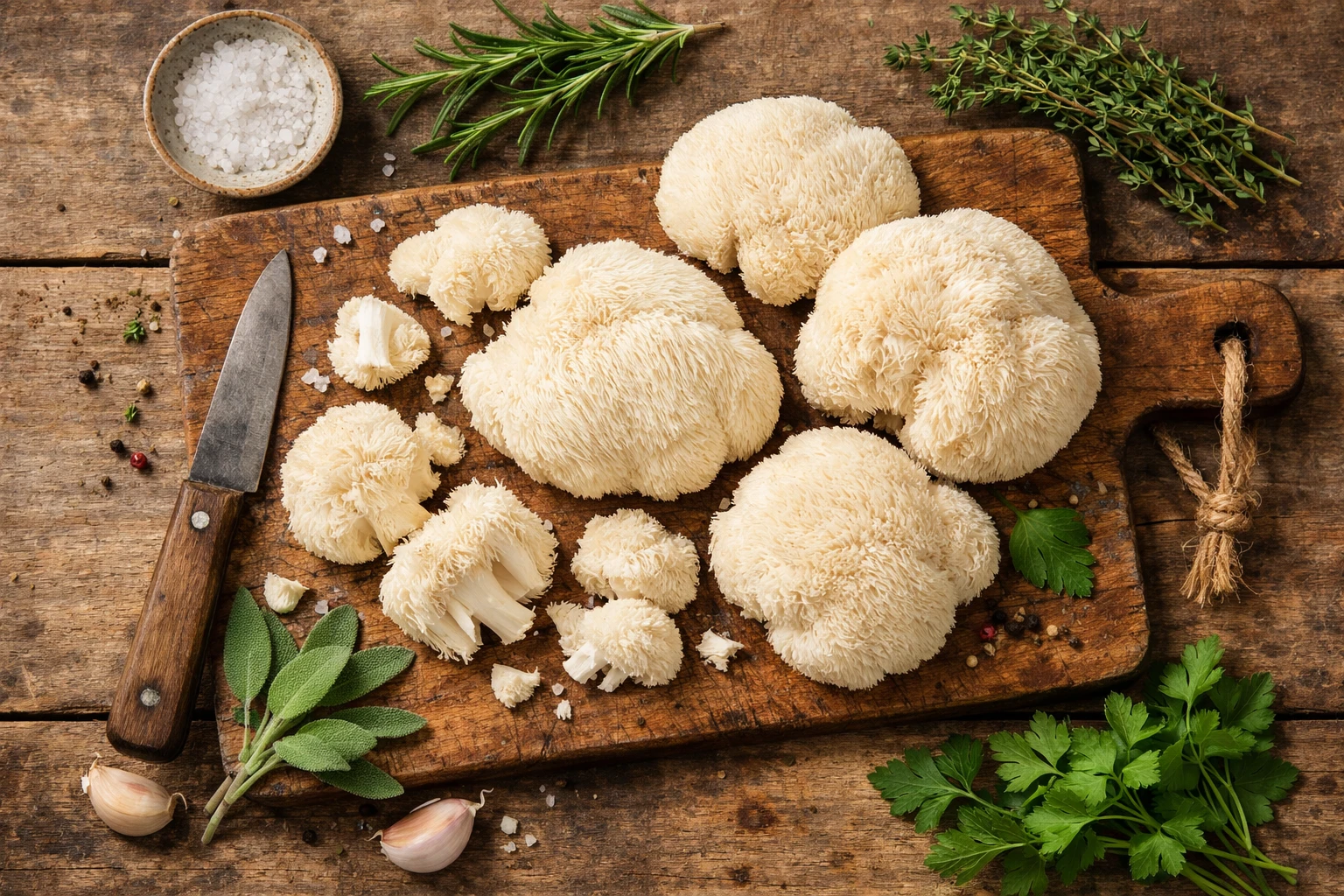
Quick Nutrition Facts
Per 100g Raw
| Nutrient | Amount |
|---|---|
| Calories | 35 kcal |
| Protein | 2.5g |
| Carbohydrates | 7g |
| Fiber | 2.5g |
| Sugars | 0.5g |
| Fat | 0.3g |
| Potassium | 443mg |
| Zinc | 0.7mg |
| Selenium | 5mcg |
| Beta-Glucans | 20-40% |
Macronutrient Breakdown
 ChatGPT
  Claude
  AI Mode
  Perplexity
NUTRITIONIST INSIGHT
Lion's mane contains unique compounds called hericenones and erinacines that stimulate nerve growth factor (NGF). This makes it one of the few foods that may actively support brain cell regeneration and neuroplasticity.
Myth Busters
MYTH #1: Lion's Mane Effects Are Immediate
TRUTH: Cognitive benefits typically require 2-4 weeks of consistent use. Studies showing memory improvements used 16-week supplementation periods. Patience and consistency are essential.
MYTH #2: All Lion's Mane Supplements Are Equal
TRUTH: Only fruiting body extracts contain significant hericenones; mycelium-on-grain products have lower active compound concentrations. Look for "fruiting body" and beta-glucan content on labels.
MYTH #3: Lion's Mane Is Only for Elderly
TRUTH: Benefits apply across ages. Students use it for focus; athletes for nerve recovery; young adults report reduced anxiety. Cognitive support matters at every life stage.
MYTH #4: Cooking Destroys the Benefits
TRUTH: While some compounds are heat-sensitive, beta-glucans remain stable during cooking. Gentle sautéing preserves most benefits while improving digestibility and flavor.
MYTH #5: Lion's Mane Causes Side Effects
TRUTH: Side effects are rare. Some report mild digestive discomfort initially. Lion's mane has been safely consumed in Asian cuisines for centuries. Start with small amounts if concerned.
NutriScore by Health Goals
| Health Goal | NutriScore | Why This Score? |
|---|---|---|
| Weight Loss |  | Only 35 calories per 100g with 2.5g fiber; excellent low-calorie protein source. |
| Muscle Gain |  | Contains protein and may support nerve-muscle connection recovery; pair with protein sources. |
| Diabetes Management | | Very low carbs (7g), may support healthy blood sugar levels; excellent for diabetic diets. |
| PCOS Management | | Low-glycemic, anti-inflammatory properties; may help with hormone-related brain fog. |
| Pregnancy Nutrition |  | Limited safety data during pregnancy; consult healthcare provider before use. |
| Viral/Flu Recovery | | Beta-glucans support immune function; anti-inflammatory; easy to digest. |
PERSONALIZED NUTRITION
Track your meals with NutriScan for personalized NutriScores based on your specific health goals!
Blood Sugar Response to Lion's Mane
Lion's mane has minimal impact on blood glucose due to its low carbohydrate content and high fiber ratio.
Typical Glucose Response Curve
This chart shows typical blood glucose response for general healthy individuals. Individual responses may vary. Not medical advice.
Why Lion's Mane Is Diabetes-Friendly
Research suggests lion's mane may help manage blood sugar through multiple mechanisms:
- 🍄 Low glycemic impact - Only 7g carbs per 100g with 2.5g fiber
- 🔬 Alpha-glucosidase inhibition - May slow carb absorption
- 🛡️ Antioxidant effects - Protects pancreatic beta cells
- 🧬 Blood sugar regulation - Studies show improved glucose tolerance
The near-flat glucose curve makes lion's mane an ideal food for diabetics and those monitoring blood sugar.
Cultural Significance
Lion's mane (Hericium erinaceus) has been treasured in traditional medicine for over a thousand years.
In Asia:
- Known as Yamabushitake in Japan (mountain priest mushroom)
- Called Hou Tou Gu in China (monkey head mushroom)
- Used in Traditional Chinese Medicine for digestive and neurological support
- Considered a delicacy in gourmet cuisine with lobster-like texture
Modern Recognition:
- 2025's hottest functional mushroom trend globally
- Featured in mushroom coffee blends (12% social media growth)
- Subject of increasing clinical research for Alzheimer's prevention
- Growing popularity in nootropic and biohacking communities
Compare & Substitute
Lion's Mane vs Other Functional Mushrooms (Per 100g)
| Nutrient | 🍄 Lion's Mane | 🍄 Reishi | 🍄 Chaga | 🍄 Shiitake |
|---|---|---|---|---|
| Calories | 35 kcal | 30 kcal | 25 kcal | 34 kcal |
| Protein | 2.5g | 1.8g | 2.1g | 2.2g |
| Fiber | 2.5g | 2.0g | 3.0g | 2.5g |
| Beta-Glucans | 20-40% | 25-50% | 10-20% | 15-30% |
| Key Benefit | Brain & nerve support | Calm & sleep | Immune & antioxidants | Immune & heart health |
| Best For | Cognitive enhancement, focus | Stress relief, evening use | Immunity, inflammation | Culinary versatility |
Frequently Asked Questions
What are the cognitive benefits of lion's mane?
Lion's mane contains hericenones and erinacines that stimulate nerve growth factor (NGF) production. Studies show improved memory, focus, and processing speed. It may help protect against age-related cognitive decline and support brain plasticity for learning.
How much lion's mane should I take daily?
For cognitive benefits, 500-3000mg of fruiting body extract daily is typical. Start with 500mg and increase gradually over 2 weeks. Fresh mushroom: 100-150g daily. Effects may take 2-4 weeks to notice; consistency is key.
Can lion's mane help with anxiety?
Research suggests lion's mane may reduce anxiety and depression symptoms. A 2010 study found 4 weeks of supplementation reduced anxiety scores in menopausal women by 34%. It may work by reducing inflammation and supporting nerve regeneration.
Is lion's mane safe to eat daily?
Yes, lion's mane is generally safe for daily consumption. It has been eaten in Asian cuisines for centuries without reported issues. Rare side effects include mild digestive discomfort. Consult a doctor if pregnant, nursing, or taking blood thinners.
Does lion's mane improve sleep?
Lion's mane may indirectly improve sleep by reducing anxiety and supporting nervous system health. Unlike reishi, it's not sedating. Best taken in morning or with meals for cognitive benefits; not specifically recommended as a sleep aid.
How do you cook lion's mane mushroom?
Sauté in butter for 5-7 minutes until golden; develops a lobster-like texture. Can be grilled, roasted, or added to soups. Tear into pieces rather than cutting for better texture. Pairs well with garlic, thyme, lemon, and white wine.
When will I notice lion's mane effects?
Cognitive improvements typically appear after 2-4 weeks of daily use. Some report improved focus within 1-2 weeks. Full benefits for nerve regeneration may take 8-16 weeks. Consistent daily intake is more effective than sporadic use.
Can I take lion's mane with coffee?
Yes, lion's mane pairs well with coffee and is a key ingredient in mushroom coffee blends. It may smooth out caffeine jitters while enhancing focus. The combination provides complementary cognitive benefits without negative interactions.


Similar Nutritious Foods
4505 Chicharrones Classic Chili Salt
7 Eleven Japan Crispy Corn Cheese
Explore More Nutrition Tools & Resources
AI Calorie Counter App - Snap a Photo, Get Macros
AI Nutritionist App That Reads Your Logged Meals
Best Protein Supplements for Women
Bulking Meal Plan App That Sets Your Surplus
ChatGPT Calorie Counter Alternative That Keeps the Total
ChatGPT Diet Plan Alternative That Tracks What You Eat
ChatGPT Weight Loss Coach Alternative With a Food Log
Fast Food Calorie Counter App That Reads the Tray
Free Calorie Tracker App with AI Photo Scans | NutriScan
Indian Diet Plan App With Veg and Non Veg Meals
Indian Food Calorie Calculator - Get Instant Nutrition Facts for Desi Meals — 2026
Intermittent Fasting for Women, Timer and Meal Log App
Intermittent Fasting Tracker App - Free Fasting Timer
Macro Tracker App That Fills the Numbers From a Photo
Mediterranean Diet Meal Plan App That Counts the Oil
Micronutrient Tracker App for Vitamins and Minerals
MyFitnessPal Alternative That Stays Free | NutriScan
NutriScore App: A Free Grade on Every Meal | NutriScan
Nutrition Label Scanner App for the Amount You Ate
Second Trimester Protein Guide
Vegetarian Meal Plan App With a Protein Target
Voice Calorie Counter - Speak to Track Meals Hands-Free
Water and Calorie Tracker App - Free Water Log