Little Moons Brown Butter Caramel Mochi: Calories, Nutrition and Health Facts
A UK-viral portion-controlled mochi ice cream with nutty brown butter and golden caramel, wrapped in chewy glutinous rice dough at just 70 calories per piece.
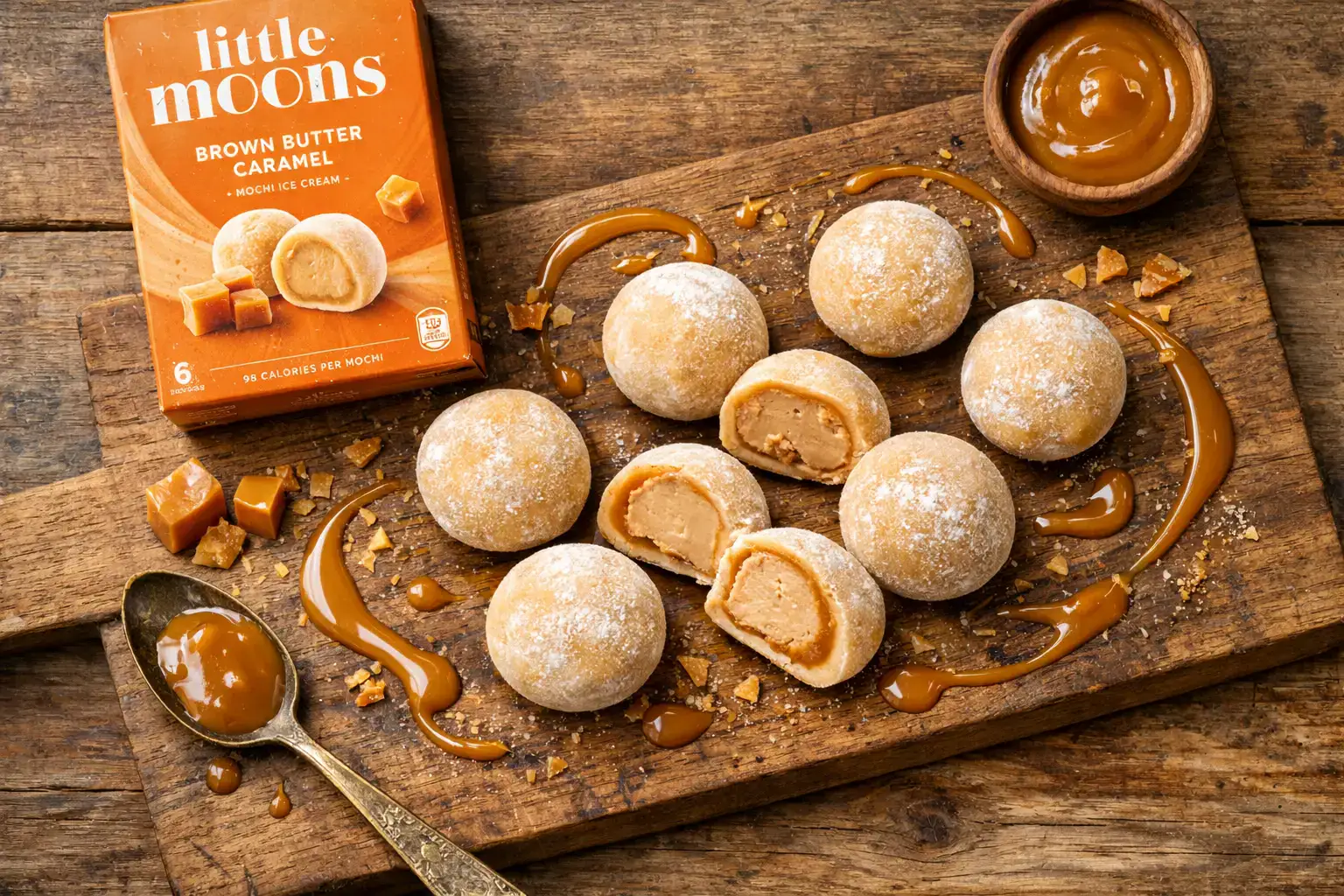
Quick Nutrition Facts
Per 1 Piece (32g)
| Nutrient | Amount |
|---|---|
| Calories | 70 kcal |
| Protein | 1g |
| Carbohydrates | 13g |
| Fiber | 0.3g |
| Sugars | 7.5g |
| Fat | 1.5g |
| Saturated Fat | 1g |
| Salt | 0.06g |
Per 100g: 219 kcal | 3.1g protein | 40.6g carbs | 4.7g fat
Macronutrient Breakdown
 ChatGPT
  Claude
  AI Mode
  Perplexity
NUTRITIONIST INSIGHT
At 70 calories per piece, Little Moons Mochi offers built-in portion control that regular ice cream lacks. The glutinous rice wrapper adds a small amount of complex carbs, while the smaller serving size naturally limits sugar intake to 7.5g per piece compared to 14g+ in a typical ice cream scoop.
Myth Busters
MYTH #1: Mochi Is a Healthy Snack
TRUTH: Mochi ice cream is still a dessert with 7.5g sugar per piece. While portion-controlled at 70 calories, eating multiple pieces negates the benefit. The CDC recommends keeping added sugars under 10% of daily calories, which is about 50g for a 2,000-calorie diet.
MYTH #2: Glutinous Rice Means It Contains Gluten
TRUTH: Despite the name, glutinous rice flour is naturally gluten-free. "Glutinous" refers to its sticky, glue-like texture when cooked, not the presence of gluten protein. Glutinous rice is safe for celiac patients when no wheat-based additives are used.
MYTH #3: Mochi Ice Cream Is Lower in Sugar Than Regular Ice Cream
TRUTH: Per 100g, mochi ice cream contains about 23g sugar versus 21g in vanilla ice cream. The perceived "healthiness" comes from the smaller per-piece serving size (32g vs a typical 66g scoop), not from a different formulation.
MYTH #4: Brown Butter Makes It More Nutritious
TRUTH: Brown butter adds a rich, nutty flavor through the Maillard reaction but does not significantly boost nutrition. The browning process slightly reduces water content and concentrates flavor, not vitamins or minerals.
MYTH #5: You Can Eat Unlimited Mochi Because Each Piece Is Small
TRUTH: Six pieces (one full box) totals 420 calories and 45g sugar, equivalent to a large ice cream sundae. Stick to 1-2 pieces to keep the portion-control advantage intact.
NutriScore by Health Goals
| Health Goal | NutriScore | Why This Score? |
|---|---|---|
| Weight Loss |  | 70 calories per piece enables portion control, but 7.5g sugar per serving adds up quickly with multiple pieces. Limit to 1 piece as a treat. |
| Muscle Gain |  | Only 1g protein per piece with minimal micronutrients. Poor choice for muscle recovery; better options exist for post-workout fuel. |
| Diabetes Management | | Glutinous rice has a medium-high GI of 69 plus 7.5g added sugar per piece. If consumed, limit to 1 piece and pair with protein. |
| PCOS Management | | Added sugars and refined carbs can worsen insulin resistance. Limit to occasional treat, maximum 1 piece. |
| Pregnancy Nutrition | | Commercial ice cream made with pasteurized ingredients is safe during pregnancy. Low nutrient density; limit to 1-2 pieces. |
| Viral/Flu Recovery | | Easy to eat when appetite is low, provides quick energy from simple carbs. Minimal vitamins or immune-supporting nutrients. |
PERSONALIZED NUTRITION
Track your meals with NutriScan for personalized NutriScores based on your specific health goals!
Blood Sugar Response to Little Moons Mochi
Understanding how mochi ice cream affects your blood glucose helps you decide when and how to enjoy it as a treat.
Typical Glucose Response Curve
This chart shows typical blood glucose response for general healthy individuals. Individual responses may vary. Not medical advice.
How to Flatten the Spike
Pairing high-GI foods with protein or fat slows glucose absorption and reduces the blood sugar peak:
- 🥜 Handful of almonds or walnuts - Adds healthy fats and protein to slow digestion
- 🧀 Small piece of cheese - Protein and fat buffer the sugar rush
- 🥛 Glass of milk or yogurt - Dairy protein helps moderate glucose response
- ⏰ Eat after a meal, not on empty stomach - Food already in the stomach slows absorption
Cultural Significance
Mochi has deep roots in Japanese culture spanning over 2,000 years. Traditional mochi (pounded rice cake) is central to Japanese New Year celebrations (mochitsuki) and is offered at Shinto shrines.
Japanese Heritage:
- Traditional mochi-making involves pounding steamed glutinous rice in an usu (mortar) with kine (wooden mallet)
- Kagami mochi (mirror mochi) is displayed during New Year as an offering to the gods
- Daifuku, mochi filled with sweet bean paste, became popular in the Edo period
Modern Global Fusion:
- Mochi ice cream was invented in the 1980s by Japanese-American entrepreneur Frances Hashimoto
- Little Moons, founded in London in 2010 by siblings Howard and Vivien Wong, went viral on TikTok in 2021
- The brand blends Japanese mochi tradition with Western dessert flavors like brown butter caramel
- UK mochi market grew significantly after the 2021 TikTok trend, becoming a mainstream frozen dessert category
Compare & Substitute
Little Moons Mochi vs Similar Frozen Desserts (Per 100g)
| Nutrient | 🍡 Mochi Ice Cream | 🍦 Vanilla Ice Cream | 🍧 Sorbet | 🧊 Frozen Yogurt |
|---|---|---|---|---|
| Calories | 219 kcal | 207 kcal | 130 kcal | 159 kcal |
| Carbs | 40.6g | 23.6g | 33g | 24g |
| Fiber | 0.3g | 0g | 0.5g | 0g |
| Protein | 3.1g | 3.5g | 0.3g | 4g |
| Fat | 4.7g | 11g | 0.2g | 5g |
| Sugar | 23.4g | 21g | 28g | 22g |
| Best For | Portion control, novelty | Classic treat, calcium | Low-fat option, fruit fix | Higher protein, probiotics |
Frequently Asked Questions
How many calories are in one Little Moons Brown Butter Caramel Mochi?
1 piece (32g) contains approximately 70 calories with 13g carbohydrates, 1.5g fat, and 1g protein. A full box of 6 pieces totals 420 calories. The portion-controlled format makes it easier to manage calorie intake compared to scooping from a tub of ice cream.
Is Little Moons Mochi healthy?
Little Moons Mochi is a lower-calorie dessert option compared to traditional ice cream per serving. However, it is still a treat with 7.5g sugar per piece. The advantage is built-in portion control at 32g per piece versus the average ice cream serving of 66g. Best enjoyed as an occasional treat within a balanced diet.
Can diabetics eat Little Moons Mochi?
Diabetics should exercise caution. Glutinous rice has a medium-high glycemic index of 69, and each piece contains 7.5g sugar. If consumed, limit to 1 piece, eat after a protein-rich meal, and monitor blood sugar 2 hours after eating. Always consult your healthcare provider for personalized guidance.
Is Little Moons Mochi gluten-free?
Yes, glutinous rice flour is naturally gluten-free despite the misleading name. "Glutinous" describes the sticky texture, not gluten content. However, always check packaging for cross-contamination warnings, especially if you have celiac disease or severe gluten sensitivity.
How many Little Moons Mochi can I eat per day?
General guidelines:
- 1-2 pieces per day for most adults (70-140 calories)
- 1 piece maximum for weight loss or diabetes management
- Athletes or active individuals can have 2-3 pieces post-activity
Track with NutriScan app to see how mochi fits your daily nutrition targets.
What makes brown butter caramel different from regular caramel?
Brown butter is made by heating butter until the milk solids toast, creating a nutty, toffee-like depth through the Maillard reaction. When combined with caramel, it adds complexity beyond regular caramel's simple sweetness. Nutritionally, the difference is minimal since both are sugar-and-fat-based, but the flavor profile is distinctly richer.


Similar Nutritious Foods
4505 Chicharrones Classic Chili Salt
7 Eleven Japan Crispy Corn Cheese
Explore More Nutrition Tools & Resources
AI Calorie Counter App - Snap a Photo, Get Macros
AI Nutritionist App That Reads Your Logged Meals
Best Protein Supplements for Women
Bulking Meal Plan App That Sets Your Surplus
ChatGPT Calorie Counter Alternative That Keeps the Total
ChatGPT Diet Plan Alternative That Tracks What You Eat
ChatGPT Weight Loss Coach Alternative With a Food Log
Fast Food Calorie Counter App That Reads the Tray
Free Calorie Tracker App with AI Photo Scans | NutriScan
Indian Diet Plan App With Veg and Non Veg Meals
Indian Food Calorie Calculator - Get Instant Nutrition Facts for Desi Meals — 2026
Intermittent Fasting for Women, Timer and Meal Log App
Intermittent Fasting Tracker App - Free Fasting Timer
Macro Tracker App That Fills the Numbers From a Photo
Mediterranean Diet Meal Plan App That Counts the Oil
Micronutrient Tracker App for Vitamins and Minerals
MyFitnessPal Alternative That Stays Free | NutriScan
NutriScore App: A Free Grade on Every Meal | NutriScan
Nutrition Label Scanner App for the Amount You Ate
Second Trimester Protein Guide
Vegetarian Meal Plan App With a Protein Target
Voice Calorie Counter - Speak to Track Meals Hands-Free
Water and Calorie Tracker App - Free Water Log