Lumpia: Calories, Nutrition and Health Benefits
Crispy Filipino spring rolls with savory pork and vegetable filling—a beloved celebration food that bridges Chinese culinary heritage with Philippine flavors.
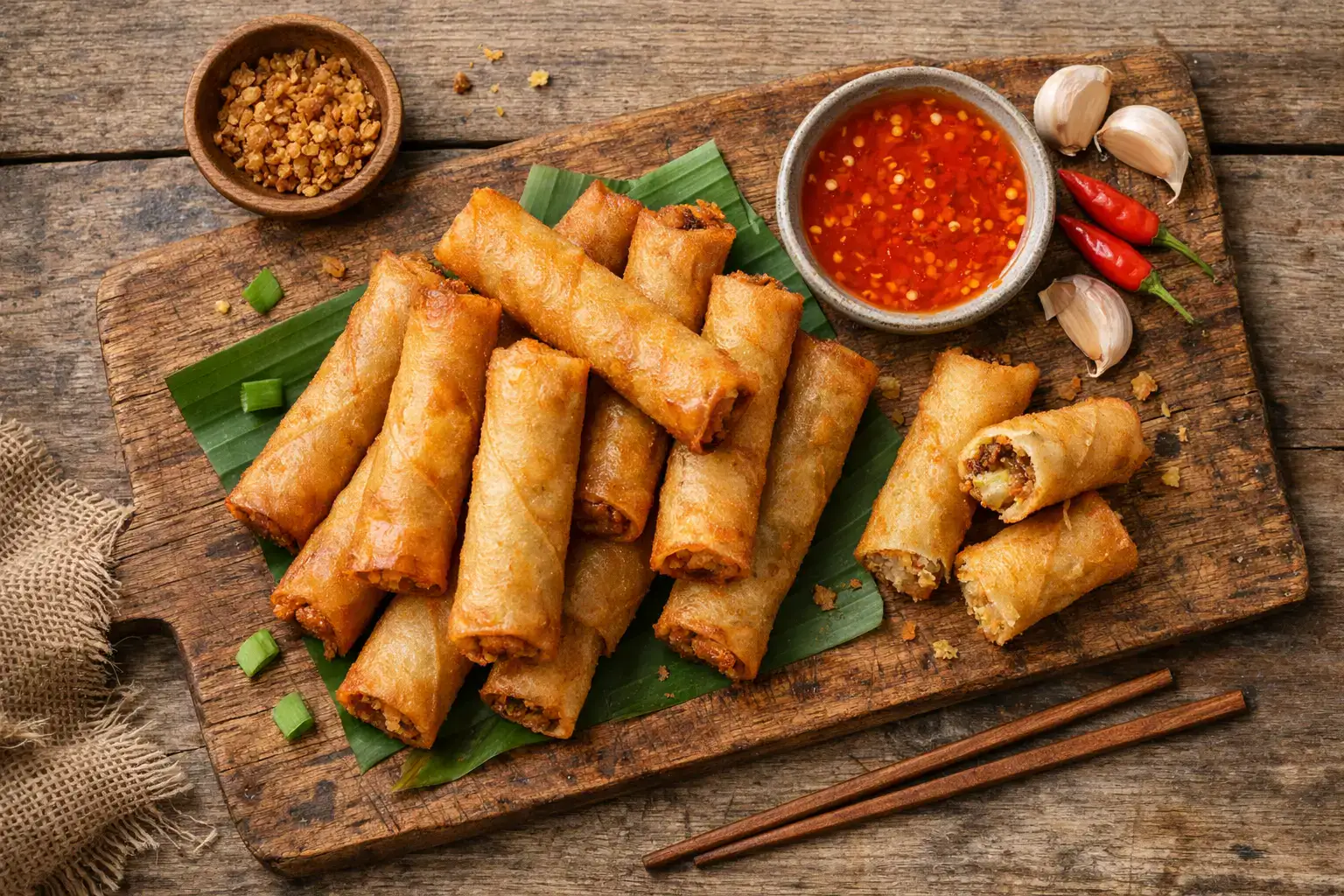
Quick Nutrition Facts
Per 1 Piece Lumpia (25g)
| Nutrient | Amount |
|---|---|
| Calories | 80 kcal |
| Protein | 3g |
| Carbohydrates | 8g |
| Fiber | 0.5g |
| Sugars | 0.5g |
| Fat | 4g |
| Saturated Fat | 1g |
| Sodium | 150mg |
| Iron | 0.5mg |
| Cholesterol | 10mg |
Macronutrient Breakdown
 ChatGPT
  Claude
  AI Mode
  Perplexity
NUTRITIONIST INSIGHT
Lumpia is best enjoyed occasionally as part of celebrations. The thin crispy wrapper delivers satisfying crunch, but frying adds significant fat. Opt for fresh lumpia (lumpiang sariwa) when available—it's wrapped in an egg crepe without frying and packed with more vegetables.
Myth Busters
MYTH #1: All Lumpia Is Unhealthy
TRUTH: While fried lumpia is higher in fat, fresh lumpia (lumpiang sariwa) offers a healthier alternative with vegetables and no frying. Even fried versions provide protein from the meat filling and can fit into a balanced diet when eaten in moderation.
MYTH #2: Lumpia Is Too Fatty for Any Diet
TRUTH: One piece contains only 4g of fat. The concern with fried foods is frequency, not occasional consumption. Limiting fried foods to once per week reduces health risks significantly.
MYTH #3: Lumpia Has No Nutritional Value
TRUTH: Lumpia provides 3g protein per piece from pork or shrimp filling, plus vegetables like carrots, cabbage, and bean sprouts that contribute fiber, vitamins, and minerals.
MYTH #4: Fresh and Fried Lumpia Are Nutritionally the Same
TRUTH: Fresh lumpia has significantly fewer calories and no added oil. Lumpiang sariwa is wrapped in an unfried egg crepe and topped with peanut sauce, offering a lighter experience with more vegetable content.
MYTH #5: Lumpia Wrapper Contains Trans Fats
TRUTH: Traditional lumpia wrappers are made from flour, water, and salt—no trans fats. However, reusing frying oil can create trans fats, so homemade with fresh oil is the healthiest option.
NutriScore by Health Goals
| Health Goal | NutriScore | Why This Score? |
|---|---|---|
| Weight Loss |  | Fried food with 80 cal/piece adds up quickly. Limit to 2-3 pieces occasionally. Choose fresh lumpia instead. |
| Muscle Gain |  | Provides 3g protein per piece, but not protein-dense. Good post-workout when paired with additional protein sources. |
| Diabetes Management | | Carb-dense fried wrapper spikes blood sugar. Limit portions to 1-2 pieces, pair with protein and vegetables. |
| PCOS Management | | Fried foods can affect insulin sensitivity. Best avoided or limited to rare occasions. |
| Pregnancy Nutrition | | Provides protein and iron from meat filling. Limit fried food intake during pregnancy, ensure meat is fully cooked. |
| Viral/Flu Recovery | | Easy to eat when appetite is low. The vegetables provide some vitamins, but lighter foods may be easier to digest. |
PERSONALIZED NUTRITION
Track your meals with NutriScan for personalized NutriScores based on your specific health goals!
Blood Sugar Response to Lumpia
Understanding how lumpia affects your blood glucose can help you make informed decisions about portions and pairings.
Typical Glucose Response Curve
*This chart shows typical blood glucose response for general healthy individuals. Individual responses may vary. Not medical advice.*
How to Flatten the Spike
Pairing carb-rich foods with protein or fiber slows glucose absorption and reduces the peak blood sugar level:
- 🥗 Fresh vegetable salad - Fiber slows carbohydrate absorption
- 🍲 Clear soup (sinigang) - Fills stomach before eating lumpia
- 🥒 Pickled vegetables (atchara) - Traditional pairing adds fiber and probiotics
- 🫘 Side of beans or lentils - Protein and fiber combination
This combination not only reduces the glucose spike but also extends energy release, keeping you fuller for longer.
Cultural Significance
Lumpia represents centuries of cultural exchange between China and the Philippines, transforming from a simple spring festival food into a beloved Filipino celebration staple.
Origins & History:
- Originated in ancient China during the Jin Dynasty (266-420 AD) as spring festival food
- Introduced to the Philippines by Hokkien immigrants from Fujian province
- Name derived from Hokkien "lun-pia" meaning "soft cake"
- Filipino adaptation uses paper-thin wrappers and local ingredients
In the Philippines:
- Essential at celebrations: birthdays, weddings, fiestas, and family gatherings
- Rolling lumpia is a communal family activity that fosters bonds
- Regional varieties: Bicol (spicy), Visayas (ubod/heart of palm), fresh (sariwa)
- Symbol of love, unity, and shared Filipino identity
Global Impact:
- Filipino diaspora brought lumpia worldwide—from Hawaii to Madrid
- Each immigrant community adapted recipes to local ingredients
- Bridges tradition and innovation wherever Filipinos settle
Compare & Substitute
Lumpia vs Similar Foods (Per 100g)
| Nutrient | 🥟 Lumpia (Fried) | 🥟 Egg Roll | 🌯 Fresh Spring Roll | 🥟 Samosa |
|---|---|---|---|---|
| Calories | 320 kcal | 290 kcal | 140 kcal | 308 kcal |
| Carbs | 32g | 28g | 24g | 32g |
| Fiber | 2g | 2g | 3g | 3g |
| Protein | 12g | 10g | 5g | 5g |
| Fat | 16g | 15g | 3g | 18g |
| Sodium | 600mg | 550mg | 400mg | 450mg |
| Best For | Celebrations, protein boost | Quick snack, similar nutrition | Weight loss, everyday eating | Vegetarian option |
Frequently Asked Questions
How many calories are in lumpia?
One piece of fried lumpia (25g) contains approximately 80 calories, with 4g fat, 8g carbohydrates, and 3g protein. A typical serving of 4 pieces would total around 320 calories.
Per 100g: 320 calories, 32g carbs, 16g fat, 12g protein.
Is lumpia good for weight loss?
Fried lumpia should be eaten sparingly during weight loss due to its calorie density from frying.
Tips for weight loss:
- Limit to 2-3 pieces as an occasional treat
- Choose fresh lumpia (lumpiang sariwa) instead when available
- Pair with a large vegetable salad to increase satiety
- Avoid sweet dipping sauces that add extra sugar
Can diabetics eat lumpia?
Diabetics can eat lumpia occasionally in controlled portions. The fried carbohydrate wrapper causes blood sugar spikes.
Tips for diabetics:
- Limit to 1-2 pieces at a time
- Always pair with protein and vegetable dishes
- Avoid sweet dipping sauces
- Monitor blood sugar 2 hours after eating
- Choose fresh lumpia when possible for lower glycemic impact
What is the difference between lumpia and egg rolls?
Lumpia uses a thinner, crispier wrapper made from flour, water, and salt, while egg rolls use a thicker wrapper containing eggs. Lumpia is typically slender and cigar-shaped, whereas egg rolls are thicker and shorter. Filipino lumpia also traditionally uses different fillings and dipping sauces.
Is fresh lumpia healthier than fried?
Yes, fresh lumpia (lumpiang sariwa) is significantly healthier with fewer calories and no added oil from frying. Fresh lumpia is wrapped in an unfried egg crepe and contains more vegetables, making it a better choice for weight management and daily eating.
What are the healthiest ways to eat lumpia?
Healthier lumpia options:
- Choose fresh lumpia - No frying, more vegetables
- Bake instead of fry - Brush with oil and bake at 400°F until crispy
- Air fry - Less oil, similar crunch
- Use fresh frying oil - Avoids trans fat formation
- Increase vegetable filling - More fiber, fewer calories per piece
How many lumpia should I eat?
General guidelines:
- Weight management: 2-3 pieces occasionally
- Normal diet: 4-5 pieces as part of a balanced meal
- Athletes/muscle gain: 5-6 pieces post-workout with additional protein
- Diabetes: 1-2 pieces paired with vegetables and protein
Track your meals with NutriScan app to see how lumpia fits your personal nutrition goals.




Similar Nutritious Foods
4505 Chicharrones Classic Chili Salt
7 Eleven Japan Crispy Corn Cheese
Explore More Nutrition Tools & Resources
AI Calorie Counter App - Snap a Photo, Get Macros
AI Nutritionist App That Reads Your Logged Meals
Best Protein Supplements for Women
Bulking Meal Plan App That Sets Your Surplus
ChatGPT Calorie Counter Alternative That Keeps the Total
ChatGPT Diet Plan Alternative That Tracks What You Eat
ChatGPT Weight Loss Coach Alternative With a Food Log
Fast Food Calorie Counter App That Reads the Tray
Free Calorie Tracker App with AI Photo Scans | NutriScan
Indian Diet Plan App With Veg and Non Veg Meals
Indian Food Calorie Calculator - Get Instant Nutrition Facts for Desi Meals — 2026
Intermittent Fasting for Women, Timer and Meal Log App
Intermittent Fasting Tracker App - Free Fasting Timer
Macro Tracker App That Fills the Numbers From a Photo
Mediterranean Diet Meal Plan App That Counts the Oil
Micronutrient Tracker App for Vitamins and Minerals
MyFitnessPal Alternative That Stays Free | NutriScan
NutriScore App: A Free Grade on Every Meal | NutriScan
Nutrition Label Scanner App for the Amount You Ate
Second Trimester Protein Guide
Vegetarian Meal Plan App With a Protein Target
Voice Calorie Counter - Speak to Track Meals Hands-Free
Water and Calorie Tracker App - Free Water Log