Lymphatic Health Foods: Best Foods to Support Lymphatic Drainage
Support your lymphatic system with nutrient-dense foods that reduce inflammation, enhance drainage, and promote detoxification.
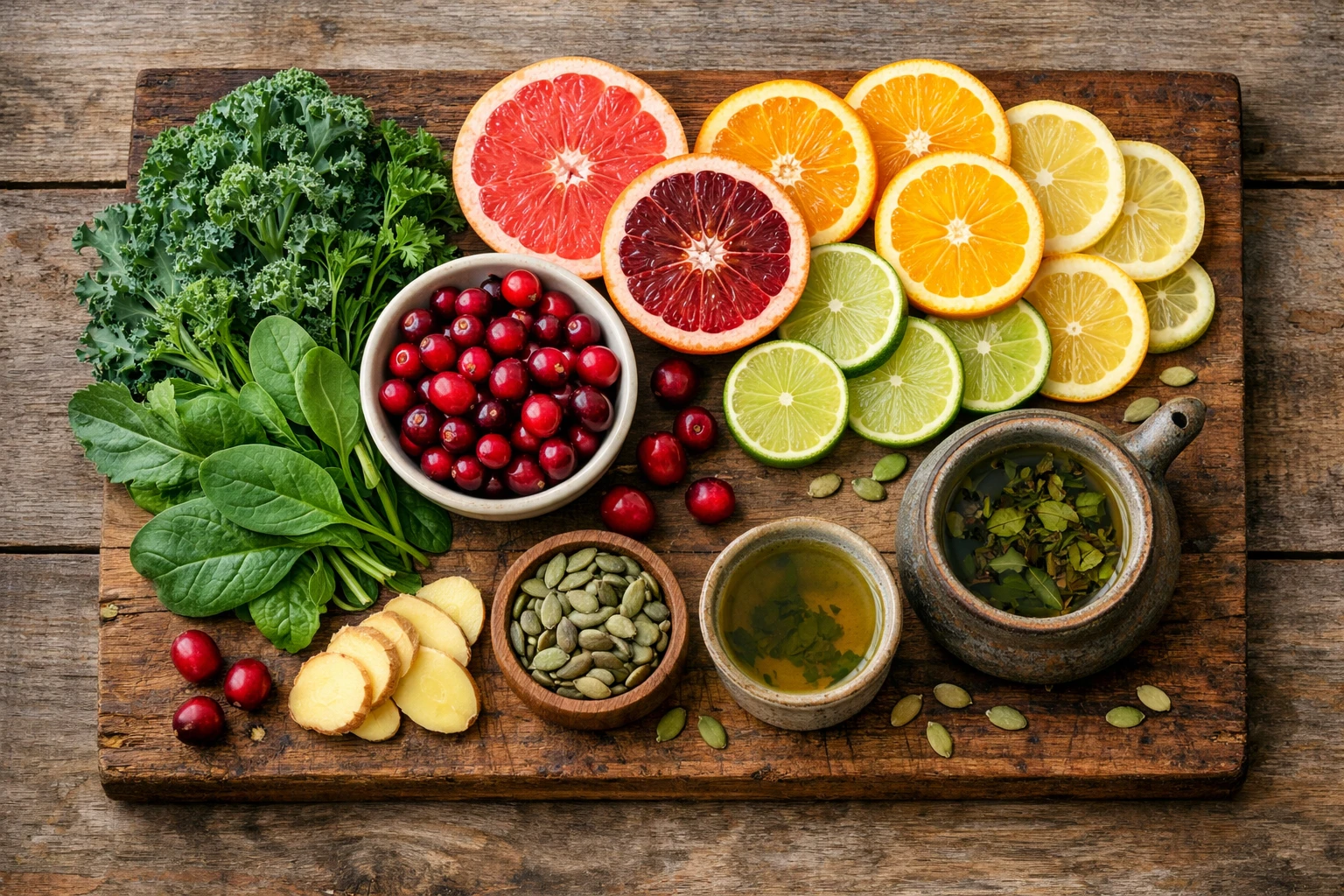
Top Lymphatic Support Foods
Key Nutrients & Foods
| Food Category | Key Benefits |
|---|---|
| Citrus Fruits | Vitamin C for vessel integrity |
| Leafy Greens | Chlorophyll for detoxification |
| Cranberries | Antioxidants, natural diuretic |
| Garlic & Ginger | Anti-inflammatory compounds |
| Turmeric | Reduces swelling, curcumin benefits |
| Green Tea | Catechins support lymph flow |
| Omega-3 Fish | Stabilizes vessel walls, reduces edema |
| Cruciferous Veggies | Liver detox, enhances drainage |
Nutritional Focus Areas
 ChatGPT
  Claude
  AI Mode
  Perplexity
NUTRITIONIST INSIGHT
Omega-3 fatty acids stabilize lymphatic vessel walls and reduce fluid buildup, particularly beneficial for lymphedema patients. Combine anti-inflammatory foods with proper hydration (8-10 glasses daily) for optimal lymphatic flow.
Myth Busters
MYTH #1: Lymphatic Drainage Diets Can "Detox" Your Body Instantly
TRUTH: Your lymphatic system naturally removes waste; no food instantly "detoxifies" you. However, anti-inflammatory foods rich in omega-3s, vitamin C, and antioxidants support lymphatic function over time by reducing inflammation and improving vessel health. Consistency matters more than quick fixes.
MYTH #2: You Need Expensive Supplements for Lymphatic Health
TRUTH: Whole foods provide the same nutrients at lower cost. Wild-caught salmon, leafy greens, citrus fruits, and green tea offer omega-3s, vitamin C, chlorophyll, and antioxidants without supplements. Focus on dietary patterns rather than pills.
MYTH #3: High Sodium Is Fine If You Drink Enough Water
TRUTH: Reducing sodium to 500-1500mg daily prevents water retention and vessel damage, which water alone cannot reverse. Excess sodium forces the lymphatic system to work harder and can worsen swelling. Limit processed foods and restaurant meals.
MYTH #4: All Oils Are Equal for Lymphatic Health
TRUTH: Omega-6 heavy oils (soybean, corn, sunflower) drive inflammation when consumed in excess, hindering lymphatic waste clearance. Choose omega-3 rich options like flaxseed oil, walnut oil, or algae oil. Aim for omega-6 to omega-3 ratio closer to 4:1 instead of typical 15:1.
MYTH #5: Oprah's Lymphatic Trend Is Just a Celebrity Fad
TRUTH: While Oprah featured lymphatic massage tools on her 2025 Favorite Things and the trend gained TikTok popularity (219.7K conversations), the lymphatic system is a legitimate component of immune and circulatory health. The key is separating evidence-based nutrition (omega-3s, hydration, anti-inflammatory foods) from unproven quick fixes.
MYTH #6: Cranberries Are Only Good for UTIs
TRUTH: Beyond urinary health, cranberries contain proanthocyanidins that protect lymphatic vessels from oxidative damage, act as natural diuretics, and support kidney and liver detoxification. Their low sugar content makes them suitable for daily consumption in whole or unsweetened juice form.
NutriScore by Health Goals
| Health Goal | NutriScore | Why This Score? |
|---|---|---|
| Immune Support |  | Vitamin C from citrus, antioxidants from berries, and omega-3s from fish all enhance immune cell function and lymphatic circulation. |
| Inflammation Reduction | | Omega-3 fatty acids, turmeric curcumin, and cruciferous vegetables reduce systemic inflammation that impairs lymphatic drainage. |
| Weight Loss |  | Water-rich vegetables (cucumber, celery), leafy greens, and green tea support detox pathways and metabolism without adding excessive calories. |
| Detoxification | | Chlorophyll in greens, antioxidants in berries, and proper hydration facilitate toxin elimination through lymph and liver pathways. |
| Lymphedema Management | | Omega-3s reduce edema and inflammation in lymphedema patients; low-sodium diet prevents fluid retention. |
| Post-Surgery Recovery | | Anti-inflammatory foods accelerate healing, vitamin C supports tissue repair, and hydration maintains lymph flow during reduced mobility. |
PERSONALIZED NUTRITION
Track your meals with NutriScan for personalized NutriScores based on your specific health goals!
Anti-Inflammatory Impact
Understanding how lymphatic-supportive foods reduce inflammation can help you make informed dietary choices.
Inflammatory Marker Reduction Over Time
*This chart shows typical anti-inflammatory response when adopting lymphatic-supportive diet. Individual responses may vary. Not medical advice.*
How to Maximize Anti-Inflammatory Benefits
Combining omega-3 rich foods with antioxidant sources amplifies anti-inflammatory effects:
- 🐟 Fatty fish (salmon, sardines, mackerel) - EPA and DHA omega-3s stabilize vessel walls
- 🥬 Leafy greens with healthy fats - Chlorophyll absorption enhanced with olive oil or avocado
- 🫐 Berries with nuts - Antioxidants plus omega-3s from walnuts or almonds
- 🍋 Citrus with green tea - Vitamin C and catechins work synergistically
Maintaining an omega-6 to omega-3 ratio of 4:1 or lower significantly reduces inflammation markers.
Cultural Significance
Lymphatic health has been recognized across cultures for centuries, though modern science is only recently validating traditional wisdom.
Traditional Medicine:
- Ayurveda uses ginger, turmeric, and leafy greens for detoxification and circulation
- Traditional Chinese Medicine emphasizes burdock root, red root, and astragalus for lymph flow
- European herbalism has long used cleavers, calendula, and echinacea for lymphatic support
Modern Wellness Movement:
- Lymphatic drainage became a major wellness trend in 2025 with over 219K TikTok conversations
- Celebrities like Lizzo and Cynthia Erivo credit lymphatic massage for reduced inflammation and improved mobility
- Oprah featured lymphatic massage skincare sets on her 2025 Favorite Things list
Scientific Validation:
- Research confirms omega-3s reduce lymphedema symptoms
- Clinical studies show low-sodium diets prevent fluid retention
- Evidence supports vitamin C's role in vessel integrity and immune function
Compare & Substitute
Lymphatic Support Foods vs Standard Options (Per 100g)
| Nutrient | 🐟 Salmon (Wild) | 🥬 Kale | 🍋 Lemon | 🫐 Cranberries (Raw) |
|---|---|---|---|---|
| Calories | 142 kcal | 35 kcal | 29 kcal | 46 kcal |
| Protein | 20g | 2.9g | 1.1g | 0.4g |
| Fat | 6g (omega-3 rich) | 1.5g | 0.3g | 0.1g |
| Carbs | 0g | 4.4g | 9.3g | 12g |
| Fiber | 0g | 4.1g | 2.8g | 3.6g |
| Vitamin C | 0mg | 93mg | 53mg | 13.3mg |
| Key Benefit | Omega-3s for vessel health | Chlorophyll detoxification | Vitamin C, bioflavonoids | Antioxidants, diuretic |
| Best For | Reducing inflammation | Daily detox and drainage | Hydration and vessel health | Kidney/liver support |
Frequently Asked Questions
What foods are best for lymphatic drainage?
Top lymphatic drainage foods include citrus fruits (vitamin C for vessel health), leafy greens (chlorophyll for detox), cranberries (antioxidants and diuretic effects), garlic and ginger (anti-inflammatory), turmeric (reduces swelling), and green tea (catechins support lymph flow). Focus on omega-3 rich fish like salmon and sardines; cruciferous vegetables like broccoli and Brussels sprouts; stay hydrated with 8-10 glasses of water daily.
Daily targets: 2-3 servings citrus; 2 cups leafy greens; 3-4oz fatty fish 3x weekly; 2-3 cups green tea; unlimited water-rich vegetables.
How does vitamin C support lymphatic health?
Vitamin C supports collagen production for lymphatic vessel integrity, improves vessel elasticity, and enhances immune function. Citrus fruits like lemons, oranges, and grapefruits provide high vitamin C levels plus bioflavonoids that reduce inflammation and improve lymphatic flow.
Recommended intake: 75-90mg daily minimum; 200mg for optimal lymphatic support. One medium orange provides ~70mg; one cup kale provides ~80mg.
What should I avoid for lymphatic health?
Limit sodium to 500-1500mg daily to prevent water retention; reduce omega-6 heavy oils (soybean, corn oil, sunflower oil) that drive inflammation when consumed in excess; minimize processed foods, refined sugars, and alcohol. These impair lymphatic drainage and increase fluid buildup.
Worst offenders: Packaged snacks (high sodium); fried foods (omega-6 oils); sugary beverages (inflammation); deli meats (sodium + preservatives).
Can green tea help with lymphatic drainage?
Yes, green tea contains catechins (EGCG) and antioxidants that support lymphatic flow and reduce oxidative stress. Recommended intake: 2-3 cups daily. Green tea acts as a mild diuretic and supports detoxification pathways without causing dehydration.
Brewing tip: Steep at 160-180°F for 2-3 minutes to preserve catechins; add lemon for enhanced vitamin C and absorption.
Is lymphatic health diet science-backed?
Omega-3 fatty acids have shown benefits in research for reducing inflammation and supporting lymphatic function in lymphedema patients. However, most lymphatic food claims are based on nutritional properties (antioxidants, vitamin C, chlorophyll) and theoretical mechanisms rather than direct clinical trials specifically testing these foods' impact on lymphatic drainage.
Evidence levels: Omega-3s (strong); vitamin C (moderate-strong); chlorophyll/antioxidants (theoretical, mechanistic support).
How much water should I drink for lymphatic health?
Aim for 8-10 glasses (2-2.5 liters) daily. Proper hydration is essential for lymph fluid movement and toxin elimination. Consider adding lemon to water for extra vitamin C and alkalizing benefits.
Signs of adequate hydration: Clear or pale yellow urine; regular bowel movements; no afternoon energy crashes; minimal swelling or puffiness.
What herbs support lymphatic drainage?
Traditional lymphatic herbs include burdock root, red root, cleavers, echinacea, astragalus, and calendula. Modern research validates ashwagandha for inflammation reduction. Consume as teas or tinctures; consult healthcare provider before using herbal supplements, especially if on medications.
Dosing: Burdock root tea 1-3 cups daily; red root tincture 30-60 drops 2-3x daily; echinacea 300mg 3x daily for short-term use.




Similar Nutritious Foods
4505 Chicharrones Classic Chili Salt
7 Eleven Japan Crispy Corn Cheese
Explore More Nutrition Tools & Resources
AI Calorie Counter App - Snap a Photo, Get Macros
AI Nutritionist App That Reads Your Logged Meals
Best Protein Supplements for Women
Bulking Meal Plan App That Sets Your Surplus
ChatGPT Calorie Counter Alternative That Keeps the Total
ChatGPT Diet Plan Alternative That Tracks What You Eat
ChatGPT Weight Loss Coach Alternative With a Food Log
Fast Food Calorie Counter App That Reads the Tray
Free Calorie Tracker App with AI Photo Scans | NutriScan
Indian Diet Plan App With Veg and Non Veg Meals
Indian Food Calorie Calculator - Get Instant Nutrition Facts for Desi Meals — 2026
Intermittent Fasting for Women, Timer and Meal Log App
Intermittent Fasting Tracker App - Free Fasting Timer
Macro Tracker App That Fills the Numbers From a Photo
Mediterranean Diet Meal Plan App That Counts the Oil
Micronutrient Tracker App for Vitamins and Minerals
MyFitnessPal Alternative That Stays Free | NutriScan
NutriScore App: A Free Grade on Every Meal | NutriScan
Nutrition Label Scanner App for the Amount You Ate
Second Trimester Protein Guide
Vegetarian Meal Plan App With a Protein Target
Voice Calorie Counter - Speak to Track Meals Hands-Free
Water and Calorie Tracker App - Free Water Log