Makki Di Roti: Calories, Nutrition and Health Benefits
Traditional Punjabi gluten-free corn flatbread, perfect winter food paired with sarson da saag, packed with fiber and complex carbohydrates.
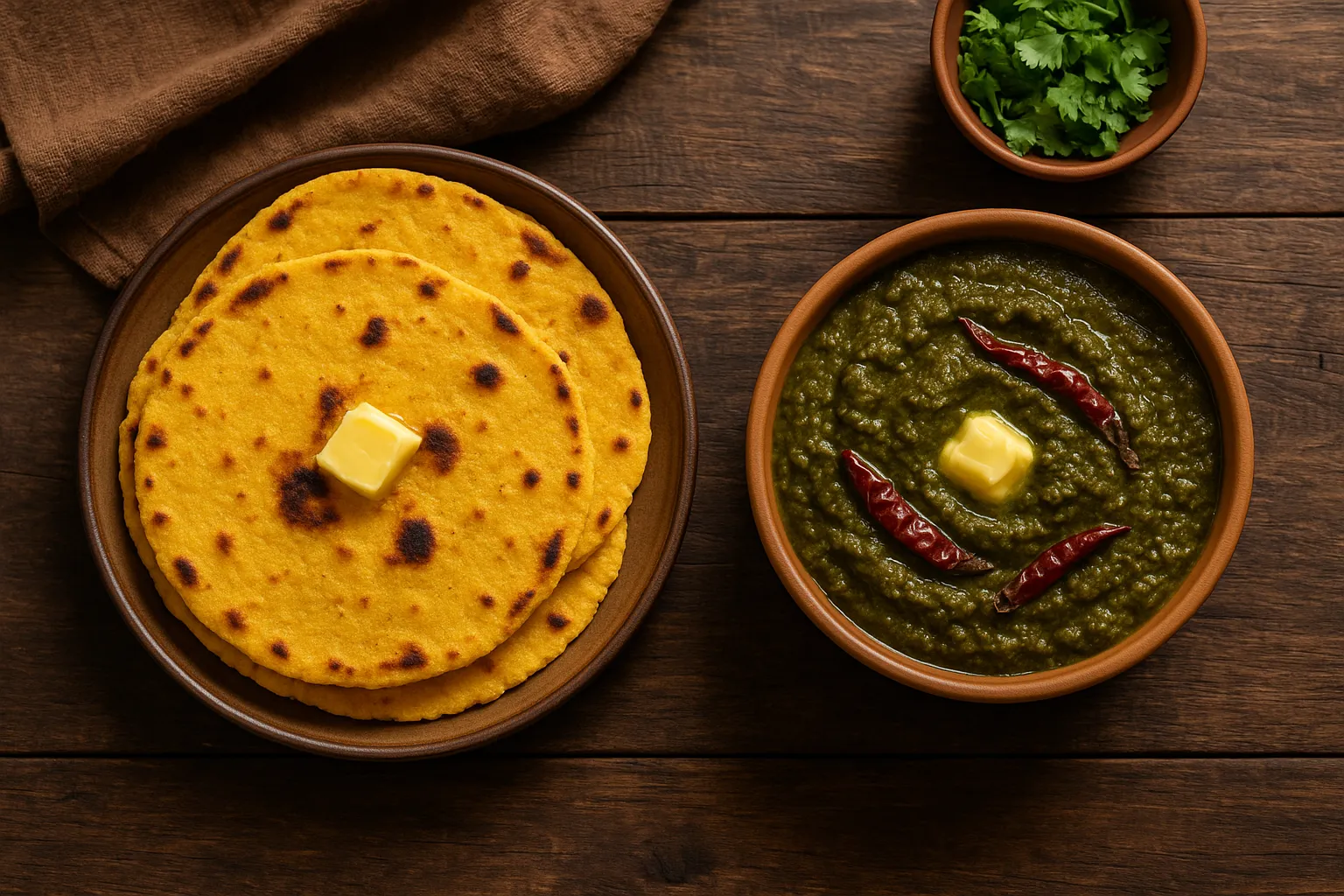
Quick Nutrition Facts
Per 1 Roti (40g)
| Nutrient | Amount |
|---|---|
| Calories | 90 kcal |
| Protein | 1.7g |
| Carbohydrates | 13.82g |
| Fiber | 1.2g |
| Sugars | 0.5g |
| Fat | 3.38g |
| Potassium | 75mg |
| Phosphorus | 48mg |
| Magnesium | 15mg |
| Iron | 0.4mg |
Macronutrient Breakdown
 ChatGPT
  Claude
  AI Mode
  Perplexity
NUTRITIONIST INSIGHT
Makki di roti is naturally gluten-free and rich in complex carbohydrates. The traditional pairing with sarson da saag provides complete nutrition - carbs from roti and protein plus fiber from greens.
Myth Busters
MYTH #1: Makki Di Roti Causes Weight Gain
TRUTH: At 90 calories per roti, it won't cause weight gain if portion-controlled. Weight gain happens from excess calories overall. The fiber content (1.2g) actually promotes satiety. Limit to 1-2 rotis per meal for weight management.
MYTH #2: Makki Di Roti Is Only for Winter
TRUTH: While traditionally a winter food in Punjab, makki di roti can be enjoyed year-round. The winter association comes from corn harvest season, not nutritional necessity.
MYTH #3: Makki Di Roti Has No Protein
TRUTH: Each roti provides 1.7g protein. While not as high as wheat (3g per roti), when paired with protein-rich sarson da saag or dal, it creates a complete meal.
MYTH #4: Diabetics Should Avoid Makki Di Roti
TRUTH: Diabetics can eat makki di roti in moderation. Corn has a moderate glycemic index (55-65), lower than white rice. Pair with vegetables and protein to minimize blood sugar impact.
MYTH #5: Makki Di Roti Needs Ghee to Be Nutritious
TRUTH: While ghee adds flavor and fat-soluble vitamin absorption, makki di roti is nutritious without it. The 3.38g fat per roti (from added oil during cooking) is sufficient for basic nutrition.
MYTH #6: Store-Bought Corn Flour Is Unhealthy
TRUTH: Quality matters. Stone-ground corn flour retains more nutrients and fiber than refined versions. Choose whole grain corn flour for maximum health benefits.
NutriScore by Health Goals
| Health Goal | NutriScore | Why This Score? |
|---|---|---|
| Weight Loss |  | 90 calories per roti with 1.2g fiber promotes fullness. Limit to 1-2 rotis per meal. Best paired with low-calorie vegetables like sarson da saag. |
| Muscle Gain | | Provides 13.82g carbs for energy. Lower protein (1.7g) requires pairing with dal, paneer, or chicken for muscle building. |
| Diabetes Management |  | Moderate GI (55-65). Limit to 1 roti per meal, pair with protein and fiber-rich vegetables. Monitor blood sugar after eating. |
| PCOS Management | | Complex carbs but moderate glycemic load. Limit to 1 roti daily, choose stone-ground flour, combine with high-protein foods. |
| Pregnancy Nutrition | | Provides energy and phosphorus for fetal bone development. Gluten-free option for sensitive digestion. |
| Viral/Flu Recovery | | Easy to digest, provides energy when appetite is low. Warm comfort food that's gentle on stomach. Pair with protein for complete nutrition. |
PERSONALIZED NUTRITION
Track your meals with NutriScan for personalized NutriScores based on your specific health goals!
Blood Sugar Response to Makki Di Roti
Understanding how makki di roti affects your blood glucose can help you make informed decisions about when and how to eat it.
Typical Glucose Response Curve
This chart shows typical blood glucose response for general healthy individuals. Individual responses may vary. Not medical advice.
How to Flatten the Spike
Pairing makki di roti with protein, healthy fat, and fiber slows glucose absorption and reduces the peak blood sugar level:
- 🥬 Sarson da saag - Traditional pairing adds protein, fiber, and minerals
- 🥛 Dahi (curd/yogurt) - Probiotic-rich protein source that slows digestion
- 🧈 Moderate ghee - Healthy fat that reduces glycemic impact
- 🥘 Dal or legumes - Complete protein and additional fiber
This combination creates a balanced meal that sustains energy for 3-4 hours without sharp blood sugar fluctuations.
Cultural Significance
Makki di roti is a cornerstone of Punjabi cuisine and culture, especially during winter months.
In Punjab:
- Paired with sarson da saag as iconic winter meal combination
- Traditionally made fresh daily in clay tandoors (earthen ovens)
- Symbol of rural Punjabi life and agricultural heritage
- Essential at Lohri festival celebrations in January
- Made from corn grown during kharif (monsoon) season
Regional Variations:
- North India: Thick rotis eaten with ghee and jaggery
- Rajasthan: Bajra-makki mix for added nutrition
- Haryana: Served with white butter and gud (jaggery)
- Modern adaptations: Multigrain versions with added flaxseed or jowar
Compare & Substitute
Makki Di Roti vs Other Rotis (Per 100g)
| Nutrient | 🌽 Makki Di Roti | 🌾 Wheat Roti | 🌾 Jowar Roti | 🌾 Bajra Roti |
|---|---|---|---|---|
| Calories | 225 kcal | 264 kcal | 349 kcal | 361 kcal |
| Carbs | 34.5g | 55.8g | 72g | 67g |
| Fiber | 3g | 11g | 10.2g | 11.5g |
| Protein | 4.3g | 10.7g | 10.4g | 11.6g |
| Fat | 8.5g | 1.2g | 3.3g | 5g |
| Iron | 1mg | 4.9mg | 8.5mg | 8mg |
| Gluten | No | Yes | No | No |
| Best For | Gluten-free diet | Daily staple | Diabetes, summer | Weight loss, B12 |
Frequently Asked Questions
Is makki di roti good for weight loss?
Yes, makki di roti can support weight loss when portion-controlled. At 90 calories per roti with 1.2g fiber, it provides moderate satiety.
Best practices for weight loss:
- Limit to 1-2 rotis per meal (180 calories total)
- Pair with high-fiber vegetables like sarson da saag, palak, or methi
- Avoid excessive ghee - use minimal oil during cooking
- Eat during lunch rather than dinner for better metabolism
The key is portion control; excess rotis add up quickly in calories.
Can diabetics eat makki di roti?
Yes, diabetics can eat makki di roti in moderation. Corn has a moderate glycemic index (55-65), which is lower than white rice (70+) but higher than whole wheat.
Tips for diabetics:
- Limit to 1 roti per meal (13.82g carbs)
- Always pair with protein (dal, paneer, chicken) and fiber (sarson da saag)
- Eat whole grain version - stone-ground corn flour has lower GI
- Monitor blood sugar 2 hours after eating to understand personal response
- Best timing: Lunch rather than dinner
Pairing with protein and vegetables significantly reduces blood sugar spike.
Is makki di roti gluten-free?
Yes, makki di roti is 100% naturally gluten-free as it's made from corn flour (maize), which contains no gluten.
Perfect for:
- Celiac disease patients
- Gluten sensitivity or intolerance
- People following gluten-free diets
- Those seeking wheat alternatives
Important: Ensure your corn flour is processed in gluten-free facilities to avoid cross-contamination if you have celiac disease.
How many calories are in makki di roti?
One makki di roti (40g) contains approximately 90 calories.
Detailed breakdown per roti:
- Carbohydrates: 13.82g (55 calories)
- Protein: 1.7g (7 calories)
- Fat: 3.38g (30 calories from cooking oil)
Typical meal calories:
- 2 rotis: 180 calories
- 2 rotis + sarson da saag (100g): 280 calories
- 2 rotis + dal (150g): 360 calories
Track accurately with NutriScan app by scanning your plate.
Is makki di roti healthier than wheat roti?
Both have unique benefits; the choice depends on your health goals:
Makki Di Roti Advantages:
- Gluten-free (essential for celiac disease)
- Higher in antioxidants (lutein, zeaxanthin for eye health)
- Lower glycemic index than white wheat
- Richer in certain minerals like phosphorus
Wheat Roti Advantages:
- Higher protein (3g vs 1.7g per roti)
- More fiber (2.5g vs 1.2g per roti)
- Better for muscle building
- Lower in fat
Recommendation: Makki for gluten sensitivity, wheat for daily protein needs, or alternate between both for nutritional variety.
What is the best way to make makki di roti?
Traditional method produces the most authentic and nutritious results:
Ingredients per roti:
- 40g makki atta (corn flour)
- 25-30ml warm water
- Pinch of salt
- 1-2g oil (optional, for binding)
Method:
- Knead carefully: Corn flour lacks gluten, so dough is delicate
- Use warm water: Helps bind the flour better
- Make thick rotis: 5-7mm thickness prevents breaking
- Cook on medium-high heat: 2-3 minutes per side
- Apply minimal ghee: For flavor and moisture
Tips: Press between parchment paper or plastic sheets to prevent sticking while rolling; eat fresh as corn rotis become hard when cold.
Can I eat makki di roti daily?
Yes, you can eat makki di roti daily as part of a balanced diet, with some considerations:
Daily recommendations:
- 1-2 rotis per meal - Provides adequate carbs without excess
- Pair with varied proteins - Dal, paneer, chicken, or eggs
- Rotate with other grains - Include wheat, jowar, bajra for nutritional diversity
Benefits of daily consumption: Gluten-free alternative for wheat sensitivity; steady complex carbohydrate source; supports traditional dietary patterns.
Caution: Relying solely on makki di roti may lead to lower protein intake compared to wheat. Ensure adequate protein from other sources.
Does makki di roti contain vitamins?
Yes, makki di roti contains several essential vitamins and minerals, though not as concentrated as some other whole grains:
Key nutrients per 100g:
- Phosphorus: 120mg - bone health, energy metabolism
- Magnesium: 37mg - muscle function, nerve health
- Iron: 1mg - oxygen transport, energy
- Vitamin B3 (Niacin): Supports energy metabolism
- Lutein & Zeaxanthin: Antioxidants for eye health
Note: Stone-ground corn flour retains more nutrients than refined versions. Choose whole grain makki atta for maximum nutritional benefits.


Similar Nutritious Foods
4505 Chicharrones Classic Chili Salt
7 Eleven Japan Crispy Corn Cheese
Explore More Nutrition Tools & Resources
AI Calorie Counter App - Snap a Photo, Get Macros
AI Nutritionist App That Reads Your Logged Meals
Best Protein Supplements for Women
Bulking Meal Plan App That Sets Your Surplus
ChatGPT Calorie Counter Alternative That Keeps the Total
ChatGPT Diet Plan Alternative That Tracks What You Eat
ChatGPT Weight Loss Coach Alternative With a Food Log
Fast Food Calorie Counter App That Reads the Tray
Free Calorie Tracker App with AI Photo Scans | NutriScan
Indian Diet Plan App With Veg and Non Veg Meals
Indian Food Calorie Calculator - Get Instant Nutrition Facts for Desi Meals — 2026
Intermittent Fasting for Women, Timer and Meal Log App
Intermittent Fasting Tracker App - Free Fasting Timer
Macro Tracker App That Fills the Numbers From a Photo
Mediterranean Diet Meal Plan App That Counts the Oil
Micronutrient Tracker App for Vitamins and Minerals
MyFitnessPal Alternative That Stays Free | NutriScan
NutriScore App: A Free Grade on Every Meal | NutriScan
Nutrition Label Scanner App for the Amount You Ate
Second Trimester Protein Guide
Vegetarian Meal Plan App With a Protein Target
Voice Calorie Counter - Speak to Track Meals Hands-Free
Water and Calorie Tracker App - Free Water Log