Manakish: Calories, Nutrition and Health Benefits
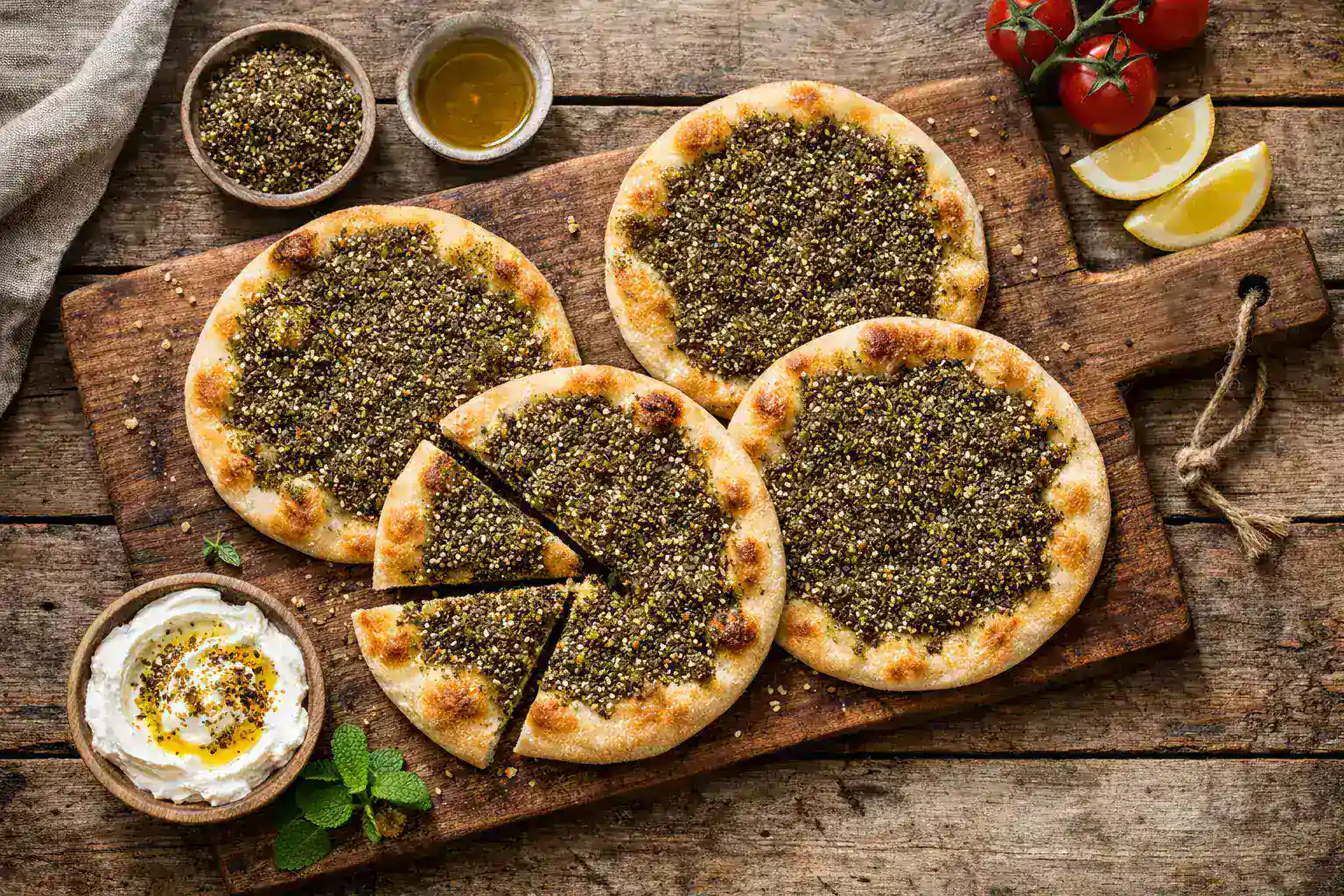
A beloved Lebanese breakfast flatbread topped with aromatic za'atar and olive oil, offering Mediterranean flavors and antioxidant benefits.
Quick Nutrition Facts
Per 1 Piece Za'atar Manakish (~120g)
| Nutrient | Amount |
|---|---|
| Calories | 320 kcal |
| Protein | 10g |
| Carbohydrates | 42g |
| Fiber | 3g |
| Sugars | 2g |
| Fat | 12g |
| Saturated Fat | 2g |
| Sodium | 480mg |
| Iron | 3mg |
| Calcium | 45mg |
Macronutrient Breakdown
 ChatGPT
  Claude
  AI Mode
  Perplexity
NUTRITIONIST INSIGHT
Za'atar's thyme and oregano contain powerful antioxidants including thymol and carvacrol that support gut health and have antimicrobial properties. The olive oil in manakish provides heart-healthy monounsaturated fats that improve nutrient absorption.
Myth Busters
MYTH #1: Manakish Is Junk Food
TRUTH: Unlike processed fast food, traditional manakish uses simple ingredients - flour, za'atar, olive oil, and sesame seeds. The za'atar provides antioxidant and antimicrobial benefits from its polyphenol content. It's a wholesome breakfast when eaten in moderation.
MYTH #2: Za'atar Has No Nutritional Value
TRUTH: Za'atar is nutrient-dense. Studies show it contains significant antioxidant compounds that may help reduce inflammation and support digestive health. The sesame seeds add protein, calcium, and healthy fats.
MYTH #3: All Manakish Varieties Are the Same Calories
TRUTH: Calorie content varies significantly by topping. Za'atar manakish has ~320 kcal, while cheese (akkawi/halloumi) versions have 370-420 kcal, and meat (lahmajoun-style) can reach 450+ kcal per piece.
MYTH #4: Manakish Should Only Be Eaten for Breakfast
TRUTH: While traditionally a breakfast food, manakish can be a balanced meal any time when paired with vegetables, labneh, or fresh salad. It provides sustained energy from complex carbohydrates and healthy fats.
MYTH #5: The Olive Oil Makes Manakish Unhealthy
TRUTH: Olive oil is central to Mediterranean diet benefits, providing monounsaturated fatty acids that support cardiovascular health. The 2-3 tablespoons used per manakish contribute beneficial fats, not harmful ones.
MYTH #6: Diabetics Cannot Eat Manakish
TRUTH: Diabetics can enjoy manakish with modifications. Eat half a piece, pair with protein (eggs, labneh), and choose za'atar over cheese. White bread's glycemic impact can be reduced by adding fiber-rich sides like vegetables.
NutriScore by Health Goals
| Health Goal | NutriScore | Why This Score? |
|---|---|---|
| Weight Loss |  | 320 calories is moderate for a meal. Refined flour means less satiety. Eat half, add vegetables. |
| Muscle Gain |  | Good carb source (42g) for energy. Pair with eggs or labneh to boost protein content. |
| Diabetes Management |  | High glycemic index from white flour raises blood sugar. Limit to half piece with protein. |
| PCOS Management | | Refined carbs may affect insulin sensitivity. Choose smaller portions, pair with fiber and protein. |
| Pregnancy Nutrition | | Provides iron (3mg) and energy. Carbohydrates are essential during pregnancy - pair with folate-rich vegetables. |
| Viral/Flu Recovery | | Easy to digest, provides quick energy. Za'atar's antimicrobial properties may support immune function. |
PERSONALIZED NUTRITION
Track your meals with NutriScan for personalized NutriScores based on your specific health goals!
Blood Sugar Response to Manakish
Understanding how manakish affects your blood glucose can help you make informed decisions about when and how to eat it.
Typical Glucose Response Curve
This chart shows typical blood glucose response for general healthy individuals. Individual responses may vary. Not medical advice.
How to Flatten the Spike
Pairing refined carbohydrates with protein or healthy fat slows glucose absorption and reduces the peak blood sugar level:
- 🥛 Labneh (strained yogurt) - Traditional pairing that adds protein and probiotics
- 🥚 Boiled or fried eggs - Complete protein balances the carbs
- 🥒 Fresh vegetables (cucumber, tomatoes, mint) - Fiber slows digestion
- 🫒 Extra olive oil drizzle - Healthy fats reduce glycemic impact
This combination not only reduces the glucose spike but also extends energy release, keeping you fuller for longer.
Cultural Significance
Manakish (also spelled manaeesh, manakeesh, or man'oushe) is one of the most iconic breakfast foods in the Levant region.
In Lebanon & the Levant:
- Essential breakfast item, often called "Lebanese pizza"
- Traditionally baked fresh at neighborhood bakeries (furn)
- Variations include za'atar, cheese (akkawi, halloumi), kishk, and meat toppings
- Often eaten with fresh mint, cucumber, tomatoes, and olives
Historical Roots:
- Origins trace back thousands of years to ancient Levantine civilizations
- Za'atar was mentioned in the Bible and used medicinally by ancient Egyptians
- The flatbread-with-topping concept predates Italian pizza by centuries
Modern Global Reach:
- Popular street food across Middle East, North Africa, and Mediterranean
- Lebanese diaspora has spread manakish to major cities worldwide
- Increasingly available in specialty bakeries and Middle Eastern restaurants globally
Compare & Substitute
Manakish vs Similar Flatbreads (Per 100g)
| Nutrient | 🫓 Manakish Za'atar | 🫓 Pita Bread | 🍕 Cheese Pizza | 🫓 Naan |
|---|---|---|---|---|
| Calories | 267 kcal | 275 kcal | 266 kcal | 262 kcal |
| Carbs | 35g | 55g | 33g | 45g |
| Fiber | 2.5g | 2.2g | 2.3g | 2g |
| Protein | 8g | 9g | 11g | 9g |
| Fat | 10g | 1.2g | 10g | 5g |
| Sodium | 400mg | 536mg | 598mg | 418mg |
| Best For | Breakfast, antioxidants | Sandwiches, low-fat option | Quick meal, protein | Curries, versatile |
Frequently Asked Questions
How many calories are in manakish?
One piece of za'atar manakish (~120g) contains approximately 320 calories. Cheese manakish has 370-400 kcal, while meat-topped versions can reach 450+ kcal.
Calorie comparison by topping:
- Za'atar: 320 kcal
- Cheese (akkawi): 380 kcal
- Cheese (halloumi): 400 kcal
- Meat (lahm bi ajeen style): 450+ kcal
Is manakish good for weight loss?
Manakish can fit into a weight loss plan with portion control. At 320 calories per piece, it's moderate for a meal.
Tips for weight loss:
- Eat half a piece (160 calories)
- Choose za'atar over cheese toppings
- Pair with vegetables for fiber and volume
- Avoid eating multiple pieces
Can diabetics eat manakish?
Diabetics should eat manakish cautiously due to high carbohydrate content (42g per piece) from refined white flour.
Tips for diabetics:
- Limit to half a piece
- Always pair with protein (eggs, labneh, cheese)
- Eat with fiber-rich vegetables
- Monitor blood sugar 2 hours after eating
- Avoid eating on empty stomach
Consult your healthcare provider for personalized advice.
What is za'atar and what are its benefits?
Za'atar is a Middle Eastern spice blend containing dried thyme, oregano, marjoram, sumac, sesame seeds, and salt.
Health benefits:
- Antioxidant-rich: Thymol and carvacrol compounds
- Antimicrobial: May support gut health
- Anti-inflammatory: Polyphenols reduce inflammation
- Digestive support: Traditional use for stomach ailments
- Cognitive function: Historically believed to enhance memory
What is the best time to eat manakish?
Depends on your goal:
- Weight Loss: Morning breakfast, paired with protein and vegetables
- Muscle Gain: Post-workout for carb replenishment with added protein
- Diabetes: Mid-morning with protein, never on empty stomach
- Energy: 1-2 hours before physical activity
IMPORTANT NOTE
Avoid eating manakish late at night as refined carbs before bed may disrupt sleep quality and digestion.
How do I make manakish healthier?
Healthier modifications:
- Use whole wheat flour for more fiber
- Reduce oil in the za'atar spread
- Add vegetables on top (tomatoes, olives)
- Pair with labneh instead of eating plain
- Control portion size (eat half)
- Make at home to control ingredients
Is manakish better than regular bread?
Manakish offers advantages over plain bread due to its za'atar topping providing antioxidants and olive oil providing healthy fats. However, it has more calories than plain bread.
Choose manakish when: You want a complete breakfast with healthy fats and antioxidants. Choose plain bread when: You need fewer calories or want to add your own toppings.


Similar Nutritious Foods
4505 Chicharrones Classic Chili Salt
7 Eleven Japan Crispy Corn Cheese
Explore More Nutrition Tools & Resources
AI Calorie Counter App - Snap a Photo, Get Macros
AI Nutritionist App That Reads Your Logged Meals
Best Protein Supplements for Women
Bulking Meal Plan App That Sets Your Surplus
ChatGPT Calorie Counter Alternative That Keeps the Total
ChatGPT Diet Plan Alternative That Tracks What You Eat
ChatGPT Weight Loss Coach Alternative With a Food Log
Fast Food Calorie Counter App That Reads the Tray
Free Calorie Tracker App with AI Photo Scans | NutriScan
Indian Diet Plan App With Veg and Non Veg Meals
Indian Food Calorie Calculator - Get Instant Nutrition Facts for Desi Meals — 2026
Intermittent Fasting for Women, Timer and Meal Log App
Intermittent Fasting Tracker App - Free Fasting Timer
Macro Tracker App That Fills the Numbers From a Photo
Mediterranean Diet Meal Plan App That Counts the Oil
Micronutrient Tracker App for Vitamins and Minerals
MyFitnessPal Alternative That Stays Free | NutriScan
NutriScore App: A Free Grade on Every Meal | NutriScan
Nutrition Label Scanner App for the Amount You Ate
Second Trimester Protein Guide
Vegetarian Meal Plan App With a Protein Target
Voice Calorie Counter - Speak to Track Meals Hands-Free
Water and Calorie Tracker App - Free Water Log