Mango Ice Cream Cup: Calories, Nutrition and Health Facts
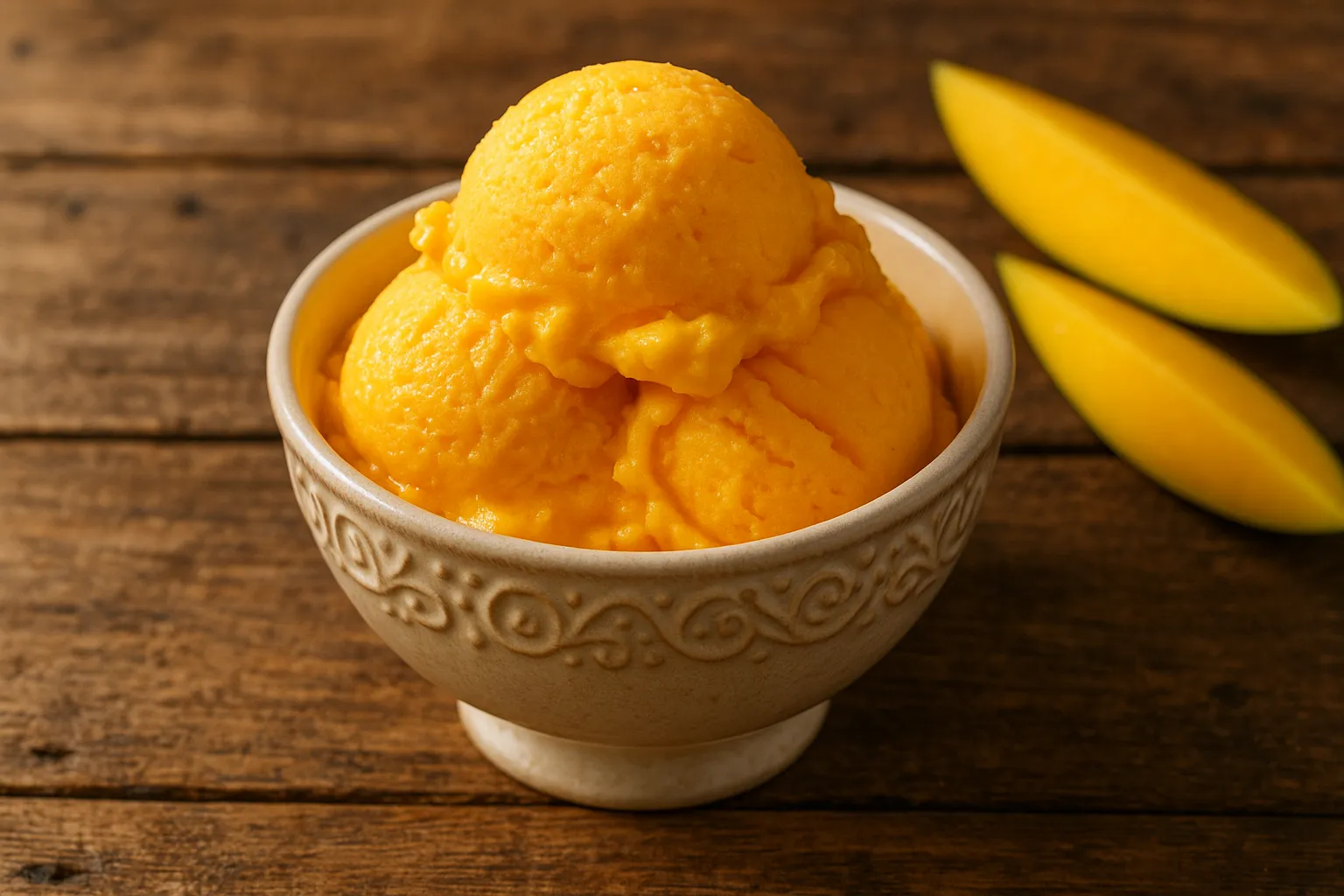
Creamy frozen dessert with tropical mango flavor—enjoy mindfully as an occasional treat with portion control for balanced nutrition.
Quick Nutrition Facts
Per 1/2 Cup (88g Serving)
| Nutrient | Amount |
|---|---|
| Calories | 207 kcal |
| Protein | 1.8g |
| Carbohydrates | 24.6g |
| Fiber | 0g |
| Sugars | 15g |
| Fat | 7.9g |
| Saturated Fat | 4.4g |
| Cholesterol | 26mg |
| Calcium | 70mg |
| Sodium | 44mg |
Macronutrient Breakdown
 ChatGPT
  Claude
  AI Mode
  Perplexity
NUTRITIONIST INSIGHT
Mango ice cream provides calcium for bone health but contains significant added sugar (15g per 1/2 cup). Practice portion control—measure 1/2 cup servings and eat slowly to enhance satisfaction. Choose varieties with real mango fruit for added nutrients.
Myth Busters
MYTH #1: Ice Cream Has No Nutritional Value
TRUTH: While ice cream shouldn't be a daily staple, it provides calcium (70mg per 1/2 cup, 7% DV), protein, vitamin A from mango, and phosphorus. The dairy content offers bone-supporting nutrients. Best consumed as an occasional treat within calorie limits, not as a health food.
MYTH #2: Eating Ice Cream Always Causes Weight Gain
TRUTH: Weight gain occurs from excess total calories, not specific foods. A measured 1/2 cup portion (207 cal) can fit into a balanced diet 1-2 times weekly. The problem arises from oversized portions and frequent consumption. Use portion control and track intake to enjoy without guilt.
MYTH #3: Fruit-Flavored Ice Cream Is as Healthy as Fruit
TRUTH: Mango ice cream contains minimal real fruit compared to fresh mango. A 1/2 cup has 15g added sugar vs fresh mango's natural sugars with fiber. You get cream, sugar, and artificial flavors—not the fiber, vitamin C, and antioxidants of whole fruit. Choose ice cream with visible fruit pieces for slightly better nutrition.
MYTH #4: Low-Fat Ice Cream Is Always Better
TRUTH: Low-fat versions often compensate with extra sugar to maintain taste, potentially providing similar or more calories. Full-fat ice cream may be more satisfying in smaller portions. Fat provides satiety, helping you feel full. Focus on portion size over fat content—1/2 cup of regular vs 3/4 cup of low-fat defeats the purpose.
MYTH #5: Ice Cream Is Forbidden for Diabetics
TRUTH: Diabetics can have small portions of ice cream occasionally when accounting for carbs (24.6g per 1/2 cup). Better strategies: choose no-sugar-added versions, limit to 1/4 cup, pair with protein/nuts to slow glucose absorption, reserve for special occasions, monitor blood sugar response.
MYTH #6: Homemade Ice Cream Is Always Healthier
TRUTH: Homemade can be healthier if you control sugar and use real fruit, but traditional recipes with heavy cream and sugar may contain similar or more calories than store-bought. Benefit: you control ingredients and portion sizes. Make versions with Greek yogurt, less sugar, and real mango for truly healthier options.
NutriScore by Health Goals
| Health Goal | NutriScore | Why This Score? |
|---|---|---|
| Weight Loss |  | 207 calories and 7.9g fat per 1/2 cup makes it calorie-dense. Limit to 1/4 cup portions, 1-2 times monthly. Better options: frozen mango, sorbet, or homemade frozen yogurt. |
| Muscle Gain |  | Provides quick carbs (24.6g) for post-workout glycogen replenishment, but low protein (1.8g). Pair with protein shake or Greek yogurt for better muscle recovery. Occasional treat only. |
| Diabetes Management | | High sugar (15g) and carbs (24.6g) cause blood glucose spikes. If consumed, limit to 1/4 cup, choose no-sugar-added versions, pair with nuts. Better alternatives: sugar-free options or fresh mango. |
| PCOS Management | | Sugar content negatively impacts insulin sensitivity. Avoid or limit to very small portions (1/4 cup) on special occasions only. Choose low-glycemic desserts instead. |
| Pregnancy Nutrition | | Provides calcium for baby's bone development, but high sugar requires moderation. Limit to 1/2 cup portions 1-2 times weekly. Ensure pasteurized dairy. Better calcium sources: milk, yogurt, cheese. |
| Viral/Flu Recovery | | Cold, soothing for sore throat; easy to eat when appetite is low. Provides calories and hydration. However, dairy may increase mucus in some people. Choose sorbet if mucus is a concern. |
PERSONALIZED NUTRITION
Track your meals with NutriScan for personalized NutriScores based on your specific health goals!
Blood Sugar Response to Mango Ice Cream
Understanding how mango ice cream affects blood glucose helps you make informed decisions about portion sizes and timing.
Typical Glucose Response Curve
This chart shows typical blood glucose response for mango ice cream (1/2 cup serving). Individual responses vary. Not medical advice.
How to Minimize Blood Sugar Impact
Pairing ice cream with protein or fiber helps slow glucose absorption and reduces blood sugar spikes:
- 🥜 Handful of almonds or walnuts - Healthy fats and protein slow absorption
- 🫘 Small handful of pistachios - Adds fiber and protein
- 🍓 Fresh berries - Extra fiber without many calories
- ☕ After a balanced meal - When stomach has protein/fat from main meal
Best timing: After dinner with protein, not as a standalone snack. Measure portions carefully—eyeballing typically leads to double servings.
Cultural Significance
Mango ice cream celebrates India's "King of Fruits" in frozen dessert form, blending traditional flavors with modern indulgence.
In India:
- Mango season (April-July) brings fresh fruit-based kulfi and ice cream
- Street vendors sell mango kulfi on sticks during summer heat
- Popular flavors: Alphonso, Kesar, and Totapuri mango varieties
- Often served at celebrations and festivals
- Modern fusion: mango ice cream with saffron, cardamom, or rose
Global Variations:
- Philippines: Mango ice candy—frozen mango juice in plastic bags
- Thailand: Mango sticky rice ice cream combining two classic desserts
- Mexico: Mango paletas (popsicles) with chili powder
- US: Premium brands feature mango with swirls of raspberry or passion fruit
Commercial Production:
- Most brands use mango puree or concentrate rather than fresh fruit
- Natural yellow color comes from mango; some brands add turmeric or annatto
- Artisan versions use Alphonso mango puree for authentic taste
- Growing popularity of vegan mango ice cream with coconut or almond base
Compare & Substitute
Mango Ice Cream vs Similar Frozen Desserts (Per 1/2 Cup, ~88g)
| Nutrient | 🥭 Mango Ice Cream | 🍦 Vanilla Ice Cream | 🍧 Mango Sorbet | 🥥 Mango Kulfi |
|---|---|---|---|---|
| Calories | 207 kcal | 220 kcal | 110 kcal | 185 kcal |
| Carbs | 24.6g | 23g | 28g | 22g |
| Fiber | 0g | 0g | 1g | 0g |
| Protein | 1.8g | 2.5g | 0.5g | 3.5g |
| Fat | 7.9g | 11g | 0g | 8.5g |
| Sugar | 15g | 17g | 26g | 16g |
| Calcium | 70mg | 85mg | 5mg | 95mg |
| Best For | Tropical flavor, moderate calories | Classic taste, calcium | Low-fat, weight loss | Traditional Indian dessert, protein |
Frequently Asked Questions
Is mango ice cream healthy?
Mango ice cream can be part of a balanced diet when consumed mindfully. A 1/2 cup provides calcium (70mg, 7% DV) for bones, vitamin A from mango, and small amounts of protein. However, with 207 calories, 7.9g fat, and 15g sugar per serving, it's best as an occasional treat.
Healthier approach: Limit to 1/2 cup portions 1-2 times weekly; choose brands with real mango fruit pieces; pair with nuts for protein; avoid eating directly from container. Not a daily food—reserve for special occasions or weekend treats.
How many calories in mango ice cream?
1/2 cup (88g): 207 calories—the standard serving size. 1 cup (176g): 414 calories. 1 pint (473g): 1,111 calories. 100g: 235 calories for comparison.
Premium brands with extra cream can reach 250-300 calories per 1/2 cup. Light versions range 130-150 calories but often have more sugar. Always check nutrition labels—brands vary significantly. Use measuring cups, not scoops, for accuracy.
Can diabetics eat mango ice cream?
Diabetics should approach mango ice cream cautiously due to 24.6g carbs and 15g sugar per 1/2 cup causing blood glucose spikes.
If consuming: Limit to 1/4 cup (12g carbs); choose no-sugar-added versions (6-8g carbs); pair with 1oz nuts to slow absorption; test blood sugar 2 hours after eating; reserve for special occasions only, not regular consumption.
Better alternatives: Frozen mango chunks blended into "nice cream"; Greek yogurt with fresh mango; sugar-free frozen desserts; small portions of kulfi with less sugar. Always consult healthcare provider about dessert choices.
Is mango ice cream good for weight loss?
No, mango ice cream is not ideal for weight loss. At 207 calories per 1/2 cup with 7.9g fat and 15g sugar, it's calorie-dense with minimal satiety. Most people eat more than 1/2 cup when not measured.
If craving ice cream: Measure exact 1/4 cup portion (100 cal); eat slowly with small spoon; choose light versions (130-150 cal/1/2 cup); factor into daily calorie budget; limit to 1-2 times monthly.
Better options: Frozen mango blended (50 cal/1/2 cup); mango sorbet (110 cal); Greek yogurt with mango (120 cal with 12g protein); homemade frozen yogurt with real mango. Prioritize protein and fiber-rich foods for satiety.
What nutrients are in mango ice cream?
Beneficial nutrients: Calcium 70mg (7% DV) for bones and teeth; vitamin A from mango for vision and immunity; phosphorus for energy metabolism; small amounts B vitamins from dairy; quick energy from carbohydrates.
Less desirable components: Added sugar 15g (limits micronutrients); saturated fat 4.4g (22% DV, may raise LDL cholesterol); low fiber 0g (no digestive benefit); minimal protein 1.8g.
Bottom line: Provides some dairy nutrients but dominated by sugar and fat. Not a nutrient-dense food—consume for enjoyment, not nutrition. Fresh mango provides 100x more vitamin C, 12x more fiber, and no added sugar.
How much mango ice cream can I eat?
General health: 1/2 cup (207 cal) maximum serving, 1-2 times weekly. Always measure portions. Weight loss: 1/4 cup maximum, 1-2 times monthly. Account for calories in daily total.
Muscle gain: 1/2-3/4 cup post-workout occasionally for carb replenishment, but pair with protein shake. Diabetes: 1/4 cup or avoid. Choose no-sugar-added versions. Pregnancy: 1/2 cup 1-2 times weekly from pasteurized sources.
Serving tips: Use small bowl (large bowl triggers larger portions); eat with teaspoon (slower, more satisfying); sit at table without distractions; don't eat from container (leads to mindless overconsumption). Stop when serving is finished—avoid refills.


Similar Nutritious Foods
4505 Chicharrones Classic Chili Salt
7 Eleven Japan Crispy Corn Cheese
Explore More Nutrition Tools & Resources
AI Calorie Counter App - Snap a Photo, Get Macros
AI Nutritionist App That Reads Your Logged Meals
Best Protein Supplements for Women
Bulking Meal Plan App That Sets Your Surplus
ChatGPT Calorie Counter Alternative That Keeps the Total
ChatGPT Diet Plan Alternative That Tracks What You Eat
ChatGPT Weight Loss Coach Alternative With a Food Log
Fast Food Calorie Counter App That Reads the Tray
Free Calorie Tracker App with AI Photo Scans | NutriScan
Indian Diet Plan App With Veg and Non Veg Meals
Indian Food Calorie Calculator - Get Instant Nutrition Facts for Desi Meals — 2026
Intermittent Fasting for Women, Timer and Meal Log App
Intermittent Fasting Tracker App - Free Fasting Timer
Macro Tracker App That Fills the Numbers From a Photo
Mediterranean Diet Meal Plan App That Counts the Oil
Micronutrient Tracker App for Vitamins and Minerals
MyFitnessPal Alternative That Stays Free | NutriScan
NutriScore App: A Free Grade on Every Meal | NutriScan
Nutrition Label Scanner App for the Amount You Ate
Second Trimester Protein Guide
Vegetarian Meal Plan App With a Protein Target
Voice Calorie Counter - Speak to Track Meals Hands-Free
Water and Calorie Tracker App - Free Water Log