Maracuja Passion Fruit Pulp: Calories, Nutrition and Health Benefits
A tropical fiber powerhouse with the highest fiber content of any common fruit, low glycemic index, and rich antioxidants for every health goal.
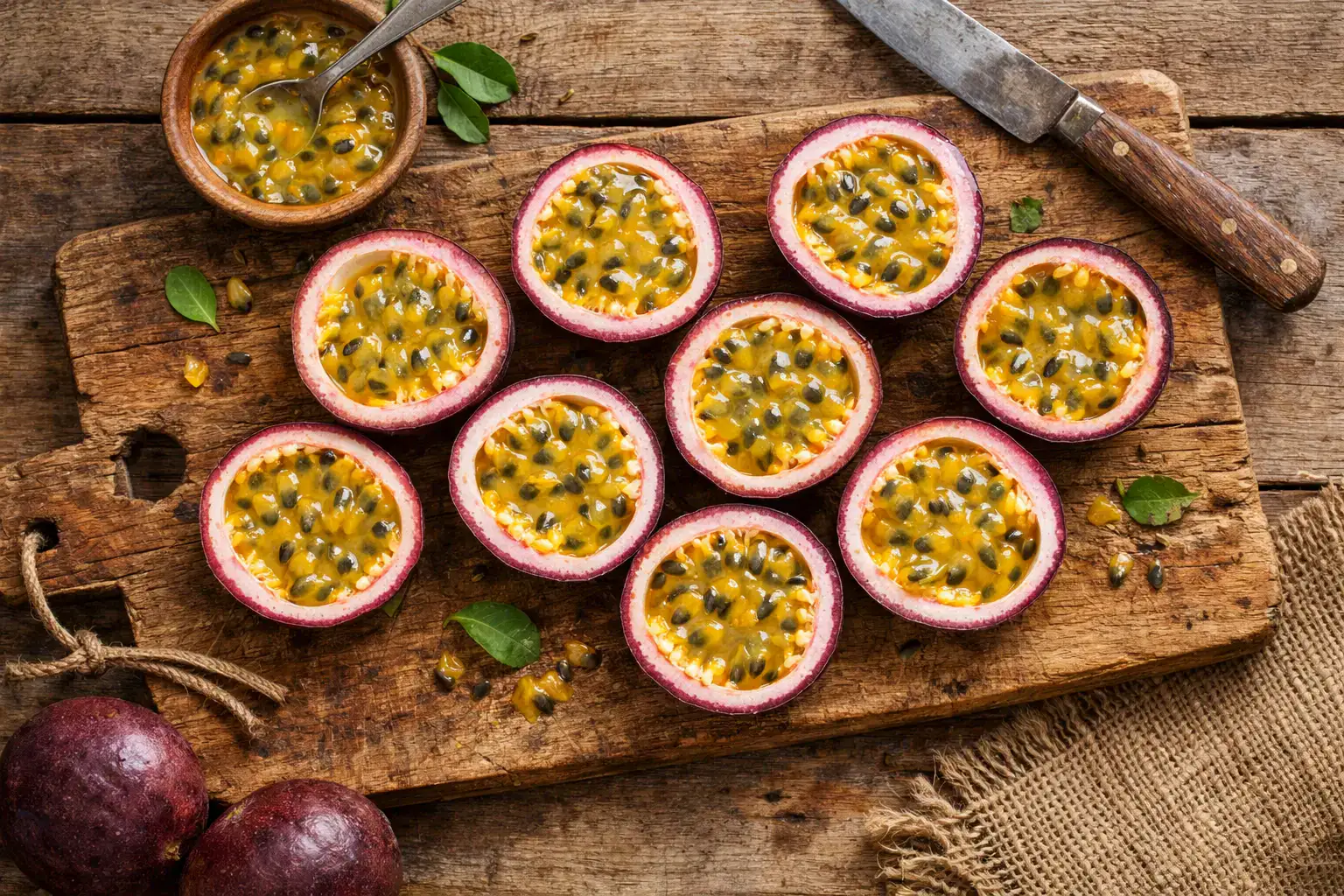
Quick Nutrition Facts
Per 100g Passion Fruit Pulp
| Nutrient | Amount |
|---|---|
| Calories | 97 kcal |
| Protein | 2.2g |
| Carbohydrates | 23.4g |
| Fiber | 10.4g |
| Sugars | 11.2g |
| Fat | 0.7g |
| Potassium | 348mg |
| Vitamin C | 30mg |
| Vitamin A | 64mcg |
| Iron | 1.6mg |
Macronutrient Breakdown
 ChatGPT
  Claude
  AI Mode
  Perplexity
NUTRITIONIST INSIGHT
Passion fruit delivers 42% of your daily fiber in just 100g, making it one of nature's top fiber sources. The edible seeds contain piceatannol, a polyphenol that helps regulate blood sugar and reduce inflammation.
Myth Busters
MYTH #1: Passion Fruit Is Too High in Sugar for Diabetics
TRUTH: With a glycemic index of just ~30 and 10.4g of fiber per 100g, passion fruit is one of the most diabetes-friendly fruits available. Clinical studies show passion fruit peel flour reduced fasting blood glucose by 25.7% in type 2 diabetes patients.
MYTH #2: Passion Fruit Seeds Should Be Spit Out
TRUTH: The seeds are fully edible and highly nutritious. They contain piceatannol, a polyphenol that inhibits alpha-glucosidase, helping control post-meal blood sugar spikes. The seeds also add extra fiber and healthy fats.
MYTH #3: The Name "Passion" Refers to Romantic Passion
TRUTH: Spanish missionaries named it for the Passion of Christ. The flower's structure symbolizes crucifixion elements: the corona represents the crown of thorns, five stamens for five wounds, and three stigmas for three nails.
MYTH #4: Wrinkled Passion Fruit Is Spoiled
TRUTH: Wrinkled skin indicates peak ripeness and the sweetest, most concentrated flavor. Smooth passion fruit is actually less ripe and more tart. Only discard if there is mold or a fermented, off-putting smell.
MYTH #5: Passion Fruit Has No Real Nutritional Value
TRUTH: Passion fruit contains 286.6mg polyphenols, 30mg vitamin C, and 10.4g fiber per 100g. It outperforms most tropical fruits in fiber content and antioxidant density, supporting heart health, digestion, and immunity.
NutriScore by Health Goals
| Health Goal | NutriScore | Why This Score? |
|---|---|---|
| Weight Loss |  | 97 calories per 100g with 10.4g fiber (42% DV) promotes exceptional satiety. Low GI (~30) prevents insulin spikes. |
| Muscle Gain |  | Good carb source (23.4g) for energy, 2.2g protein, 348mg potassium for muscle function. Pair with yogurt for complete recovery. |
| Diabetes Management | | Low GI (~30), high fiber slows glucose absorption. Passion fruit peel flour improved insulin sensitivity in clinical trials. |
| PCOS Management | | High fiber supports insulin regulation. Anti-inflammatory polyphenols may help manage PCOS symptoms. Moderate portions recommended. |
| Pregnancy Nutrition | | Rich in folate (14mcg), vitamin C (30mg) boosts iron absorption, fiber prevents constipation. Avoid passionflower supplements. |
| Viral/Flu Recovery | | 30mg vitamin C for immunity, easy-to-digest pulp, hydrating, anti-inflammatory antioxidants support recovery. |
PERSONALIZED NUTRITION
Track your meals with NutriScan for personalized NutriScores based on your specific health goals!
Blood Sugar Response to Passion Fruit
Understanding how passion fruit affects your blood glucose helps you make informed decisions. With a GI of ~30, it causes a very mild glucose response.
Typical Glucose Response Curve
*This chart shows typical blood glucose response for general healthy individuals. Individual responses may vary. Not medical advice.*
How to Flatten the Spike
Pairing passion fruit with protein or healthy fat slows glucose absorption and keeps the response even flatter:
- 🥛 Greek yogurt or coconut cream - Adds protein and healthy fats, classic Brazilian combination
- 🌰 A handful of nuts (almonds, cashews) - Healthy fats and extra fiber
- 🥄 Chia seeds or flaxseeds - Omega-3s and additional fiber
- 🧀 Cottage cheese - Complete protein source, balances the tartness
This combination extends energy release, keeping you fuller for longer.
Cultural Significance
Passion fruit, called "maracuja" in Brazil, traces its origins to the Amazon basin of South America.
In Brazil:
- World's largest producer with over 690,000 tons annually
- "Maracuja" derives from the Tupi-Guarani word meaning "food in a bowl"
- Central to Brazilian cuisine: mousse de maracuja, caipirinha de maracuja, suco de maracuja
- Indigenous Amazonian tribes revered it as sacred with medicinal properties
Religious History:
- Spanish missionaries in the 16th century named the flower "flor de las cinco llagas" (flower of the five wounds)
- Flower structure symbolizes Christ's Passion: corona as crown of thorns, five stamens as five wounds, three stigmas as three nails
Global Reach:
- Called "lilikoi" in Hawaii, widely grown across tropical regions
- India's Northeast and Kerala are expanding commercial cultivation
- Australia, Colombia, Ecuador, and Peru are major producers
- Used in traditional medicine for sleep, anxiety, and digestive health
Compare & Substitute
Passion Fruit vs Similar Tropical Fruits (Per 100g)
| Nutrient | 🫐 Passion Fruit | 🥝 Kiwi | 🥭 Mango | 🍈 Papaya |
|---|---|---|---|---|
| Calories | 97 kcal | 61 kcal | 60 kcal | 43 kcal |
| Carbs | 23.4g | 15g | 15g | 11g |
| Fiber | 10.4g | 3.0g | 1.6g | 1.7g |
| Protein | 2.2g | 1.1g | 0.8g | 0.5g |
| Fat | 0.7g | 0.5g | 0.4g | 0.3g |
| Potassium | 348mg | 312mg | 168mg | 182mg |
| Vitamin C | 30mg | 93mg | 36mg | 61mg |
| Sugar | 11.2g | 9.0g | 14.0g | 7.8g |
| Best For | Fiber, blood sugar, antioxidants | Vitamin C, digestion, low cal | Quick energy, skin health | Digestive enzymes, low calorie |
Frequently Asked Questions
Is passion fruit good for weight loss?
97 calories per 100g with 10.4g of fiber makes passion fruit one of the best fruits for weight management. The high fiber content promotes satiety, keeping you full longer and reducing overall calorie intake.
Best practices: Add pulp to smoothies or yogurt for a filling snack, eat 2-3 fruits as a mid-morning snack, pair with protein for sustained energy.
Can diabetics eat passion fruit?
Passion fruit is excellent for diabetics. Its low glycemic index (~30) and high fiber (10.4g per 100g) help control blood sugar responses.
Tips for diabetics:
- Eat the whole fruit including seeds for maximum fiber benefit
- Pair with protein or healthy fat to further slow glucose absorption
- Avoid passion fruit juices with added sugar
- Monitor blood sugar 2 hours after eating
Clinical studies show passion fruit peel flour reduced fasting blood glucose by 25.7% in type 2 diabetes patients.
How much fiber is in passion fruit?
Passion fruit contains 10.4g of fiber per 100g, providing 42% of your daily value. This makes it the highest-fiber common fruit, surpassing guava (5.4g), raspberries (6.5g), and avocado (6.7g).
The fiber comes from both the pulp and the edible seeds, which is why eating the whole fruit is recommended.
What are the main health benefits of passion fruit?
Key Benefits:
- Digestive Health: 10.4g fiber per 100g supports regularity and gut microbiome
- Blood Sugar Control: Low GI (~30) and fiber slow glucose absorption
- Immune Support: 30mg vitamin C (33% DV) per 100g
- Heart Health: Potassium (348mg), fiber, and polyphenols reduce cardiovascular risk
- Anti-Inflammatory: Rich polyphenols (286.6mg/100g) combat chronic inflammation
- Sleep and Anxiety: Passiflora compounds have documented calming effects
Is passion fruit safe during pregnancy?
Fresh passion fruit is safe and beneficial during pregnancy. It provides folate for fetal development, vitamin C for iron absorption, fiber for constipation relief, and iron (1.6mg per 100g).
Important: Avoid passionflower herbal supplements and teas during pregnancy, as they may stimulate uterine contractions. Only consume the fresh fruit or pure frozen pulp.
Are passion fruit seeds edible?
Yes, passion fruit seeds are completely safe and nutritious. They contain piceatannol (a polyphenol that aids blood sugar regulation), healthy fats, and additional fiber. The seeds provide a satisfying crunch and are traditionally eaten with the pulp in all passion fruit cultures.
Tip: Blend seeds with pulp in smoothies if the texture bothers you. You still get the nutritional benefits.




Similar Nutritious Fruits
4505 Chicharrones Classic Chili Salt
7 Eleven Japan Crispy Corn Cheese
Explore More Nutrition Tools & Resources
AI Calorie Counter App - Snap a Photo, Get Macros
AI Nutritionist App That Reads Your Logged Meals
Best Protein Supplements for Women
Bulking Meal Plan App That Sets Your Surplus
ChatGPT Calorie Counter Alternative That Keeps the Total
ChatGPT Diet Plan Alternative That Tracks What You Eat
ChatGPT Weight Loss Coach Alternative With a Food Log
Fast Food Calorie Counter App That Reads the Tray
Free Calorie Tracker App with AI Photo Scans | NutriScan
Indian Diet Plan App With Veg and Non Veg Meals
Indian Food Calorie Calculator - Get Instant Nutrition Facts for Desi Meals — 2026
Intermittent Fasting for Women, Timer and Meal Log App
Intermittent Fasting Tracker App - Free Fasting Timer
Macro Tracker App That Fills the Numbers From a Photo
Mediterranean Diet Meal Plan App That Counts the Oil
Micronutrient Tracker App for Vitamins and Minerals
MyFitnessPal Alternative That Stays Free | NutriScan
NutriScore App: A Free Grade on Every Meal | NutriScan
Nutrition Label Scanner App for the Amount You Ate
Second Trimester Protein Guide
Vegetarian Meal Plan App With a Protein Target
Voice Calorie Counter - Speak to Track Meals Hands-Free
Water and Calorie Tracker App - Free Water Log