Matcha Pocky (Green Tea): Calories, Nutrition and Health Facts
Japan's iconic matcha-coated biscuit sticks — 190 calories per pack with earthy green tea flavor, a satisfying crunch, and trace catechins from real matcha powder.
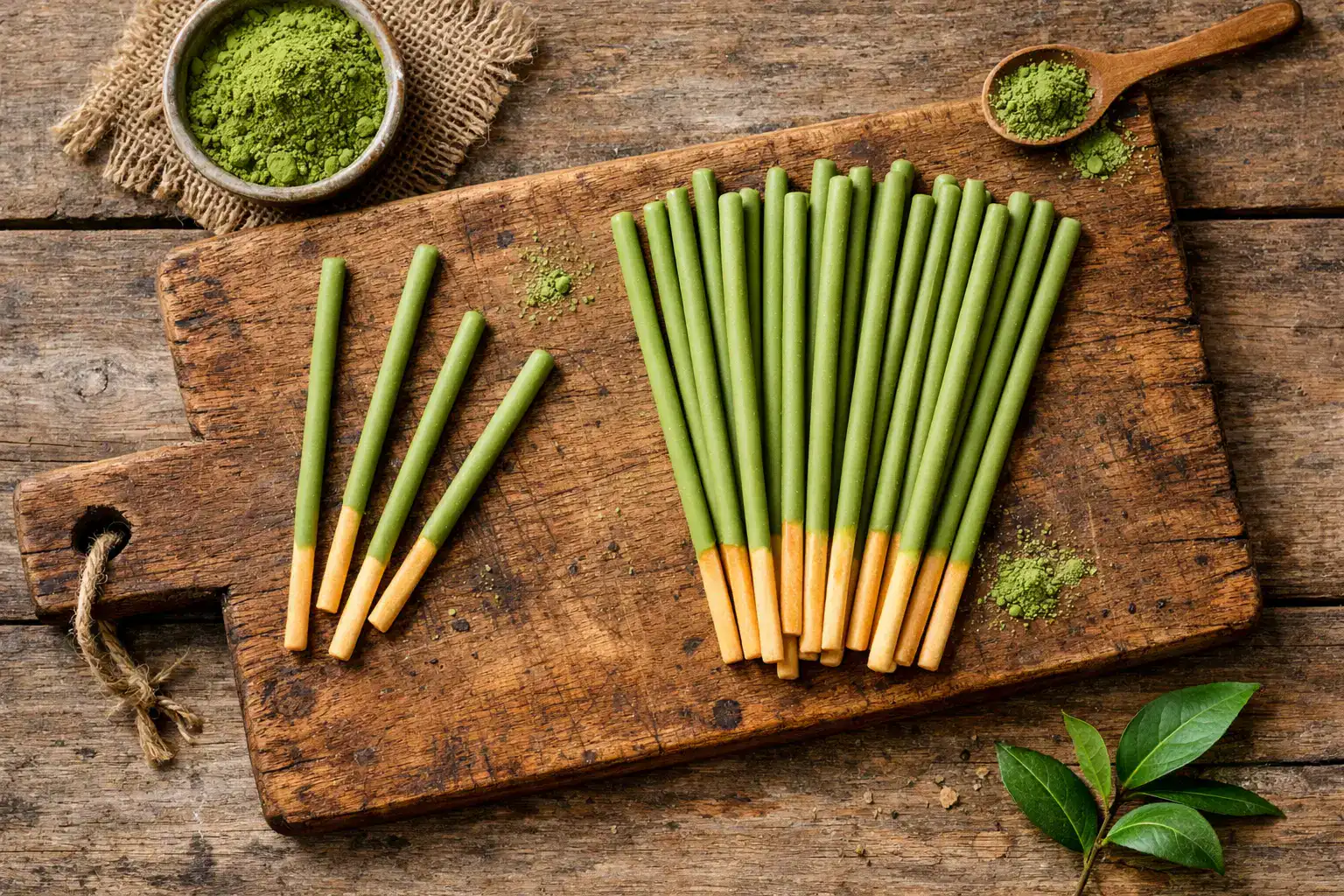
Quick Nutrition Facts
Per 1 Pack Matcha Pocky (35g / ~12 sticks)
| Nutrient | Amount |
|---|---|
| Calories | 190 kcal |
| Protein | 3g |
| Carbohydrates | 27g |
| Fiber | 0.5g |
| Sugars | 13g |
| Fat | 8g |
| Saturated Fat | 6g |
| Sodium | 55mg |
| Calcium | 25mg |
| Iron | 1.0mg |
Macronutrient Breakdown
 ChatGPT
  Claude
  AI Mode
  Perplexity
NUTRITIONIST INSIGHT
Matcha Pocky contains trace green tea powder, but the amount is too small (less than 1%) to deliver meaningful catechin benefits. Treat it as a refined-carb snack, not a health food. Pair 5-7 sticks with almonds or Greek yogurt to slow sugar absorption and add protein.
Myth Busters
MYTH #1: Matcha Pocky Is Healthier Than Regular Pocky
TRUTH: Matcha Pocky has nearly identical macros to chocolate Pocky (190 vs 200 cal per pack). The green tea powder is listed as less than 1% of ingredients. Ultra-processed snacks with refined flour and added sugar provide minimal nutritional benefit regardless of flavor.
MYTH #2: The Matcha in Pocky Provides Antioxidant Benefits
TRUTH: Real matcha delivers EGCG catechins that support metabolism and brain health. However, meaningful EGCG benefits require 400-500mg daily — equivalent to 3-4 cups of pure matcha. A pack of Matcha Pocky contains a negligible fraction of this amount.
MYTH #3: Matcha Pocky Is a Good Low-Calorie Snack
TRUTH: At 520 calories per 100g, Matcha Pocky is calorie-dense — comparable to cookies and chocolate bars. A 35g pack delivers 190 calories mostly from refined carbs and hydrogenated palm oil.
MYTH #4: Matcha Pocky Won't Affect Blood Sugar
TRUTH: A full pack delivers 27g carbohydrates (13g sugar) from refined flour and matcha cream — enough to cause a significant postprandial glucose spike, especially in insulin-resistant individuals.
MYTH #5: Matcha Pocky Is a Good Source of Green Tea Nutrients
TRUTH: The matcha coating uses primarily sugar, hydrogenated palm oil, and milk powder with green tea powder as a minor ingredient. For actual matcha benefits, drink brewed matcha tea which contains 137x more catechins than brewed green tea.
NutriScore by Health Goals
| Health Goal | NutriScore | Why This Score? |
|---|---|---|
| Weight Loss |  | 520 cal/100g with minimal fiber. Easy to overconsume. Limit to 5-7 sticks max as occasional treat. |
| Muscle Gain | | Only 3g protein per pack. Poor protein-to-calorie ratio. Post-workout carbs are better sourced from bananas or oats. |
| Diabetes Management |  | High glycemic load from refined flour + 13g sugar per pack. Refined carb snacks trigger significant postprandial insulin response. Limit to 3-5 sticks with protein. |
| PCOS Management | | Refined carbs and added sugar worsen insulin resistance. Avoid as regular snack; choose nuts or seeds instead. |
| Pregnancy Nutrition | | Safe in moderation but provides empty calories. ACOG recommends whole grains and nutrient-dense snacks during pregnancy. Occasional treat only. |
| Viral/Flu Recovery |  | Quick energy when appetite is low. The 27g carbs provide fast fuel, but lacks vitamins and electrolytes for real recovery. |
PERSONALIZED NUTRITION
Track your meals with NutriScan for personalized NutriScores based on your specific health goals!
Blood Sugar Response to Matcha Pocky
Understanding how Matcha Pocky affects your blood glucose helps you decide when and how much to eat.
Typical Glucose Response Curve
This chart shows typical blood glucose response for general healthy individuals. Individual responses may vary. Not medical advice.
How to Flatten the Spike
Pairing refined-carb snacks with protein or healthy fat slows glucose absorption and reduces the peak blood sugar level:
- 🥜 Almonds or mixed nuts - Adds healthy fats and protein to slow digestion
- 🧀 Cheese cubes - Protein and fat moderate the glycemic response
- 🥛 Greek yogurt - Provides protein and probiotics alongside the treat
- 🍵 Brewed matcha tea - Real matcha catechins may help inhibit intestinal glucose transport
This combination reduces the glucose spike and extends energy release, keeping you satisfied longer.
Cultural Significance
Matcha Pocky was introduced by Ezaki Glico as a seasonal flavor inspired by Japan's deep-rooted matcha culture. Matcha — finely ground shade-grown green tea — has been central to Japanese tea ceremony (chado) for over 800 years.
In Japan:
- Matcha Pocky is a staple Kyoto souvenir (omiyage), reflecting the city's tea heritage
- The flavor captures the umami and slight bitterness prized in Japanese tea culture
- Seasonal and regional variants include Matcha Azuki (red bean) and Deep Matcha (higher tea content)
- Glico's Osaka headquarters features Matcha Pocky in their famous Glico Museum
Global Impact:
- Part of the global matcha boom that grew the green tea market to $4.5 billion worldwide
- Available in 30+ countries alongside chocolate Pocky as a top-selling Asian snack
- Featured in food tourism gift guides for Japan, Korea, and Southeast Asia
- Inspired matcha-flavored versions from competing brands (Pepero, Toppo)
Compare & Substitute
Matcha Pocky vs Similar Snacks (Per 100g)
| Nutrient | 🍵 Matcha Pocky | 🍫 Pocky Chocolate | 🍪 Oreo Cookies | 🍵 Matcha KitKat |
|---|---|---|---|---|
| Calories | 520 kcal | 500 kcal | 480 kcal | 530 kcal |
| Carbs | 69g | 67g | 69g | 61g |
| Fiber | 0.5g | 1.2g | 1.8g | 1g |
| Protein | 8g | 7.5g | 4.5g | 6g |
| Fat | 23g | 23g | 22g | 29g |
| Sugar | 37g | 30g | 41g | 46g |
| Sodium | 160mg | 150mg | 430mg | 70mg |
| Best For | Matcha flavor treat, gifting | Portion-controlled treat | Cookie craving | Rich matcha + chocolate |
Frequently Asked Questions
How many calories are in one pack of Matcha Pocky?
A standard 35g pack of Matcha Pocky contains approximately 190 calories. Per 100g, Matcha Pocky has about 520 calories — comparable to most chocolate-coated cookies. The calories come primarily from refined wheat flour (69g carbs/100g) and hydrogenated palm oil (23g fat/100g).
Is Matcha Pocky healthier than regular Pocky?
Matcha Pocky has slightly fewer calories per pack (190 vs 200) than chocolate Pocky, but the nutritional profile is nearly identical. Both use refined flour, added sugar, and vegetable oils. The green tea powder content is less than 1%, providing negligible catechin or antioxidant benefits.
Can diabetics eat Matcha Pocky?
Diabetics should consume Matcha Pocky sparingly. The combination of refined flour and 13g sugar per pack creates a high glycemic load that can spike blood glucose rapidly.
Tips for diabetics:
- Limit to 3-5 sticks at a time (not the full pack)
- Always pair with protein or healthy fat (nuts, cheese)
- Best timing: after a protein-rich meal, not on empty stomach
- Monitor blood sugar 2 hours after eating
Is Matcha Pocky safe during pregnancy?
Matcha Pocky is safe during pregnancy in moderation. The trace amount of caffeine from green tea powder is negligible (well under the 200mg daily limit). However, it provides mostly empty calories.
Better alternatives: Whole-grain crackers with dark chocolate, fruit with nut butter, or trail mix provide more folate, iron, and fiber that pregnancy demands.
What are the main ingredients in Matcha Pocky?
Matcha Pocky contains enriched wheat flour, sugar, fully hydrogenated palm oil, whole milk powder, lactose, modified food starch, inulin, green tea powder (less than 1%), artificial flavor, soy lecithin, and salt. It contains wheat, milk, and soy allergens and may contain tree nuts and peanuts.
How many Matcha Pocky sticks should I eat per day?
Depends on your goal:
- General health: 1 pack (12 sticks, 190 cal) max per day
- Weight loss: 5-7 sticks (about 80-100 cal)
- Diabetes/PCOS: 3-5 sticks paired with protein
- Athletes: 1 pack is acceptable on training days for quick carbs
Track your snack intake with NutriScan app to see how Matcha Pocky fits your daily calorie and macro goals.


Similar Nutritious Foods
4505 Chicharrones Classic Chili Salt
7 Eleven Japan Crispy Corn Cheese
Explore More Nutrition Tools & Resources
AI Calorie Counter App - Snap a Photo, Get Macros
AI Nutritionist App That Reads Your Logged Meals
Best Protein Supplements for Women
Bulking Meal Plan App That Sets Your Surplus
ChatGPT Calorie Counter Alternative That Keeps the Total
ChatGPT Diet Plan Alternative That Tracks What You Eat
ChatGPT Weight Loss Coach Alternative With a Food Log
Fast Food Calorie Counter App That Reads the Tray
Free Calorie Tracker App with AI Photo Scans | NutriScan
Indian Diet Plan App With Veg and Non Veg Meals
Indian Food Calorie Calculator - Get Instant Nutrition Facts for Desi Meals — 2026
Intermittent Fasting for Women, Timer and Meal Log App
Intermittent Fasting Tracker App - Free Fasting Timer
Macro Tracker App That Fills the Numbers From a Photo
Mediterranean Diet Meal Plan App That Counts the Oil
Micronutrient Tracker App for Vitamins and Minerals
MyFitnessPal Alternative That Stays Free | NutriScan
NutriScore App: A Free Grade on Every Meal | NutriScan
Nutrition Label Scanner App for the Amount You Ate
Second Trimester Protein Guide
Vegetarian Meal Plan App With a Protein Target
Voice Calorie Counter - Speak to Track Meals Hands-Free
Water and Calorie Tracker App - Free Water Log