McDonald's Hash Browns: Calories, Nutrition and Health Benefits
Crispy golden comfort food that brings convenience to your breakfast with a satisfying crunch.
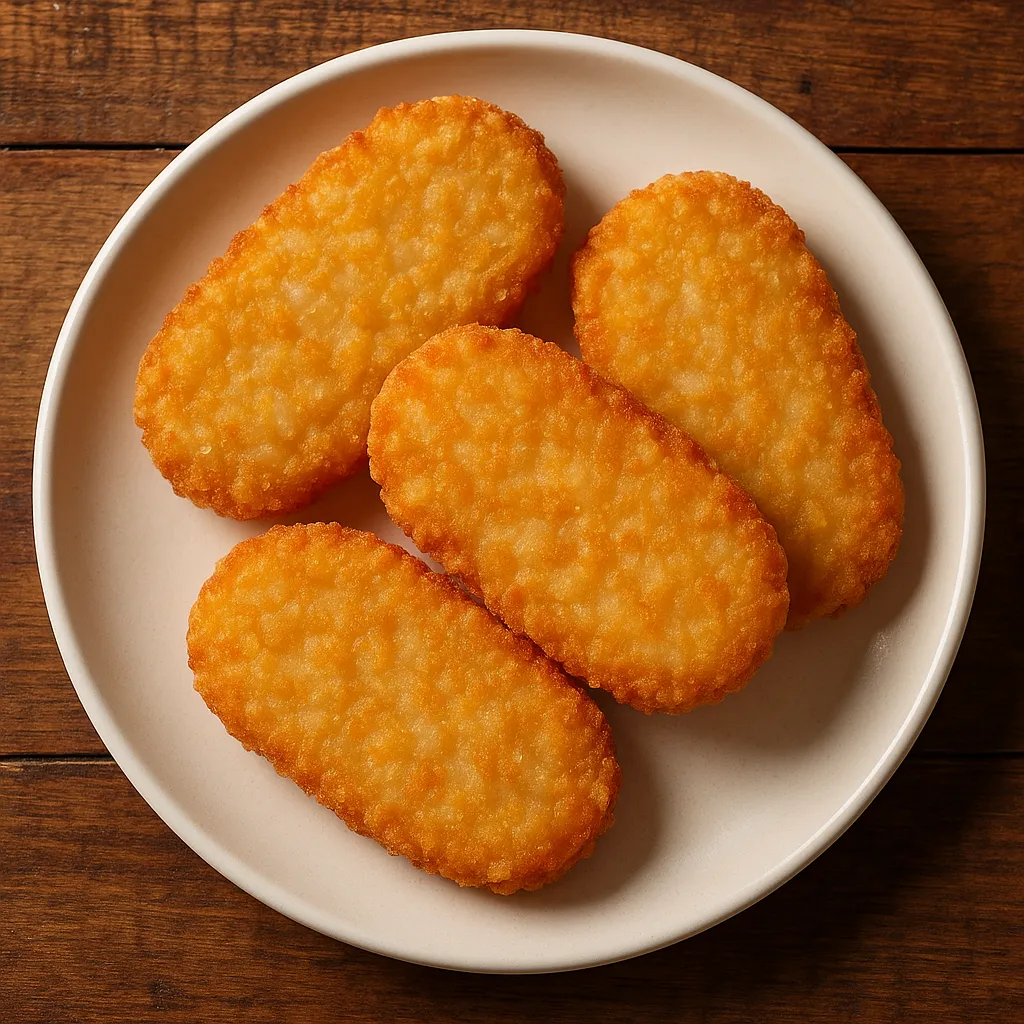
Quick Nutrition Facts
Per 1 Serving (55g)
| Nutrient | Amount |
|---|---|
| Calories | 150 kcal |
| Protein | 2g |
| Carbohydrates | 16g |
| Fiber | 1g |
| Sugars | 0g |
| Fat | 9g |
| Saturated Fat | 4g |
| Sodium | 310mg |
| Potassium | 356mg |
Macronutrient Breakdown
 ChatGPT
  Claude
  AI Mode
  Perplexity
NUTRITIONIST INSIGHT
McDonald's Hash Browns are potato-based comfort food with minimal nutritional depth. While convenient for busy mornings, they lack fiber (only 1g) and vitamins. For optimal breakfast nutrition, pair with eggs, whole grain toast, or fresh fruit to boost protein and micronutrients.
Myth Busters
MYTH #1: Hash Browns Are a "Vegetable" Serving
TRUTH: Hash Browns are a fried, processed starch, not a vegetable. Although made from potatoes, the deep-frying in vegetable oil and minimal potato fiber (only 1g) make them more similar to chips than a nutritious potato side. A baked sweet potato with skin provides significantly more fiber and nutrients.
MYTH #2: Potassium in Hash Browns Supports Heart Health
TRUTH: While Hash Browns contain 356mg potassium (10% DV), one serving doesn't meaningfully contribute to cardiovascular health. The high sodium (310mg) and saturated fat (4g) offset any potassium benefit. Better potassium sources include bananas (422mg) and leafy greens.
MYTH #3: Hash Browns Are a Protein-Rich Breakfast
TRUTH: With only 2g protein per serving, Hash Browns are insufficient as a primary protein source. For muscle gain or appetite control, pair with 15-20g protein from eggs, sausage, or Greek yogurt to create a balanced breakfast.
MYTH #4: Fast-Food Hash Browns Fit Any Diet Goal
TRUTH: Hash Browns' composition (high glycemic index, high saturated fat) makes them suboptimal for weight loss and diabetes management. Occasional indulgence is fine, but they shouldn't be a daily staple for specific health goals.
MYTH #5: One Hash Brown Won't Affect Weight Loss
TRUTH: Calorie math is simple: 150 calories + 9g fat from deep frying compounds over time. If consumed 3-5 times weekly, Hash Browns contribute 450-750 calories monthly. Tracking frequency matters more than occasional guilt.
NutriScore by Health Goals
| Health Goal | NutriScore | Why This Score? |
|---|---|---|
| Weight Loss |  | 150 calories with high fat (9g) and low protein (2g). Not satiating. Better alternatives: oatmeal, eggs, fruit. |
| Muscle Gain | | Insufficient protein (2g). Pair with 15-20g protein source. Carbs help glycogen replenishment but lack micronutrient support. |
| Diabetes Management | | High glycemic index (refined potato), 16g carbs spike blood sugar rapidly. Monitor closely; pair with protein/fat. |
| PCOS Management | | Refined carbs affect insulin sensitivity. High saturated fat (4g) may worsen inflammation. Limit to rare occasions. |
| Pregnancy Nutrition |  | Adequate carbs for energy but minimal micronutrients (folate, B vitamins). Pair with egg, cheese, or whole grain toast for balanced nutrition during pregnancy. |
| Viral/Flu Recovery | | Easy to digest carbs provide quick energy; low sodium helps with hydration. However, lacks vitamin C and antioxidants. Add fresh juice or fruit for faster recovery. |
PERSONALIZED NUTRITION
Track your meals with NutriScan for personalized NutriScores based on your specific health goals!
Blood Sugar Response to McDonald's Hash Browns
Understanding how refined potato products affect your blood glucose helps you manage breakfast timing and pairing strategies.
Typical Glucose Response Curve
This chart shows typical blood glucose response for general healthy individuals. Individual responses may vary. Not medical advice.
How to Flatten the Spike
Pairing Hash Browns with protein and healthy fats slows glucose absorption and extends energy release:
- 🥚 Eggs (scrambled, fried, or boiled) - Adds 6-8g protein and healthy fats; classic pairing
- 🧀 Cheese (cheddar, American) - Contributes fat and protein; reduces glycemic impact by 20-30%
- 🥓 Bacon or Sausage - Provides 3-4g protein and fat; traditional fast-food pairing
- 🥛 Whole Milk - Lactose and protein slow sugar absorption compared to eating alone
Pair any of these with your Hash Browns to create a more balanced breakfast that sustains energy without rapid blood sugar spikes.
Cultural Significance
McDonald's Hash Browns have become iconic breakfast comfort food globally since their introduction in 1977. Originally a simple potato side, they now represent convenient fast-food breakfast culture across North America, Europe, and Asia.
In the USA:
- Introduced nationally in 1977; became McDonald's signature breakfast item
- Symbol of quick, affordable breakfast for commuters and students
- Part of American fast-food breakfast culture alongside Egg McMuffins and pancakes
Global Adoption:
- Available in 100+ countries with regional variations
- India and Asia adapted sizing and spice levels for local palates
- Environmental concern: potato sourcing and deep-frying oil sustainability
Nutritional Context:
- Represents "convenient carbs" in modern breakfast culture
- Often criticized by nutrition experts as processed starch lacking micronutrients
- Growing health consciousness has shifted some consumers toward healthier breakfast options
Compare & Substitute
McDonald's Hash Browns vs Similar Breakfast Starches (Per 100g equivalent)
| Nutrient | Hash Browns | Baked Sweet Potato | Whole Grain Toast | Oatmeal (cooked) |
|---|---|---|---|---|
| Calories | 273 kcal | 86 kcal | 265 kcal | 68 kcal |
| Carbs | 29g | 20g | 49g | 12g |
| Fiber | 2g | 3g | 2.5g | 1.6g |
| Protein | 3.6g | 1.6g | 9g | 2.4g |
| Fat | 16g (fried) | 0.1g | 3g | 1.4g |
| Potassium | 648mg | 337mg | 100mg | 150mg |
| Best For | Convenience, comfort | Nutrition, satiety | Sustained energy, fiber | Micronutrients, fiber |
Frequently Asked Questions
Are McDonald's Hash Browns good for weight loss?
Hash Browns are calorie-dense (150 cal) with 9g fat and minimal protein (2g), making them less ideal for weight loss. They provide poor satiety relative to calories. Occasional consumption is acceptable, but daily intake can hinder progress. Better alternatives: scrambled eggs (70 cal, 6g protein), oatmeal (150 cal, 5g protein, 4g fiber).
How much sodium is in McDonald's Hash Browns?
One serving contains 310mg sodium (13% Daily Value). This is moderate, but if combined with other fast-food items (burgers, fries, drinks), daily sodium can exceed 2,300mg limits. Pair with water and low-sodium sides to balance intake.
Can I eat Hash Browns on a low-carb diet?
Hash Browns contain 16g carbs per serving, which may fit into some low-carb plans (50-100g/day), but better options exist: cheese omelet (1g carbs), bacon (0 carbs), or avocado toast on low-carb bread (3-5g carbs). If eating Hash Browns, reduce carbs elsewhere that day.
What is the healthiest way to prepare potatoes for breakfast?
Baked or boiled potatoes with skin retain fiber (3-4g) and nutrients; roasted potatoes with olive oil offer balanced nutrition. Deep-fried Hash Browns lose fiber during processing and cooking, resulting in rapid blood sugar spikes. Steamed or air-fried versions reduce fat intake by 70-80%.
Should I avoid McDonald's Hash Browns if I have diabetes?
Diabetics should exercise caution. Hash Browns have high glycemic index (GI 70+) due to refined potato processing; 16g carbs spike blood sugar rapidly. If eating, monitor blood sugar 2-3 hours post-meal and pair with protein/fat. Consult your healthcare provider for personalized guidance.
How do Hash Browns compare to French fries nutritionally?
Hash Browns and French Fries are nutritionally similar: both are fried potatoes with ~9-10g fat, 150-160 calories, and low fiber (1g). The main difference is processing; Hash Browns retain slightly more potato fiber while Fries are cut thinner. Neither offers significant nutritional advantage over the other.


Similar Nutritious Foods
4505 Chicharrones Classic Chili Salt
7 Eleven Japan Crispy Corn Cheese
Explore More Nutrition Tools & Resources
AI Calorie Counter App - Snap a Photo, Get Macros
AI Nutritionist App That Reads Your Logged Meals
Best Protein Supplements for Women
Bulking Meal Plan App That Sets Your Surplus
ChatGPT Calorie Counter Alternative That Keeps the Total
ChatGPT Diet Plan Alternative That Tracks What You Eat
ChatGPT Weight Loss Coach Alternative With a Food Log
Fast Food Calorie Counter App That Reads the Tray
Free Calorie Tracker App with AI Photo Scans | NutriScan
Indian Diet Plan App With Veg and Non Veg Meals
Indian Food Calorie Calculator - Get Instant Nutrition Facts for Desi Meals — 2026
Intermittent Fasting for Women, Timer and Meal Log App
Intermittent Fasting Tracker App - Free Fasting Timer
Macro Tracker App That Fills the Numbers From a Photo
Mediterranean Diet Meal Plan App That Counts the Oil
Micronutrient Tracker App for Vitamins and Minerals
MyFitnessPal Alternative That Stays Free | NutriScan
NutriScore App: A Free Grade on Every Meal | NutriScan
Nutrition Label Scanner App for the Amount You Ate
Second Trimester Protein Guide
Vegetarian Meal Plan App With a Protein Target
Voice Calorie Counter - Speak to Track Meals Hands-Free
Water and Calorie Tracker App - Free Water Log