Medjool Dates: Calories, Nutrition and Health Benefits
Nature's caramel-like energy snack packed with potassium, fiber, and essential minerals for every health goal.
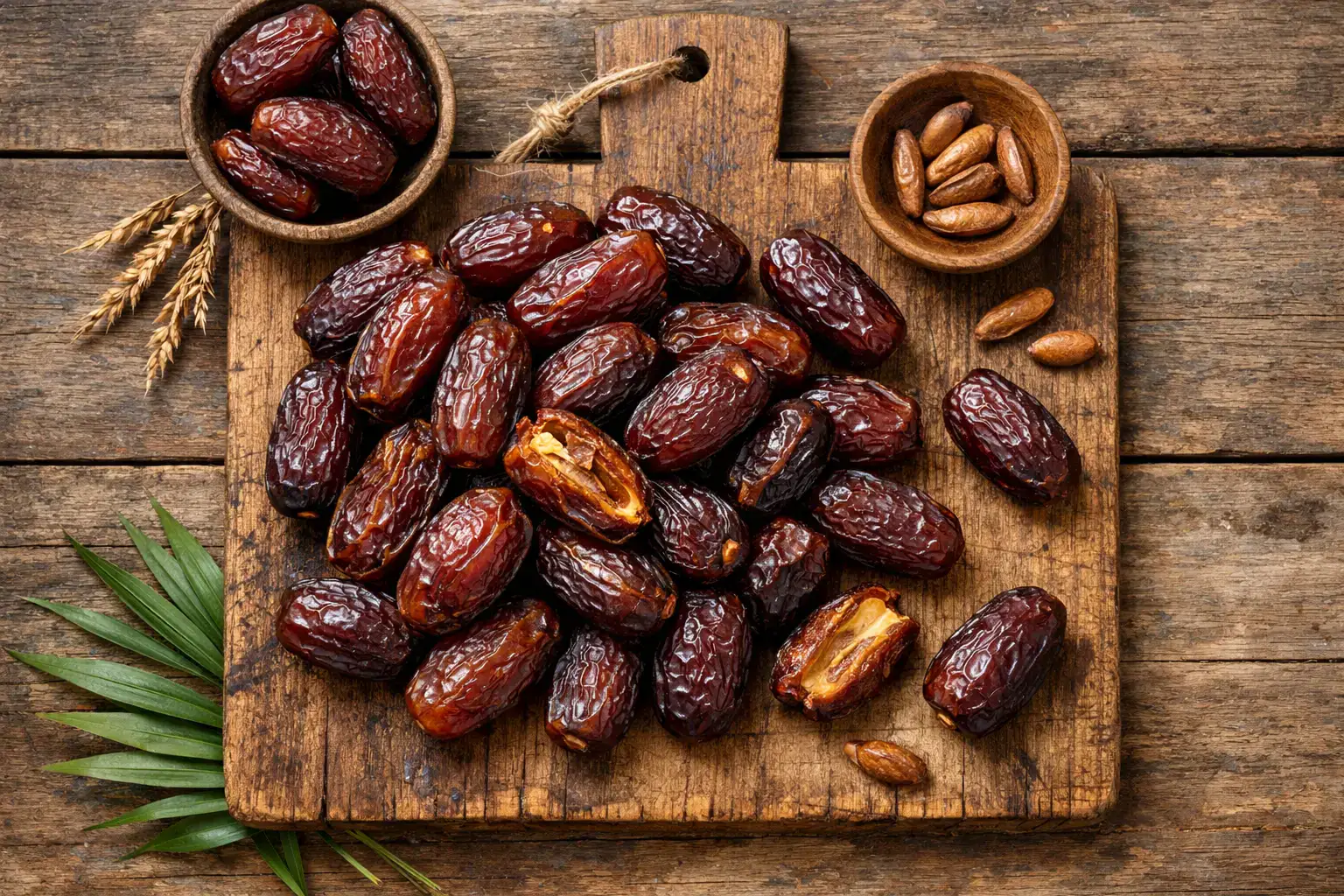
Quick Nutrition Facts
Per 1 Medjool Date, Pitted (24g)
| Nutrient | Amount |
|---|---|
| Calories | 66 kcal |
| Protein | 0.4g |
| Carbohydrates | 18g |
| Fiber | 1.6g |
| Sugars | 16g |
| Fat | 0g |
| Potassium | 167mg |
| Magnesium | 13mg |
| Iron | 0.2mg |
| Copper | 0.1mg |
Macronutrient Breakdown
 ChatGPT
  Claude
  AI Mode
  Perplexity
NUTRITIONIST INSIGHT
Medjool dates deliver 20% of your daily potassium in just 3 dates. Their low-to-medium glycemic index (GI 42-50) despite being 66% sugar is thanks to their 6.7g fiber per 100g, which slows glucose absorption.
Myth Busters
MYTH #1: Dates Are Too High in Sugar for Healthy Eating
TRUTH: While dates contain 66g sugar per 100g, their low-to-medium glycemic index (GI 42-50) means they don't spike blood sugar like refined sugars. The fiber, potassium, and antioxidants make them a nutrient-dense sweetener choice.
MYTH #2: Diabetics Must Avoid Dates Completely
TRUTH: Research shows daily low-dose date consumption does not worsen glycemic control in adults with pre- and type 2 diabetes. Limit to 1-2 dates per serving and pair with protein or healthy fat.
MYTH #3: Dates Cause Weight Gain
TRUTH: One Medjool date has only 66 calories. Used as a natural sweetener replacement, dates can reduce overall added sugar intake. The 1.6g fiber per date promotes satiety. Portion control (2-3 dates/day) is key.
MYTH #4: Fresh Dates Are Healthier Than Dried
TRUTH: Medjool dates are technically fresh dates, not dried. They have higher moisture content (21%) than Deglet Noor dates. The nutritional profile remains largely the same whether soft or slightly dried. Choose based on texture preference.
MYTH #5: Dates Have No Nutritional Value Beyond Sugar
TRUTH: Dates provide 696mg potassium per 100g (more than bananas), 54mg magnesium, 0.9mg iron, and contain over 13 phenolic compounds with strong antioxidant and alpha-glucosidase inhibitory activity.
NutriScore by Health Goals
| Health Goal | NutriScore | Why This Score? |
|---|---|---|
| Weight Loss |  | 66 cal per date is moderate; calorie-dense at 277/100g. Use as sweetener replacement (1-2/day), not snack food. Fiber helps fullness. |
| Muscle Gain |  | Excellent pre/post-workout fuel: fast-digesting carbs (18g/date), 167mg potassium prevents cramps. Pair with protein shake. |
| Diabetes Management | | Low-medium GI (42-50) but high sugar content. Studies show no adverse glycemic effects at 3 dates/day. Pair with nuts, limit to 1-2 per serving. |
| PCOS Management | | High sugar load affects insulin sensitivity. Limit to 1 date daily, pair with protein. Magnesium (54mg/100g) supports hormonal balance. |
| Pregnancy Nutrition |  | Consuming 6 dates/day in last 4 weeks of pregnancy promotes cervical dilation and reduces need for labor induction. Rich in iron, potassium, and folate. |
| Viral/Flu Recovery | | Quick natural energy, easy to digest, iron for recovery, potassium for rehydration. Natural fructose provides gentle energy without caffeine. |
PERSONALIZED NUTRITION
Track your meals with NutriScan for personalized NutriScores based on your specific health goals!
Blood Sugar Response to Medjool Dates
Understanding how Medjool dates affect your blood glucose can help you make informed decisions about when and how to eat them.
Typical Glucose Response Curve
This chart shows typical blood glucose response for general healthy individuals. Individual responses may vary. Not medical advice.
How to Flatten the Spike
Pairing dates with protein or healthy fat slows glucose absorption and reduces the peak blood sugar level:
- 🥜 Almond butter or tahini - Stuff dates with nut butter for healthy fats and protein
- 🧀 Cheese or paneer - Pair with a small cube of cheese for protein
- 🌰 Walnuts or almonds - Classic Middle Eastern combination of dates and nuts
- 🥛 Greek yogurt or dahi - Chop dates into yogurt for a balanced snack
This combination not only reduces the glucose spike but also extends energy release, keeping you fuller for longer.
Cultural Significance
Medjool dates originated in Morocco and have been cultivated for over 5,000 years across the Middle East and North Africa.
In the Middle East & South Asia:
- Central to Ramadan: traditionally used to break the fast (iftar)
- Mentioned over 20 times in the Quran as a blessed fruit
- Ayurveda classifies dates as a nourishing, strength-building food (bala-vardhak)
- Used in traditional Indian sweets (khajoor pak, dates halwa)
Global Impact:
- Called the "King of Dates" for their large size and caramel flavor
- Saudi Arabia, Egypt, Iran, and Iraq are top producers (8+ million tonnes annually)
- Growing as a natural sweetener alternative in health-conscious markets worldwide
Compare & Substitute
Medjool Dates vs Similar Foods (Per 100g)
| Nutrient | 🌴 Medjool Dates | 🍯 Honey | 🍌 Banana | 🫐 Dried Figs |
|---|---|---|---|---|
| Calories | 277 kcal | 304 kcal | 89 kcal | 249 kcal |
| Carbs | 75g | 82g | 23g | 64g |
| Fiber | 6.7g | 0.2g | 2.6g | 9.8g |
| Protein | 1.8g | 0.3g | 1.1g | 3.3g |
| Fat | 0.2g | 0g | 0.3g | 0.9g |
| Potassium | 696mg | 52mg | 358mg | 680mg |
| Sugar | 66g | 82g | 12g | 48g |
| Iron | 0.9mg | 0.4mg | 0.3mg | 2mg |
| Best For | Natural sweetener, pre-workout | Quick energy, sore throat remedy | Post-workout, daily snacking | Digestive health, bone health |
Frequently Asked Questions
Are Medjool dates good for weight loss?
Medjool dates can support weight loss when used as a natural sweetener replacement. 1 date has 66 calories with 1.6g fiber. Replace refined sugar, chocolate, or candy with 1-2 dates to reduce overall calorie and added sugar intake.
Best practices: Limit to 2-3 dates per day (under 200 calories), stuff with almond butter for satiety, avoid eating mindlessly from the container.
Can diabetics eat Medjool dates?
Diabetics can eat Medjool dates in moderation. Despite being 66% sugar, dates have a low-to-medium GI (42-50) and research shows no adverse glycemic effects at moderate intake.
Tips for diabetics:
- Limit to 1-2 dates per serving (36-132 calories)
- Always pair with protein or healthy fat (nuts, cheese)
- Best timing: post-meal as dessert replacement, not on empty stomach
- Monitor blood sugar 2 hours after eating
The fiber and phenolic compounds in dates may actually improve insulin sensitivity. Always consult your healthcare provider.
How many calories are in one Medjool date?
One pitted Medjool date (24g) contains 66 calories, 18g carbohydrates, 1.6g fiber, 16g sugars, 0.4g protein, and 167mg potassium. Per 100g, Medjool dates provide 277 calories.
For reference, 3 Medjool dates (72g) equal roughly 198 calories, comparable to a medium banana plus a tablespoon of peanut butter.
Are Medjool dates good for pregnancy?
Research strongly supports date consumption during pregnancy. A landmark study found women who consumed 6 dates daily for 4 weeks before delivery had significantly higher cervical dilation upon admission (3.5 cm vs 2 cm) and 47% lower need for oxytocin-induced labor.
Key benefits for pregnancy:
- Iron (0.9mg/100g) supports increased blood volume
- Potassium (696mg/100g) prevents leg cramps
- Natural energy for labor and delivery
- Folate supports fetal development
What is the difference between Medjool and Deglet Noor dates?
Medjool dates are larger (24g vs 7g each), softer, and have a rich caramel flavor. Deglet Noor dates are smaller, firmer, and nuttier.
Nutritionally, they are similar: Medjool have 277 cal/100g vs 282 cal/100g for Deglet Noor. Medjool dates have slightly more moisture and potassium. Choose Medjool for snacking and smoothies; Deglet Noor for baking and cooking.
How many Medjool dates should I eat per day?
General Guidelines:
- 2-3 dates daily - Most adults (132-198 calories, good potassium boost)
- 1-2 dates daily - Diabetes, PCOS, or weight loss goals
- 4-6 dates daily - Athletes, pregnancy (last 4 weeks), or high-energy needs
Avoid excess: More than 6 per day can provide excessive sugar (over 96g), calories, and may cause digestive discomfort due to high fructose content.
Track your meals with NutriScan app to see how Medjool dates fit your personal nutrition goals.


Similar Nutritious Foods
4505 Chicharrones Classic Chili Salt
7 Eleven Japan Crispy Corn Cheese
Explore More Nutrition Tools & Resources
AI Calorie Counter App - Snap a Photo, Get Macros
AI Nutritionist App That Reads Your Logged Meals
Best Protein Supplements for Women
Bulking Meal Plan App That Sets Your Surplus
ChatGPT Calorie Counter Alternative That Keeps the Total
ChatGPT Diet Plan Alternative That Tracks What You Eat
ChatGPT Weight Loss Coach Alternative With a Food Log
Fast Food Calorie Counter App That Reads the Tray
Free Calorie Tracker App with AI Photo Scans | NutriScan
Indian Diet Plan App With Veg and Non Veg Meals
Indian Food Calorie Calculator - Get Instant Nutrition Facts for Desi Meals — 2026
Intermittent Fasting for Women, Timer and Meal Log App
Intermittent Fasting Tracker App - Free Fasting Timer
Macro Tracker App That Fills the Numbers From a Photo
Mediterranean Diet Meal Plan App That Counts the Oil
Micronutrient Tracker App for Vitamins and Minerals
MyFitnessPal Alternative That Stays Free | NutriScan
NutriScore App: A Free Grade on Every Meal | NutriScan
Nutrition Label Scanner App for the Amount You Ate
Second Trimester Protein Guide
Vegetarian Meal Plan App With a Protein Target
Voice Calorie Counter - Speak to Track Meals Hands-Free
Water and Calorie Tracker App - Free Water Log