Melon Pan: Calories, Nutrition and Health Benefits
Japan's beloved sweet bread featuring a soft, fluffy interior and distinctive crispy cookie crust with melon-like cross-hatch pattern.
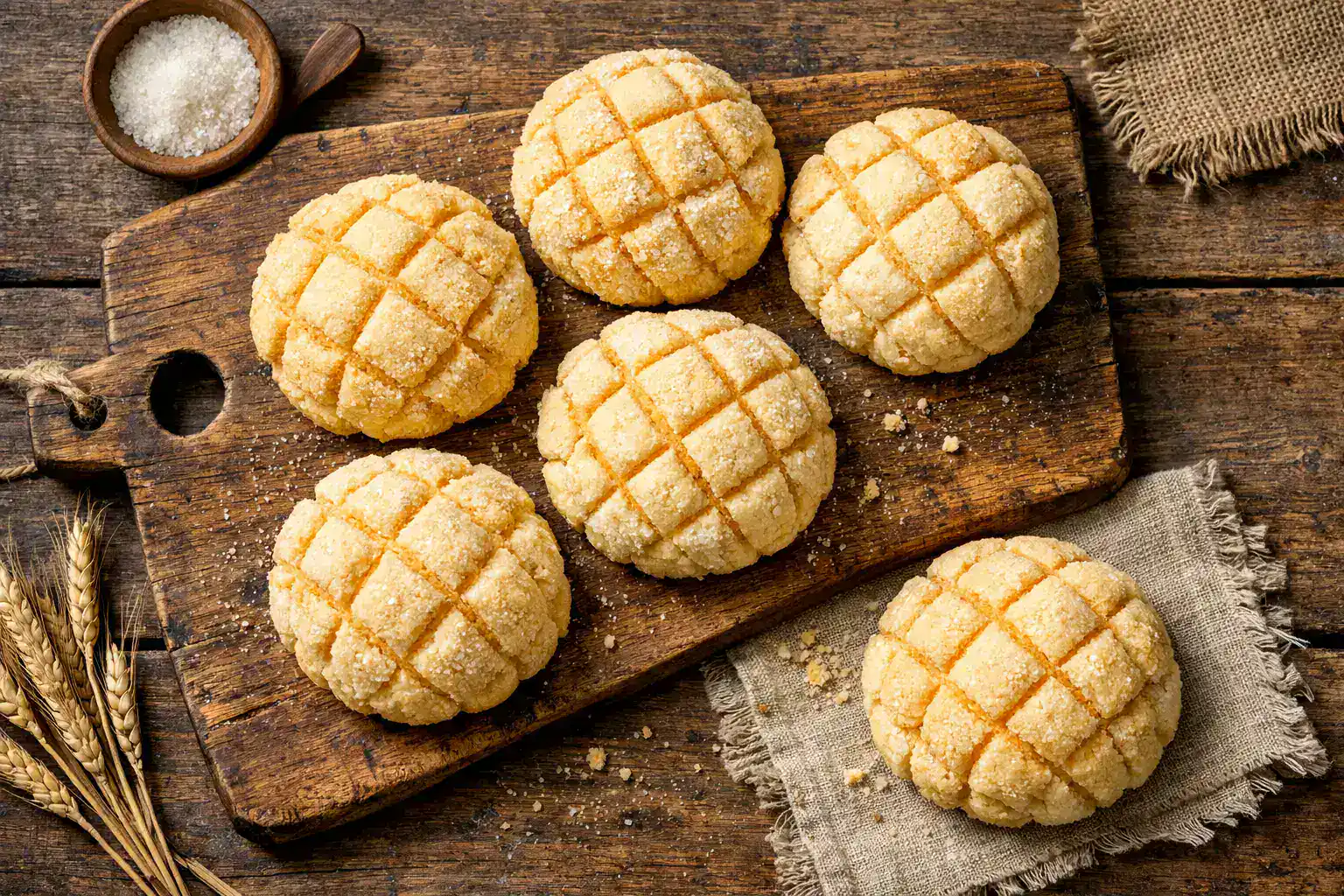
Quick Nutrition Facts
Per 1 Melon Pan (100g)
| Nutrient | Amount |
|---|---|
| Calories | 350 kcal |
| Protein | 7g |
| Carbohydrates | 54g |
| Fiber | 1.5g |
| Sugars | 18g |
| Fat | 12g |
| Saturated Fat | 6g |
| Sodium | 180mg |
| Iron | 2.1mg |
| Calcium | 45mg |
Macronutrient Breakdown
 ChatGPT
  Claude
  AI Mode
  Perplexity
NUTRITIONIST INSIGHT
Melon pan is a high-calorie treat best enjoyed occasionally. The combination of refined flour and sugar cookie crust creates a high glycemic index food. If enjoying, consider sharing half and pairing with protein to slow sugar absorption.
Myth Busters
MYTH #1: Melon Pan Contains Melon Fruit
TRUTH: Traditional melon pan contains no melon at all. The name comes from the cross-hatch pattern on the cookie crust that resembles a cantaloupe melon's skin. Some modern bakeries add melon flavoring, but classic recipes are melon-free.
MYTH #2: Melon Pan Is a Good Breakfast Choice
TRUTH: Despite being bread, melon pan lacks the fiber and complex carbohydrates needed for sustained energy. With 18g sugar and minimal protein, it causes rapid blood sugar spikes followed by energy crashes.
MYTH #3: The Cookie Crust Is Just Decoration
TRUTH: The cookie crust contributes significantly to calories and fat content. It's made with butter, sugar, and flour, adding approximately 100-120 extra calories compared to plain bread. Refined carbohydrates like these are rapidly digested.
MYTH #4: All Japanese Breads Are Healthy
TRUTH: Japanese bakery items (shokupan, anpan, melon pan) are typically made with refined white flour and added sugar. While delicious, they're treats rather than health foods. White bread has a high glycemic index (GI ~75).
MYTH #5: Melon Pan Is Low in Fat
TRUTH: At 12g fat per piece (6g saturated), melon pan gets about 31% of its calories from fat. The butter-rich cookie crust and enriched bread dough make it higher in fat than many other bread types.
NutriScore by Health Goals
| Health Goal | NutriScore | Why This Score? |
|---|---|---|
| Weight Loss |  | 350 calories with minimal satiety. High sugar causes hunger shortly after eating. Choose protein-rich alternatives. |
| Muscle Gain |  | Provides quick carbs (54g) post-workout but lacks sufficient protein (7g). Better options exist for recovery nutrition. |
| Diabetes Management |  | High GI (~75), refined carbohydrates cause rapid blood glucose spikes. Avoid or eat tiny portions with protein. |
| PCOS Management | | High glycemic load affects insulin sensitivity. Limit consumption; choose whole grain alternatives. |
| Pregnancy Nutrition | | Provides quick energy and some iron (2.1mg). Limit added sugars during pregnancy; occasional treat only. |
| Viral/Flu Recovery | | Soft texture easy to eat when sick. Provides quick energy but lacks immune-supporting nutrients. |
PERSONALIZED NUTRITION
Track your meals with NutriScan for personalized NutriScores based on your specific health goals!
Blood Sugar Response to Melon Pan
Understanding how melon pan affects your blood glucose helps you make informed decisions about when and how to enjoy this treat.
Typical Glucose Response Curve
This chart shows typical blood glucose response for general healthy individuals. Individual responses may vary. Not medical advice.
How to Flatten the Spike
Pairing high-GI foods with protein or fat slows glucose absorption and reduces the peak blood sugar level:
- 🥛 Glass of milk - Adds protein and fat to slow digestion
- 🥚 Boiled egg or egg salad - Complete protein source
- 🥜 Almond butter spread - Healthy fats and protein
- 🧀 Cheese slice - Protein and fat combination
This combination not only reduces the glucose spike but also extends energy release, keeping you fuller for longer.
Cultural Significance
Melon pan emerged in Japan during the early 20th century, becoming an iconic part of Japanese bakery culture.
In Japan:
- Found in virtually every konbini (convenience store) and bakery
- A comfort food featured in anime and manga
- Regional variations include chocolate chip, matcha, and actual melon-flavored versions
- Often enjoyed with coffee or milk tea
Global Variations:
- Mexico: Conchas (shell bread) - similar concept with colorful sugar topping
- Hong Kong: Pineapple bun (bo lo bao) - same pattern, often served with butter slab
- Taiwan: Polo bun variation with different toppings
- Hawaii/USA: Available in Japanese bakeries, gaining popularity
Compare & Substitute
Melon Pan vs Similar Sweet Breads (Per 100g)
| Nutrient | 🍞 Melon Pan | 🥐 Croissant | 🍩 Glazed Donut | 🥯 Plain Bagel |
|---|---|---|---|---|
| Calories | 350 kcal | 406 kcal | 421 kcal | 250 kcal |
| Carbs | 54g | 45g | 49g | 49g |
| Fiber | 1.5g | 2.4g | 1.7g | 2.1g |
| Protein | 7g | 8g | 5g | 10g |
| Fat | 12g | 21g | 22g | 1.5g |
| Sugar | 18g | 6g | 21g | 5g |
| Best For | Occasional treat, snack | Breakfast indulgence | Sweet craving, dessert | Lower-fat bread option |
Frequently Asked Questions
How many calories are in melon pan?
A standard melon pan (100g) contains approximately 314-350 calories. Smaller convenience store versions (60-70g) have around 200-240 calories. The calorie content varies by bakery and size.
Calorie breakdown: 62% from carbohydrates, 31% from fat, 7% from protein.
Is melon pan healthy?
Melon pan is best enjoyed as an occasional treat rather than a regular food. It's high in refined carbohydrates and added sugar with limited nutritional benefits.
Nutritional concerns:
- High glycemic index (causes rapid blood sugar spikes)
- Low fiber content (1.5g)
- Contains saturated fat from butter
- Minimal vitamins and minerals
For healthier alternatives, choose whole grain breads, fruit, or protein-rich snacks.
Can diabetics eat melon pan?
Diabetics should be cautious with melon pan due to its high glycemic index (GI ~75) and refined carbohydrate content.
Tips for diabetics:
- Limit to very small portions (1/4 piece)
- Always pair with protein or healthy fat
- Eat after a protein-rich meal, never on empty stomach
- Monitor blood sugar 2 hours after eating
Consider lower-GI alternatives like whole grain bread or nuts for regular snacking.
What is melon pan made of?
Melon pan consists of two parts: soft enriched bread dough and crispy cookie crust.
Key ingredients:
- Bread dough: Flour, yeast, milk, eggs, sugar, butter
- Cookie crust: Flour, butter, sugar, eggs, baking powder
Despite the name, traditional melon pan contains no melon fruit - the name refers to the melon-like cross-hatch pattern.
Why is melon pan so popular in Japan?
Melon pan's popularity stems from its unique texture combination - soft, fluffy bread with crispy, sweet cookie crust. It's affordable (100-200 yen), portable, and available everywhere from convenience stores to specialty bakeries.
Cultural factors:
- Featured in popular anime and manga
- Nostalgic childhood food for many Japanese
- Perfect grab-and-go breakfast or snack
- Satisfying texture contrast
What's the best time to eat melon pan?
Recommendations by goal:
- General enjoyment: Mid-afternoon as a snack, paired with protein
- Pre-workout: 60-90 minutes before exercise for quick energy
- Weight loss: Avoid or share half with someone; eat after protein-rich meal
- Diabetes: Avoid on empty stomach; tiny portions only after meals
IMPORTANT NOTE
Avoid eating melon pan as your only breakfast. The rapid blood sugar spike and crash will leave you hungry within 1-2 hours.
How do I store melon pan?
Fresh melon pan is best eaten within 24 hours. The cookie crust becomes soft over time, losing its signature crunch.
Storage tips:
- Room temperature: 1-2 days in paper bag
- Freezer: Up to 1 month in airtight bag
- To refresh: Toast at 180°C (350°F) for 5 minutes to re-crisp crust


Similar Nutritious Foods
4505 Chicharrones Classic Chili Salt
7 Eleven Japan Crispy Corn Cheese
Explore More Nutrition Tools & Resources
AI Calorie Counter App - Snap a Photo, Get Macros
AI Nutritionist App That Reads Your Logged Meals
Best Protein Supplements for Women
Bulking Meal Plan App That Sets Your Surplus
ChatGPT Calorie Counter Alternative That Keeps the Total
ChatGPT Diet Plan Alternative That Tracks What You Eat
ChatGPT Weight Loss Coach Alternative With a Food Log
Fast Food Calorie Counter App That Reads the Tray
Free Calorie Tracker App with AI Photo Scans | NutriScan
Indian Diet Plan App With Veg and Non Veg Meals
Indian Food Calorie Calculator - Get Instant Nutrition Facts for Desi Meals — 2026
Intermittent Fasting for Women, Timer and Meal Log App
Intermittent Fasting Tracker App - Free Fasting Timer
Macro Tracker App That Fills the Numbers From a Photo
Mediterranean Diet Meal Plan App That Counts the Oil
Micronutrient Tracker App for Vitamins and Minerals
MyFitnessPal Alternative That Stays Free | NutriScan
NutriScore App: A Free Grade on Every Meal | NutriScan
Nutrition Label Scanner App for the Amount You Ate
Second Trimester Protein Guide
Vegetarian Meal Plan App With a Protein Target
Voice Calorie Counter - Speak to Track Meals Hands-Free
Water and Calorie Tracker App - Free Water Log