Methi Thepla: Calories, Nutrition and Health Benefits
Traditional Gujarati flatbread infused with fenugreek leaves, combining wholesome nutrition with authentic flavor—a versatile staple for health-conscious meal planning.
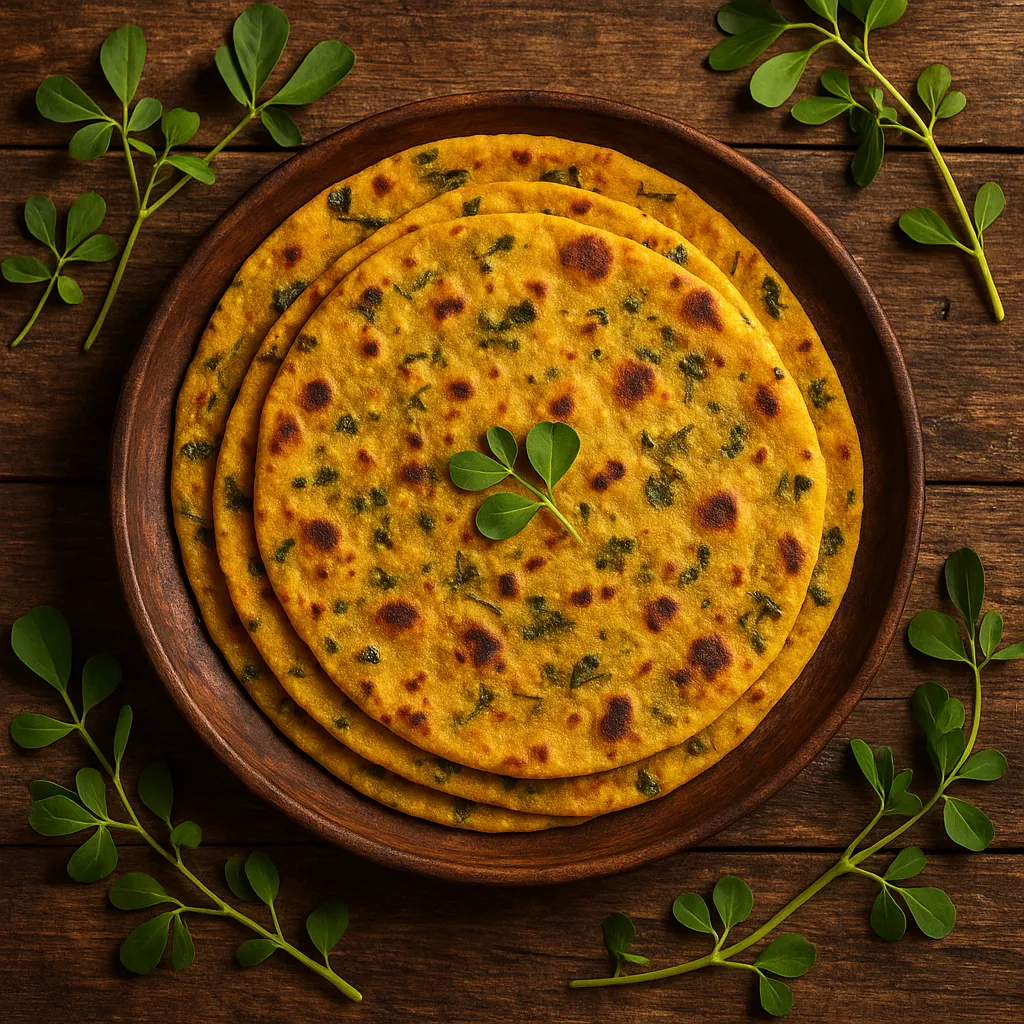
Quick Nutrition Facts
Per 1 Methi Thepla (60g)
| Nutrient | Amount |
|---|---|
| Calories | 265 kcal |
| Protein | 8g |
| Carbohydrates | 36g |
| Fiber | 4g |
| Sugars | 1.2g |
| Fat | 10g |
| Iron | 3.2mg |
| Calcium | 85mg |
| Magnesium | 68mg |
| Folate | 42mcg |
Macronutrient Breakdown
 ChatGPT
  Claude
  AI Mode
  Perplexity
NUTRITIONIST INSIGHT
Methi thepla is a functional food in Ayurveda for centuries. The fenugreek seeds contain galactomannan fiber that slows glucose absorption, making it one of the best traditional breads for blood sugar control. The iron content (3.2mg) supports energy levels, especially important for menstruating women and pregnant mothers.
Myth Busters
MYTH #1: Thepla Is Just Fried Bread High in Calories
TRUTH: While store-bought deep-fried versions can be calorie-heavy, home-made pan-cooked methi thepla with 1 tsp oil is only 265 calories. The high fiber (4g) and protein (8g) make it more satiating than white bread. Studies show fenugreek reduces appetite through GLP-1 stimulation.
MYTH #2: Fenugreek Seeds Taste Bad
TRUTH: Fresh methi leaves have a slightly bitter, nutty, maple-like flavor that pairs perfectly with spices (turmeric, cumin, chili). When balanced with salt and oil, methi thepla has a savory, addictive taste. Many find it more interesting than plain wheat chapati.
MYTH #3: Methi Thepla Is Not Suitable for Muscle Gain
TRUTH: One thepla provides 8g protein plus 36g complex carbs for glycogen replenishment post-workout. Combined with dal, paneer, or curd, it becomes a complete post-workout meal. The carb-to-protein ratio (4.5:1) is ideal for muscle recovery.
MYTH #4: Pregnant Women Should Avoid Fenugreek
TRUTH: Moderate fenugreek consumption (in traditional foods like thepla) is safe during pregnancy. It boosts milk supply preparation, provides folate (42mcg) for fetal development, and supports iron absorption. Avoid mega-dose supplements; food amounts are safe.
MYTH #5: Store-Bought Theplas Have Same Nutrition as Homemade
TRUTH: Packaged theplas often use refined flour, less methi, and preservatives. Homemade versions allow you to control whole wheat percentage, oil amount, and methi content. Fresh methi leaves (100g) retain more nutrients than dried variants.
MYTH #6: Methi Thepla Cannot Be Frozen
TRUTH: Methi theplas freeze beautifully for up to 3 weeks. Wrap individually, store in freezer-safe bags, then warm on a pan for 1-2 minutes. No loss of fiber, protein, or taste compared to fresh theplas.
NutriScore by Health Goals
| Health Goal | NutriScore | Why This Score? |
|---|---|---|
| Weight Loss |  | 265 calories, 4g fiber, 8g protein support satiety. Fenugreek slows glucose absorption. Limit to 1-2 pieces per meal with vegetables. |
| Muscle Gain |  | 8g protein + 36g carbs ideal post-workout. Pair with dal, paneer, or Greek yogurt for complete amino acid profile. |
| Diabetes Management | | Fenugreek galactomannan reduces fasting blood sugar by 15-30%. Eat 1 piece with protein/fat to flatten glucose curve. |
| PCOS Management | | Whole wheat + fenugreek supports hormonal balance. Limit to 1 piece due to carbs; pair with healthy fat (olive oil dip) for sustained energy. |
| Pregnancy Nutrition | | Rich in folate (42mcg), iron (3.2mg) for anemia prevention, and fenugreek supports lactation. Safe in moderation; provides prenatal nutrition naturally. |
| Viral/Flu Recovery | | Easy-to-digest carbs for quick energy, mild turmeric inclusion aids inflammation, warm and comforting. Pair with light dal or broth. |
PERSONALIZED NUTRITION
Track your methi thepla portions with NutriScan for personalized NutriScores based on your specific health goals!
Blood Sugar Response to Methi Thepla
Understanding how methi thepla affects your blood glucose helps optimize timing and pairings.
Typical Glucose Response Curve
This chart shows typical blood glucose response for general healthy individuals. Individual responses may vary. Not medical advice.
How to Flatten the Spike
Pair methi thepla with protein or healthy fat to further slow glucose absorption:
- 🥛 Greek yogurt or curd (dahi) - Traditional pairing; probiotics aid digestion
- 🫘 Dal curry - Protein + fiber extends satiety and flattens glucose curve
- 🧀 Paneer - Complete protein; calcium supports bone health
- 🥬 Cucumber raita - Hydrating, low-calorie complement
- 🫒 Olive oil dip - Healthy fats slow carb absorption
This combination transforms a simple bread into a complete, glycemically stable meal.
Cultural Significance
Methi thepla is a beloved traditional food in Gujarat, India, with roots spanning centuries.
In India:
- Originated in Gujarat as a nutritious travel bread for merchants and travelers
- Fermented methi leaves used in Ayurvedic medicine for digestive and blood sugar health
- Commonly served at family meals, weddings, and festivals
- Made fresh daily in traditional Gujarati households
- Part of regional identity; each household has a signature recipe variation
Global Adoption:
- Gaining popularity in health-conscious Indian diaspora communities
- Featured in modern nutritionist recommendations for diabetes management
- Growing recognition in functional food movement for natural blood sugar control
- Sustainable crop: methi grows year-round with minimal water in India
Compare & Substitute
Methi Thepla vs Similar Indian Breads (Per 100g equivalent portion)
| Nutrient | Methi Thepla | Plain Chapati | Bajra Roti | Makki Roti |
|---|---|---|---|---|
| Calories | 265 kcal | 155 kcal | 220 kcal | 212 kcal |
| Carbs | 36g | 27g | 35g | 34g |
| Fiber | 4g | 1.5g | 5g | 4.5g |
| Protein | 8g | 4g | 7g | 7.5g |
| Fat | 10g | 2g | 5g | 4g |
| Iron | 3.2mg | 1.8mg | 4.2mg | 3.5mg |
| Best For | Diabetes, lactation, weight loss | Quick meals, lean diets | Iron boost, PCOS management | Celiac-friendly alternative |
Frequently Asked Questions
Are methi theplas good for weight loss?
Yes. One thepla delivers 4g fiber and 8g protein with only 265 calories. The fenugreek galactomannan creates feelings of fullness, reducing overall calorie intake. Best practice: eat 1-2 pieces with yogurt or a vegetable curry to extend satiety. Shallow pan-cook (1 tsp oil) instead of deep frying.
Can diabetics eat methi thepla?
Absolutely. Fenugreek is recommended by diabetes educators for its galactomannan fiber that slows glucose absorption and can reduce fasting blood sugar by 15-30%. Eat 1 piece with protein (dal, curd, or paneer) to optimize glucose response. Monitor blood sugar 2 hours post-meal to understand your individual response.
Is methi thepla safe during pregnancy?
Yes, in moderation. Fenugreek leaves (in food form) boost lactation preparation, provide iron for anemia prevention (3.2mg per thepla), and offer folic acid (42mcg) essential for fetal development. General guideline: 1-2 pieces daily is safe; consult your obstetrician for personalized advice.
How much protein is in methi thepla?
One methi thepla (60g) contains 8g protein—significantly more than plain wheat chapati (4g). Combined with whole wheat flour and methi seeds, it becomes a decent plant-based protein source. For muscle gain, pair with dal, paneer, or curd to achieve 15-20g protein per meal.
What makes methi thepla better than white bread?
Methi thepla uses whole wheat (complex carbs), adds fenugreek (functional ingredient), and retains 4g fiber vs. white bread (1g). The glycemic index of methi thepla is lower due to fenugreek's bioactive compounds. Studies show fenugreek improves post-meal glucose control and lipid profiles.
Can I eat methi thepla on an empty stomach?
Yes, but pair it with a source of protein or fat for sustained energy. Alone on empty stomach, the carbs digest quickly, causing a minor glucose spike and subsequent energy dip. Better approach: eat with curd, paneer, or boiled eggs for balanced nutrition.
How to freeze and reheat methi thepla?
Wrap cooked theplas individually in parchment, place in freezer bags, store up to 3 weeks. To reheat: warm on a pan for 1-2 minutes over medium heat until soft, or microwave for 30 seconds. No significant nutrient loss; fiber and protein content remain intact.
Is store-bought methi thepla as nutritious as homemade?
No. Packaged versions often use refined flour, less fresh methi, artificial preservatives, and more oil. Homemade theplas let you control ingredients: use 100% whole wheat or multigrain, fresh methi leaves, minimal oil, and natural salt. Fresh methi retains more polyphenol antioxidants than dried variants.


Similar Nutritious Indian Foods
4505 Chicharrones Classic Chili Salt
7 Eleven Japan Crispy Corn Cheese
Explore More Nutrition Tools & Resources
AI Calorie Counter App - Snap a Photo, Get Macros
AI Nutritionist App That Reads Your Logged Meals
Best Protein Supplements for Women
Bulking Meal Plan App That Sets Your Surplus
ChatGPT Calorie Counter Alternative That Keeps the Total
ChatGPT Diet Plan Alternative That Tracks What You Eat
ChatGPT Weight Loss Coach Alternative With a Food Log
Fast Food Calorie Counter App That Reads the Tray
Free Calorie Tracker App with AI Photo Scans | NutriScan
Indian Diet Plan App With Veg and Non Veg Meals
Indian Food Calorie Calculator - Get Instant Nutrition Facts for Desi Meals — 2026
Intermittent Fasting for Women, Timer and Meal Log App
Intermittent Fasting Tracker App - Free Fasting Timer
Macro Tracker App That Fills the Numbers From a Photo
Mediterranean Diet Meal Plan App That Counts the Oil
Micronutrient Tracker App for Vitamins and Minerals
MyFitnessPal Alternative That Stays Free | NutriScan
NutriScore App: A Free Grade on Every Meal | NutriScan
Nutrition Label Scanner App for the Amount You Ate
Second Trimester Protein Guide
Vegetarian Meal Plan App With a Protein Target
Voice Calorie Counter - Speak to Track Meals Hands-Free
Water and Calorie Tracker App - Free Water Log