Miso Caramel Sauce: Calories, Nutrition and Health Benefits
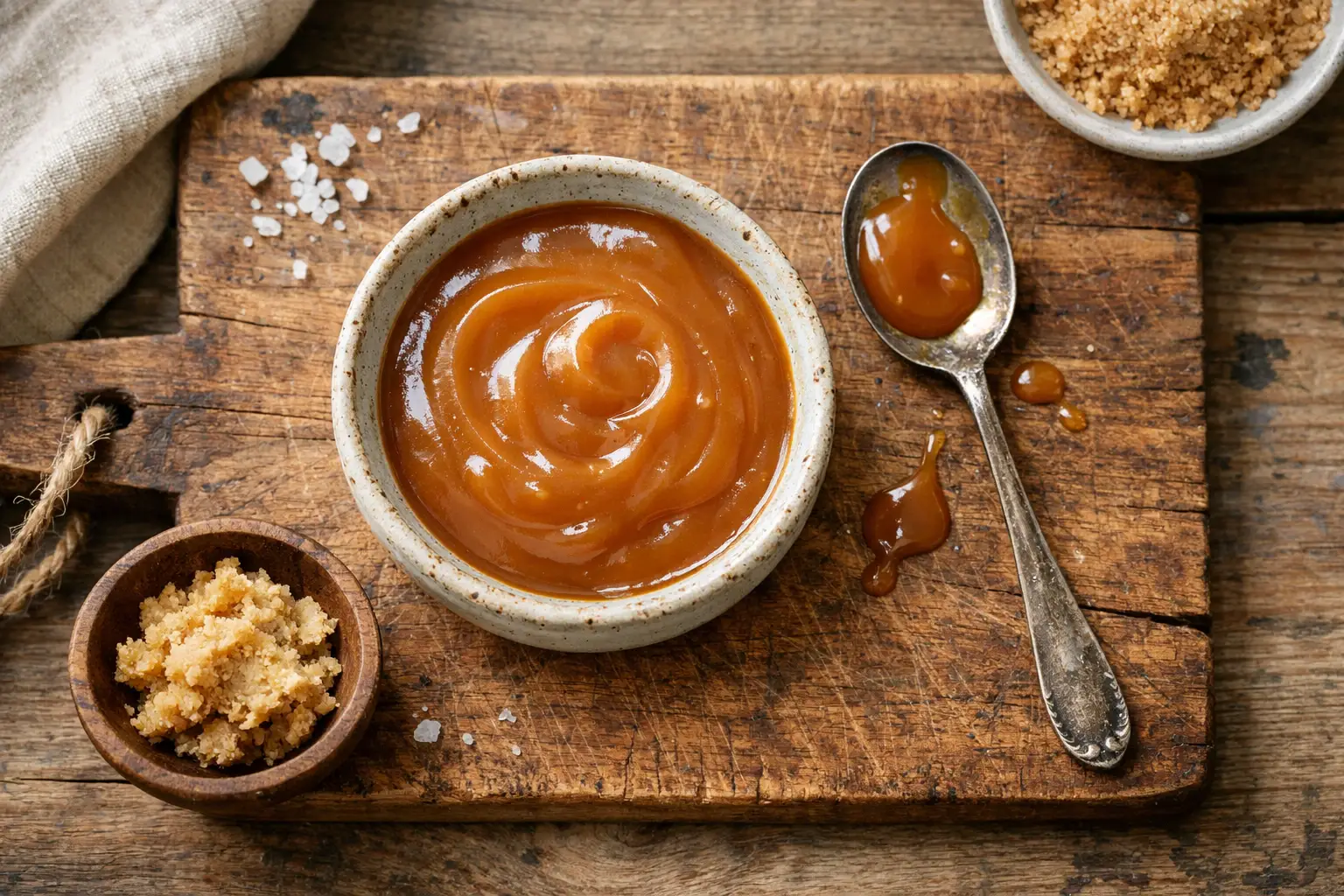
A sweet-salty umami dessert sauce blending caramelized sugar with fermented miso paste, delivering 60 calories per 20g serving with unique probiotic benefits.
Quick Nutrition Facts
Per 1 Serving (20g)
| Nutrient | Amount |
|---|---|
| Calories | 60 kcal |
| Protein | 1g |
| Carbohydrates | 10g |
| Fiber | 0.2g |
| Sugars | 8g |
| Fat | 2g |
| Sodium | 150mg |
| Manganese | 0.1mg |
| Copper | 0.03mg |
| Calcium | 12mg |
Macronutrient Breakdown
 ChatGPT
  Claude
  AI Mode
  Perplexity
NUTRITIONIST INSIGHT
Miso caramel sauce gets its unique edge from fermented soybean paste, which provides probiotics and isoflavones alongside the expected sweetness. Use it as a 1-tablespoon drizzle rather than a pour to keep sugar intake in check while enjoying its umami depth.
Myth Busters
MYTH #1: Miso Caramel Sauce Is Just Regular Caramel
TRUTH: Unlike plain caramel, miso caramel contains fermented soybean paste that provides probiotics, isoflavones, and minerals like manganese and copper. The fermentation process creates beneficial bacteria including Lactobacilli and Bifidobacteria.
MYTH #2: Fermented Miso Makes This Sauce Healthy Enough to Eat Freely
TRUTH: Despite miso's benefits, miso caramel sauce is still 40% sugar by weight. A 20g serving delivers 8g of sugar and 60 calories. The health benefits of miso are best obtained from miso soup or paste used in cooking, not sugar-laden sauces.
MYTH #3: Miso Caramel Is Too High in Sodium
TRUTH: A 20g serving contains about 150mg sodium, which is only 6% of the daily recommended limit. Compare this to soy sauce (900mg per tablespoon) or ketchup (160mg per tablespoon). The sodium in fermented miso may also have less hypertensive effect than table salt.
MYTH #4: The Probiotics in Miso Caramel Are Destroyed by Cooking
TRUTH: While high-heat caramelization does reduce live probiotic cultures, the isoflavones and peptides produced during fermentation remain heat-stable. These bioactive compounds still offer antioxidant and anti-inflammatory benefits even after cooking.
MYTH #5: Miso Caramel Sauce Has No Nutritional Value
TRUTH: Beyond calories and sugar, miso contributes B vitamins, manganese, copper, and zinc from the fermented soybean base. Soy foods provide complete protein with all nine essential amino acids, though the amount per serving of sauce is modest.
NutriScore by Health Goals
| Health Goal | NutriScore | Why This Score? |
|---|---|---|
| Weight Loss |  | 300 cal per 100g with 40g sugar. Use sparingly as a 1-teaspoon drizzle (30 cal) instead of larger portions. |
| Muscle Gain |  | Minimal protein (1g per serving). Best as a flavor enhancer on protein-rich meals like grilled chicken or yogurt bowls. |
| Diabetes Management | | High sugar content raises blood glucose quickly. Habitual miso consumption may help glycemic variability, but the sugar offsets this benefit. Limit to 1 teaspoon. |
| PCOS Management | | Sugar and simple carbs can worsen insulin resistance. Soy isoflavones may offer some benefit, but not enough to offset the sugar load. Use minimally. |
| Pregnancy Nutrition | | Safe in moderation. Miso provides folate and B vitamins. Focus on nutrient-dense foods during pregnancy and keep added sugar intake low. |
| Viral/Flu Recovery | | Quick energy from sugar, plus fermented soy compounds support immune function. Better options exist, but acceptable as a small flavor addition. |
PERSONALIZED NUTRITION
Track your meals with NutriScan for personalized NutriScores based on your specific health goals!
Blood Sugar Response to Miso Caramel Sauce
Understanding how miso caramel sauce affects your blood glucose helps you decide when and how much to use.
Typical Glucose Response Curve
*This chart shows typical blood glucose response for general healthy individuals. Individual responses may vary. Not medical advice.*
How to Flatten the Spike
Pairing sugar-based sauces with protein or healthy fat slows glucose absorption and reduces the peak blood sugar level:
- 🥜 Drizzle over nut butter toast - Fat and protein from nuts buffer the sugar
- 🍦 Use on Greek yogurt instead of ice cream - Protein-rich base slows absorption
- 🍗 Glaze grilled chicken or salmon - Savory protein pairing reduces glycemic impact
- 🍎 Pair with fresh apple slices - Fiber from fruit helps moderate blood sugar
This approach not only flattens the glucose spike but also enhances the umami-sweet flavor profile.
Cultural Significance
Miso caramel sauce is a modern fusion condiment born from the global intersection of Japanese fermentation traditions and Western confectionery.
Japanese Roots:
- Miso paste has been a staple in Japanese cuisine for over 1,300 years, originating from Chinese fermented soybean paste (jiang)
- The fermentation process using Aspergillus oryzae (koji mold) is recognized by Japan as a national fungus
- Traditional miso varieties include white (shiro), red (aka), and mixed (awase), each bringing different flavor profiles to caramel
Global Fusion:
- Gained popularity in Western fine dining during the 2010s as chefs explored umami in desserts
- Now widely featured in artisan bakeries, coffee shops, and home cooking worldwide
- Represents the broader trend of incorporating fermented ingredients into sweet applications
- Popular in Australia, UK, and US food scenes as a sophisticated alternative to salted caramel
Compare & Substitute
Miso Caramel Sauce vs Similar Condiments (Per 100g)
| Nutrient | 🍯 Miso Caramel | 🍮 Regular Caramel | 🍯 Honey | 🥫 Dulce de Leche |
|---|---|---|---|---|
| Calories | 300 kcal | 350 kcal | 304 kcal | 315 kcal |
| Carbs | 50g | 65g | 82g | 56g |
| Fiber | 0.5g | 0g | 0.2g | 0g |
| Protein | 5g | 1g | 0.3g | 7g |
| Fat | 10g | 12g | 0g | 8g |
| Sodium | 750mg | 200mg | 4mg | 130mg |
| Sugar | 40g | 55g | 82g | 50g |
| Best For | Umami depth, savory-sweet | Classic dessert topping | Natural sweetener | Rich dairy-based topping |
Frequently Asked Questions
How many calories are in miso caramel sauce?
A 20g serving of miso caramel sauce contains approximately 60 calories. Per 100g, it provides about 300 calories, making it a calorie-dense condiment best used in small drizzles of 1-2 teaspoons.
Is miso caramel sauce healthy?
Miso caramel sauce offers modest benefits from fermented soybean paste, including isoflavones, minerals, and bioactive peptides. However, it remains a high-sugar condiment. Use it as a flavor enhancer (1 teaspoon) rather than a health food.
Best approach: Enjoy in moderation as part of a balanced diet, choosing it over plain caramel for its additional nutritional compounds.
Can diabetics eat miso caramel sauce?
Diabetics should limit miso caramel sauce due to its high sugar content (8g per 20g serving).
Tips for diabetics:
- Use 1 teaspoon (5g) as a drizzle, not a pour
- Pair with protein-rich foods to slow glucose absorption
- Choose it to glaze savory proteins rather than top desserts
- Monitor blood sugar 2 hours after consuming
Always consult your healthcare provider about incorporating sweet condiments into your meal plan.
What makes miso caramel different from regular caramel?
Miso caramel adds fermented soybean paste to traditional caramel, creating a complex sweet-salty-umami flavor. Beyond taste, miso contributes complete plant protein, probiotics (if uncooked), isoflavones, and minerals not present in regular caramel sauce.
How should I store miso caramel sauce?
Storage tips:
- Refrigerated: Lasts 2-3 weeks in an airtight container
- Room temperature: Use within 3-5 days if homemade
- Freezing: Can freeze for up to 3 months; thaw in refrigerator
- Reheat gently: Warm in microwave (10-second intervals) or stovetop over low heat
What are the best ways to use miso caramel sauce?
Sweet applications: Ice cream topping, pancake drizzle, fruit dip, brownie glaze, cheesecake swirl, coffee flavoring.
Savory applications: Grilled meat glaze, roasted vegetable finish, stir-fry sauce base, popcorn drizzle.
Track your condiment portions with NutriScan app to stay within your daily nutrition goals.




Similar Nutritious Foods
4505 Chicharrones Classic Chili Salt
7 Eleven Japan Crispy Corn Cheese
Explore More Nutrition Tools & Resources
AI Calorie Counter App - Snap a Photo, Get Macros
AI Nutritionist App That Reads Your Logged Meals
Best Protein Supplements for Women
Bulking Meal Plan App That Sets Your Surplus
ChatGPT Calorie Counter Alternative That Keeps the Total
ChatGPT Diet Plan Alternative That Tracks What You Eat
ChatGPT Weight Loss Coach Alternative With a Food Log
Fast Food Calorie Counter App That Reads the Tray
Free Calorie Tracker App with AI Photo Scans | NutriScan
Indian Diet Plan App With Veg and Non Veg Meals
Indian Food Calorie Calculator - Get Instant Nutrition Facts for Desi Meals — 2026
Intermittent Fasting for Women, Timer and Meal Log App
Intermittent Fasting Tracker App - Free Fasting Timer
Macro Tracker App That Fills the Numbers From a Photo
Mediterranean Diet Meal Plan App That Counts the Oil
Micronutrient Tracker App for Vitamins and Minerals
MyFitnessPal Alternative That Stays Free | NutriScan
NutriScore App: A Free Grade on Every Meal | NutriScan
Nutrition Label Scanner App for the Amount You Ate
Second Trimester Protein Guide
Vegetarian Meal Plan App With a Protein Target
Voice Calorie Counter - Speak to Track Meals Hands-Free
Water and Calorie Tracker App - Free Water Log