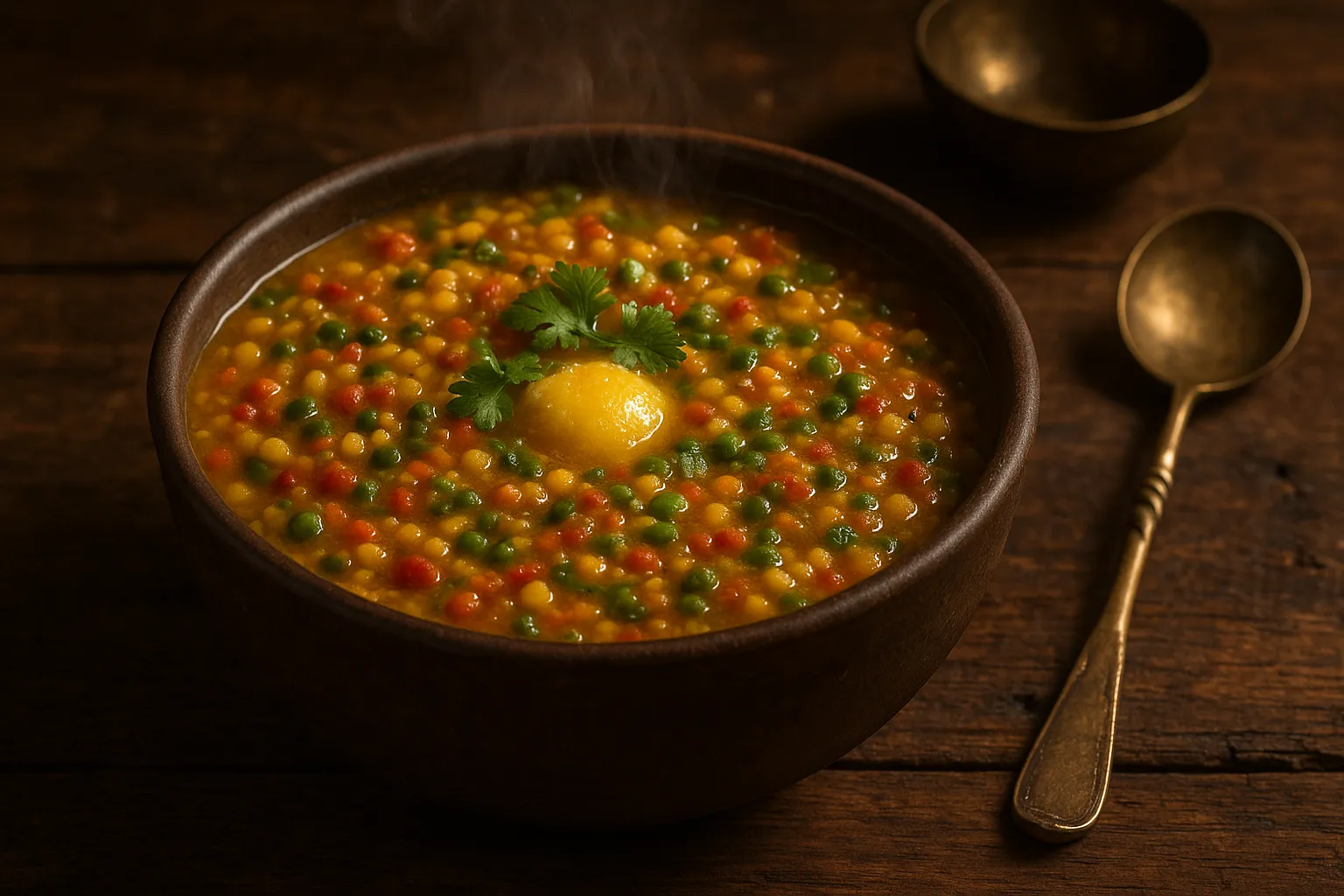
Mixed Daal: Calories, Nutrition and Health Benefits
Ancient Indian superfood combining red, yellow, and green lentils for complete plant-based protein, fiber, and sustained energy.
Quick Nutrition Facts
Per 1 Serving (250ml cooked)
| Nutrient | Amount |
|---|---|
| Calories | 200 kcal |
| Protein | 14g |
| Carbohydrates | 28g |
| Fiber | 7.5g |
| Sugars | 1g |
| Fat | 4g |
| Iron | 3.5mg |
| Folate | 180mcg |
| Magnesium | 48mg |
| Potassium | 420mg |
Macronutrient Breakdown
 ChatGPT
  Claude
  AI Mode
  Perplexity
NUTRITIONIST INSIGHT
Mixed daal provides low glycemic index (30-32) carbs combined with 14g plant protein and 7.5g fiber. This combination creates stable blood sugar and prolonged satiety. The resistant starch supports gut health and beneficial bacteria growth.
Myth Busters
MYTH #1: Daal Is Only for Weight Gain
TRUTH: Mixed daal aids weight loss due to high fiber (7.5g) and protein (14g) which promote fullness. At 200 calories per serving with sustained energy release, it prevents overeating and blood sugar crashes.
MYTH #2: Plant Protein From Daal Is Incomplete
TRUTH: Mixing different lentil varieties creates a complete amino acid profile. When paired with whole grains (rice, roti), daal provides all nine essential amino acids needed for muscle building and repair.
MYTH #3: Daal Has High Glycemic Impact
TRUTH: Mixed daal has low glycemic index (30-32) due to resistant starch and high fiber. Studies show daal consumption improves insulin sensitivity even in diabetic patients compared to rice alone.
MYTH #4: Daal Causes Bloating and Gas
TRUTH: Soaking lentils for 2-4 hours and cooking with spices like turmeric and asafetida reduces fermentable compounds that cause bloating. Gradual introduction builds gut tolerance.
MYTH #5: All Lentils Require Overnight Soaking
TRUTH: Red and yellow lentils cook in 15-20 minutes without soaking, while green lentils benefit from soaking. The soaking reduces phytic acid slightly but cooking achieves similar results for most lentil varieties.
NutriScore by Health Goals
| Health Goal | NutriScore | Why This Score? |
|---|---|---|
| Weight Loss |  | 200 cal, 14g protein, 7.5g fiber = sustained satiety; low GI prevents crashes; 4g fat aids micronutrient absorption. 1-2 servings daily fits calorie goals. |
| Muscle Gain | | 14g complete plant protein per serving; carbs for glycogen; polyphenols aid post-workout recovery. Combine with grains for optimal amino acids. |
| Diabetes Management | | Low GI (30-32); 7.5g fiber slows glucose; resistant starch improves insulin sensitivity. Ideal for blood sugar control. |
| PCOS Management | | Plant protein helps insulin management; resistant starch reduces inflammation; 7.5g fiber aids hormonal balance. |
| Pregnancy Nutrition | | 180mcg folate prevents neural tube defects, 3.5mg iron prevents anemia; 14g protein aids fetal growth; fiber prevents pregnancy constipation. |
| Viral/Flu Recovery | | Easy to digest when cooked soft; protein for immune recovery; iron for oxygen transport; polyphenols for antioxidant support during infection. |
PERSONALIZED NUTRITION
Track your meals with NutriScan for personalized NutriScores based on your specific health goals!
Blood Sugar Response to Mixed Daal
Understanding how mixed daal affects your blood glucose reveals why it's ideal for diabetes and weight management.
Typical Glucose Response Curve
This chart shows typical blood glucose response for general healthy individuals. Individual responses may vary. Not medical advice.
How to Maximize Benefits
Pairing daal with whole grains and vegetables optimizes protein completeness and blood sugar control:
- 🍚 Whole grain rice or millet - Completes amino acid profile; slows glucose further
- 🥬 Leafy greens (spinach, fenugreek) - Adds iron bioavailability; boosts fiber
- 🧈 Ghee or oil - Enhances fat-soluble vitamin absorption (vitamin A, K); slows digestion
- 🌿 Spices (turmeric, cumin, asafetida) - Anti-inflammatory; aids digestion; reduces bloating
This traditional combination creates optimal nutrition and sustained energy lasting 4-6 hours.
Cultural Significance
Daal is the foundation of Indian cuisine for over 4,000 years, central to Ayurvedic medicine and daily nutrition across the Indian subcontinent.
In India:
- Staple protein source in vegetarian households across all religions
- Symbol of hospitality: first meal offered to guests
- Different regional variations: Punjabi (butter daal), South Indian (sambar), Bengali (musur daal)
- Mentioned in ancient Sanskrit texts as "bahu-guna" (having many virtues)
- Essential during religious fasts and festivals
Global Impact:
- World's largest producer and consumer of lentils (India produces 30% globally)
- Exported worldwide; increasingly recognized as sustainable plant protein
- Perfect protein for vegan and vegetarian diets
- Climate-resilient crop; requires minimal water and pesticides
Compare & Substitute
Mixed Daal vs Similar Plant Proteins (Per serving)
| Nutrient | 🍲 Mixed Daal | 🫘 Chickpea Curry | 🥜 Peanut Butter | 🌱 Tofu (100g) |
|---|---|---|---|---|
| Calories | 200 | 250 | 190 (2 tbsp) | 80 |
| Protein | 14g | 12g | 8g | 9g |
| Carbs | 28g | 35g | 6g | 2g |
| Fiber | 7.5g | 9g | 2g | 1.2g |
| Fat | 4g | 6g | 17g | 5g |
| Iron | 3.5mg | 2.8mg | 1.7mg | 1.5mg |
| GI | 30-32 (Low) | 28 (Low) | 13 (Very Low) | 15 (Very Low) |
| Best For | Complete plant protein, fiber | Higher protein option | High calorie needs | Low-carb diets |
Frequently Asked Questions
Is mixed daal good for weight loss?
Yes, at 200 calories with 14g protein and 7.5g fiber, mixed daal promotes sustained fullness. The low glycemic index (30-32) prevents energy crashes that trigger overeating. Have 1-2 servings daily with vegetables for optimal weight loss results.
How much protein is in mixed daal?
One serving provides 14 grams of plant-based protein from mixed lentils. When paired with whole grains (rice, roti), it becomes a complete protein with all nine essential amino acids needed for muscle building and repair.
Can diabetics eat mixed daal?
Absolutely. Studies show daal has low glycemic index (30-32) and resistant starch improves insulin sensitivity. The 7.5g fiber per serving significantly slows glucose absorption, making it ideal for blood sugar management.
What's the best way to prepare mixed daal?
Soak for 2-4 hours (optional for quick-cooking red lentils), cook with turmeric and asafetida to reduce bloating, include vegetables (spinach, tomato, carrot), and serve with whole grain rice or roti for complete protein. Traditional preparation optimizes both taste and nutrition.
Is daal good during pregnancy?
Yes. Mixed daal provides 180mcg folate (crucial for fetal neural development), 14g protein for fetal growth, 3.5mg iron for anemia prevention, and 7.5g fiber for pregnancy-related constipation. Include with grains daily for optimal pregnancy nutrition.
Why does daal cause gas?
Lentils contain oligosaccharides (fermentable carbs) that gut bacteria metabolize, producing gas. Solution: soak for 2-4 hours before cooking, use spices (turmeric, cumin), cook thoroughly, introduce gradually, and eat slowly. Most people develop tolerance within 2-3 weeks.


Similar Nutritious Foods
4505 Chicharrones Classic Chili Salt
7 Eleven Japan Crispy Corn Cheese
Explore More Nutrition Tools & Resources
AI Calorie Counter App - Snap a Photo, Get Macros
AI Nutritionist App That Reads Your Logged Meals
Best Protein Supplements for Women
Bulking Meal Plan App That Sets Your Surplus
ChatGPT Calorie Counter Alternative That Keeps the Total
ChatGPT Diet Plan Alternative That Tracks What You Eat
ChatGPT Weight Loss Coach Alternative With a Food Log
Fast Food Calorie Counter App That Reads the Tray
Free Calorie Tracker App with AI Photo Scans | NutriScan
Indian Diet Plan App With Veg and Non Veg Meals
Indian Food Calorie Calculator - Get Instant Nutrition Facts for Desi Meals — 2026
Intermittent Fasting for Women, Timer and Meal Log App
Intermittent Fasting Tracker App - Free Fasting Timer
Macro Tracker App That Fills the Numbers From a Photo
Mediterranean Diet Meal Plan App That Counts the Oil
Micronutrient Tracker App for Vitamins and Minerals
MyFitnessPal Alternative That Stays Free | NutriScan
NutriScore App: A Free Grade on Every Meal | NutriScan
Nutrition Label Scanner App for the Amount You Ate
Second Trimester Protein Guide
Vegetarian Meal Plan App With a Protein Target
Voice Calorie Counter - Speak to Track Meals Hands-Free
Water and Calorie Tracker App - Free Water Log