Mixed Vegetable Curry: Calories, Nutrition and Health Benefits
A colorful, nutrient-dense dish combining seasonal vegetables with aromatic spices—a cornerstone of plant-based nutrition and traditional Indian home cooking.
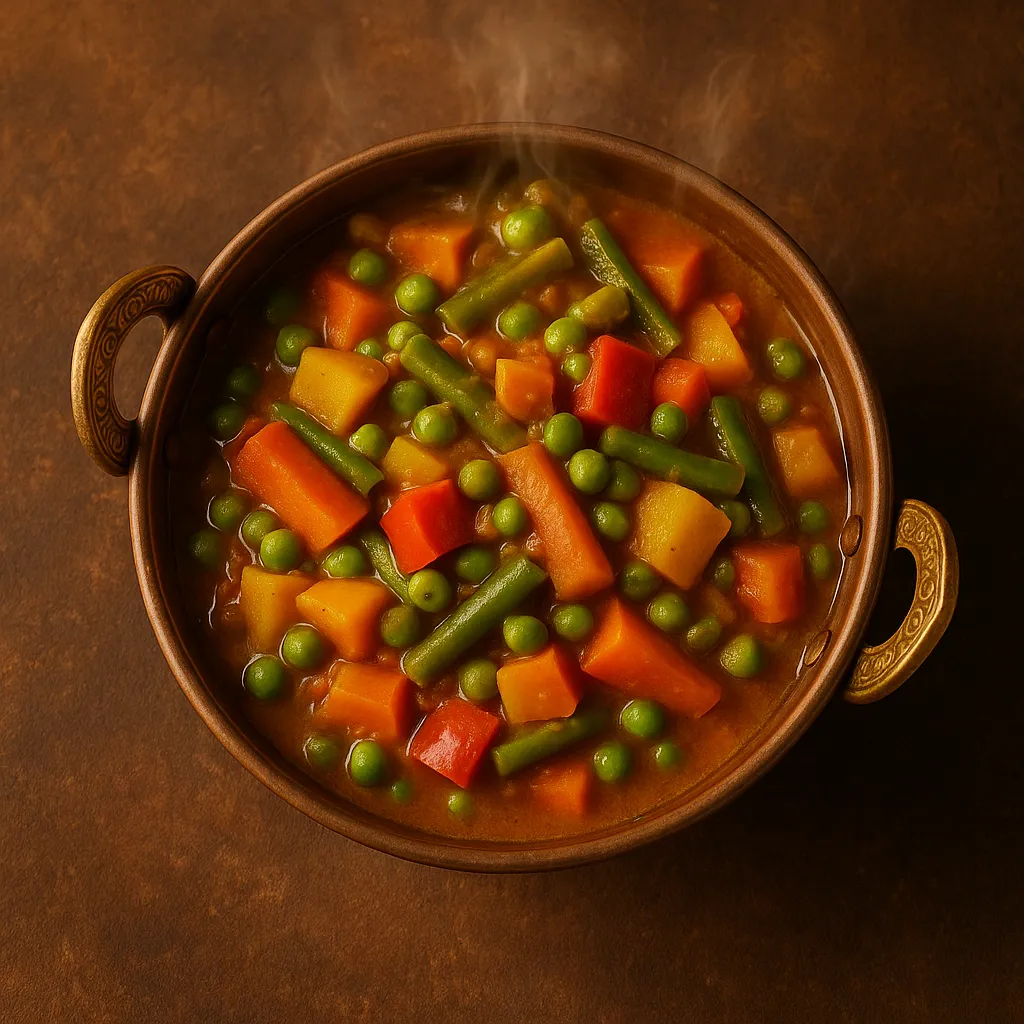
Quick Nutrition Facts
Per 1 Cup Mixed Vegetable Curry (200g)
| Nutrient | Amount |
|---|---|
| Calories | 145 kcal |
| Protein | 4g |
| Carbohydrates | 18g |
| Fiber | 5g |
| Sugars | 6g |
| Fat | 6g |
| Vitamin A | 285mcg |
| Vitamin C | 18mg |
| Potassium | 285mg |
| Iron | 1.5mg |
Macronutrient Breakdown
 ChatGPT
  Claude
  AI Mode
  Perplexity
NUTRITIONIST INSIGHT
Mixed vegetable curry is a nutrient-dense staple in Indian cuisine, providing polyphenol antioxidants from turmeric and ginger that reduce inflammation. The diverse vegetable combination ensures a complete spectrum of vitamins, minerals, and phytochemicals. At only 145 calories per cup with 5g fiber, it's ideal for weight management without nutrient compromise.
Myth Busters
MYTH #1: Vegetable Curry Is High in Calories
TRUTH: Traditional vegetable curry without coconut milk is only 145 calories per cup. The calories come from cooking oil (1-2 tsp). By controlling oil and using water or light tomato base, you reduce calories while maintaining flavor through spices.
MYTH #2: Vegetable Curry Lacks Protein
TRUTH: While vegetables alone provide modest protein (4g), curry typically includes peas (2g), beans (3g), or chickpeas (5g+). Serve with dal, paneer, or tofu to reach 15-20g protein per meal.
MYTH #3: Spices in Curry Are Too Much for Digestion
TRUTH: Turmeric, cumin, and ginger are digestive aids, not irritants. Studies show curcumin and ginger improve digestive enzyme secretion and reduce bloating. Traditional Indian medicine uses curry spices specifically for digestion support.
MYTH #4: Cooked Vegetables Lose All Nutrients
TRUTH: Light cooking of mixed vegetables retains 80-90% of vitamins and minerals. Lycopene in tomatoes actually increases with cooking. The heat breaks down cell walls, improving bioavailability of fat-soluble vitamins A, D, K.
MYTH #5: Vegetable Curry Cannot Support Muscle Gain
TRUTH: Vegetable curry provides micronutrients and phytonutrients essential for muscle recovery. Combined with protein sources (dal, paneer, tofu), it becomes a complete post-workout meal. The carbs replenish glycogen; spices reduce exercise-induced inflammation.
MYTH #6: Store-Bought Curry Paste Is Same as Homemade
TRUTH: Packaged curry pastes often contain added sugar (3-5g per 2 tbsp), preservatives, and high sodium. Homemade curry uses fresh spices with zero added sugar. Fresh turmeric, ginger, and garlic deliver higher curcumin and gingerol content.
NutriScore by Health Goals
| Health Goal | NutriScore | Why This Score? |
|---|---|---|
| Weight Loss |  | 145 calories, 5g fiber, minimal fat (1 tsp oil). High satiety from vegetables. Serve with brown rice for balanced meals under 400 calories. |
| Muscle Gain |  | 4g protein from vegetables; combine with dal, paneer, or tofu to reach 15-20g per meal. Micronutrients support recovery and reduce inflammation. |
| Diabetes Management | | Most vegetables have GI <55. Turmeric improves insulin sensitivity. Pair with protein for further glucose flattening. Keep oil under 1 tsp per cup. |
| PCOS Management | | Vegetables support hormone balance; turmeric reduces inflammation linked to PCOS. Fiber helps regulate blood sugar. Excellent staple for hormonal health. |
| Pregnancy Nutrition | | Leafy greens provide folate, carrots offer beta-carotene, peas give plant protein. Turmeric aids digestion. Cook vegetables thoroughly for food safety. |
| Viral/Flu Recovery | | Vitamins A, C support immune function; ginger aids inflammation reduction; light, easily digestible. Warm and comforting; provides nutrients without digestive stress. |
PERSONALIZED NUTRITION
Track your vegetable curry meals with NutriScan for personalized NutriScores based on your specific health goals!
Blood Sugar Response to Mixed Vegetable Curry
Understanding the glucose impact helps optimize meal timing and pairings.
Typical Glucose Response Curve
This chart shows typical blood glucose response for general healthy individuals. Individual responses may vary. Not medical advice.
How to Optimize Glucose Response
Pair vegetable curry strategically for stable blood sugar:
- 🫘 Dal or legume curry - Adds protein and fiber for sustained energy release
- 🧀 Paneer or tofu - Complete protein; slows carb absorption significantly
- 🥬 Leafy green addition - Spinach or methi increases fiber and micronutrients
- 🥜 Nuts or seeds topping - Healthy fats extend satiety and flatten glucose curve
- 🍚 Brown rice or millet - Better than white rice; lower GI and higher fiber
This combination ensures stable blood glucose while maximizing nutritional benefit.
Cultural Significance
Mixed vegetable curry is fundamental to Indian culinary tradition, representing sustainability, health, and community.
In India:
- Regional variations: each state has unique combinations reflecting local agriculture
- Traditional comfort food served at daily family meals across all economic classes
- Central to vegetarian philosophy and Ayurvedic medicine for balancing doshas
- Uses seasonal vegetables, promoting sustainable local agriculture
- Cooked fresh daily in most Indian households; rarely from packaged mixes
Global Recognition:
- Growing appreciation in plant-based and vegan movements worldwide
- Recognized by nutritionists as a model for micronutrient-dense, low-calorie meals
- Increasing popularity in health-conscious cooking shows and blogs
- Foundation dish for Mediterranean and Asian fusion cuisines
Compare & Substitute
Mixed Vegetable Curry vs Similar Vegetable Dishes (Per 200g serving)
| Nutrient | Mixed Veg Curry | Stir-Fried Vegetables | Steamed Vegetables | Vegetable Soup |
|---|---|---|---|---|
| Calories | 145 kcal | 180 kcal | 95 kcal | 75 kcal |
| Carbs | 18g | 16g | 16g | 12g |
| Fiber | 5g | 4g | 4.5g | 3g |
| Protein | 4g | 4g | 3.5g | 2.5g |
| Fat | 6g | 10g | 0.5g | 1g |
| Vitamin C | 18mg | 22mg | 20mg | 12mg |
| Best For | Balanced meals, flavor, warmth | Quick wok meals, Asian fusion | Calorie-conscious, detox | Light broth, wellness |
Frequently Asked Questions
Is mixed vegetable curry good for weight loss?
Absolutely. At 145 calories per cup with 5g fiber and only 6g fat (if 1 tsp oil), vegetable curry provides fullness without excess calories. The spices enhance metabolism; fiber slows digestion, maintaining satiety. Serve with brown rice or roti to create satisfying, balanced meals under 400 calories.
Can diabetics eat mixed vegetable curry?
Yes, it's ideal for diabetes. Most vegetables have low glycemic index, and turmeric's curcumin improves insulin sensitivity. Keep oil under 1 tsp per cup to control calories. Combine with protein (dal, paneer, tofu) to further flatten glucose spikes.
How much protein is in mixed vegetable curry?
One cup contains 4g from vegetables (peas contribute significantly). For muscle gain or recovery, pair with complementary proteins: dal (6g), paneer (8g), tofu (10g), or chickpeas (7g). This creates a complete 15-20g protein meal supporting muscle maintenance.
What are the main health benefits of vegetable curry?
Mixed vegetables provide complete micronutrient spectrum: vitamin A (from carrots), vitamin C (immune support), K (bone health), potassium (cardiovascular), magnesium (muscle function), and antioxidants. Turmeric's curcumin reduces systemic inflammation; ginger aids digestion. Together, they support immune function, cardiovascular health, and inflammation reduction.
How much sodium is in vegetable curry?
Homemade curry with 1/2 tsp salt contains approximately 200-250mg per cup—reasonable for a main dish. Store-bought versions can have 600-800mg. To reduce sodium: use half-salt, salt-free spice blends, emphasize turmeric and ginger for flavor, add lemon juice for tangy seasoning.
Is vegetable curry safe during pregnancy?
Yes, in moderation and with proper food safety. Leafy greens provide folate (essential first trimester); carrots offer beta-carotene for fetal development; peas provide plant protein. Turmeric aids digestion; ginger helps with nausea. Ensure vegetables are cooked thoroughly to avoid foodborne pathogens.
Can I freeze mixed vegetable curry?
Yes, it freezes excellently for up to 3 months. Cool completely before freezing in airtight containers. When reheating, thaw overnight and warm gently on stovetop to preserve vegetable texture. Fiber content remains intact; minimal nutrient loss.
Is vegetable curry better for the environment?
Yes. Plant-based curries have significantly lower environmental impact than meat-based dishes. Using seasonal, local vegetables further reduces footprint. By featuring vegetable curry 3-4 times weekly, households reduce their environmental impact while improving nutritional diversity.


Similar Nutritious Indian Foods
4505 Chicharrones Classic Chili Salt
7 Eleven Japan Crispy Corn Cheese
Explore More Nutrition Tools & Resources
AI Calorie Counter App - Snap a Photo, Get Macros
AI Nutritionist App That Reads Your Logged Meals
Best Protein Supplements for Women
Bulking Meal Plan App That Sets Your Surplus
ChatGPT Calorie Counter Alternative That Keeps the Total
ChatGPT Diet Plan Alternative That Tracks What You Eat
ChatGPT Weight Loss Coach Alternative With a Food Log
Fast Food Calorie Counter App That Reads the Tray
Free Calorie Tracker App with AI Photo Scans | NutriScan
Indian Diet Plan App With Veg and Non Veg Meals
Indian Food Calorie Calculator - Get Instant Nutrition Facts for Desi Meals — 2026
Intermittent Fasting for Women, Timer and Meal Log App
Intermittent Fasting Tracker App - Free Fasting Timer
Macro Tracker App That Fills the Numbers From a Photo
Mediterranean Diet Meal Plan App That Counts the Oil
Micronutrient Tracker App for Vitamins and Minerals
MyFitnessPal Alternative That Stays Free | NutriScan
NutriScore App: A Free Grade on Every Meal | NutriScan
Nutrition Label Scanner App for the Amount You Ate
Second Trimester Protein Guide
Vegetarian Meal Plan App With a Protein Target
Voice Calorie Counter - Speak to Track Meals Hands-Free
Water and Calorie Tracker App - Free Water Log