Mixed Vegetable Raita: Calories, Nutrition and Health Benefits
A refreshing yogurt-based side dish with cucumber, tomato, and carrots—packed with probiotics, hydration, and cooling properties for digestive health.
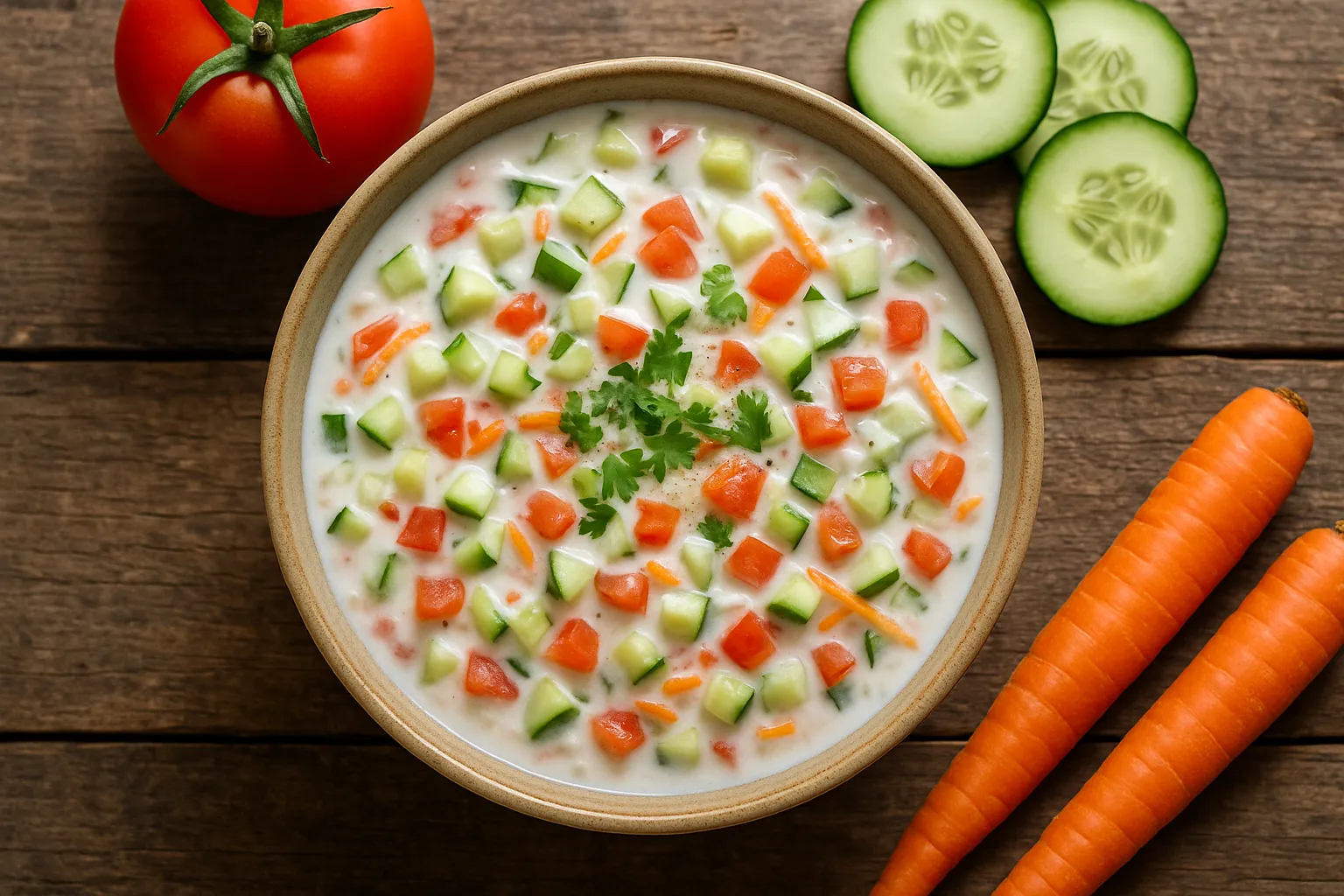
Quick Nutrition Facts
Per 1 Cup (200g)
| Nutrient | Amount |
|---|---|
| Calories | 60 kcal |
| Protein | 4g |
| Carbohydrates | 8g |
| Fiber | 1.2g |
| Sugars | 6g |
| Fat | 1.5g |
| Calcium | 120mg |
| Potassium | 220mg |
| Vitamin C | 8mg |
| Probiotics | 1-10 billion CFU |
Macronutrient Breakdown
 ChatGPT
  Claude
  AI Mode
  Perplexity
NUTRITIONIST INSIGHT
Raita's probiotics support gut health and boost metabolism, while its 90%+ water content provides hydration and satiety with minimal calories. The cooling properties naturally balance spicy Indian meals and reduce digestive acidity.
Myth Busters
MYTH #1: Raita Causes Weight Gain
TRUTH: At only 60 calories per cup, raita is one of the lowest-calorie accompaniments in Indian cuisine. The probiotics in yogurt may actually enhance weight loss by improving gut microbiome health and metabolism. Weight gain comes from excess total calories, not raita.
MYTH #2: Yogurt-Based Foods Spike Blood Sugar
TRUTH: Raita has a low glycemic index (GI ~30-35) thanks to protein, fat, and probiotics that slow carbohydrate digestion. Traditional Indian dietary practices like consuming raita with meals help manage blood glucose in people with diabetes.
MYTH #3: Raita Should Be Avoided in Summer
TRUTH: Raita is ideal for hot weather! The cooling properties of yogurt and cucumber naturally lower body temperature, while the high water content prevents dehydration. Ayurveda recommends cooling foods like raita during summer months.
MYTH #4: All Probiotics Are the Same
TRUTH: Yogurt-based foods like raita contain live Lactobacillus and Bifidobacterium strains that specifically support digestive health and immune function. Fresh, homemade raita provides more active cultures than processed yogurt products.
MYTH #5: Raita Causes Bloating
TRUTH: For most people, raita aids digestion rather than causing bloating. The probiotics support healthy gut bacteria, while cucumber's water content and fiber promote regularity. Only avoid if lactose intolerant; try dairy-free yogurt alternatives.
MYTH #6: Raita Has No Nutritional Value
TRUTH: Beyond probiotics, raita provides protein (4g per cup), calcium (120mg), vitamin C from vegetables, and cooling spices like cumin that enhance digestive enzyme activity. It's a nutrient-dense, not just a flavor enhancer.
NutriScore by Health Goals
| Health Goal | NutriScore | Why This Score? |
|---|---|---|
| Weight Loss |  | Only 60 calories per cup, high water content (90%+) for fullness, probiotics boost metabolism. Eat 1 cup daily with meals. |
| Muscle Gain |  | Provides 4g protein plus calcium for muscle function and recovery. Pair with protein-rich meals for optimal gains. |
| Diabetes Management | | Low GI (~30-35) with probiotics that help regulate blood sugar. Cucumber and tomato add fiber without glucose spikes. |
| PCOS Management | | Low-calorie, probiotic-rich food supports gut health and hormonal balance. High water content aids metabolism. Use low-fat yogurt. |
| Pregnancy Nutrition | | Probiotics support maternal gut health, calcium (120mg) for fetal bone development, cooling properties reduce nausea. |
| Viral/Flu Recovery | | Easy to digest, hydrating (90%+ water), probiotics boost immunity, vitamin C from vegetables supports recovery. |
PERSONALIZED NUTRITION
Track your meals with NutriScan for personalized NutriScores based on your specific health goals!
Blood Sugar Response to Mixed Vegetable Raita
Understanding how raita affects blood glucose helps you incorporate it strategically into your meals.
Typical Glucose Response Curve
This chart shows typical blood glucose response for general healthy individuals. Individual responses may vary. Not medical advice.
How Raita Stabilizes Blood Sugar
The combination of protein, fat, and probiotics in raita slows carbohydrate digestion and minimizes glucose spikes:
- 🥒 Cucumber (95% water) - Adds volume and fiber with minimal carbs
- 🍅 Tomato (low GI) - Provides antioxidants without raising blood sugar
- 🥕 Carrots (beta-carotene) - Fiber-rich with moderate natural sugars
- 🥛 Probiotics in yogurt - Enhance insulin sensitivity and glucose metabolism
Consuming raita with roti, rice, or biryani reduces the meal's overall glycemic impact by 15-25%.
Cultural Significance
Raita is a cornerstone of Indian cuisine, dating back thousands of years in Ayurvedic dietary traditions.
In India:
- Essential accompaniment to biryanis, pulaos, parathas, and thalis across all regions
- Regional variations: Boondi raita (North), Pachadi (South), Koshimbir (Maharashtra)
- Ayurveda classifies yogurt as cooling (sheeta virya), balancing hot spices
- Served at weddings, festivals, and daily meals—from homes to restaurants
- Cumin (jeera) and mint are added for digestive and cooling benefits
Global Impact:
- Similar yogurt-based dishes: Greek tzatziki, Turkish cacik, Middle Eastern laban
- Adopted worldwide as a healthy, probiotic-rich condiment
- Featured in fusion cuisines and modern healthy eating trends
Compare & Substitute
Raita vs Similar Yogurt-Based Dishes (Per 100g)
| Nutrient | 🥒 Mixed Veg Raita | 🥛 Plain Yogurt (Low-fat) | 🇬🇷 Greek Yogurt | 🥙 Tzatziki | 🥤 Lassi (Sweet) |
|---|---|---|---|---|---|
| Calories | 30 kcal | 59 kcal | 97 kcal | 54 kcal | 65 kcal |
| Carbs | 4g | 4.7g | 3.6g | 4.2g | 12g |
| Fiber | 0.6g | 0g | 0g | 0.5g | 0g |
| Protein | 2g | 3.5g | 10.2g | 2.8g | 2.5g |
| Fat | 0.8g | 1.5g | 5g | 3.2g | 1.2g |
| Calcium | 60mg | 121mg | 110mg | 72mg | 95mg |
| Probiotics | High (1-10B CFU) | High | Very High | Moderate | High |
| Best For | Weight loss, diabetes, hydration | General gut health | High protein needs | Mediterranean meals | Energy, post-workout |
Frequently Asked Questions
Is raita good for weight loss?
Yes, raita is excellent for weight loss. At only 60 calories per cup, it provides probiotics that support gut health and metabolism; high water content (90%+) for hydration and fullness; protein (4g) that helps control appetite.
Best practices: Use low-fat yogurt, limit to 1 cup per meal as accompaniment, add extra cucumber for volume, skip fried toppings like boondi or sev.
Can diabetics eat raita?
Yes, raita is highly beneficial for diabetics. The low glycemic index (GI ~30-35) combined with probiotic content helps regulate blood sugar levels, while cucumber and tomatoes add fiber without spiking glucose.
Tips for diabetics: Use plain low-fat yogurt without added sugar; pair with whole grain roti or brown rice instead of white; consume 1 cup with main meals; monitor blood sugar response initially.
Traditional Indian dietary wisdom of pairing raita with meals is scientifically validated for diabetes management. Always consult your healthcare provider.
What are the health benefits of eating raita?
Key Benefits:
- Gut Health: Probiotics (1-10 billion CFU) promote healthy gut bacteria and digestion
- Hydration: 90%+ water content prevents dehydration, especially in hot weather
- Bone Health: Calcium (120mg per cup) supports bone density
- Weight Management: Low-calorie (60 per cup) with high satiety from protein and water
- Digestive Comfort: Cooling properties balance spicy foods, reduce acidity
- Immune Support: Probiotics and vitamin C enhance immune function
How much raita should I eat per day?
General Guidelines:
- 1 cup daily (200g) - Most people, as meal accompaniment
- 1 cup with one meal - Weight loss, diabetes management
- 1-2 cups daily - Muscle gain, pregnancy (extra protein and calcium needs)
- 1/2 cup daily - If new to probiotics or lactose sensitive
Avoid excess: More than 2 cups daily may provide too many calories from sugars, especially if using full-fat yogurt or sweetened versions.
Track your meals with NutriScan app to see how raita fits your personal nutrition goals.
Does raita help with digestion?
Yes, raita significantly aids digestion through multiple mechanisms: probiotics in yogurt promote healthy gut bacteria and improve nutrient absorption; cucumber's high water and fiber content supports bowel regularity; cooling properties reduce acidity and gastrointestinal inflammation; spices like cumin enhance digestive enzyme activity.
Best for digestion: Fresh homemade raita with active cultures, consumed with main meals, especially helpful after spicy foods or for those with mild acid reflux.
Is raita good for hot weather?
Yes, raita is perfect for summer and hot climates. Yogurt and cucumber provide natural cooling effects (sheeta virya in Ayurveda); high water content (90%+) prevents dehydration; electrolytes (potassium, calcium) help maintain fluid balance; probiotics support immunity during heat stress.
Summer tips: Serve chilled, add extra cucumber and mint for cooling, pair with light meals, consume daily during heat waves for hydration and gut health.


Similar Nutritious Foods
4505 Chicharrones Classic Chili Salt
7 Eleven Japan Crispy Corn Cheese
Explore More Nutrition Tools & Resources
AI Calorie Counter App - Snap a Photo, Get Macros
AI Nutritionist App That Reads Your Logged Meals
Best Protein Supplements for Women
Bulking Meal Plan App That Sets Your Surplus
ChatGPT Calorie Counter Alternative That Keeps the Total
ChatGPT Diet Plan Alternative That Tracks What You Eat
ChatGPT Weight Loss Coach Alternative With a Food Log
Fast Food Calorie Counter App That Reads the Tray
Free Calorie Tracker App with AI Photo Scans | NutriScan
Indian Diet Plan App With Veg and Non Veg Meals
Indian Food Calorie Calculator - Get Instant Nutrition Facts for Desi Meals — 2026
Intermittent Fasting for Women, Timer and Meal Log App
Intermittent Fasting Tracker App - Free Fasting Timer
Macro Tracker App That Fills the Numbers From a Photo
Mediterranean Diet Meal Plan App That Counts the Oil
Micronutrient Tracker App for Vitamins and Minerals
MyFitnessPal Alternative That Stays Free | NutriScan
NutriScore App: A Free Grade on Every Meal | NutriScan
Nutrition Label Scanner App for the Amount You Ate
Second Trimester Protein Guide
Vegetarian Meal Plan App With a Protein Target
Voice Calorie Counter - Speak to Track Meals Hands-Free
Water and Calorie Tracker App - Free Water Log