Molokhia: Calories, Nutrition and Health Benefits
Egypt's ancient superfood: a nutrient-dense leafy green with exceptional vitamin K, calcium, and iron content, served as a savory soup for thousands of years.
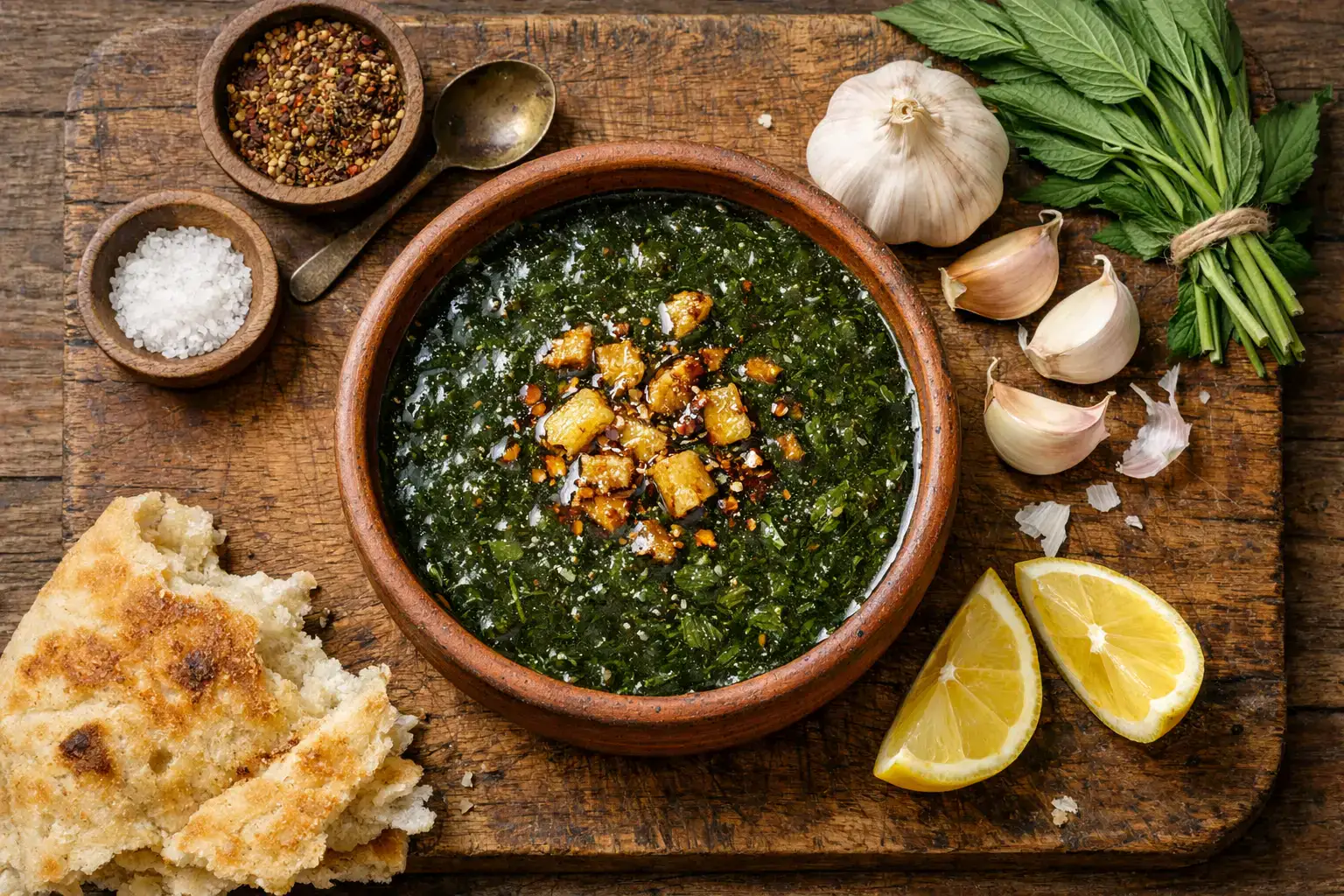
Quick Nutrition Facts
Per 1 Cup Cooked Molokhia (87g)
| Nutrient | Amount |
|---|---|
| Calories | 32 kcal |
| Protein | 3.2g |
| Carbohydrates | 6.3g |
| Fiber | 1.7g |
| Sugars | 0.9g |
| Fat | 0.2g |
| Vitamin K | 94mcg |
| Vitamin A | 225mcg |
| Vitamin C | 28.7mg |
| Calcium | 184mg |
| Iron | 2.7mg |
| Potassium | 479mg |
| Folate | 90.5mcg |
Macronutrient Breakdown
 ChatGPT
  Claude
  AI Mode
  Perplexity
NUTRITIONIST INSIGHT
Molokhia delivers an exceptional 78% of daily vitamin K in just one cup, supporting bone health and blood clotting. Its unique mucilaginous texture comes from soluble fiber that aids digestion and helps stabilize blood sugar levels.
Myth Busters
MYTH #1: Molokhia Is Just a Poor Man's Food
TRUTH: Molokhia is a nutritional powerhouse consumed by Egyptian royalty since pharaonic times. Research shows it contains higher concentrations of bioactive compounds, vitamins, and antioxidants than many expensive superfoods.
MYTH #2: The Slimy Texture Means It's Unhealthy
TRUTH: The mucilaginous texture comes from beneficial soluble fiber (mucilage polysaccharides). This fiber supports gut health, improves immune function, and helps slow sugar absorption for better blood glucose control.
MYTH #3: Molokhia Has No Real Nutritional Value
TRUTH: One cup provides 78% DV vitamin K, 32% DV vitamin C, 25% DV vitamin A, 23% DV folate, 15% DV iron, and 14% DV calcium. It's rich in carotenoids, vitamins A, B1, B2, B5, C, and E.
MYTH #4: Diabetics Should Avoid Molokhia
TRUTH: Molokhia is actually beneficial for diabetics. Studies show Corchorus olitorius may significantly reduce blood glucose levels. With only 6.3g carbs per cup and high fiber, it has minimal blood sugar impact.
MYTH #5: Molokhia Is Difficult to Prepare
TRUTH: While traditional preparation involves finely chopping fresh leaves, frozen and dried molokhia are widely available and cook in minutes. Simply add to broth with garlic and coriander for an authentic, nutritious soup.
NutriScore by Health Goals
| Health Goal | NutriScore | Why This Score? |
|---|---|---|
| Weight Loss |  | Only 32 calories per cup with 3.2g protein and 1.7g fiber. Mucilage promotes satiety. |
| Muscle Gain |  | Good plant protein (3.2g/cup), excellent iron (15% DV) for oxygen transport, high potassium for muscle function. |
| Diabetes Management | | Very low carbs, high fiber. Research indicates anti-hyperglycemic properties that may help reduce blood glucose. |
| PCOS Management | | Low glycemic impact, anti-inflammatory compounds, supports insulin sensitivity. |
| Pregnancy Nutrition | | Excellent folate (23% DV) essential for fetal neural development, plus iron (15% DV) and calcium (14% DV). |
| Viral/Flu Recovery | | 32% DV vitamin C for immunity, easy to digest soup form, hydrating broth base, anti-inflammatory properties. |
PERSONALIZED NUTRITION
Track your meals with NutriScan for personalized NutriScores based on your specific health goals!
Blood Sugar Response to Molokhia
Understanding how molokhia affects your blood glucose helps optimize meal timing and combinations.
Typical Glucose Response Curve
This chart shows typical blood glucose response for general healthy individuals. Individual responses may vary. Not medical advice.
How to Optimize Blood Sugar Response
Pairing molokhia with protein sources enhances its already-low glycemic impact:
- 🍗 Chicken or rabbit - Traditional Egyptian pairing adds complete protein
- 🍚 Rice (moderate portion) - Fiber in molokhia slows rice digestion
- 🫓 Whole grain bread - Better than white bread for sustained energy
- 🧄 Garlic - Adds flavor while providing additional blood sugar benefits
The mucilaginous fiber naturally slows carbohydrate absorption from accompanying foods.
Cultural Significance
Molokhia (Corchorus olitorius) is one of the world's oldest cultivated vegetables, with a 4,000+ year history in the Middle East and Africa.
In Egypt:
- National dish dating to pharaonic times, possibly served to royalty
- Name derived from Arabic "mulukiyya" (royal) or "mulukhiyya"
- Traditional preparation involves finely mincing leaves with a makhrata (two-handled knife)
- Served at celebrations, family gatherings, and everyday meals
- Regional variations: Cairo-style (smooth), Alexandria-style (with shrimp), Upper Egypt (with meat)
Global Spread:
- Widely consumed across Middle East, North Africa, and parts of Asia
- Known as "jute mallow" or "jute leaves" in English
- Popular in Japanese cuisine as "nalta jute" or "moroheiya"
- Used in Filipino cuisine as "saluyot"
- The jute plant fiber is used for rope and textiles (same plant, different use)
Compare & Substitute
Molokhia vs Similar Leafy Greens (Per 100g cooked)
| Nutrient | 🥬 Molokhia | 🥬 Spinach | 🥬 Kale | 🥬 Collard Greens |
|---|---|---|---|---|
| Calories | 37 kcal | 23 kcal | 35 kcal | 33 kcal |
| Carbs | 7.2g | 3.6g | 4.4g | 5.7g |
| Fiber | 2g | 2.4g | 2g | 4g |
| Protein | 3.7g | 2.9g | 2.9g | 2.7g |
| Vitamin K | 108mcg (90% DV) | 494mcg (411% DV) | 418mcg (348% DV) | 437mcg (364% DV) |
| Vitamin A | 259mcg (29% DV) | 469mcg (52% DV) | 241mcg (27% DV) | 380mcg (42% DV) |
| Calcium | 211mg (16% DV) | 136mg (10% DV) | 72mg (6% DV) | 145mg (11% DV) |
| Iron | 3.1mg (17% DV) | 3.6mg (20% DV) | 1.6mg (9% DV) | 0.5mg (3% DV) |
| Best For | Digestive health, soups | Raw salads, smoothies | Chips, sauteed dishes | Southern cooking |
Frequently Asked Questions
Is molokhia good for weight loss?
Yes, molokhia is excellent for weight loss. One cup of cooked molokhia has only 32 calories but provides 3.2g protein and 1.7g fiber that promote satiety.
Best practices: Prepare with minimal oil, use chicken broth for flavor, enjoy as a low-calorie soup course before meals, pair with lean protein.
Can diabetics eat molokhia?
Yes, molokhia is highly beneficial for diabetics. It has very low carbohydrates (6.3g per cup) and research suggests anti-hyperglycemic properties.
Tips for diabetics:
- Enjoy freely as a soup or side dish
- Pair with brown rice instead of white
- The mucilage fiber helps slow sugar absorption
- Monitor blood sugar response to confirm individual tolerance
Studies indicate Corchorus olitorius may help reduce blood glucose levels. Consult your healthcare provider for personalized advice.
How much protein is in molokhia?
One cup of cooked molokhia contains 3.2g of protein. For a leafy green vegetable, this is relatively high. Molokhia also provides all essential amino acids, though not in complete proportions.
For higher protein meals, pair molokhia with chicken, rabbit, or legumes as traditionally done in Egyptian cuisine.
What are the main health benefits of molokhia?
Key Benefits:
- Bone Health: 78% DV vitamin K supports calcium absorption and bone mineralization
- Vision Support: 25% DV vitamin A maintains eye health
- Immune Function: 32% DV vitamin C plus antioxidants boost immunity
- Blood Health: 15% DV iron and 23% DV folate support red blood cell production
- Digestive Health: Mucilage fiber soothes the digestive tract
- Heart Health: Potassium (479mg) supports healthy blood pressure
Is molokhia safe during pregnancy?
Yes, molokhia is excellent during pregnancy. It provides essential nutrients including:
- Folate (23% DV): Critical for preventing neural tube defects
- Iron (15% DV): Prevents pregnancy-related anemia
- Calcium (14% DV): Supports fetal bone development
- Vitamin K: Supports blood clotting
Eat cooked molokhia prepared hygienically. Avoid raw or undercooked preparations during pregnancy.
How do you prepare molokhia?
Traditional Egyptian Preparation:
- Finely chop fresh, frozen, or rehydrated dried molokhia leaves
- Prepare broth (chicken, rabbit, or vegetable)
- Fry minced garlic and coriander in ghee until golden (taqliya)
- Add chopped molokhia to simmering broth
- Stir in the taqliya, cook 5-10 minutes
- Serve over rice or with bread
Quick method: Use frozen chopped molokhia, add to prepared broth with store-bought garlic paste.
How should I store molokhia?
Storage Guidelines:
- Fresh leaves: Refrigerate in plastic bag, use within 3-4 days
- Frozen molokhia: Keep frozen up to 6 months, no need to thaw before cooking
- Dried molokhia: Store in airtight container, lasts 1+ year
- Cooked soup: Refrigerate up to 3 days, freeze up to 3 months
Dried molokhia is most convenient for long-term storage and travels well.


Similar Nutritious Foods
4505 Chicharrones Classic Chili Salt
7 Eleven Japan Crispy Corn Cheese
Explore More Nutrition Tools & Resources
AI Calorie Counter App - Snap a Photo, Get Macros
AI Nutritionist App That Reads Your Logged Meals
Best Protein Supplements for Women
Bulking Meal Plan App That Sets Your Surplus
ChatGPT Calorie Counter Alternative That Keeps the Total
ChatGPT Diet Plan Alternative That Tracks What You Eat
ChatGPT Weight Loss Coach Alternative With a Food Log
Fast Food Calorie Counter App That Reads the Tray
Free Calorie Tracker App with AI Photo Scans | NutriScan
Indian Diet Plan App With Veg and Non Veg Meals
Indian Food Calorie Calculator - Get Instant Nutrition Facts for Desi Meals — 2026
Intermittent Fasting for Women, Timer and Meal Log App
Intermittent Fasting Tracker App - Free Fasting Timer
Macro Tracker App That Fills the Numbers From a Photo
Mediterranean Diet Meal Plan App That Counts the Oil
Micronutrient Tracker App for Vitamins and Minerals
MyFitnessPal Alternative That Stays Free | NutriScan
NutriScore App: A Free Grade on Every Meal | NutriScan
Nutrition Label Scanner App for the Amount You Ate
Second Trimester Protein Guide
Vegetarian Meal Plan App With a Protein Target
Voice Calorie Counter - Speak to Track Meals Hands-Free
Water and Calorie Tracker App - Free Water Log