Moroccan Couscous: Calories, Nutrition and Health Benefits
Quick Nutrition Facts
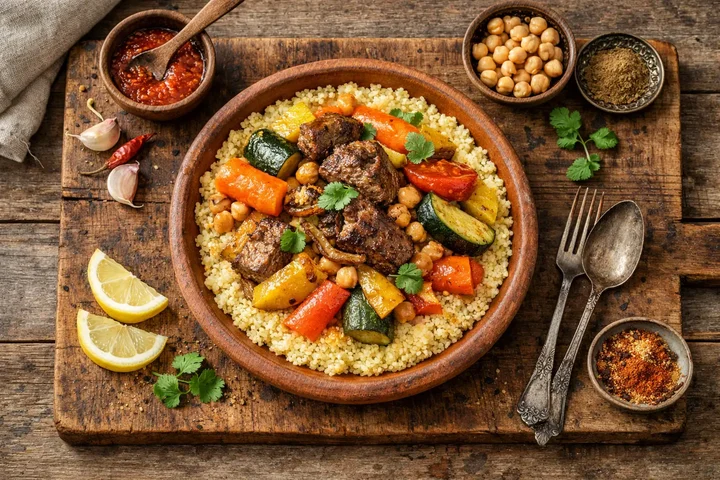
One cup of cooked Moroccan couscous (157g) provides 180 calories with 37g carbohydrates, 6g protein, and 0.3g fat. This North African staple delivers 60% of daily selenium needs and is low in fat while offering quick energy.
| Nutrient | Per 100g | Per 1 cup (157g) |
|---|---|---|
| Calories | 115 kcal | 180 kcal |
| Protein | 3.8g | 6g |
| Total Fat | 0.2g | 0.3g |
| Carbohydrates | 23.5g | 37g |
| Fiber | 1.4g | 2.2g |
| Sugar | 0.1g | 0.2g |
| Selenium | 42μg (60% DV) | 66μg (95% DV) |
| Thiamin (B1) | 0.06mg | 0.1mg |
| Niacin (B3) | 0.98mg | 1.5mg |
| Folate | 15μg | 24μg |
Nutrition Highlights:
- High Selenium: 95% daily value supports thyroid and immune function
- Quick Energy: Refined carbohydrates provide rapid fuel for activity
- Moderate Protein: 6g per cup, higher than rice but incomplete amino acid profile
Macronutrient Breakdown
Key Macro Points:
- Carb-Dominant: 82% of calories from refined wheat semolina
- Very Low Fat: 0.3g per serving makes it heart-friendly base
- Moderate Protein: 13% of calories, pair with legumes for balance
 ChatGPT
  Claude
  AI Mode
  Perplexity
NUTRITIONIST INSIGHT
Moroccan couscous is essentially tiny pasta made from durum wheat semolina. Its quick 5-minute cooking time and neutral flavor make it an ideal canvas for vegetables, proteins, and spices in traditional tagines. Choose whole wheat versions for triple the fiber content and better blood sugar control.
Myth Busters
MYTH #1: Couscous is healthier than rice or pasta
TRUTH: Traditional couscous is refined grain with similar nutrition to white rice or regular pasta. One cup couscous has 180 calories and 2.2g fiber versus brown rice's 215 calories and 3.5g fiber. Whole wheat couscous provides more nutrients, but regular versions offer minimal advantage over other refined grains. The health benefits come from the vegetables and proteins served with it.
MYTH #2: Couscous is a whole grain
TRUTH: Regular Moroccan couscous is made from refined semolina flour with the bran and germ removed. It's essentially tiny pasta, not a whole grain. Whole wheat couscous exists but represents a small market fraction. Check labels – if it doesn't say "whole wheat," it's refined.
MYTH #3: Couscous is low glycemic and diabetes-friendly
TRUTH: Regular couscous has a medium-high glycemic index around 65, causing moderate blood sugar spikes. While lower than white bread (GI 75), it's higher than whole wheat pasta (GI 50) or quinoa (GI 53). Diabetics should practice portion control and pair with protein and fiber-rich foods.
MYTH #4: All couscous is the same
TRUTH: There are three types: small Moroccan couscous (1mm, instant), medium Israeli/pearl couscous (2-3mm, chewy), and large Lebanese couscous. Moroccan couscous is pre-steamed and cooks in 5 minutes. Israeli couscous requires boiling and has slightly different texture and nutrient density per cup due to size differences.
NutriScore by Health Goals
| Health Goal | Score | Key Benefits | Recommended Portion | Important Notes |
|---|---|---|---|---|
| Weight Loss |  | Moderate 180 cal/cup, low fat, fills stomach volume. Quick prep supports meal planning. | 3/4 cup cooked + protein + veggies | Not as filling as whole grains due to low fiber. Watch portions – easy to overeat. |
| Muscle Gain |  | 6g protein/cup, quick-digesting carbs for glycogen. Pairs well with lean meats. | 1-1.5 cups cooked post-workout | Low protein alone – must combine with meat, beans, or Greek yogurt for muscle synthesis. |
| Diabetes Management | | Medium GI when paired with protein/fat. Portion-controlled servings minimize spikes. | 1/2-3/4 cup cooked with added fiber | Diabetics should monitor response. Pair with vegetables and protein to lower meal glycemic load. |
| PCOS | | Better than white rice when portions controlled. Low fat supports hormonal balance. | 1/2 cup cooked maximum | Refined grains can worsen insulin resistance. Choose whole wheat version or substitute quinoa for better results. |
| Pregnancy | | Selenium (95% DV) supports fetal development. Folate and B vitamins aid pregnancy. | 3/4-1 cup cooked | Safe for pregnancy but ensure whole diet includes fiber from other sources. Fortified versions provide extra iron. |
| Viral/Flu Recovery | | Easy to digest, quick energy. Selenium boosts immune function. | 1 cup cooked in broth | Gentle on stomach, rehydrates when cooked in broth. Add vegetables and lean protein for complete recovery meal. |
PERSONALIZED NUTRITION
Your ideal couscous portion depends on activity level, health conditions, and meal composition. Use NutriScan App to track how couscous affects your blood sugar and energy levels. Photograph the plate, or log the box under the Packaged Food tag with manual or voice entry, and the app suggests optimal pairings.
Blood Sugar Response
What Happens After Eating Couscous
Expected Blood Glucose Pattern (Medium GI Food):
- 0-15 min: Minimal change as digestion begins
- 30-45 min: Moderate rise to 130-135 mg/dL peak
- 60-90 min: Gradual decline as insulin works
- 2-3 hours: Return to baseline around 85-90 mg/dL
Pairing Tips for Stable Blood Sugar
- Add Protein: Serve with grilled chicken, lamb, chickpeas, or fish (Moroccan tagines naturally do this)
- Include Healthy Fats: Drizzle olive oil, add almonds, or serve with harissa sauce
- Boost Fiber: Mix in roasted vegetables, spinach, or swap for whole wheat couscous
- Portion Control: Stick to 3/4 cup cooked and fill plate with non-starchy vegetables
This is general information. Individual responses vary based on activity, insulin sensitivity, and meal composition. Fiber content significantly affects glucose absorption. Consult healthcare provider for personalized advice.
Cultural Significance
Couscous has been a North African staple for over 1,000 years, with origins likely in Berber communities of Morocco, Algeria, and Tunisia. The name derives from Arabic "kuskus" meaning "to pound small." Traditional preparation involves hand-rolling moistened semolina into tiny granules, then steaming in a special pot called a "couscoussier."
In Morocco, couscous is the ultimate Friday meal, served after communal prayers as families gather. The dish reflects Morocco's position at the crossroads of Mediterranean, Arab, and Berber cultures – semolina from wheat cultivation, vegetables from Mediterranean gardens, and spices from Arab trade routes. UNESCO recognized couscous-making as Intangible Cultural Heritage in 2020.
Moroccan Jewish communities adapted couscous for Shabbat, creating unique preparations with fish or vegetarian versions. During Ramadan, couscous breaks the fast alongside dates and milk. Traditional Moroccan couscous features seven vegetables (carrots, turnips, zucchini, cabbage, tomatoes, pumpkin, onions) symbolizing the seven days of creation.
Globally, couscous has become a convenience food staple. France, due to North African immigration, is now the world's largest couscous consumer. The instant "Moroccan" couscous in Western supermarkets is pre-steamed, requiring only hot water – a far cry from the 2-hour traditional steaming process but democratizing access to North African cuisine.
Compare & Substitute
Nutritional comparison per 100g cooked:
| Food | Calories | Protein | Fat | Carbs | Fiber | GI | Selenium |
|---|---|---|---|---|---|---|---|
| Moroccan Couscous | 115 | 3.8g | 0.2g | 23.5g | 1.4g | 65 | 42μg |
| Whole Wheat Couscous | 110 | 4.5g | 0.4g | 22g | 3.5g | 50 | 38μg |
| White Rice | 130 | 2.7g | 0.3g | 28g | 0.4g | 73 | 15μg |
| Brown Rice | 111 | 2.6g | 0.9g | 23g | 1.8g | 68 | 10μg |
| Quinoa | 120 | 4.4g | 1.9g | 21g | 2.8g | 53 | 2.8μg |
| Bulgur Wheat | 83 | 3.1g | 0.2g | 18.6g | 4.5g | 48 | 2.3μg |
| Best For: | Quick meals | Complete protein | Low-carb diets | Fiber needs | Blood sugar control | Fiber + minerals |
Substitution Guide:
- For Traditional Moroccan Dishes: Pearl/Israeli couscous offers chewier texture
- For Better Blood Sugar: Bulgur wheat or quinoa provide more fiber
- For Gluten-Free: Quinoa, rice, or certified GF couscous (corn/rice-based)
- For Higher Protein: Quinoa has complete amino acids unlike couscous
FAQs
1. How much couscous should I eat per meal?
A standard serving is 3/4 to 1 cup cooked (130-180 calories), which equals about 1/4 cup dry. This provides adequate energy as a grain base without excessive calories. Athletes or those in caloric surplus may consume 1.5 cups cooked, while weight loss goals work better with 1/2-3/4 cup plus extra vegetables.
2. Does couscous cause bloating?
Couscous can cause bloating in people with gluten sensitivity, wheat allergies, or IBS, as it contains gluten from durum wheat. The refined nature also means less fiber to support healthy digestion. If you experience bloating, try smaller portions, ensure thorough chewing, or switch to whole wheat couscous which provides more fiber for gut health.
3. Is couscous good for athletes?
Yes, couscous works well for athletes due to quick-digesting carbohydrates that rapidly replenish muscle glycogen post-workout. With 37g carbs per cup and minimal fat, it's ideal for carb-loading before endurance events. However, combine with protein sources (chicken, fish, beans) for recovery, as 6g protein alone is insufficient for muscle repair.
4. Can I eat couscous every day?
Eating couscous daily is safe for most people, but variety is key for optimal nutrition. Regular couscous lacks the fiber and nutrients of whole grains like brown rice, quinoa, or bulgur. Rotate whole grains to ensure diverse nutrient intake, especially if managing blood sugar or seeking weight loss.
5. What's the healthiest way to prepare couscous?
Cook couscous in vegetable or bone broth instead of water for added minerals and flavor without calories. Toss with olive oil (1 tsp per cup), fresh herbs, lemon juice, and roasted vegetables. Add protein like grilled chicken, chickpeas, or fish. Avoid butter or cream-based sauces which drastically increase calories and saturated fat.
6. Is instant couscous less nutritious?
Instant couscous (standard in stores) is pre-steamed during manufacturing, making it identical nutritionally to traditionally steamed couscous. Both are refined semolina. The only difference is preparation time – instant requires 5 minutes versus 30-90 minutes for traditional steaming. Neither is more nutritious; choose whole wheat versions for better fiber and nutrient density.


Similar Nutritious Foods
4505 Chicharrones Classic Chili Salt
7 Eleven Japan Crispy Corn Cheese
AI Calorie Counter App - Snap a Photo, Get Macros
AI Nutritionist App That Reads Your Logged Meals
Best Protein Supplements for Women
Bulking Meal Plan App That Sets Your Surplus
ChatGPT Calorie Counter Alternative That Keeps the Total
ChatGPT Diet Plan Alternative That Tracks What You Eat
ChatGPT Weight Loss Coach Alternative With a Food Log
Fast Food Calorie Counter App That Reads the Tray
Free Calorie Tracker App with AI Photo Scans | NutriScan
Indian Diet Plan App With Veg and Non Veg Meals
Indian Food Calorie Calculator - Get Instant Nutrition Facts for Desi Meals — 2026
Intermittent Fasting for Women, Timer and Meal Log App
Intermittent Fasting Tracker App - Free Fasting Timer
Macro Tracker App That Fills the Numbers From a Photo
Mediterranean Diet Meal Plan App That Counts the Oil
Micronutrient Tracker App for Vitamins and Minerals
MyFitnessPal Alternative That Stays Free | NutriScan
NutriScore App: A Free Grade on Every Meal | NutriScan
Nutrition Label Scanner App for the Amount You Ate
Second Trimester Protein Guide
Vegetarian Meal Plan App With a Protein Target
Voice Calorie Counter - Speak to Track Meals Hands-Free
Water and Calorie Tracker App - Free Water Log

Evidence-Based Nutrition Information
All nutritional data verified against USDA FoodData Central and peer-reviewed research. Our team combines registered dietitian expertise with the latest nutrition science to provide accurate, actionable information for your health journey.
- ✓ Verified with USDA Database
- ✓ Peer-reviewed sources
- ✓ Updated monthly
- ✓ Expert-reviewed content
Track Moroccan Couscous Nutrition with NutriScan
Instant nutrition tracking • Blood sugar insights • Meal planning
Photograph your couscous plate, or type it in under the Packaged Food tag, and log its complete nutrition profile. NutriScan's database includes over 500,000 foods with detailed macro and micronutrient breakdowns, free on every plan.
- 📊 Track blood sugar response to couscous meals
- 🎯 Get personalized couscous portions for your goals
- 🥗 Find balanced Moroccan-inspired meal combinations
- 📱 Photo, voice, or text entry for couscous meals

Medical Disclaimer
This information is for educational purposes only and not intended as medical advice. Individual nutritional needs vary based on age, sex, activity level, and health conditions. Consult with a registered dietitian or healthcare provider before making significant dietary changes, especially if you have diabetes, celiac disease, kidney disease, or other medical conditions. Blood sugar responses are examples based on research averages and may differ significantly for individuals.
Allergen Warning: Couscous contains gluten and is made from wheat. Not suitable for people with celiac disease, wheat allergies, or non-celiac gluten sensitivity.
Content reviewed by nutrition science team. Last updated: January 2026