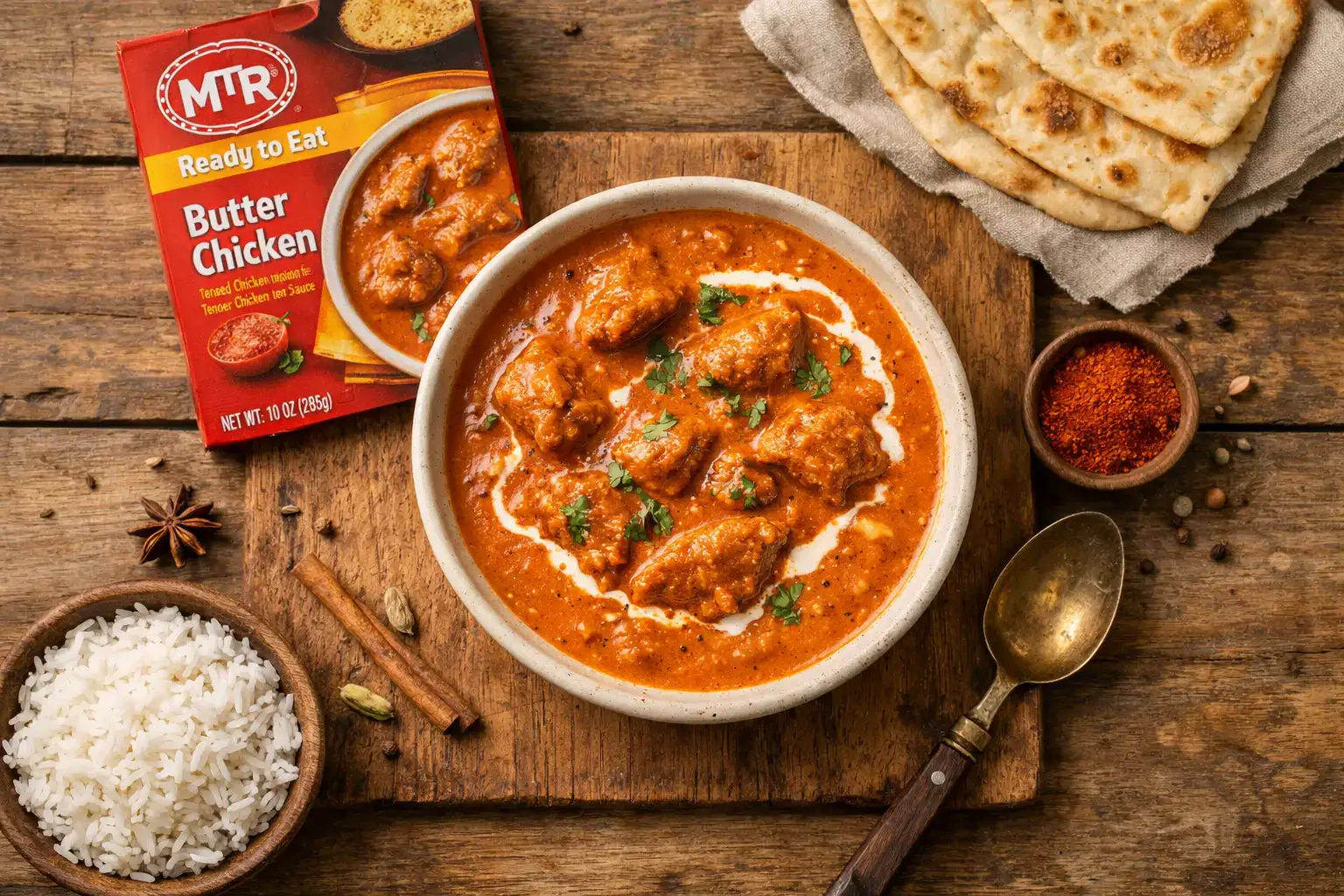
MTR Ready-to-Eat Butter Chicken: Calories, Nutrition and Health Benefits
A convenient ready-to-eat Indian curry with tender chicken in a rich, creamy tomato-butter gravy delivering 180 calories and 12g protein per 300g pack.
Quick Nutrition Facts
Per 1 Pack (300g)
| Nutrient | Amount |
|---|---|
| Calories | 180 kcal |
| Protein | 12g |
| Carbohydrates | 8g |
| Fiber | 2g |
| Sugars | 3g |
| Fat | 11g |
| Saturated Fat | 5g |
| Sodium | 680mg |
| Vitamin A | 750 IU |
| Calcium | 26mg |
Macronutrient Breakdown
 ChatGPT
  Claude
  AI Mode
  Perplexity
NUTRITIONIST INSIGHT
MTR Butter Chicken delivers 12g of complete protein from chicken in just 180 calories per pack, making it one of the lighter ready-to-eat Indian curries. The tomato-based gravy provides lycopene and vitamin A, though watch the sodium at 680mg per serving.
Myth Busters
MYTH #1: Ready-to-Eat Butter Chicken Is Junk Food
TRUTH: MTR Butter Chicken provides 12g protein and only 180 calories per pack. Poultry is a quality protein source with beneficial bioactive compounds like carnosine and anserine. While not as nutrient-dense as homemade, it is far from junk food when eaten as part of a balanced diet.
MYTH #2: Butter Chicken Is Too Fatty for Weight Loss
TRUTH: At 11g fat per 300g pack, MTR Butter Chicken has less fat than most restaurant versions (which can exceed 30g fat per serving). The protein content helps maintain satiety and supports lean muscle preservation during calorie restriction.
MYTH #3: Diabetics Cannot Eat Butter Chicken
TRUTH: With only 8g carbohydrates per pack, butter chicken has a minimal glycemic impact. Protein-rich meals with low carbohydrate content have little effect on blood glucose levels. Pair with vegetables or a small portion of brown rice for a diabetes-friendly meal.
MYTH #4: All Packaged Indian Curries Are High in Sodium
TRUTH: While MTR Butter Chicken contains 680mg sodium (30% DV), this is within the WHO recommended daily limit of 2,000mg sodium. Many restaurant curries contain 1,200-1,800mg sodium per serving, making the packaged version a better-controlled option.
MYTH #5: Butter Chicken Has No Nutritional Value
TRUTH: Beyond protein, butter chicken provides vitamin A (750 IU from tomatoes and butter), calcium (26mg), and bioactive peptides from chicken that have antioxidant and anti-glycation properties. The tomato-based gravy adds lycopene, a powerful antioxidant.
NutriScore by Health Goals
| Health Goal | NutriScore | Why This Score? |
|---|---|---|
| Weight Loss |  | 180 calories per full pack is very reasonable for a complete curry. Pair with salad or roti instead of rice. |
| Muscle Gain |  | 12g protein per pack is moderate. Supplement with extra grilled chicken or paneer for muscle-building goals. |
| Diabetes Management | | Only 8g carbs per pack with minimal glycemic impact from protein-rich, low-carb meals. Avoid pairing with white rice. |
| PCOS Management | | Moderate protein but contains saturated fat (5g). Limit frequency to 2-3 times per week and pair with fiber-rich sides. |
| Pregnancy Nutrition | | Fully cooked chicken is safe. Monitor sodium intake during pregnancy as 680mg is 30% of recommended daily limit. Add leafy greens for folate. |
| Viral/Flu Recovery | | Easy to digest, provides protein for immune support, and the warm curry gravy aids hydration and comfort. |
PERSONALIZED NUTRITION
Track your meals with NutriScan for personalized NutriScores based on your specific health goals!
Blood Sugar Response to MTR Butter Chicken
Understanding how butter chicken affects blood glucose helps diabetics and health-conscious individuals plan their meals better.
Typical Glucose Response Curve
*This chart shows typical blood glucose response for general healthy individuals. Individual responses may vary. Not medical advice.*
How to Flatten the Spike
Pairing protein-rich meals with fiber slows glucose absorption and reduces post-meal blood sugar elevation:
- 🥗 Side salad with cucumber and onion - Adds fiber and slows digestion
- 🫓 Whole wheat roti instead of white rice - Lower glycemic index carb pairing
- 🥒 Raita (yogurt with cucumber) - Probiotics and protein buffer glucose
- 🥬 Steamed broccoli or spinach - Fiber-rich vegetable side
This combination keeps blood sugar stable while making the meal more nutritionally complete.
Cultural Significance
Butter chicken (murgh makhani) was invented in 1948 at Moti Mahal restaurant in Delhi by Kundan Lal Gujral, who repurposed leftover tandoori chicken in a rich tomato-butter-cream gravy.
In India:
- One of India's most beloved curries, served in restaurants, dhabas, and homes nationwide
- A gateway dish introducing millions worldwide to Indian cuisine
- MTR Foods (est. 1924, Bangalore) pioneered the ready-to-eat Indian food category
- Regional variations exist: Punjabi (creamier), South Indian (spicier), Mughlai (richer)
Global Impact:
- Among the top 3 most-ordered Indian dishes worldwide
- Ready-to-eat versions like MTR made Indian cuisine accessible in 50+ countries
- Adapted into fusion cuisines: butter chicken pizza, pasta, tacos, and wraps
Compare & Substitute
MTR Butter Chicken vs Similar Ready-to-Eat Curries (Per 100g)
| Nutrient | MTR Butter Chicken | MTR Paneer Butter Masala | MTR Dal Makhani | Homemade Butter Chicken |
|---|---|---|---|---|
| Calories | 60 kcal | 95 kcal | 80 kcal | 130 kcal |
| Carbs | 2.7g | 5g | 10g | 5g |
| Fiber | 0.7g | 1g | 3g | 1g |
| Protein | 4g | 3.5g | 3.5g | 10g |
| Fat | 3.7g | 7g | 3g | 8g |
| Sodium | 227mg | 280mg | 250mg | 400mg |
| Vitamin A | 250 IU | 200 IU | 100 IU | 350 IU |
| Best For | Low-cal protein meal | Vegetarian option | High-fiber veg | Higher protein needs |
Frequently Asked Questions
How many calories are in MTR Butter Chicken?
One 300g pack of MTR Ready-to-Eat Butter Chicken contains approximately 180 calories with 12g protein, 11g fat, and 8g carbohydrates. Per 100g, that is about 60 calories, making it one of the lower-calorie ready-to-eat Indian curry options.
Is MTR Butter Chicken good for weight loss?
180 calories per 300g pack is quite reasonable for a complete curry meal. For weight loss, pair with a side salad or 1 whole wheat roti instead of rice. Avoid adding extra cream or butter.
Best practices: Limit to 1 pack per meal, add fiber-rich vegetables, choose brown rice over white if having rice.
Can diabetics eat MTR Butter Chicken?
Yes. With only 8g carbohydrates per pack, the glycemic impact is minimal.
Tips for diabetics:
- Skip white rice; use cauliflower rice or a small portion of brown rice
- Add a fiber-rich side like salad or steamed vegetables
- Monitor blood sugar 2 hours after the meal
- The 12g protein helps slow glucose absorption
How much protein is in MTR Butter Chicken?
One 300g pack provides 12g of protein from chicken. While moderate, you can boost protein by adding grilled chicken breast (25g protein per 100g) or paneer (18g per 100g) to the curry.
Is MTR Butter Chicken safe during pregnancy?
MTR Butter Chicken is generally safe during pregnancy as the chicken is fully cooked during manufacturing. ACOG recommends ensuring all meat is thoroughly cooked during pregnancy.
Considerations during pregnancy:
- Monitor sodium intake (680mg per pack is 30% of daily limit)
- Add leafy greens for folate and iron
- Limit to 2-3 servings per week
- Pair with whole grains for sustained energy
How does MTR Butter Chicken compare to restaurant butter chicken?
Key differences:
- Calories: MTR has ~60 cal/100g vs restaurant ~130 cal/100g
- Fat: MTR has ~3.7g/100g vs restaurant ~8-12g/100g
- Sodium: MTR has ~227mg/100g vs restaurant ~400-600mg/100g
- Portion control: Fixed 300g packs prevent overeating
- Convenience: Shelf-stable, no cooking required, consistent nutrition
Track your meals with NutriScan app to see how MTR Butter Chicken fits your personal nutrition goals.




Similar Nutritious Foods
4505 Chicharrones Classic Chili Salt
7 Eleven Japan Crispy Corn Cheese
Explore More Nutrition Tools & Resources
AI Calorie Counter App - Snap a Photo, Get Macros
AI Nutritionist App That Reads Your Logged Meals
Best Protein Supplements for Women
Bulking Meal Plan App That Sets Your Surplus
ChatGPT Calorie Counter Alternative That Keeps the Total
ChatGPT Diet Plan Alternative That Tracks What You Eat
ChatGPT Weight Loss Coach Alternative With a Food Log
Fast Food Calorie Counter App That Reads the Tray
Free Calorie Tracker App with AI Photo Scans | NutriScan
Indian Diet Plan App With Veg and Non Veg Meals
Indian Food Calorie Calculator - Get Instant Nutrition Facts for Desi Meals — 2026
Intermittent Fasting for Women, Timer and Meal Log App
Intermittent Fasting Tracker App - Free Fasting Timer
Macro Tracker App That Fills the Numbers From a Photo
Mediterranean Diet Meal Plan App That Counts the Oil
Micronutrient Tracker App for Vitamins and Minerals
MyFitnessPal Alternative That Stays Free | NutriScan
NutriScore App: A Free Grade on Every Meal | NutriScan
Nutrition Label Scanner App for the Amount You Ate
Second Trimester Protein Guide
Vegetarian Meal Plan App With a Protein Target
Voice Calorie Counter - Speak to Track Meals Hands-Free
Water and Calorie Tracker App - Free Water Log