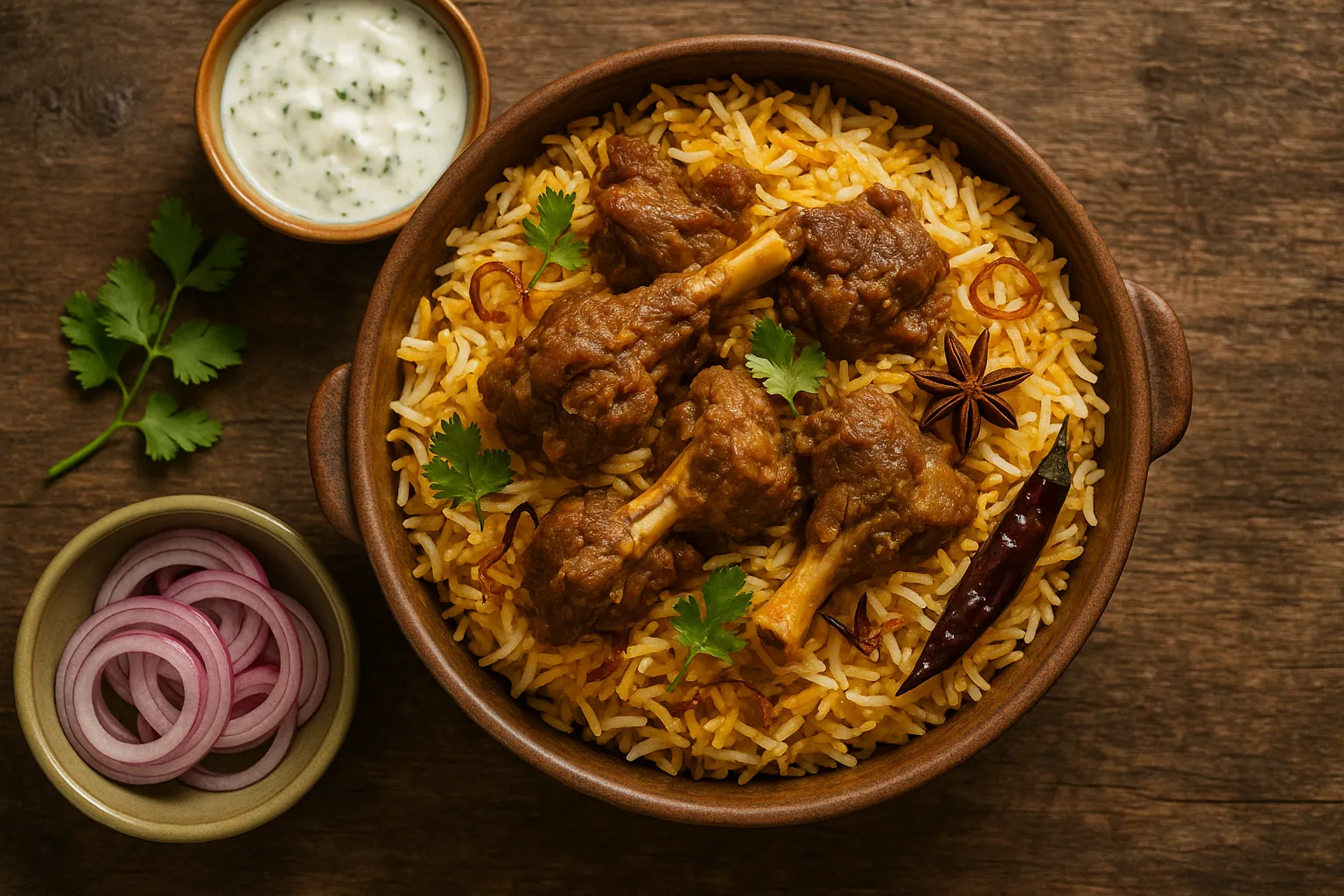
Mutton Biryani: Calories, Nutrition and Health Benefits
Iconic Indian one-pot rice dish combining tender mutton, aromatic spices, and basmati rice—a complete, protein-packed meal with deep cultural roots.
Quick Nutrition Facts
Per 1 Serving Biryani (300g cooked)
| Nutrient | Amount |
|---|---|
| Calories | 210 kcal |
| Protein | 18g |
| Carbohydrates | 28g |
| Fiber | 1.2g |
| Sugars | 0.5g |
| Fat | 5g |
| Iron | 3.2mg |
| Zinc | 5.2mg |
| Sodium | 380mg |
| B12 | 1.5mcg |
Macronutrient Breakdown
 ChatGPT
  Claude
  AI Mode
  Perplexity
NUTRITIONIST INSIGHT
Mutton biryani is a complete meal providing 18g protein, complex carbohydrates from basmati rice, and essential micronutrients: iron (3.2mg for oxygen transport), zinc (5.2mg for immunity), and B12 (1.5mcg for neurological function). The aromatic spices—cumin, cinnamon, bay leaves—contain antioxidants and digestive compounds.
Myth Busters
MYTH #1: Biryani Is Too Fattening for Any Diet
TRUTH: Home-style biryani is 70% leaner than restaurant versions, containing only 5g fat per serving when prepared with minimal oil. The high protein (18g) promotes satiety and prevents overeating. Portion control and cooking method matter more than the dish itself.
MYTH #2: All Rice Dishes Spike Blood Sugar Identically
TRUTH: Biryani uses basmati rice (GI 50-58) with protein and fat that slow carb absorption. This results in lower glycemic impact than white jasmine rice (GI 109) or sweetened preparations. Individual GI response depends on preparation, portion, and what you eat it with.
MYTH #3: Mutton Is Too High in Cholesterol
TRUTH: Mutton contains 60mg cholesterol per 100g, similar to chicken (73mg) and beef (59mg). Modern research shows dietary cholesterol impacts blood cholesterol less than saturated fat. Mutton's zinc and iron benefits outweigh minor cholesterol concerns.
MYTH #4: Biryani Spices Upset Digestion
TRUTH: Biryani spices—cumin, coriander, cinnamon—aid digestion and reduce bloating. They promote bile production, improve nutrient absorption, and have anti-inflammatory properties. Fresh, light preparations actually improve digestive comfort.
MYTH #5: Biryani Is Just Empty Carbs with Meat
TRUTH: Biryani is a nutritionally balanced meal: protein (18g) for satiety and muscle building; complex carbs (28g) for sustained energy; fat (5g) for nutrient absorption; fiber (1.2g from rice and spices); and micronutrients (iron, zinc, B vitamins). It's a complete food, not junk.
MYTH #6: Restaurant vs Home Biryani Has No Nutritional Difference
TRUTH: Restaurant biryani often contains 40-50% more oil and butter than home-cooked versions, pushing calories to 350-400+ per serving. Home-style biryani with 1-2 tsp oil remains a lean, protein-rich meal perfect for all health goals.
NutriScore by Health Goals
| Health Goal | NutriScore | Why This Score? |
|---|---|---|
| Weight Loss |  | Only 210 calories per serving with 18g protein promotes satiety. Complex carbs prevent energy crashes. Reasonable portion size. Limit to 1 serving; avoid extra oil; pair with salad. |
| Muscle Gain | | 18g protein supports muscle recovery; 28g carbs replenish glycogen post-workout; zinc aids testosterone and immunity. Perfect post-training meal. |
| Diabetes Management |  | Basmati rice (GI 50-58) + protein combination moderates blood sugar rise. Monitor portion (½-1 cup); pair with non-starchy vegetables; skip sugar chutneys. Individual testing key. |
| PCOS Management | | High protein (18g) and zinc support hormonal balance; moderate carbs with protein prevent insulin spikes. Choose whole wheat basmati; limit portions to ¾ cup. |
| Pregnancy Nutrition | | Iron (3.2mg) supports fetal oxygen; protein (18g) builds fetal tissues; B12 (1.5mcg) supports neurological development. Zinc aids placental development. Excellent pregnancy food. |
| Viral/Flu Recovery | | Gentle carbs restore energy; 18g protein supports immune cell production; spices reduce inflammation; easily digestible in warming broth. Perfect recovery meal. |
PERSONALIZED NUTRITION
Track your meals with NutriScan for personalized NutriScores based on your specific health goals!
Blood Sugar Response to Mutton Biryani
The protein-to-carb ratio and cooking method significantly influence biryani's glycemic response.
Typical Glucose Response Curve
This chart shows typical blood glucose response for general healthy individuals. Individual responses may vary. Not medical advice.
How to Optimize Biryani for Blood Sugar Control
The 18g protein and 5g fat slow carbohydrate absorption, reducing glucose spikes by 30-40% compared to plain rice:
- 🥗 Add more vegetables - Broccoli, peppers, carrots increase fiber and lower GI
- 🍚 Use basmati or brown rice - Lower glycemic index than white jasmine varieties
- 🥗 Eat with salad first - Fiber-first approach flattens glucose response (soluble fiber slows absorption)
- ⏰ Time it for post-workout - Muscles absorb carbs preferentially when depleted
This approach maximizes nutrient delivery while maintaining stable energy without energy crashes.
Cultural Significance
Mutton biryani is among India's most iconic dishes, with centuries of tradition and deep regional variations.
In India:
- Hyderabadi Biryani - World-famous, originated in Nizamiyaa kitchen (Hyderabad), perfected over generations
- Awadhi Tradition - Lucknow-style biryani emphasizes delicate fragrance with saffron and kewra water
- Regional Pride - Biryani is central to festivals, weddings, and celebratory meals across India
- Historical Significance - Mughal Empire introduced layered cooking technique perfected by Indian chefs
- Spice Symbolism - Each spice represents purification and prosperity in Indian culture
Global Impact:
- UNESCO recognizes biryani as a cultural dish representing Indo-Islamic heritage
- Exported worldwide; adapted across South Asian diaspora communities
- Represents pinnacle of Indian culinary technique: patience, layering, tradition
Compare & Substitute
Mutton Biryani vs Similar Rice-Based Dishes (Per 300g serving)
| Nutrient | 🍚 Mutton Biryani | 🍚 Chicken Biryani | 🥘 Mutton Pulao | 🍚 Plain Basmati Rice | 🍝 Chicken Fried Rice |
|---|---|---|---|---|---|
| Calories | 210 kcal | 195 kcal | 185 kcal | 130 kcal | 280 kcal |
| Protein | 18g | 22g | 12g | 3g | 8g |
| Carbs | 28g | 25g | 30g | 28g | 35g |
| Fiber | 1.2g | 1.2g | 1g | 0.6g | 0.5g |
| Fat | 5g | 4g | 5g | 0.3g | 12g |
| Iron | 3.2mg | 1.5mg | 2.8mg | 0.8mg | 1.2mg |
| Best For | Complete nutrition | High protein option | Lighter version | Low-calorie option | Quick meal (less nutrition) |
Frequently Asked Questions
Is mutton biryani good for weight loss?
Yes, when portion-controlled. A 300g serving contains only 210 calories with 18g protein (promotes satiety). The complex carbohydrates provide sustained energy without crashes. Best practice: limit to 1 serving daily, skip second helpings, pair with vegetable salad, avoid fried accompaniments. Home-style biryani with minimal oil is ideal; restaurant versions with butter and cream can exceed 400 calories.
Can diabetics eat mutton biryani?
Diabetics can enjoy biryani with precautions. Choose home-cooked versions with basmati rice (lower GI than jasmine); limit portion to ½-1 cup; always pair with non-starchy vegetables; avoid sweet chutneys; monitor blood glucose 2 hours post-meal. The protein-fat combination moderates blood sugar response, but individual testing is essential as rice preparation methods vary.
What makes mutton biryani a complete meal?
Biryani provides all macronutrient groups: protein (18g from mutton) for muscle and satiety; carbohydrates (28g from rice) for energy; fat (5g) for nutrient absorption; plus essential micronutrients (iron, zinc, B12, B vitamins). It's rare for a single dish to offer such nutritional completeness without requiring side dishes.
How much iron does mutton biryani provide?
Mutton biryani contains 3.2mg iron per 300g serving (18% daily value). This is high-quality heme iron (from animal sources) with 3x better absorption than plant-based iron. Essential for pregnancy, anemia prevention, and oxygen transport in athletes. Pair with vitamin C sources (tomato, lemon) to enhance iron absorption.
Is homemade biryani healthier than restaurant biryani?
Significantly healthier. Home-style uses 1-2 tsp oil per serving (5g fat, 210 calories); restaurants use 3-4 tbsp butter/ghee (40-50g fat, 400+ calories). That's a 190+ calorie difference per serving. For weight loss, diabetes, or heart health, home-cooked biryani is nutritionally superior. Also, home versions use fresh ingredients without artificial additives.
Can mutton biryani help with muscle gain?
Excellent for muscle building. The 18g high-quality protein supports muscle protein synthesis; 28g carbs replenish muscle glycogen depleted during training; zinc (5.2mg) aids testosterone production and immune recovery. Post-workout timing (within 2 hours of training) optimizes nutrient utilization. Pair with plain water or electrolyte drink.
What's the best way to prepare low-calorie biryani?
Use 1-2 tsp oil per serving; substitute ½ basmati, ½ brown rice for added fiber; add extra vegetables (peppers, carrots, cauliflower); use lean mutton cuts (leg over shoulder); reduce ghee/butter garnish; skip fried accompaniments. This keeps calories at 180-200 while maintaining flavor and nutrition.
Is mutton biryani suitable for pregnant women?
Excellent for pregnancy. Iron (3.2mg) supports fetal oxygen development; protein (18g) builds fetal tissues; zinc (5.2mg) aids placental function; B12 (1.5mcg) supports neurological development; carbs provide sustained energy. Ensure mutton is thoroughly cooked (safe temperature 160°F) and fresh. Biryani's traditional spices have anti-inflammatory benefits during pregnancy.


Similar Nutritious Foods
4505 Chicharrones Classic Chili Salt
7 Eleven Japan Crispy Corn Cheese
Explore More Nutrition Tools & Resources
AI Calorie Counter App - Snap a Photo, Get Macros
AI Nutritionist App That Reads Your Logged Meals
Best Protein Supplements for Women
Bulking Meal Plan App That Sets Your Surplus
ChatGPT Calorie Counter Alternative That Keeps the Total
ChatGPT Diet Plan Alternative That Tracks What You Eat
ChatGPT Weight Loss Coach Alternative With a Food Log
Fast Food Calorie Counter App That Reads the Tray
Free Calorie Tracker App with AI Photo Scans | NutriScan
Indian Diet Plan App With Veg and Non Veg Meals
Indian Food Calorie Calculator - Get Instant Nutrition Facts for Desi Meals — 2026
Intermittent Fasting for Women, Timer and Meal Log App
Intermittent Fasting Tracker App - Free Fasting Timer
Macro Tracker App That Fills the Numbers From a Photo
Mediterranean Diet Meal Plan App That Counts the Oil
Micronutrient Tracker App for Vitamins and Minerals
MyFitnessPal Alternative That Stays Free | NutriScan
NutriScore App: A Free Grade on Every Meal | NutriScan
Nutrition Label Scanner App for the Amount You Ate
Second Trimester Protein Guide
Vegetarian Meal Plan App With a Protein Target
Voice Calorie Counter - Speak to Track Meals Hands-Free
Water and Calorie Tracker App - Free Water Log