Nasi Goreng: Calories, Nutrition and Health Benefits
Indonesia's signature fried rice loaded with protein, aromatic spices, and sweet soy sauce for a complete, flavorful meal.
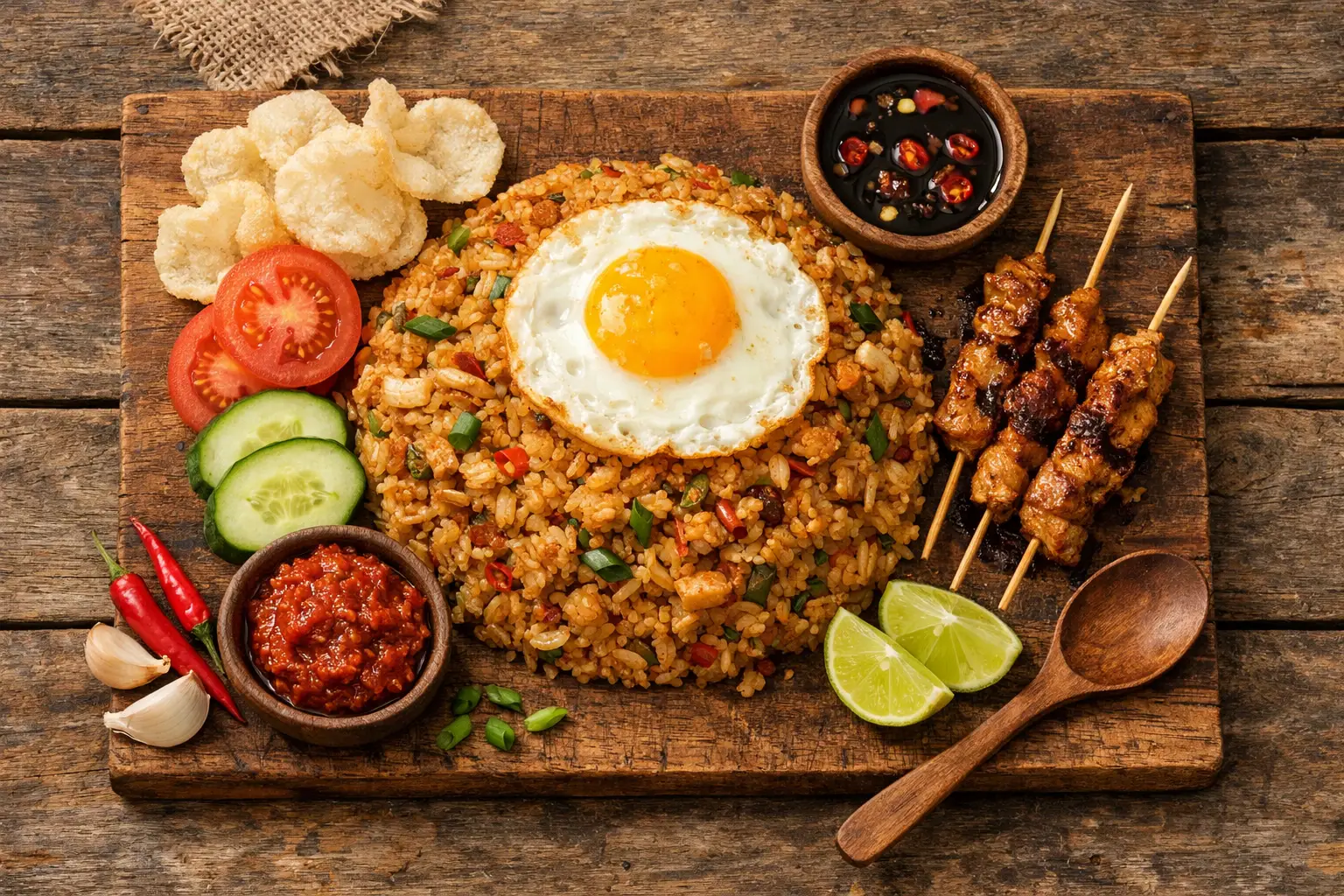
Quick Nutrition Facts
Per 1 Serving (350g)
| Nutrient | Amount |
|---|---|
| Calories | 467 kcal |
| Protein | 42g |
| Carbohydrates | 47g |
| Fiber | 2g |
| Sugars | 4g |
| Fat | 12g |
| Sodium | 850mg |
| Iron | 3.2mg |
| Vitamin B12 | 1.5mcg |
| Selenium | 28mcg |
Macronutrient Breakdown
 ChatGPT
  Claude
  AI Mode
  Perplexity
NUTRITIONIST INSIGHT
Nasi goreng delivers 42g of complete protein per serving from eggs and protein sources, making it excellent for muscle recovery. The combination of protein, carbs, and aromatic spices creates a balanced meal that satisfies hunger for hours.
Myth Busters
MYTH #1: Nasi Goreng Is Too High in Calories for Weight Loss
TRUTH: At 467 calories per serving, nasi goreng can fit into a weight loss plan. The high protein content (42g) promotes satiety and reduces overall calorie intake. Control portions, use less oil (1-2 tbsp instead of 3-4), and add vegetables to increase volume without calories.
MYTH #2: Fried Rice Is Always Unhealthy
TRUTH: Cooking method matters more than the dish itself. Nasi goreng made with minimal oil, lean protein, and vegetables provides balanced nutrition. Use day-old rice (reduces starch), cook in a wok with high heat and quick stirring to minimize oil absorption.
MYTH #3: Diabetics Should Never Eat Nasi Goreng
TRUTH: Diabetics can enjoy nasi goreng with modifications. Use brown rice or cauliflower rice, increase protein and vegetables, and limit portion to 1 cup rice. The protein and fat slow glucose absorption significantly.
MYTH #4: Sweet Soy Sauce (Kecap Manis) Makes It Unhealthy
TRUTH: While kecap manis adds sugar (about 4g per serving), it's balanced by the protein and fat in the dish. The small amount provides authentic flavor without significantly impacting blood sugar when eaten as part of a complete meal. Use sparingly for flavor, not as a sauce.
MYTH #5: Nasi Goreng Has No Nutritional Value
TRUTH: Nasi goreng provides complete protein, B vitamins from rice and eggs, iron from protein sources, and when made with vegetables, adds fiber and antioxidants. It's a nutritionally complete meal that covers multiple food groups.
MYTH #6: You Should Avoid Fried Rice at Night
TRUTH: Timing matters less than total daily calories. However, the high carb content (47g) may affect sleep quality in sensitive individuals. For better sleep, eat 2-3 hours before bed and pair with vegetables to balance the meal.
NutriScore by Health Goals
| Health Goal | NutriScore | Why This Score? |
|---|---|---|
| Weight Loss |  | 467 calories requires portion control. High protein (42g) promotes fullness. Reduce oil and rice portion, add vegetables. |
| Muscle Gain |  | Excellent post-workout meal: 42g protein for recovery, 47g carbs for glycogen replenishment, complete amino acid profile. |
| Diabetes Management | | Moderate GI when made with white rice. Choose brown rice, limit to 1 cup, pair with vegetables and protein. |
| PCOS Management | | Carb content affects insulin. Use cauliflower rice or brown rice, increase protein, reduce portion size. |
| Pregnancy Nutrition |  | High protein supports fetal development, iron for blood health, B12 for neural development. Ensure proteins are fully cooked and use pasteurized eggs. |
| Viral/Flu Recovery | | Complete protein for immune function, easy to digest carbs for energy, B vitamins support recovery, warming spices aid digestion. |
PERSONALIZED NUTRITION
Track your meals with NutriScan for personalized NutriScores based on your specific health goals!
Blood Sugar Response to Nasi Goreng
Understanding how nasi goreng affects your blood glucose can help you make informed decisions about portions and pairings.
Typical Glucose Response Curve
This chart shows typical blood glucose response for general healthy individuals. Individual responses may vary. Not medical advice.
How to Flatten the Spike
Pairing nasi goreng with fiber and choosing the right rice slows glucose absorption:
- 🥦 Extra vegetables - Add bok choy, cabbage, carrots, and bean sprouts
- 🍚 Brown rice or cauliflower rice - Lower glycemic impact
- 🥚 Extra protein - Add more egg, chicken, or tofu
- 🥗 Side salad - Fiber-rich greens slow carb absorption
This combination reduces the glucose spike and provides sustained energy.
Cultural Significance
Nasi goreng is Indonesia's national dish, originating from Chinese fried rice traditions adapted with local spices and sweet soy sauce.
In Indonesia:
- Street food staple served morning, noon, and night
- Every region has unique variations: Javanese, Sundanese, Balinese
- Traditional toppings: fried egg, krupuk (crackers), acar (pickles)
- Symbol of Indonesian cuisine worldwide
- Commonly eaten for breakfast with fried egg on top
Global Impact:
- Popular across Southeast Asia with local adaptations
- Malaysian and Singaporean versions use different spice blends
- Found in Indonesian restaurants globally
- Influenced by Chinese, Dutch, and Arab trading routes
- UNESCO recognized Indonesian cuisine, including nasi goreng
Compare & Substitute
Nasi Goreng vs Similar Rice Dishes (Per 100g)
| Nutrient | 🍛 Nasi Goreng | 🍚 Plain Steamed Rice | 🍜 Fried Rice (Chinese) | 🥘 Biryani |
|---|---|---|---|---|
| Calories | 133 kcal | 130 kcal | 150 kcal | 140 kcal |
| Carbs | 13g | 28g | 20g | 18g |
| Fiber | 0.6g | 0.4g | 0.8g | 1g |
| Protein | 12g | 2.7g | 4g | 6g |
| Fat | 3.4g | 0.3g | 6g | 5g |
| Sodium | 243mg | 5mg | 380mg | 320mg |
| Iron | 0.9mg | 0.2mg | 0.5mg | 1.2mg |
| Best For | High protein meals | Low-calorie base | Quick energy | Spiced rice dishes |
Frequently Asked Questions
Is nasi goreng good for weight loss?
Nasi goreng can fit into a weight loss plan when prepared mindfully. At 467 calories per serving, portion control is essential.
Best practices: Use 1-2 tablespoons of oil instead of 3-4, increase vegetables to bulk up the meal, choose lean protein (chicken breast, shrimp), limit rice to 1 cup cooked, and eat slowly to recognize fullness.
The high protein content (42g) promotes satiety and helps preserve muscle mass during weight loss.
Can diabetics eat nasi goreng?
Diabetics can eat nasi goreng with modifications to reduce blood sugar impact.
Tips for diabetics:
- Use brown rice or cauliflower rice (lower GI)
- Limit rice portion to 1/2-1 cup
- Add extra protein and vegetables
- Avoid sweet soy sauce or use sparingly
- Pair with fiber-rich vegetables
- Monitor blood sugar 2 hours after eating
The protein and fat in nasi goreng help slow glucose absorption compared to plain rice.
How much protein is in nasi goreng?
A typical serving of nasi goreng contains 42g of protein from eggs, chicken, shrimp, or tofu. This makes it an excellent high-protein meal.
The protein quality is high due to complete amino acid profiles from eggs and meat. For vegetarians, tofu or tempeh versions provide plant-based protein.
What are the main health benefits of nasi goreng?
Key Benefits:
- Complete Protein: 42g supports muscle maintenance and satiety
- Energy from Carbs: 47g provides sustained fuel for activity
- B Vitamins: From rice and eggs support metabolism
- Iron: 3.2mg supports blood health and oxygen transport
- Selenium: 28mcg acts as antioxidant
- Versatile Nutrition: Can be customized with vegetables and lean proteins
When is the best time to eat nasi goreng?
Depends on your goal:
- Weight Loss: Lunch or early dinner (provides sustained energy without late-night carbs).
- Muscle Gain: Post-workout within 2 hours (protein + carbs for recovery).
- Diabetes: Mid-day paired with vegetables. Avoid large portions at dinner.
- Energy: Breakfast or lunch for sustained fuel.
IMPORTANT NOTE
Avoid eating large portions late at night if you have GERD or digestive issues.
Is nasi goreng healthier than regular fried rice?
Health depends on preparation rather than the specific dish. Traditional nasi goreng uses kecap manis (sweet soy sauce) which adds sugar but also provides depth of flavor.
Healthier nasi goreng tips:
- Use less oil (high heat, quick cooking)
- Choose brown rice over white rice
- Add more vegetables (bok choy, carrots, cabbage)
- Use lean protein sources
- Control portions to 1 serving
- Make with day-old rice (lower starch content)
How many servings of nasi goreng should I eat?
General Guidelines:
- 1 serving (350g) - Most people for a complete meal
- 1/2 serving - Weight loss, strict calorie control, or as a side dish
- 1-1.5 servings - Athletes, muscle gain, high activity levels
Avoid excess: More than 1.5 servings provides excessive calories and sodium. Balance your day with lighter meals if having nasi goreng.
Track your meals with NutriScan app to see how nasi goreng fits your personal nutrition goals.
Can I eat nasi goreng every day?
Eating nasi goreng daily is possible but requires variety and balance.
Considerations:
- Sodium Content: 850mg per serving (35% daily value) - can lead to high blood pressure if eaten daily
- Variety: Rotate with other dishes to ensure diverse nutrient intake
- Preparation: Make healthier versions with more vegetables and less oil
Better approach: Enjoy 2-3 times per week, varying protein sources and vegetables each time. Balance other meals with lower sodium, higher fiber options.


Similar Nutritious Fruits
4505 Chicharrones Classic Chili Salt
7 Eleven Japan Crispy Corn Cheese
Explore More Nutrition Tools & Resources
AI Calorie Counter App - Snap a Photo, Get Macros
AI Nutritionist App That Reads Your Logged Meals
Best Protein Supplements for Women
Bulking Meal Plan App That Sets Your Surplus
ChatGPT Calorie Counter Alternative That Keeps the Total
ChatGPT Diet Plan Alternative That Tracks What You Eat
ChatGPT Weight Loss Coach Alternative With a Food Log
Fast Food Calorie Counter App That Reads the Tray
Free Calorie Tracker App with AI Photo Scans | NutriScan
Indian Diet Plan App With Veg and Non Veg Meals
Indian Food Calorie Calculator - Get Instant Nutrition Facts for Desi Meals — 2026
Intermittent Fasting for Women, Timer and Meal Log App
Intermittent Fasting Tracker App - Free Fasting Timer
Macro Tracker App That Fills the Numbers From a Photo
Mediterranean Diet Meal Plan App That Counts the Oil
Micronutrient Tracker App for Vitamins and Minerals
MyFitnessPal Alternative That Stays Free | NutriScan
NutriScore App: A Free Grade on Every Meal | NutriScan
Nutrition Label Scanner App for the Amount You Ate
Second Trimester Protein Guide
Vegetarian Meal Plan App With a Protein Target
Voice Calorie Counter - Speak to Track Meals Hands-Free
Water and Calorie Tracker App - Free Water Log