Nasi Lemak: Calories, Nutrition and Health Benefits
Malaysia's beloved national dish: fragrant coconut rice with sambal, anchovies, peanuts, and boiled egg for complete nutrition.
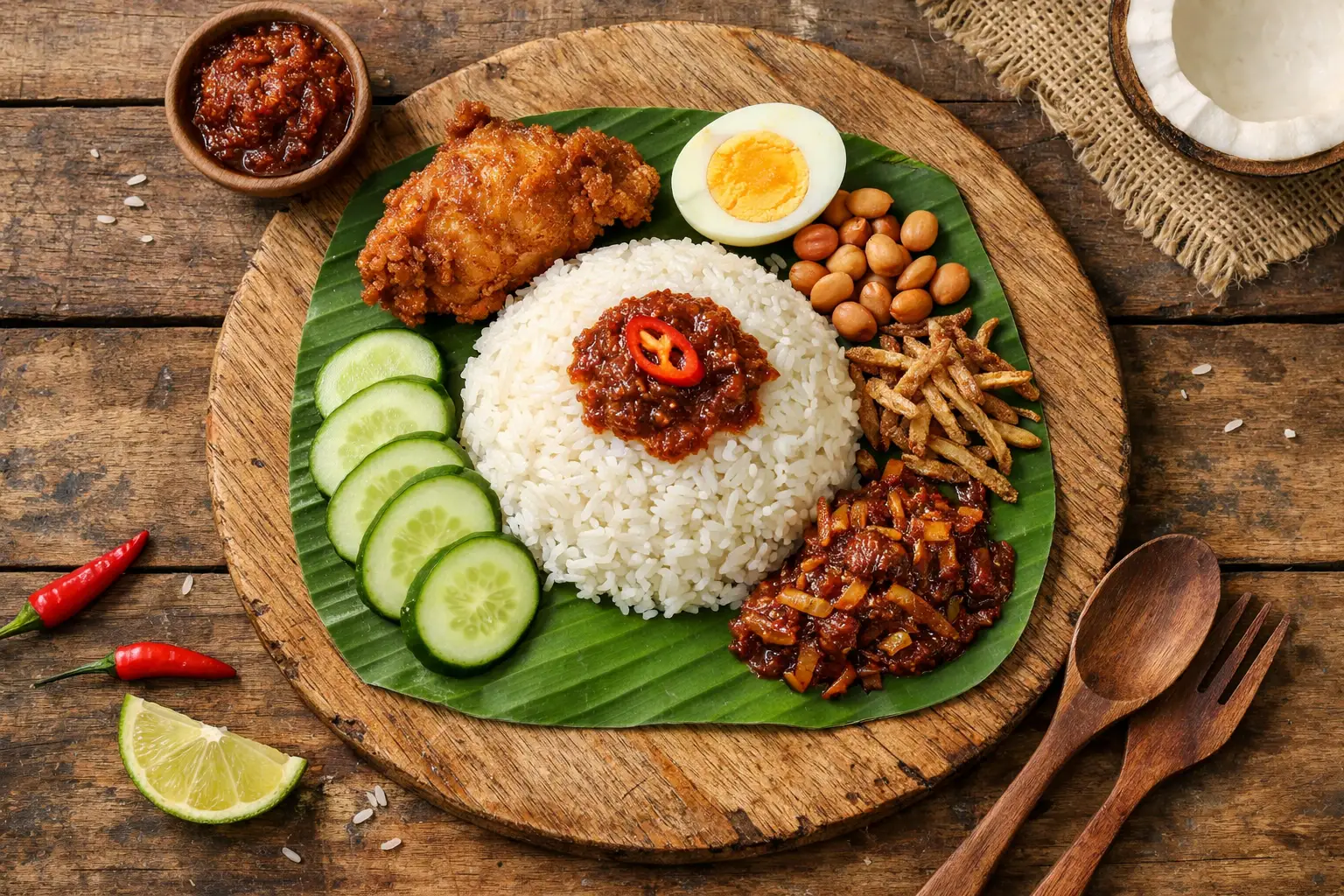
Quick Nutrition Facts
Per 1 Cup (247g)
| Nutrient | Amount |
|---|---|
| Calories | 348 kcal |
| Protein | 10g |
| Carbohydrates | 51g |
| Fiber | 2g |
| Sugars | 1g |
| Fat | 12g |
| Saturated Fat | 6g |
| Sodium | 380mg |
| Potassium | 180mg |
| Calcium | 45mg |
Macronutrient Breakdown
 ChatGPT
  Claude
  AI Mode
  Perplexity
NUTRITIONIST INSIGHT
Nasi lemak combines complex carbs from rice, healthy fats from coconut milk, and complete protein from eggs and anchovies. The sambal provides antioxidants and metabolism-boosting capsaicin from chilies.
Myth Busters
MYTH #1: Nasi Lemak is Too Unhealthy to Eat Regularly
TRUTH: Traditional nasi lemak provides balanced macros with coconut milk's medium-chain triglycerides (MCTs) that are easier to digest than other fats. The issue is portion size and fried sides. A moderate serving (1/2-1 cup) with boiled egg and fresh cucumber is nutritious. Avoid deep-fried chicken and excessive sambal for regular consumption.
MYTH #2: Diabetics Should Never Eat Nasi Lemak
TRUTH: Diabetics can enjoy nasi lemak with modifications. Choose brown rice versions for lower glycemic impact, eat half portions paired with protein (eggs, chicken), and skip sugary sambal. The fat from coconut milk actually slows glucose absorption, reducing blood sugar spikes compared to plain white rice alone.
MYTH #3: Coconut Milk Makes Nasi Lemak Too Fatty
TRUTH: While coconut milk contains saturated fat, it provides MCTs that are metabolized differently than long-chain fats. Coconut oil is not recommended for daily use, but occasional nasi lemak (2-3 times per week) fits a balanced diet. The key is moderation and choosing grilled over fried accompaniments.
MYTH #4: Nasi Lemak Has No Nutritional Value
TRUTH: A complete nasi lemak provides carbs for energy, 10g protein from eggs and anchovies, healthy fats, vitamin E from peanuts, and antioxidants from sambal chilies. It's actually a balanced meal with all three macronutrients. The issue is overconsumption and fried additions, not the dish itself.
MYTH #5: You Can't Eat Nasi Lemak for Weight Loss
TRUTH: Weight loss depends on total daily calories, not specific foods. A half-cup serving (174 calories) with extra vegetables, boiled egg, and minimal sambal can fit a 1,500-1,800 calorie diet. Skip fried sides, control portions, and balance with lighter meals throughout the day.
MYTH #6: Nasi Lemak is Only Breakfast Food
TRUTH: While traditionally eaten for breakfast in Malaysia, nasi lemak's balanced macros make it suitable for lunch or pre-workout meals (2 hours before exercise). Avoid eating late at night due to the calorie and fat content that may interfere with sleep and digestion.
NutriScore by Health Goals
| Health Goal | NutriScore | Why This Score? |
|---|---|---|
| Weight Loss |  | 348 calories per cup is moderate. Control portions (half servings), skip fried sides, add vegetables. Limit to 2-3x per week. |
| Muscle Gain |  | Good carb-protein balance (51g carbs, 10g protein). Add grilled chicken or fish for 20-25g protein per meal. Coconut fats support hormone production. |
| Diabetes Management | | White rice versions have medium-high GI. Choose brown rice, eat half portions, pair with protein, monitor blood sugar response. |
| PCOS Management | | Refined carbs affect insulin sensitivity. Choose brown rice version, limit to 1/2 cup, pair with protein-rich sides, avoid fried accompaniments. |
| Pregnancy Nutrition | | Provides energy, protein, healthy fats, and iron from anchovies. Coconut is safe during pregnancy in moderation. Ensure well-cooked eggs and fresh ingredients. |
| Viral/Flu Recovery | | Easy to digest, provides quick energy, protein supports immunity. Sambal chili has anti-inflammatory properties. Coconut milk soothes digestive system. |
PERSONALIZED NUTRITION
Track your meals with NutriScan for personalized NutriScores based on your specific health goals!
Blood Sugar Response to Nasi Lemak
Understanding how nasi lemak affects your blood glucose can help you make informed decisions about when and how to eat it.
Typical Glucose Response Curve
*This chart shows typical blood glucose response for general healthy individuals. Individual responses may vary. Not medical advice.*
How to Flatten the Spike
The coconut fat already slows glucose absorption, but pairing nasi lemak strategically reduces blood sugar peaks:
- 🥚 Extra boiled eggs - Adds protein without extra calories
- 🥗 Cucumber and leafy greens - Fiber slows carb absorption
- 🍗 Grilled chicken or fish - Complete protein source (avoid fried)
- 🥜 Handful of peanuts (if not included) - Healthy fats and fiber
Eating protein and vegetables first, then rice helps minimize glucose spikes while extending satiety.
Cultural Significance
Nasi lemak is Malaysia's unofficial national dish, with origins tracing back to the early 19th century in Malay kampungs (villages).
In Malaysia & Singapore:
- Traditionally served wrapped in banana leaves for portable breakfast
- Available 24/7 from street vendors (hawker centers) to upscale restaurants
- Regional variations: Penang (with cockles), Ipoh (with bean sprouts), Singapore (with fried chicken wing)
- Considered comfort food representing Malaysian multicultural identity
- Served at celebrations, weddings, and official government events
Global Impact:
- Featured in Michelin-starred restaurants worldwide (London, New York, Tokyo)
- Inspired fusion dishes: nasi lemak burgers, nasi lemak pizza, nasi lemak fried rice
- Represents Southeast Asian cuisine in international food festivals
- Symbol of Malaysian diaspora communities maintaining cultural identity
Compare & Substitute
Nasi Lemak vs Similar Rice Dishes (Per 100g)
| Nutrient | 🇲🇾 Nasi Lemak | 🍚 White Rice | 🇮🇳 Biryani | 🇹🇭 Khao Man Gai |
|---|---|---|---|---|
| Calories | 141 kcal | 130 kcal | 160 kcal | 145 kcal |
| Carbs | 21g | 28g | 22g | 20g |
| Fiber | 0.8g | 0.4g | 1.2g | 0.6g |
| Protein | 4g | 2.7g | 6g | 8g |
| Fat | 5g | 0.3g | 6g | 5.5g |
| Sodium | 154mg | 1mg | 340mg | 280mg |
| Best For | Balanced meal, energy | Low-fat base for other dishes | High-protein meal, spice lovers | High-protein, lower sodium |
Frequently Asked Questions
Is nasi lemak good for weight loss?
Nasi lemak can fit weight loss diets with careful portion control. One cup has 348 calories with moderate protein and fat that promotes satiety.
Best practices: Eat half portions (174 calories), skip fried chicken/fish, add extra vegetables (cucumber, tomatoes, cabbage), choose boiled eggs over fried, and limit to 2-3 times per week. The coconut fats help you feel full longer compared to plain rice.
Can diabetics eat nasi lemak?
Diabetics can eat nasi lemak in moderation with smart modifications. White rice versions have medium glycemic impact, but the coconut fat slows glucose absorption.
Tips for diabetics:
- Choose brown rice versions when available
- Eat half portions (1/2 cup rice, about 25g carbs)
- Always pair with protein (eggs, grilled chicken, tempeh)
- Avoid sugary sambal varieties
- Monitor blood sugar 2 hours after eating
- Best timing: lunch, not breakfast on empty stomach
The protein and fat content actually makes nasi lemak better for blood sugar control than plain white rice.
How much protein is in nasi lemak?
A typical nasi lemak serving (1 cup, 247g) contains 10g of protein from rice, eggs, anchovies (ikan bilis), and peanuts. This provides about 20% of daily protein needs.
To increase protein:
- Add grilled chicken thigh (20g protein) → total 30g
- Double the eggs (13g protein) → total 23g
- Add tempeh or tofu (8-10g protein) → total 18-20g
For muscle gain or high-protein diets, nasi lemak works best as a base paired with grilled protein.
What are the main health benefits of nasi lemak?
Key Benefits:
- Sustained Energy: Coconut rice provides quick carbs with MCTs for extended energy release
- Complete Protein: Eggs and anchovies provide all essential amino acids
- Healthy Fats: MCTs from coconut milk are easier to metabolize than other saturated fats
- Antioxidants: Sambal chilies contain capsaicin with anti-inflammatory properties
- Balanced Macros: One meal provides carbs, protein, and fats in good ratios
- Digestive Support: Coconut milk has antimicrobial properties supporting gut health
When is the best time to eat nasi lemak?
Depends on your goal:
- Weight Loss: Lunch when metabolism is highest. Avoid dinner. Limit to 1/2 cup portions.
- Muscle Gain: Post-workout (within 90 minutes) with extra protein, or pre-workout (2-3 hours before) for carb loading.
- Diabetes: Mid-morning or lunch, never on empty stomach. Pair with protein first.
- Energy/Performance: Breakfast or lunch when you need sustained 4-6 hour energy.
IMPORTANT NOTE
Avoid eating nasi lemak late at night (after 8 PM) due to high calories and fat content that may interfere with sleep and digestion.
Is coconut rice healthier than white rice?
Both have benefits - choose based on your health goals:
Coconut Rice (Nasi Lemak):
- Higher calories (141 vs 130 per 100g)
- Contains MCTs that are easier to digest
- More satisfying due to fat content
- Better for sustained energy
- Higher in saturated fat (6g per serving)
Plain White Rice:
- Lower calories and fat
- Neutral base for other foods
- Better for strict low-fat diets
- Faster glucose spike without fat
Recommendation: Diabetes/heart health = use coconut rice sparingly. Active lifestyle/muscle gain = coconut rice provides better energy. Weight loss = depends on total daily calories.
How many servings of nasi lemak should I eat per day?
General Guidelines:
- 1/2 to 1 cup daily - Active individuals, muscle gain goals (174-348 calories)
- 1/2 cup maximum - Weight loss, diabetes, PCOS, heart health (174 calories)
- 1-2 cups - Athletes, very active jobs, underweight individuals (348-696 calories)
Avoid excess: More than 1 cup per day provides too much saturated fat and sodium for most people. Balance with lighter meals throughout the day.
Track your meals with NutriScan app to see how nasi lemak fits your personal nutrition goals.
Can I eat nasi lemak on an empty stomach?
Generally safe for most people - the fat from coconut milk slows digestion, making it gentler than plain rice.
May want to avoid if you have:
- Acid Reflux/GERD: High fat content may trigger symptoms
- Diabetes: Causes faster blood sugar spike on empty stomach
- IBS: Coconut milk and spicy sambal may cause discomfort
Better approach: Eat a small piece of fruit or handful of nuts first, then nasi lemak 15-20 minutes later for better digestion and blood sugar control.




Similar Nutritious Foods
4505 Chicharrones Classic Chili Salt
7 Eleven Japan Crispy Corn Cheese
Explore More Nutrition Tools & Resources
AI Calorie Counter App - Snap a Photo, Get Macros
AI Nutritionist App That Reads Your Logged Meals
Best Protein Supplements for Women
Bulking Meal Plan App That Sets Your Surplus
ChatGPT Calorie Counter Alternative That Keeps the Total
ChatGPT Diet Plan Alternative That Tracks What You Eat
ChatGPT Weight Loss Coach Alternative With a Food Log
Fast Food Calorie Counter App That Reads the Tray
Free Calorie Tracker App with AI Photo Scans | NutriScan
Indian Diet Plan App With Veg and Non Veg Meals
Indian Food Calorie Calculator - Get Instant Nutrition Facts for Desi Meals — 2026
Intermittent Fasting for Women, Timer and Meal Log App
Intermittent Fasting Tracker App - Free Fasting Timer
Macro Tracker App That Fills the Numbers From a Photo
Mediterranean Diet Meal Plan App That Counts the Oil
Micronutrient Tracker App for Vitamins and Minerals
MyFitnessPal Alternative That Stays Free | NutriScan
NutriScore App: A Free Grade on Every Meal | NutriScan
Nutrition Label Scanner App for the Amount You Ate
Second Trimester Protein Guide
Vegetarian Meal Plan App With a Protein Target
Voice Calorie Counter - Speak to Track Meals Hands-Free
Water and Calorie Tracker App - Free Water Log