Natto: Calories, Nutrition and Health Benefits
Japan's nutritional powerhouse: fermented sticky soybeans packed with bone-strengthening vitamin K2, probiotics, and complete plant protein.
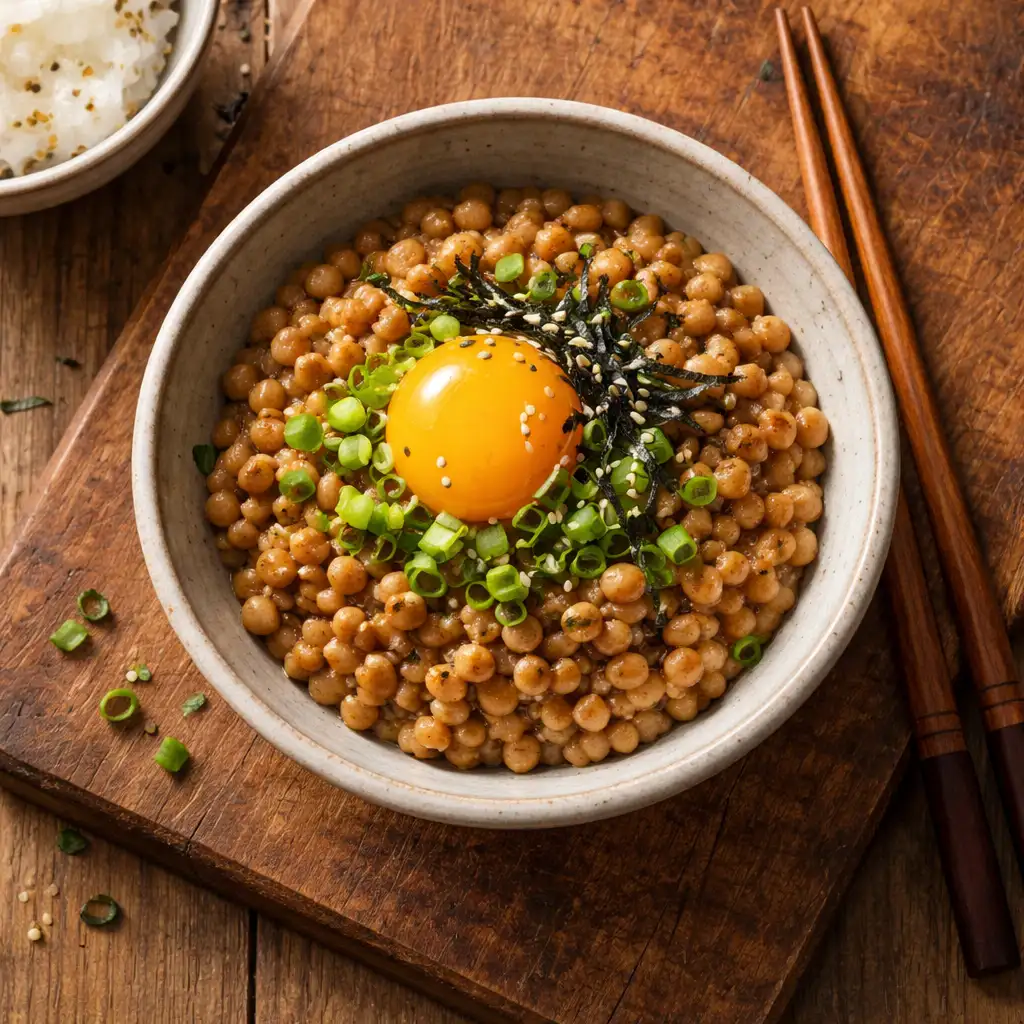
Quick Nutrition Facts
Per 1 Serving (50g / 1 small package)
| Nutrient | Amount |
|---|---|
| Calories | 95 kcal |
| Protein | 8.8g |
| Carbohydrates | 5.1g |
| Fiber | 2.5g |
| Sugars | 0.5g |
| Fat | 4.2g |
| Vitamin K2 | 263mcg |
| Iron | 1.5mg |
| Sodium | 265mg |
| Zinc | 1.2mg |
Macronutrient Breakdown
 ChatGPT
  Claude
  AI Mode
  Perplexity
NUTRITIONIST INSIGHT
Natto contains nattokinase enzyme and vitamin K2 (menaquinone-7), both rare in Western diets, making it one of the world's best natural sources for cardiovascular and skeletal health. The Bacillus subtilis bacteria in natto produce these compounds during fermentation, creating a genuinely functional food.
Myth Busters
MYTH #1: Natto Smells Bad So It Must Contain Harmful Compounds
TRUTH: The pungent ammonia-like smell comes from normal fermentation byproducts (volatile compounds from Bacillus subtilis), not spoilage. Japanese populations have consumed natto safely for over 1,000 years. The smell signals live fermentation—beneficial probiotics creating vitamin K2 and enzymes.
MYTH #2: Raw Fermented Foods Like Natto Are Too Risky
TRUTH: Natto's acidic, salty environment and live Bacillus subtilis inhibit pathogenic bacteria. Commercial natto is pasteurized for safety. Research shows traditional fermented soy foods reduce cardiovascular disease risk, not increase it.
MYTH #3: Plant Proteins Like Natto Are Incomplete
TRUTH: Natto contains all 9 essential amino acids in balanced proportions (8.8g per 50g serving). Fermentation actually increases amino acid bioavailability compared to regular cooked soybeans. It's a complete protein matching poultry quality.
MYTH #4: High Sodium in Natto Makes It Unhealthy
TRUTH: 265mg sodium per 50g serving (11% DV) is moderate. When paired with potassium-rich vegetables and whole grains (traditional serving on rice), natto supports healthy blood pressure. Total salt intake matters more than single-food sodium.
MYTH #5: Natto Is Only for Japanese People
TRUTH: Vitamin K2 benefits apply to everyone regardless of ancestry. Non-Japanese populations benefit equally from natto's bone-building and cardiovascular support. Start with small amounts on rice, and the acquired taste becomes an appreciated umami experience.
NutriScore by Health Goals
| Health Goal | NutriScore | Why This Score? |
|---|---|---|
| Weight Loss |  | 95 calories, high protein (8.8g) drives satiety, low carbs (5.1g), zero sugar. Probiotics support metabolism and gut health for sustained fat loss. |
| Muscle Gain | | Complete plant protein (8.8g, all amino acids), 1.5mg iron aids oxygen transport, natural fermentation enzymes improve nutrient absorption for muscle recovery. |
| Diabetes Management | | GI ~15 (very low), just 5g carbs, high protein prevents glucose spikes, proven to improve insulin sensitivity per studies on fermented soy. |
| PCOS Management |  | Low carbs, high protein, but monitor sodium for water retention. Fermented soy supports hormonal balance without excess calories. |
| Pregnancy Nutrition | | Rich in folate (25mcg), complete protein (8.8g), iron essential for placental development, probiotics support maternal gut health and fetal microbiome transfer. |
| Viral/Flu Recovery | | Probiotics strengthen immune barriers, high protein (8.8g) supports antibody production, easy to digest despite strong flavor, zinc (1.2mg) accelerates recovery. |
PERSONALIZED NUTRITION
Track your meals with NutriScan for personalized NutriScores based on your specific health goals!
Blood Sugar Response to Natto
Natto's low glycemic index and high protein content make it an exceptional choice for stable blood glucose management.
Typical Glucose Response Curve
This chart shows typical blood glucose response for general healthy individuals. Individual responses may vary. Not medical advice.
How to Maximize Blood Sugar Benefits
Natto's minimal glycemic impact makes pairing flexible. Combine with:
- 🍚 Warm white or brown rice - Traditional preparation that slows any remaining carb absorption
- 🥬 Leafy greens - Adds fiber, vitamins, zero impact on glucose
- 🥒 Pickled vegetables - Vinegar further flattens glucose response
- 🥚 Soft-boiled egg - Adds complete protein, extends satiety
This combination provides complete meals with exceptional nutrition density and stable energy.
Cultural Significance
Natto is Japan's ancient functional food with over 1,000 years of consumption tradition.
In Japan:
- Named for the Chikuzen region, becoming nationwide staple by the Edo period
- Synergy food combining soybeans' protein with Bacillus subtilis' vitamin K2 synthesis
- Traditional breakfast food served on warm rice with scallions and soy sauce
- Iconic Japanese food featured at festivals and in anime/pop culture worldwide
- Regional varieties: Takahashi-natto (Ibaraki), Ota-natto (Okayama), each with fermentation nuances
Global Impact:
- Gaining adoption in Western health communities seeking K2 alternatives to dairy
- Online communities helping non-Japanese learn to enjoy natto's unique taste
- Food scientists studying nattokinase enzyme for cardiovascular applications
- Japanese immigrants brought natto culture to USA, Brazil, and Australian communities
Compare & Substitute
Natto vs Similar Fermented High-Protein Foods (Per 100g)
| Nutrient | 🫘 Natto | 🍲 Tempeh | 🫘 Miso Paste | 🧀 Greek Yogurt |
|---|---|---|---|---|
| Calories | 190 kcal | 195 kcal | 200 kcal | 60 kcal |
| Protein | 17.6g | 19.3g | 12g | 10.2g |
| Carbs | 10.2g | 7.6g | 8.7g | 3.3g |
| Fiber | 5g | 0g | 5.4g | 0g |
| Fat | 8.4g | 11g | 8g | 0.4g |
| Vitamin K2 | 526mcg | 15mcg | 29mcg | 0mcg |
| Probiotics | Bacillus subtilis (live) | None (cooked) | Koji spores + salt | Lactobacillus (live) |
| Best For | Bone health, vitamin K2 | Complete amino acid profile | Umami, digestive enzymes | Calcium, creamy textures |
Frequently Asked Questions
What are the main health benefits of natto?
Natto delivers exceptional vitamin K2 (263mcg per 50g serving - 329% daily value), the rarest vitamin in Western diets, essential for bone mineralization and arterial flexibility. It provides 8.8g complete plant protein with all amino acids, probiotics supporting gut immunity, nattokinase enzyme improving circulation, and fermentation enzymes enhancing nutrient absorption. Regular consumption supports skeletal strength, cardiovascular function, and metabolic health.
How does natto help bone health?
Vitamin K2 activates osteocalcin protein that binds calcium into bone mineral matrix, making dietary calcium bioavailable. Studies show populations consuming natto demonstrate higher bone density and significantly lower fracture risk, particularly important for postmenopausal women. One serving delivers 329% of daily K2 needs—far exceeding typical Western intake from limited cheese and egg sources.
Does natto really improve digestion?
Yes; fermentation creates nattokinase protease enzyme improving protein breakdown, while Bacillus subtilis bacteria feed beneficial microbiota. Traditional Japanese use natto as digestive support food. The 2.5g fiber per serving aids transit, and probiotics strengthen intestinal barrier function, supporting both immediate digestion and long-term gut ecosystem health.
How much protein is in natto and is it complete?
One 50g serving provides 8.8g complete protein with all 9 essential amino acids in balanced proportions. Per 100g, natto delivers 17.6g protein rivaling poultry. Fermentation increases amino acid bioavailability compared to regular soybeans. For vegetarians and vegans, it's exceptionally valuable; for athletes, it combines protein with recovery-supporting probiotics.
Can diabetics eat natto?
Yes, natto is ideal for diabetes management. Glycemic index ~15 (very low); one serving has just 5.1g carbs and 8.8g protein preventing blood sugar spikes. Studies show fermented soy products improve insulin sensitivity and glucose control. The umami saltiness is satisfying without excess carbs or sugar.
Why is natto sticky and does it have a strong smell?
Fermentation creates slime (natto-specific polysaccharide) from Bacillus subtilis, signaling live probiotics; texture improves nutrition absorption. The pungent ammonia-like smell indicates normal fermentation byproducts from live bacteria synthesizing vitamin K2 and enzymes. This is not spoilage—it's fermentation working as intended. Mix into rice to mellow the flavor; regular consumption makes it appreciated umami.


Similar Nutritious Foods
4505 Chicharrones Classic Chili Salt
7 Eleven Japan Crispy Corn Cheese
Explore More Nutrition Tools & Resources
AI Calorie Counter App - Snap a Photo, Get Macros
AI Nutritionist App That Reads Your Logged Meals
Best Protein Supplements for Women
Bulking Meal Plan App That Sets Your Surplus
ChatGPT Calorie Counter Alternative That Keeps the Total
ChatGPT Diet Plan Alternative That Tracks What You Eat
ChatGPT Weight Loss Coach Alternative With a Food Log
Fast Food Calorie Counter App That Reads the Tray
Free Calorie Tracker App with AI Photo Scans | NutriScan
Indian Diet Plan App With Veg and Non Veg Meals
Indian Food Calorie Calculator - Get Instant Nutrition Facts for Desi Meals — 2026
Intermittent Fasting for Women, Timer and Meal Log App
Intermittent Fasting Tracker App - Free Fasting Timer
Macro Tracker App That Fills the Numbers From a Photo
Mediterranean Diet Meal Plan App That Counts the Oil
Micronutrient Tracker App for Vitamins and Minerals
MyFitnessPal Alternative That Stays Free | NutriScan
NutriScore App: A Free Grade on Every Meal | NutriScan
Nutrition Label Scanner App for the Amount You Ate
Second Trimester Protein Guide
Vegetarian Meal Plan App With a Protein Target
Voice Calorie Counter - Speak to Track Meals Hands-Free
Water and Calorie Tracker App - Free Water Log