Navat: Calories, Nutrition and Health Facts
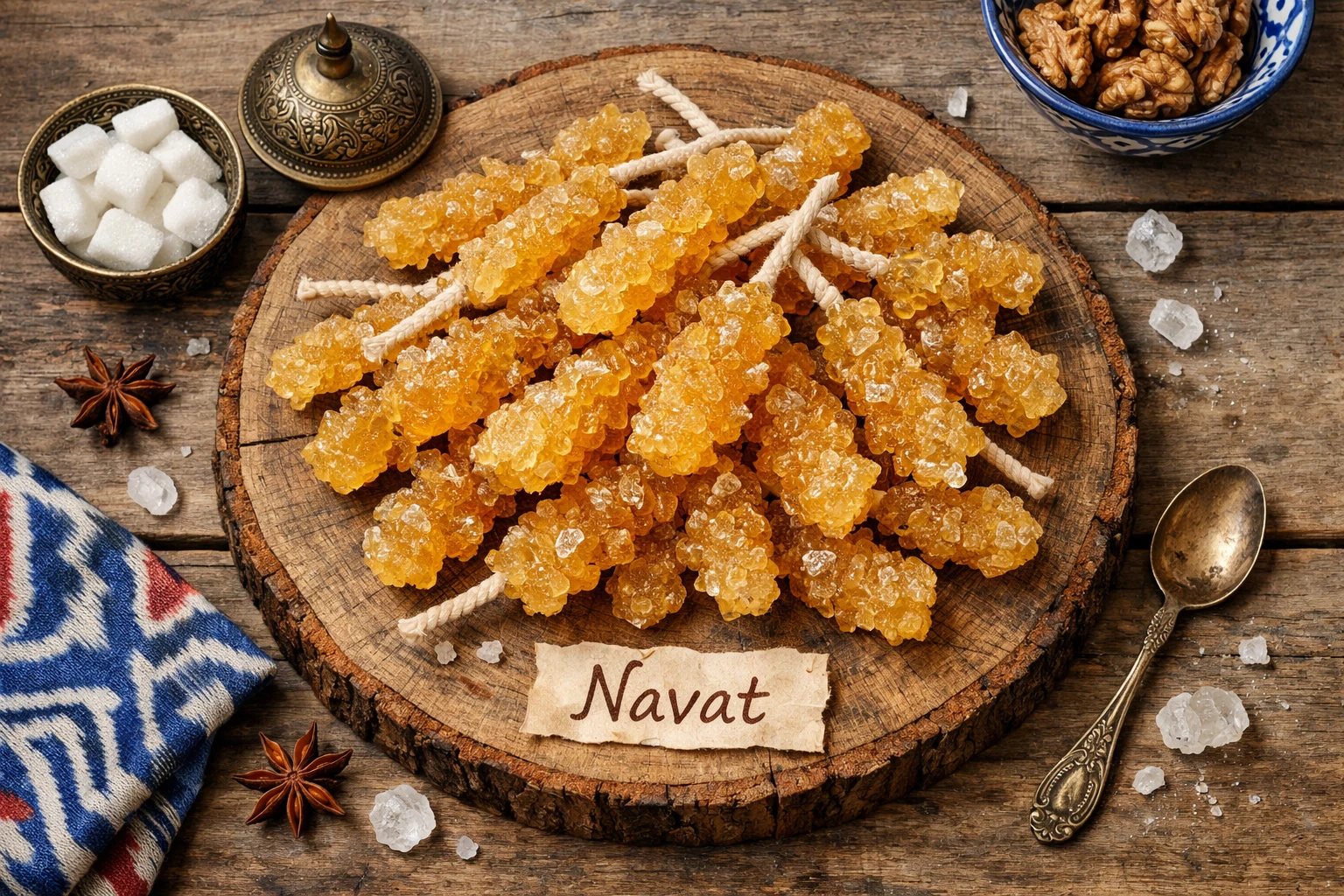
Traditional Uzbek crystallized sugar served with tea, offering pure energy but requiring careful portion control for health-conscious consumption.
Quick Nutrition Facts
Per 100g Navat
| Nutrient | Amount |
|---|---|
| Calories | 380 kcal |
| Protein | 0g |
| Carbohydrates | 98g |
| Fiber | 0g |
| Sugars | 98g |
| Fat | 0g |
| Potassium | Trace |
| Calcium | Trace |
| Iron | Trace |
| Sodium | 2mg |
Macronutrient Breakdown
 ChatGPT
  Claude
  AI Mode
  Perplexity
NUTRITIONIST INSIGHT
Navat is pure crystallized sugar with virtually no nutritional value beyond quick energy. Limit to 1-2 small crystals (10-15g) when enjoying with tea to stay within WHO's recommended 25g daily added sugar limit.
Myth Busters
MYTH #1: Navat Is Healthier Than White Sugar
TRUTH: While navat made from grape juice may contain trace minerals, it's nutritionally equivalent to regular sugar. Both are essentially 100% carbohydrates with no fiber, protein, or vitamins.
MYTH #2: Traditional Sweets Are Better for Blood Sugar
TRUTH: Navat has a high glycemic index (65), similar to table sugar. Consuming high-GI foods leads to rapid blood glucose spikes that strain pancreatic function regardless of the source.
MYTH #3: Eating Navat With Tea Reduces Its Calories
TRUTH: Sipping tea through navat crystals doesn't reduce caloric intake. You still consume the full sugar content. The slow dissolution only spreads consumption over time.
MYTH #4: Navat Provides Sustained Energy
TRUTH: As pure sugar, navat causes rapid blood glucose spikes followed by crashes. Unlike complex carbohydrates or foods with fiber, it doesn't provide sustained energy release.
NutriScore by Health Goals
| Health Goal | NutriScore | Why This Score? |
|---|---|---|
| Weight Loss |  | 380 cal/100g of pure sugar with zero fiber or protein. Provides empty calories that don't satisfy hunger. |
| Muscle Gain |  | Quick carbs post-workout, but zero protein. Better options exist for glycogen replenishment. |
| Diabetes Management | | High GI (65) causes rapid blood sugar spikes. Avoid or strictly limit. |
| PCOS Management | | Pure sugar worsens insulin resistance. Should be avoided for PCOS management. |
| Pregnancy Nutrition | | Excess sugar increases gestational diabetes risk. Limit strictly; choose nutrient-dense sweets. |
| Viral/Flu Recovery |  | Quick energy when appetite is low, but provides no immune-supporting nutrients. |
PERSONALIZED NUTRITION
Track your sugar intake with NutriScan to stay within healthy daily limits based on your specific health goals!
Blood Sugar Response to Navat
Understanding how navat affects your blood glucose helps you make informed decisions about consumption timing and portions.
Typical Glucose Response Curve
This chart shows typical blood glucose response for general healthy individuals. Individual responses may vary. Not medical advice.
How to Minimize the Spike
Pairing high-GI foods with protein, fat, or fiber slows glucose absorption:
- 🥜 Eat nuts alongside - Almonds or walnuts add protein and healthy fats
- 🫖 Pair with green tea - Catechins may help moderate glucose response
- 🧈 Add ghee or butter - Fat slows sugar absorption
- ⏰ Consume after meals - Not on empty stomach
Even with these strategies, keep portions small (1-2 crystals maximum).
Cultural Significance
Navat holds deep cultural importance across Central Asian tea traditions spanning over 1,000 years.
In Uzbekistan:
- Essential part of traditional tea ceremonies (choy)
- Served to honored guests as a symbol of hospitality
- Made from grape juice in traditional recipes, sometimes with saffron or cardamom
- Crystallization process takes 7-10 days using cotton threads
Across Central Asia:
- Known as "nabat" in Iran, "navvat" in Tajikistan
- Used in traditional medicine for sore throats and coughs
- Believed to aid digestion when consumed after meals
- Symbol of celebration at weddings and festivals
Traditional Preparation:
- Grape juice or sugar syrup boiled to high concentration
- Cotton threads suspended in syrup
- Slow crystallization in warm, dry conditions
- Larger crystals considered higher quality
Compare & Substitute
Navat vs Similar Sweeteners (Per 100g)
| Nutrient | 🍬 Navat | 🍯 Honey | 🥥 Coconut Sugar | 🍁 Maple Syrup |
|---|---|---|---|---|
| Calories | 380 kcal | 304 kcal | 375 kcal | 260 kcal |
| Carbs | 98g | 82g | 92g | 67g |
| Fiber | 0g | 0g | 0g | 0g |
| Protein | 0g | 0.3g | 1g | 0g |
| Fat | 0g | 0g | 0.5g | 0g |
| GI | 65 | 58 | 35 | 54 |
| Minerals | Trace | Some | Iron, zinc, potassium | Manganese, zinc |
| Best For | Tea ceremonies | Coughs, natural sweetening | Lower GI baking | Pancakes, glazes |
Frequently Asked Questions
What is navat made from?
Navat is made by slowly crystallizing grape juice or concentrated sugar syrup around cotton threads over 7-10 days. Traditional Uzbek recipes may include spices like cardamom, saffron, or cloves for added flavor.
The crystallization process creates the distinctive rock candy texture, with larger crystals typically considered higher quality.
How many calories are in navat?
100g of navat contains approximately 380 calories, almost entirely from sugar. A typical serving of 2-3 small crystals (about 15g) provides around 57 calories.
Since navat is pure crystallized sugar, all calories come from carbohydrates with no protein, fat, or fiber.
Can diabetics eat navat?
Diabetics should avoid or strictly limit navat. With a glycemic index of 65 and pure sugar content, even small amounts cause significant blood sugar spikes.
If consumed occasionally, limit to one small crystal (5g) and pair with protein-rich foods. Always monitor blood glucose response.
Is navat healthier than regular sugar?
Traditional navat made from grape juice may contain trace minerals not found in refined white sugar, but the nutritional difference is negligible. Both are essentially 100% carbohydrates.
Neither provides fiber, significant vitamins, or minerals. For healthier alternatives, consider coconut sugar (GI 35) or small amounts of raw honey.
How is navat traditionally served?
In Central Asian tradition, navat crystals are placed on the tongue while sipping hot green or black tea. The tea gradually dissolves the sugar, providing slow, gradual sweetness.
This serving method is part of the traditional "choy" tea ceremony, especially when hosting guests.
How much navat is safe to eat per day?
For healthy adults, limit navat to 1-2 small crystals (10-15g) daily, which provides 38-57 calories. This keeps you within WHO's recommended maximum of 25g added sugar daily.
Those managing diabetes, PCOS, or weight loss should avoid navat entirely and choose lower-GI alternatives.


Similar Nutritious Foods
4505 Chicharrones Classic Chili Salt
7 Eleven Japan Crispy Corn Cheese
Explore More Nutrition Tools & Resources
AI Calorie Counter App - Snap a Photo, Get Macros
AI Nutritionist App That Reads Your Logged Meals
Best Protein Supplements for Women
Bulking Meal Plan App That Sets Your Surplus
ChatGPT Calorie Counter Alternative That Keeps the Total
ChatGPT Diet Plan Alternative That Tracks What You Eat
ChatGPT Weight Loss Coach Alternative With a Food Log
Fast Food Calorie Counter App That Reads the Tray
Free Calorie Tracker App with AI Photo Scans | NutriScan
Indian Diet Plan App With Veg and Non Veg Meals
Indian Food Calorie Calculator - Get Instant Nutrition Facts for Desi Meals — 2026
Intermittent Fasting for Women, Timer and Meal Log App
Intermittent Fasting Tracker App - Free Fasting Timer
Macro Tracker App That Fills the Numbers From a Photo
Mediterranean Diet Meal Plan App That Counts the Oil
Micronutrient Tracker App for Vitamins and Minerals
MyFitnessPal Alternative That Stays Free | NutriScan
NutriScore App: A Free Grade on Every Meal | NutriScan
Nutrition Label Scanner App for the Amount You Ate
Second Trimester Protein Guide
Vegetarian Meal Plan App With a Protein Target
Voice Calorie Counter - Speak to Track Meals Hands-Free
Water and Calorie Tracker App - Free Water Log