Nestlé Munch: Calories, Nutrition and Health Benefits
Crispy wafer layers with smooth caramel center enrobed in milk chocolate—a beloved Indian snack merging indulgence with convenient portioning.
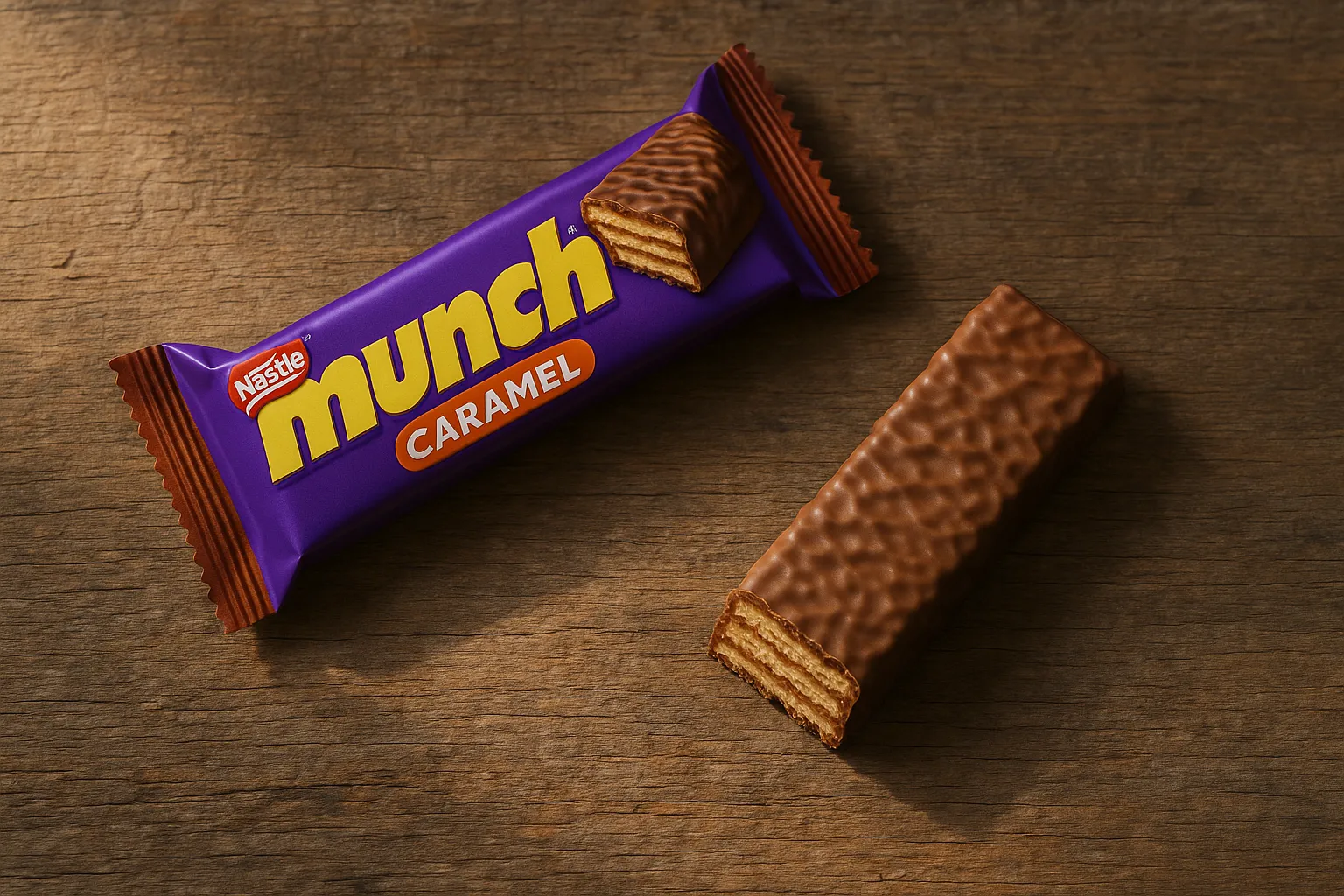
Quick Nutrition Facts
Per 1 Bar (28g)
| Nutrient | Amount |
|---|---|
| Calories | 217 kcal |
| Protein | 2.2g |
| Carbohydrates | 24g |
| Fiber | 0.5g |
| Sugars | 19-20g |
| Fat | 12g |
| Saturated Fat | 6.8g |
| Caffeine | 3-5mg |
| Sodium | 35mg |
| Calcium | 45mg |
Macronutrient Breakdown
 ChatGPT
  Claude
  AI Mode
  Perplexity
NUTRITIONIST INSIGHT
Nestlé Munch exemplifies the wafer-chocolate category popular in India—thin layers maximize crunch-satisfaction while minimizing absolute intake. At 217 calories per bar, it's manageable as occasional treat when planned into daily macros. The minimal fiber (0.5g) means limited satiety; pair with protein or save for meal-time dessert rather than standalone snack.
Myth Busters
MYTH #1: Wafer Adds No Calories
TRUTH: The crispy wafer structure contributes ~60 calories per bar (27% of total). While lighter than solid chocolate, wafers still carry significant caloric load due to wheat flour and fat content. A bar provides 217 calories—count them all within your daily intake.
MYTH #2: Caramel Flavor Means Real Caramel
TRUTH: Most caramel centers in mass-market bars use caramel flavoring (vanillin, buttery compounds) rather than cooked sugar caramel. Added flavorings contribute empty calories without nutritional benefit. Natural caramel would contain similar calories but slightly different sweetness curve.
MYTH #3: Chocolate Bars Are Complete Snacks
TRUTH: Nestlé Munch provides minimal protein (2.2g) and virtually no fiber (0.5g)—insufficient for satiety. Pairing with protein extends fullness duration by 3-4 hours versus 1-2 hours alone. Never consume as standalone meal replacement.
MYTH #4: One Bar Daily Won't Impact Weight
TRUTH: One daily Munch bar (217 cal × 7 = 1,519 calories/week) equals 0.4 kg weight gain monthly—significant over time. Calorie-dense treats require intentional portioning; daily consumption typically derails weight goals without awareness.
MYTH #5: Milk Chocolate is Healthier Than Dark
TRUTH: Both contain similar calories and sugar. Dark chocolate (70%+) provides more antioxidants, while milk chocolate has minimal polyphenol benefit. Nutritionally, wafer-chocolate bars are treats regardless of chocolate type—health positioning matters less than portion control.
MYTH #6: Nestlé Munch is a Good Pre-Workout Snack
TRUTH: The 24g carbs provide quick energy, but 0.5g fiber and 2.2g protein leave muscles under-nourished post-activity. Post-workout requires 15-25g protein for muscle synthesis; Munch lacks this entirely. Better choices: Greek yogurt, nuts, protein bar.
NutriScore by Health Goals
| Health Goal | NutriScore | Why This Score? |
|---|---|---|
| Weight Loss |  | 217 calories, high sugar (19g), minimal fiber/protein (0.5g fiber, 2.2g protein). Requires strong portion control; better alternatives exist. |
| Muscle Gain | | Carbs are useful for recovery, but protein (2.2g) is insufficient. Not suitable post-workout; use dedicated protein sources instead. |
| Diabetes Management | | 24g carbs, 19-20g sugar per bar presents blood sugar challenges. Avoid regular consumption; ask healthcare provider about occasional treats. |
| PCOS Management | | High sugar impacts insulin sensitivity negatively. Infrequent treats only (quarterly), always paired with protein; avoid during high-stress periods. |
| Pregnancy Nutrition |  | Low caffeine (3-5mg), minimal toxins. Occasional treat acceptable; provide carb energy without excessive nutrients. Monitor portion given sugar concerns in pregnancy. |
| Viral/Flu Recovery |  | Easy-to-consume carbs when appetite compromised; caramel adds palatability. Pairs well with warm beverages; quick energy boost during recovery phase. |
PERSONALIZED NUTRITION
Track your treats with NutriScan for personalized NutriScores based on your specific health goals!
Blood Sugar Response to Nestlé Munch
Understanding glucose response helps time consumption strategically, especially for those managing blood sugar.
Typical Glucose Response Curve
This chart shows typical blood glucose response for general healthy individuals. Individual responses may vary. Not medical advice.
How to Mitigate the Spike
High sugar content (19g) + low fiber (0.5g) = rapid glucose absorption. If consuming:
- 🥛 Pair with milk or yogurt - Dairy protein/fat slows sugar absorption by 30-40 minutes
- 🥜 Add nuts or nut butter - Healthy fats reduce glycemic index impact
- 🚶 Post-meal movement - 10-minute walk after consumption improves glucose clearance by 20-30%
- ☕ Consume mid-meal - Part of structured meal rather than standalone maximizes satiety signals
Strategy: Save for dessert course post-protein rather than standalone snack to minimize spike severity.
Cultural Significance
Nestlé Munch launched in India during the 1990s, becoming the nation's leading wafer-chocolate bar through aggressive TV advertising ("Munch it!"). The product epitomizes affordable indulgence in Indian snacking culture, with the bar becoming shorthand for spontaneous pleasure amid daily routines.
In India:
- Market leader in wafer-chocolate category; sold in 3 million+ retail outlets
- Iconic jingle embedded in generational memory across age groups
- Tea-time tradition: pairs naturally with chai for mid-afternoon energy
- Positioning as "steal a moment" treat reflects busy Indian lifestyle; convenient single-serving format
- Regional popularity exceeds competitors through distribution excellence and cultural resonance
Global Context:
- Wafer-chocolate innovation pioneered by Nestlé in 1970s-80s
- India remains highest per-capita consumer market for wafer bars
- Similar products (KitKat, Cadbury Bubbly) compete on taste nuance rather than positioning
- Single-bar packaging enables impulse purchase culture in emerging markets
Compare & Substitute
Wafer-Chocolate Treats Comparison (Per Bar/Serving)
| Nutrient | 🍫 Nestlé Munch | 🍫 KitKat Original | 🍫 Cadbury Bubbly | 🍫 Milkybar |
|---|---|---|---|---|
| Calories | 217 kcal | 215 kcal | 210 kcal | 220 kcal |
| Carbs | 24g | 25g | 23g | 26g |
| Fiber | 0.5g | 1g | 0.8g | 0g |
| Protein | 2.2g | 2.8g | 2.5g | 3.2g |
| Fat | 12g | 11.5g | 12g | 13g |
| Sugar | 19-20g | 19g | 20g | 22g |
| Chocolate | Milk (creamy) | Milk (crispy) | Milk (aerated) | White (sweet) |
| Best For | Smooth, melt-in-mouth texture | Crisp wafer satisfaction | Light, airy, novelty appeal | Indulgent white chocolate lovers |
Frequently Asked Questions
Is Nestlé Munch good for weight loss?
Nestlé Munch contains 217 calories per bar with minimal fiber (0.5g) and protein (2.2g), providing limited satiety. A single bar consumes 8-11% of a typical 2,000-calorie daily allowance without fullness benefit. Weight loss requires either avoiding entirely or limiting to 1 bar weekly maximum while increasing protein/fiber from other sources. Tracking with NutriScan app helps visualize impact on daily macros.
Can diabetics eat Nestlé Munch?
Diabetics should avoid regular Munch consumption due to 24g carbohydrates and 19-20g added sugars per bar. If desired occasionally after medical clearance, consume with protein/fat meal components, monitor blood glucose 2 hours post-consumption, and limit to maximum 1 bar per month. Consult your healthcare provider before including in meal plans.
How many calories are in Nestlé Munch?
One bar (28g) contains 217 calories. Larger multipacks may contain 2-4 bars; clarify serving size on packaging. Consuming 2 bars (434 calories) represents 20-22% of daily intake—significant for weight management goals. Track portions carefully; individual bars are easier to portion-control than multipacks.
What's the difference between Munch and other chocolate bars?
Nestlé Munch features thin crispy wafers with smooth caramel center, providing textural variety versus solid chocolate bars. Nutritionally nearly identical to KitKat and Cadbury Bubbly (215-220 cal, 24-26g carbs). Choice depends on flavor preference and mouth-feel; health/macro differences are negligible. Select based on satisfaction factor for better adherence.
Is Nestlé Munch safe during pregnancy?
Nestlé Munch contains minimal caffeine (3-5mg) and no dangerous additives—safe during pregnancy in moderation. However, high sugar (19g) is concerning for gestational diabetes risk; discuss frequency with healthcare provider. Better choices during pregnancy: whole fruits, yogurt, nuts provide nutrients plus carbs without excess sugar.
How often can I eat Nestlé Munch?
General recommendation: 1-2 bars per week maximum for balanced nutrition and weight management. Daily consumption (217 cal × 7 = 1,519 cal/week) adds ~0.4 kg weight monthly. Those managing diabetes, PCOS, or pursuing weight loss should limit further—treat as occasional indulgence rather than regular snack. Use NutriScan app to track and plan treats strategically.


Similar Nutritious Treats
4505 Chicharrones Classic Chili Salt
7 Eleven Japan Crispy Corn Cheese
Explore More Nutrition Tools & Resources
AI Calorie Counter App - Snap a Photo, Get Macros
AI Nutritionist App That Reads Your Logged Meals
Best Protein Supplements for Women
Bulking Meal Plan App That Sets Your Surplus
ChatGPT Calorie Counter Alternative That Keeps the Total
ChatGPT Diet Plan Alternative That Tracks What You Eat
ChatGPT Weight Loss Coach Alternative With a Food Log
Fast Food Calorie Counter App That Reads the Tray
Free Calorie Tracker App with AI Photo Scans | NutriScan
Indian Diet Plan App With Veg and Non Veg Meals
Indian Food Calorie Calculator - Get Instant Nutrition Facts for Desi Meals — 2026
Intermittent Fasting for Women, Timer and Meal Log App
Intermittent Fasting Tracker App - Free Fasting Timer
Macro Tracker App That Fills the Numbers From a Photo
Mediterranean Diet Meal Plan App That Counts the Oil
Micronutrient Tracker App for Vitamins and Minerals
MyFitnessPal Alternative That Stays Free | NutriScan
NutriScore App: A Free Grade on Every Meal | NutriScan
Nutrition Label Scanner App for the Amount You Ate
Second Trimester Protein Guide
Vegetarian Meal Plan App With a Protein Target
Voice Calorie Counter - Speak to Track Meals Hands-Free
Water and Calorie Tracker App - Free Water Log