Nihari: Calories, Nutrition and Health Benefits
A rich, slow-cooked Pakistani stew featuring tender beef and bone marrow, packed with protein and collagen for sustained energy.
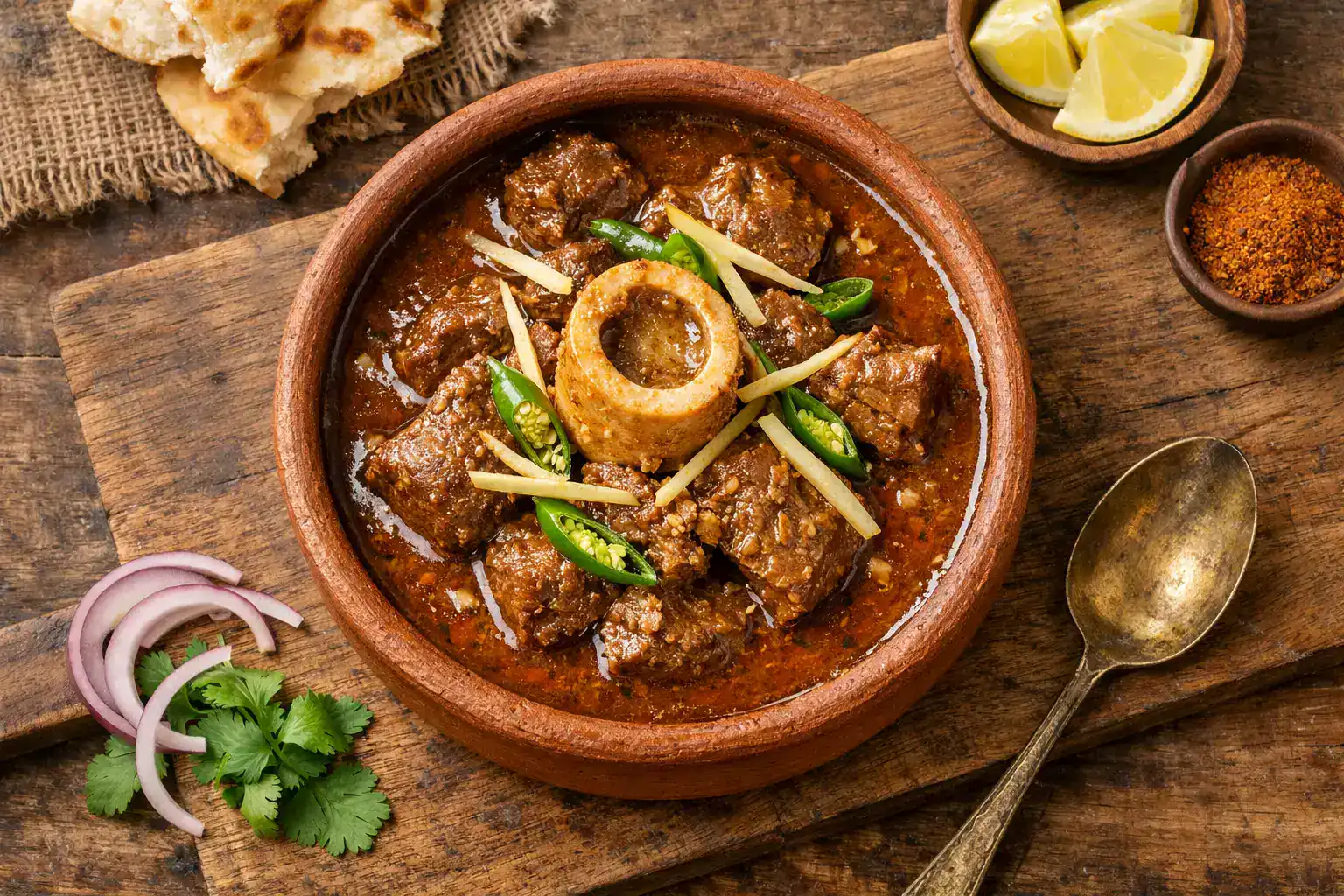
Quick Nutrition Facts
Per 1 Cup Serving (250g)
| Nutrient | Amount |
|---|---|
| Calories | 350 kcal |
| Protein | 20g |
| Carbohydrates | 10g |
| Fiber | 1g |
| Sugars | 2g |
| Fat | 25g |
| Saturated Fat | 9.4g |
| Cholesterol | 66mg |
| Sodium | 755mg |
| Iron | 2.8mg |
| Potassium | 377mg |
| Zinc | 7mg |
Macronutrient Breakdown
 ChatGPT
  Claude
  AI Mode
  Perplexity
NUTRITIONIST INSIGHT
Nihari's slow-cooking process extracts collagen from bone marrow, supporting joint health and skin elasticity. The 20g protein per serving makes it excellent for post-workout recovery.
Myth Busters
MYTH #1: Nihari Is Too Fatty to Be Healthy
TRUTH: While nihari is high in fat (25g per serving), it provides essential nutrients like collagen from bone marrow that supports joint and skin health. Moderation and lean cuts make it part of a balanced diet.
MYTH #2: Diabetics Must Avoid Nihari Completely
TRUTH: Nihari has only 10g carbs per serving - lower than rice or naan. The protein and fat content slows glucose absorption. Diabetics can enjoy it without bread, paired with vegetables.
MYTH #3: Nihari Has No Nutritional Value
TRUTH: Nihari is nutrient-dense: 20g protein, 2.8mg iron (16% DV), 7mg zinc for immunity, and collagen for joints. The slow-cooking process makes these nutrients highly bioavailable.
MYTH #4: You Can Only Eat Nihari for Breakfast
TRUTH: While traditionally a breakfast dish for laborers needing sustained energy, nihari can be eaten anytime. Post-workout is ideal for muscle recovery. Avoid late-night due to high fat content affecting sleep.
MYTH #5: All Nihari Is Equally Unhealthy
TRUTH: Nutrition varies significantly by preparation. Using lean beef cuts, less ghee, and skipping flour thickener creates a healthier version with similar protein but 30-40% less fat and calories.
MYTH #6: Bone Marrow in Nihari Is Just Fat
TRUTH: Bone marrow contains collagen, glucosamine, and glycine that support joint health and gut lining repair. It's also rich in vitamin B12 and iron.
NutriScore by Health Goals
| Health Goal | NutriScore | Why This Score? |
|---|---|---|
| Weight Loss |  | High calories (350) and fat (25g). Limit to half portion once weekly. Choose lean cuts and skip naan. |
| Muscle Gain |  | Excellent 20g complete protein, collagen for recovery, zinc for testosterone. Perfect post-workout meal. |
| Diabetes Management |  | Low carbs (10g) and protein slows glucose absorption. Skip bread, pair with non-starchy vegetables. |
| PCOS Management |  | High protein supports hormonal balance, but saturated fat may affect inflammation. Limit to once weekly. |
| Pregnancy Nutrition | | Iron-rich beef prevents pregnancy anemia, high protein supports fetal growth, collagen aids tissue development. |
| Viral/Flu Recovery | | Warm, easy to digest, zinc boosts immunity, protein supports recovery. Traditional remedy for strength restoration. |
PERSONALIZED NUTRITION
Track your meals with NutriScan for personalized NutriScores based on your specific health goals!
Blood Sugar Response to Nihari
Understanding how nihari affects your blood glucose can help you make informed decisions about when and how to eat it.
Typical Glucose Response Curve
This chart shows typical blood glucose response for general healthy individuals. Individual responses may vary. Not medical advice.
How to Flatten the Spike
Pairing nihari with fiber-rich vegetables and avoiding refined carbs minimizes blood sugar impact:
- Skip the naan/roti - The bread causes the spike, not the stew
- Add non-starchy vegetables - Spinach, cucumber salad, or raita
- Choose smaller portions - Half cup with extra vegetables
- Eat slowly - Allows better satiety signals and digestion
This combination keeps nihari diabetes-friendly while maintaining its satisfying richness.
Cultural Significance
Nihari originated in 18th century Delhi during the Mughal era, later becoming iconic in Pakistani cuisine, especially Karachi and Lahore.
Historical Roots:
- Name derives from "Nahar" (Arabic for morning) - traditionally eaten for breakfast
- Created for laborers and soldiers needing sustained energy
- Slow-cooked overnight (6-8 hours) for tender meat and rich flavor
- Royal Mughal kitchens perfected the spice blend
Modern Traditions:
- Pakistan's national breakfast dish, especially on weekends
- Served at weddings, Eid celebrations, and special occasions
- Famous nihari houses in Karachi, Lahore, and Lucknow have multi-generational recipes
- Traditional garnishes: ginger julienne, green chilies, coriander, fried onions, lemon
Compare & Substitute
Nihari vs Similar Dishes (Per Serving)
| Nutrient | Nihari | Haleem | Paya | Beef Stew (Western) |
|---|---|---|---|---|
| Calories | 350 kcal | 400 kcal | 280 kcal | 250 kcal |
| Protein | 20g | 18g | 22g | 20g |
| Carbs | 10g | 35g | 5g | 15g |
| Fat | 25g | 18g | 18g | 12g |
| Iron | 2.8mg | 3.5mg | 2.5mg | 2.2mg |
| Collagen | High (bone marrow) | Low | Very High (trotters) | Low |
| Best For | Muscle gain, recovery | Sustained energy, Ramadan | Joint health, collagen | Low-fat protein |
Frequently Asked Questions
Is nihari good for weight loss?
Nihari is calorie-dense (350 calories per cup) with 25g fat, making it challenging for weight loss. However, its high protein (20g) promotes satiety.
Weight loss tips:
- Limit to half portion (175 calories)
- Skip naan and pair with salad
- Choose lean beef cuts
- Reduce ghee in preparation
- Eat once weekly maximum
Can diabetics eat nihari?
Yes, diabetics can enjoy nihari in moderation. It has only 10g carbs per serving - significantly less than rice or bread.
Tips for diabetics:
- Skip naan, roti, or rice completely
- Pair with cucumber raita or salad
- Monitor portion size (1 cup max)
- The protein and fat slow glucose absorption
- Check blood sugar 2 hours after eating
Always consult your healthcare provider for personalized advice.
How much protein is in nihari?
One cup (250g) of nihari contains approximately 20 grams of complete protein from beef and bone marrow. This provides about 40% of daily protein needs.
The protein in nihari is highly bioavailable due to slow cooking, making it excellent for muscle building and recovery.
What are the main health benefits of nihari?
Key Benefits:
- Muscle Recovery: 20g complete protein for muscle repair and growth
- Anemia Prevention: 2.8mg iron (16% DV) from beef supports red blood cell production
- Joint Health: Collagen and glucosamine from bone marrow
- Immune Support: 7mg zinc per serving boosts immunity
- Gut Health: Gelatin from slow-cooking supports gut lining
- B Vitamins: Rich in B12 for energy and nervous system
When is the best time to eat nihari?
Depends on your goal:
- Traditional: Breakfast (sustained morning energy)
- Muscle Gain: Post-workout within 2 hours for protein synthesis
- Weight Management: Lunch (allows time for digestion)
- Avoid: Late dinner (high fat disrupts sleep)
IMPORTANT NOTE
Due to high fat content, allow 3-4 hours for digestion before sleep or intense activity.
Is nihari healthy or unhealthy?
Nihari is nutrient-dense but calorie-rich - it depends on portion size and frequency.
Healthy aspects:
- High-quality protein (20g)
- Iron for blood health
- Collagen for joints
- Zinc for immunity
Concerns:
- High saturated fat (9.4g) - limit for heart health
- High sodium (755mg) - watch for blood pressure
- Calorie-dense - easy to overeat
Recommendation: 1-2 servings per week, balanced with vegetables, using lean cuts.
How many calories are in nihari with naan?
| Combination | Calories | Carbs |
|---|---|---|
| Nihari alone (1 cup) | 350 | 10g |
| + 1 Naan | +250 | +45g |
| + 2 Naan | +500 | +90g |
| Total (1 naan) | 600 | 55g |
| Total (2 naan) | 850 | 100g |
For diabetes or weight loss, skip naan entirely or choose half a roti instead.


Similar Nutritious Foods
4505 Chicharrones Classic Chili Salt
7 Eleven Japan Crispy Corn Cheese
Explore More Nutrition Tools & Resources
AI Calorie Counter App - Snap a Photo, Get Macros
AI Nutritionist App That Reads Your Logged Meals
Best Protein Supplements for Women
Bulking Meal Plan App That Sets Your Surplus
ChatGPT Calorie Counter Alternative That Keeps the Total
ChatGPT Diet Plan Alternative That Tracks What You Eat
ChatGPT Weight Loss Coach Alternative With a Food Log
Fast Food Calorie Counter App That Reads the Tray
Free Calorie Tracker App with AI Photo Scans | NutriScan
Indian Diet Plan App With Veg and Non Veg Meals
Indian Food Calorie Calculator - Get Instant Nutrition Facts for Desi Meals — 2026
Intermittent Fasting for Women, Timer and Meal Log App
Intermittent Fasting Tracker App - Free Fasting Timer
Macro Tracker App That Fills the Numbers From a Photo
Mediterranean Diet Meal Plan App That Counts the Oil
Micronutrient Tracker App for Vitamins and Minerals
MyFitnessPal Alternative That Stays Free | NutriScan
NutriScore App: A Free Grade on Every Meal | NutriScan
Nutrition Label Scanner App for the Amount You Ate
Second Trimester Protein Guide
Vegetarian Meal Plan App With a Protein Target
Voice Calorie Counter - Speak to Track Meals Hands-Free
Water and Calorie Tracker App - Free Water Log