Nutritional Yeast: Calories, Nutrition and Health Benefits
The vegan's secret weapon - a complete protein, B12 powerhouse, and savory cheese substitute packed with essential nutrients.
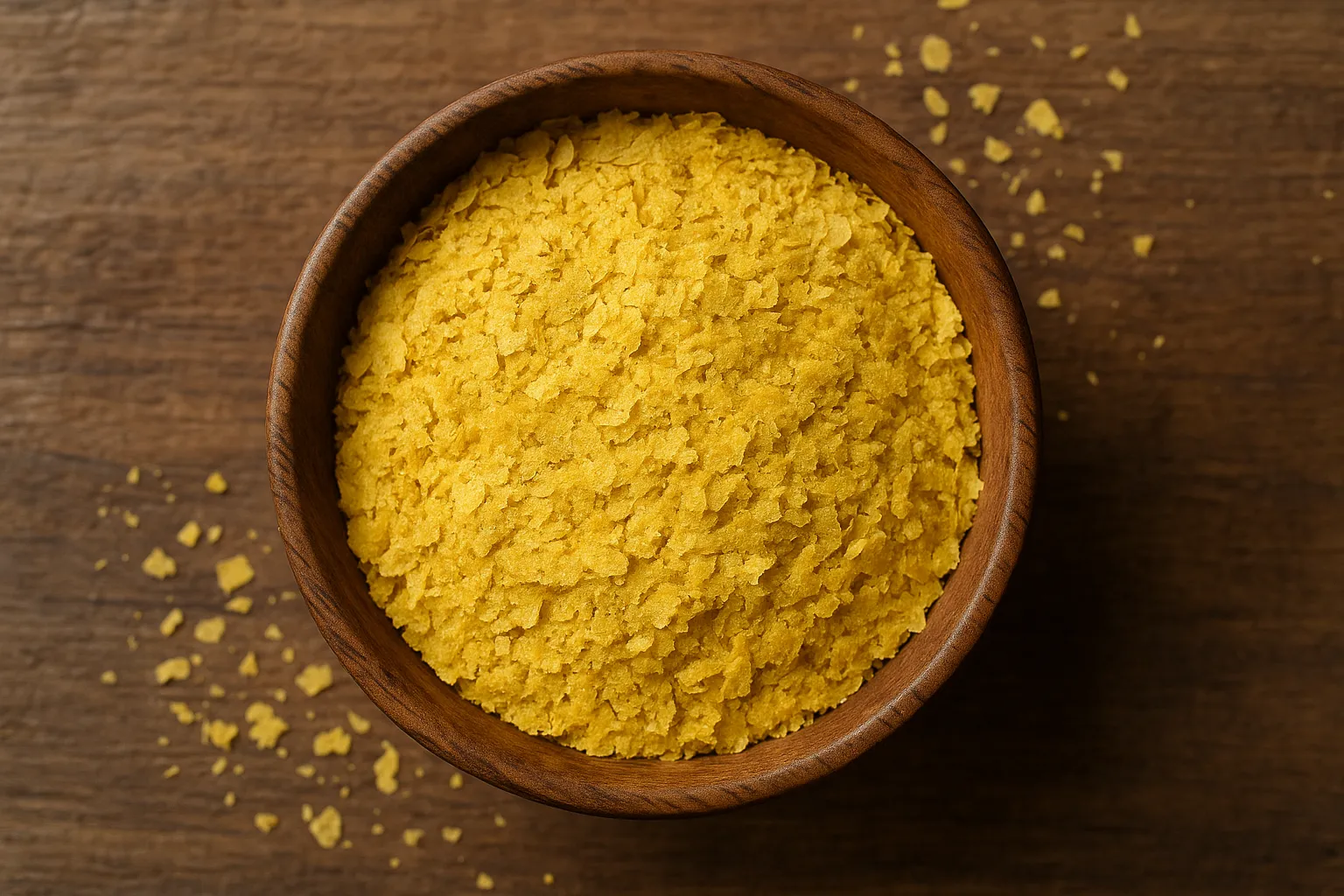
Quick Nutrition Facts
Per 2 Tablespoons (16g)
| Nutrient | Amount |
|---|---|
| Calories | 50 kcal |
| Protein | 8g |
| Carbohydrates | 5g |
| Fiber | 4g |
| Sugars | <1g |
| Fat | 0.5g |
| Vitamin B12 | 8mcg* |
| Thiamin (B1) | 9.6mg |
| Riboflavin (B2) | 9.7mg |
| Niacin (B3) | 56mg |
| Folate | 240mcg |
*Only in fortified versions
Macronutrient Breakdown
 ChatGPT
  Claude
  AI Mode
  Perplexity
NUTRITIONIST INSIGHT
Nutritional yeast is only a reliable B12 source when fortified - always check the label. The 8g complete protein per serving makes it a vegan staple, providing all 9 essential amino acids your body can't produce.
Myth Busters
MYTH #1: All Nutritional Yeast Contains B12
TRUTH: Only fortified nutritional yeast contains B12. Unfortified versions have zero B12. Always verify the label states "fortified with B12" - this is critical for vegans relying on it as their B12 source.
MYTH #2: Nutritional Yeast Causes Yeast Infections
TRUTH: Nutritional yeast is inactive (deactivated) Saccharomyces cerevisiae and cannot cause yeast infections. Candida infections come from Candida species, not baker's or nutritional yeast. Completely different organisms.
MYTH #3: It's Just Like Brewer's Yeast
TRUTH: While both are S. cerevisiae, nutritional yeast is grown on molasses for nutrition, then deactivated. Brewer's yeast is a beer byproduct with bitter taste. Nutritional yeast has a nutty, cheesy flavor without bitterness.
MYTH #4: Too Much Will Cause B12 Toxicity
TRUTH: B12 is water-soluble with no established upper limit. Excess is excreted in urine. Even consuming 2,000% daily value poses no toxicity risk for healthy individuals.
MYTH #5: It's High in MSG
TRUTH: The savory "umami" flavor comes from naturally occurring glutamic acid, not added MSG. Free glutamates in nutritional yeast are significantly lower than aged cheese and occur naturally.
MYTH #6: Nutritional Yeast Is High in Sodium
TRUTH: Plain nutritional yeast contains only 5-15mg sodium per 2 tablespoons. Some seasoned varieties may have added salt, but standard nutritional yeast is naturally very low in sodium.
NutriScore by Health Goals
| Health Goal | NutriScore | Why This Score? |
|---|---|---|
| Weight Loss |  | Only 50 calories per serving with 8g protein and 4g fiber promoting fullness. Perfect low-calorie cheese substitute. |
| Muscle Gain |  | Complete protein with all 9 essential amino acids. 50g protein per 100g, though serving sizes are small. Excellent protein quality. |
| Diabetes Management | | Low carb (5g per serving), high fiber, minimal blood sugar impact. Chromium content may support glucose metabolism. |
| PCOS Management | | B vitamins support hormone metabolism, complete protein aids satiety, low glycemic impact supports insulin sensitivity. |
| Pregnancy Nutrition | | Fortified B12 prevents neural tube defects, 240mcg folate supports fetal development. Complete protein for growth. |
| Viral/Flu Recovery | | Beta-glucans support immune function, B vitamins aid energy metabolism, easy to digest protein supports tissue repair. |
PERSONALIZED NUTRITION
Track your meals with NutriScan for personalized NutriScores based on your specific health goals!
Blood Sugar Response to Nutritional Yeast
Understanding how nutritional yeast affects your blood glucose - spoiler: minimal impact.
Typical Glucose Response Curve
*This chart shows typical blood glucose response for general healthy individuals. Individual responses may vary. Not medical advice.*
How to Use for Blood Sugar Control
Nutritional yeast's high protein and fiber content makes it excellent for stabilizing blood sugar:
- 🍝 Sprinkle on pasta - Protein slows carb absorption
- 🥔 Add to mashed potatoes - Reduces glycemic impact
- 🍿 Season popcorn - Adds protein to high-GI snack
- 🥗 Mix in salad dressings - Protein balances leafy greens
The minimal carbohydrate content (5g per serving with 4g fiber) means essentially no blood sugar spike.
Cultural Significance
Nutritional yeast emerged from the health food movement of the 1950s-60s but has ancient roots in yeast cultivation.
Modern History:
- Developed in 1950s as a nutritional supplement for vegetarians
- "Nooch" nickname popularized in 1990s-2000s vegan communities
- 2010s saw mainstream adoption in plant-based cooking
- Now standard in vegan pantries worldwide
Culinary Uses:
- Cheese substitute in vegan mac and cheese, pizza, pasta
- Popcorn seasoning (the "vegan popcorn" staple)
- Umami flavor enhancer in soups, sauces, dressings
- Topping for avocado toast, salads, roasted vegetables
Health Movement Impact:
- Made B12 supplementation accessible and tasty for vegans
- Democratized umami flavor without animal products
- Supported growth of plant-based movement with practical nutrition
Compare & Substitute
Nutritional Yeast vs Similar Protein Sources (Per 100g)
| Nutrient | 🧀 Nutritional Yeast | 🧀 Parmesan | 🥜 Almond Flour | 💚 Spirulina |
|---|---|---|---|---|
| Calories | 320 kcal | 392 kcal | 571 kcal | 290 kcal |
| Carbs | 36g | 3.2g | 21g | 24g |
| Fiber | 27g | 0g | 10g | 8g |
| Protein | 50g | 36g | 21g | 57g |
| Fat | 5g | 26g | 50g | 8g |
| B12 | 50mcg* (fortified) | 1.3mcg | 0mcg | 0mcg |
| Sodium | 95mg | 1529mg | 10mg | 1048mg |
| Folate | 1500mcg | 7mcg | 44mcg | 94mcg |
| Best For | Vegan B12, cheese flavor | Authentic cheese taste | Gluten-free baking | Protein concentration |
Frequently Asked Questions
Does nutritional yeast contain B12?
Only fortified nutritional yeast contains B12. Check the label for "fortified with vitamins" or specific B12 content listing.
Key facts: Fortified versions provide 133-500% daily B12 needs per 2 tablespoons (8-24mcg); unfortified versions have zero B12; B12 is added during manufacturing, not naturally present; essential for vegans as reliable B12 source.
Always purchase fortified nutritional yeast if using it as your primary B12 source on a plant-based diet.
Is nutritional yeast good for weight loss?
Yes, nutritional yeast supports weight loss as a low-calorie, high-protein, high-fiber food.
Benefits per 2 tablespoons: 50 calories; 8g protein promotes fullness; 4g fiber aids satiety; savory flavor satisfies cravings; replaces cheese (saves 60-100 calories per serving).
Best uses: Sprinkle on salads instead of cheese, mix into mashed cauliflower, season roasted vegetables, add to soups for umami without cream.
How much protein is in nutritional yeast?
Nutritional yeast contains 50g protein per 100g or 8g per 2 tablespoons (16g). It's a complete protein with all 9 essential amino acids.
Protein quality: Contains leucine, lysine, and other essential amino acids; similar amino acid profile to animal proteins; highly bioavailable; suitable for muscle maintenance and growth.
While servings are small, the protein concentration makes it a valuable addition to vegan meals for boosting overall protein intake.
What are the main health benefits of nutritional yeast?
Key Benefits:
- B12 Source: Fortified versions provide 133-500% daily needs per serving
- Complete Protein: All 9 essential amino acids for tissue repair
- Immune Support: Beta-glucans enhance immune cell function
- Energy Metabolism: B-complex vitamins convert food to energy
- Digestive Health: 27g fiber per 100g supports gut health
- Antioxidants: Glutathione and selenium protect cells
Can diabetics eat nutritional yeast?
Yes, diabetics can safely eat nutritional yeast. With only 5g carbs per 2 tablespoons (1g net carbs after subtracting 4g fiber), it has minimal blood sugar impact.
Diabetes benefits: High protein and fiber slow glucose absorption; chromium content may improve insulin sensitivity; low glycemic index; can replace high-carb cheese in recipes.
Usage tips: Add to eggs for protein boost, sprinkle on vegetables, use in low-carb bread recipes, mix into yogurt for savory flavor.
Is nutritional yeast safe to eat daily?
Yes, nutritional yeast is safe for daily consumption for most people. Typical serving is 1-2 tablespoons per day.
Who should be cautious:
- Yeast allergies: Avoid completely if allergic to yeast
- Crohn's disease/IBD: May trigger symptoms in some individuals
- Taking MAOIs: High tyramine content can interact with medication
- Gout: High purine content may increase uric acid
General population: No upper limit established; excess B vitamins are water-soluble and excreted; start with 1 tablespoon daily and increase gradually.
What does nutritional yeast taste like?
Nutritional yeast has a savory, nutty, cheesy, umami flavor often described as similar to Parmesan cheese.
Flavor profile: Savory with slight nuttiness; no bitterness unlike brewer's yeast; cheesy without dairy; enhances umami in dishes; subtle enough to blend into recipes.
Popular uses: Popcorn topping ("vegan popcorn"); pasta dishes; salad toppers; cheese sauce base; pizza seasoning.
Some brands have stronger or milder flavors - experiment to find your preferred taste.
How do I store nutritional yeast?
Store nutritional yeast in an airtight container in a cool, dry place. Properly stored, it lasts 1-2 years.
Storage tips: Keep away from moisture and humidity; no refrigeration needed; use airtight container to prevent clumping; store away from heat sources; check for off odors before use (should smell nutty/savory).
Signs of spoilage: Clumping (indicates moisture), off smell, color change from golden yellow to brown, unusual taste.




Similar Nutritious Foods
4505 Chicharrones Classic Chili Salt
7 Eleven Japan Crispy Corn Cheese
Explore More Nutrition Tools & Resources
AI Calorie Counter App - Snap a Photo, Get Macros
AI Nutritionist App That Reads Your Logged Meals
Best Protein Supplements for Women
Bulking Meal Plan App That Sets Your Surplus
ChatGPT Calorie Counter Alternative That Keeps the Total
ChatGPT Diet Plan Alternative That Tracks What You Eat
ChatGPT Weight Loss Coach Alternative With a Food Log
Fast Food Calorie Counter App That Reads the Tray
Free Calorie Tracker App with AI Photo Scans | NutriScan
Indian Diet Plan App With Veg and Non Veg Meals
Indian Food Calorie Calculator - Get Instant Nutrition Facts for Desi Meals — 2026
Intermittent Fasting for Women, Timer and Meal Log App
Intermittent Fasting Tracker App - Free Fasting Timer
Macro Tracker App That Fills the Numbers From a Photo
Mediterranean Diet Meal Plan App That Counts the Oil
Micronutrient Tracker App for Vitamins and Minerals
MyFitnessPal Alternative That Stays Free | NutriScan
NutriScore App: A Free Grade on Every Meal | NutriScan
Nutrition Label Scanner App for the Amount You Ate
Second Trimester Protein Guide
Vegetarian Meal Plan App With a Protein Target
Voice Calorie Counter - Speak to Track Meals Hands-Free
Water and Calorie Tracker App - Free Water Log