Nutty Baklava: Calories, Nutrition and Health Benefits
Mediterranean treasure combining crispy phyllo, precious nuts, and golden honey for antioxidants, heart health, and sustained energy.
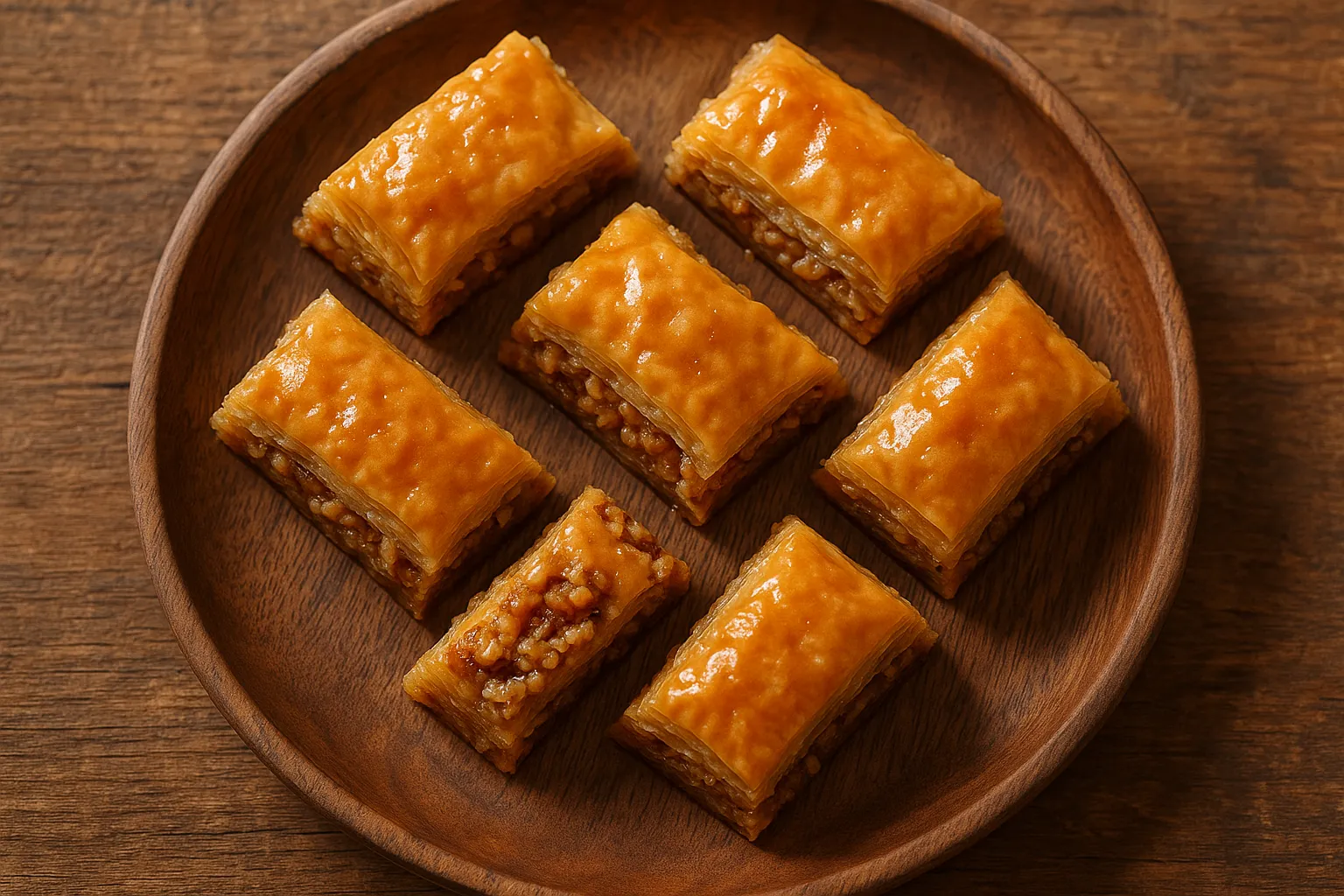
Quick Nutrition Facts
Per 1 Piece Baklava (50g)
| Nutrient | Amount |
|---|---|
| Calories | 150 kcal |
| Protein | 3.5g |
| Carbohydrates | 15g |
| Fiber | 1.2g |
| Sugars | 10.5g |
| Fat | 8.5g |
| Vitamin E | 3.2mg |
| Magnesium | 35mg |
| Potassium | 92mg |
| Antioxidants | High |
Macronutrient Breakdown
 ChatGPT
  Claude
  AI Mode
  Perplexity
NUTRITIONIST INSIGHT
Baklava's nuts provide polyphenols and vitamin E that protect cells from oxidative stress, while honey offers enzymes for digestion and energy. The phyllo dough contributes minimal nutrition but creates satisfying texture. Portion control is key—enjoy baklava as an occasional Mediterranean treat, not daily food.
Myth Busters
MYTH #1: Baklava Is Too Unhealthy to Ever Eat
TRUTH: One piece provides real nutrition from nuts including omega-3s, fiber, and antioxidants. The issue isn't baklava itself but portion size. Enjoying 1-2 pieces as occasional dessert fits balanced nutrition; daily consumption causes problems.
MYTH #2: All Honey in Baklava Is Equally Nutritious
TRUTH: Store-bought baklava often uses sugar syrup instead of pure honey, reducing nutritional value significantly. Raw honey contains enzymes and antioxidants lost in heating. Choose artisanal baklava with pure honey or make homemade versions.
MYTH #3: Baklava Has Too Much Sugar for Any Diet
TRUTH: One baklava piece contains 10.5g sugar—significant but not excessive for occasional treats. When paired with protein and fat from nuts, sugar absorption slows, minimizing blood sugar spikes. The key is frequency (occasional, not daily).
MYTH #4: Nuts in Baklava Are "Unhealthy Fats"
TRUTH: Nuts contain monounsaturated and polyunsaturated fats that protect heart health and reduce inflammation. Walnut omega-3s, almond vitamin E, and pistachio lutein all support cardiovascular function and brain health.
MYTH #5: Phyllo Dough Adds No Nutritional Value
TRUTH: Phyllo is made from flour providing carbs for energy and some B vitamins. While not nutrient-dense, the thin layers minimize calorie contribution per piece. Homemade phyllo is better than store-bought versions with added hydrogenated oils.
MYTH #6: You Can't Enjoy Baklava on Weight Loss
TRUTH: At 150 calories per piece, baklava fits occasional treats within calorie budgets. The protein (3.5g) and fiber promote satiety, reducing overall snacking. Enjoy 1 piece with herbal tea once weekly as sustainable indulgence.
NutriScore by Health Goals
| Health Goal | NutriScore | Why This Score? |
|---|---|---|
| Weight Loss |  | 150 calories per piece; enjoy as occasional treat max 2x weekly. Protein and fiber aid satiety but sugars limit frequency. |
| Muscle Gain |  | 3.5g protein, energy-rich carbs for recovery, antioxidants reduce inflammation. Use post-workout (1-2 pieces) for quick replenishment. |
| Diabetes Management |  | High sugar (10.5g) makes daily consumption unsuitable. Occasional small portion (half piece) with medication adjustment only; consult doctor. |
| PCOS Management | | Natural sugars and refined carbs affect insulin sensitivity. Limit to 1 piece monthly maximum; pair with protein. Better alternatives exist. |
| Pregnancy Nutrition | | Nuts provide magnesium (35mg) for cramp prevention, antioxidants for immunity, energy for growing baby. Enjoy 1-2 pieces weekly as safe treat. |
| Viral/Flu Recovery | | Quick-digesting carbs provide energy; nuts offer antioxidants and protein for immune support. Eat 1 small piece with herbal tea for comfort without straining digestion. |
PERSONALIZED NUTRITION
Track your meals with NutriScan for personalized NutriScores based on your specific health goals!
Blood Sugar Response to Baklava
Baklava's high sugar content causes a noticeable blood glucose spike, especially without protein or fat pairing. Understanding this response helps with portion timing and frequency.
Typical Glucose Response Curve
This chart shows typical blood glucose response for general healthy individuals. Individual responses may vary. Not medical advice.
How to Minimize Blood Sugar Impact
Pairing baklava with protein and fat slows sugar absorption and prevents sharp spikes:
- Greek yogurt pairing - Eat one small baklava piece with full-fat yogurt for protein cushion
- Tea or coffee - Drink unsweetened varieties to extend digestion without adding sugars
- After meals - Enjoy baklava as dessert following protein/vegetable meal rather than alone
- Exercise timing - Post-workout (30-60 min after training) when muscles absorb glucose
This approach lets you enjoy baklava's Mediterranean charm while protecting blood sugar stability.
Cultural Significance
Baklava is a crown jewel of Eastern Mediterranean, Middle Eastern, and Turkish cuisines, dating back to Ottoman Empire times with ancient roots in Persian, Arab, and Greek traditions.
Historical & Cultural:
- Originated during Ottoman Empire's golden age; served to sultans and dignitaries
- Represents celebration, hospitality, and special occasions across cultures
- Regional variations: Turkish, Greek, Lebanese, Palestinian, Syrian each claim authentic versions
- Traditionally made during holidays and weddings; symbol of generosity and abundance
- Religious significance: offered in mosques and during Ramadan; baklava-making is family tradition
Global Adoption:
- Spread along ancient trade routes to Mediterranean and beyond
- Now enjoyed worldwide; restaurants feature baklava as signature dessert
- Homemade baklava-making preserves cultural heritage across diaspora communities
- Symbol of cultural pride and culinary excellence in Middle Eastern communities
Compare & Substitute
Baklava vs Similar Desserts (Per serving/piece)
| Nutrient | 🥜 Nutty Baklava | 🍪 Walnut Cookie | 🍰 Honey Cake | 🥜 Almond Brittle |
|---|---|---|---|---|
| Calories | 150 kcal | 120 kcal | 180 kcal | 140 kcal |
| Carbs | 15g | 12g | 24g | 13g |
| Fiber | 1.2g | 0.8g | 0.5g | 1.5g |
| Protein | 3.5g | 2.5g | 2g | 4.2g |
| Fat | 8.5g | 6.5g | 9g | 8g |
| Sugars | 10.5g | 8g | 14g | 11g |
| Best For | Special occasions | Daily treats | Celebrations | Nut lovers |
Frequently Asked Questions
Is baklava healthy despite being sweet?
Baklava contains real nuts with protein, fiber, and antioxidants that provide genuine nutrition. One piece (50g) delivers 3.5g protein and heart-healthy fats; the sugar content is offset by nut benefits. Enjoy baklava as occasional treat (1-2 pieces maximum) rather than daily snack for sustainable nutrition.
Can people with diabetes eat baklava?
Baklava is high in sugar (10.5g per piece), making it unsuitable for regular diabetes diets. However, a tiny portion (half piece) occasionally, paired with medication adjustment and doctor approval, may fit some meal plans. Consult your healthcare provider before including baklava.
What nuts are best in baklava?
Walnuts provide omega-3 fatty acids for heart health; almonds offer fiber and vitamin E; pistachios contain monounsaturated fats and lutein. All are excellent. Choose based on regional tradition, availability, and personal preference; all deliver antioxidants and protein.
How much baklava should I eat?
Optimal portion: 1-2 pieces (50-100g) as occasional dessert, maximum 2-3 times weekly. Each piece contains 150 calories; exceeding this leads to excess sugar and calorie accumulation. For weight loss, limit to one small piece weekly.
What are the main health benefits of baklava?
Nuts provide heart-healthy fats, antioxidants that reduce inflammation, protein for satiety, and quick energy from honey. Benefits depend on nut quality and honey purity. Enjoy baklava as occasional Mediterranean treat within a balanced diet.
Is homemade baklava more nutritious?
Yes, homemade baklava with pure honey, quality nuts, and minimal processing offers superior nutrition to store-bought versions often made with sugar syrup and hydrogenated oils. Making baklava at home ensures ingredient quality and allows portion control.


Similar Nutritious Foods
4505 Chicharrones Classic Chili Salt
7 Eleven Japan Crispy Corn Cheese
Explore More Nutrition Tools & Resources
AI Calorie Counter App - Snap a Photo, Get Macros
AI Nutritionist App That Reads Your Logged Meals
Best Protein Supplements for Women
Bulking Meal Plan App That Sets Your Surplus
ChatGPT Calorie Counter Alternative That Keeps the Total
ChatGPT Diet Plan Alternative That Tracks What You Eat
ChatGPT Weight Loss Coach Alternative With a Food Log
Fast Food Calorie Counter App That Reads the Tray
Free Calorie Tracker App with AI Photo Scans | NutriScan
Indian Diet Plan App With Veg and Non Veg Meals
Indian Food Calorie Calculator - Get Instant Nutrition Facts for Desi Meals — 2026
Intermittent Fasting for Women, Timer and Meal Log App
Intermittent Fasting Tracker App - Free Fasting Timer
Macro Tracker App That Fills the Numbers From a Photo
Mediterranean Diet Meal Plan App That Counts the Oil
Micronutrient Tracker App for Vitamins and Minerals
MyFitnessPal Alternative That Stays Free | NutriScan
NutriScore App: A Free Grade on Every Meal | NutriScan
Nutrition Label Scanner App for the Amount You Ate
Second Trimester Protein Guide
Vegetarian Meal Plan App With a Protein Target
Voice Calorie Counter - Speak to Track Meals Hands-Free
Water and Calorie Tracker App - Free Water Log