Orange Juice: Calories, Nutrition and Health Benefits
Bright, vitamin C-packed breakfast staple that delivers immune support—but lacks the fiber that makes whole oranges the healthier choice.
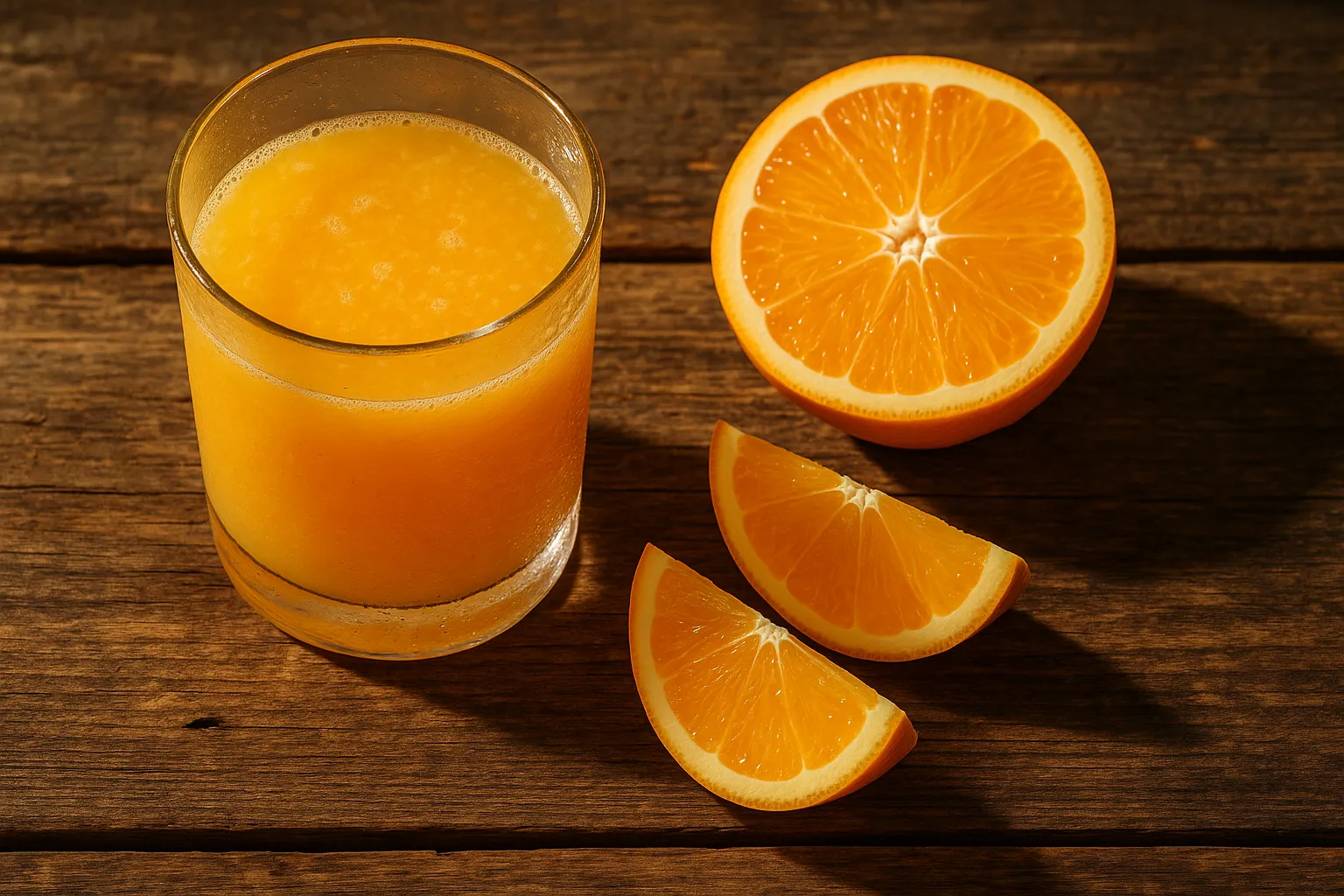
Quick Nutrition Facts
Per 1 Glass (240ml / 8 oz)
| Nutrient | Amount |
|---|---|
| Calories | 112 kcal |
| Protein | 2g |
| Carbohydrates | 26g |
| Fiber | 0.5g |
| Sugars | 21g |
| Fat | 0.5g |
| Vitamin C | 124mg |
| Folate | 74mcg |
| Potassium | 496mg |
| Thiamin | 0.2mg |
Macronutrient Breakdown
 ChatGPT
  Claude
  AI Mode
  Perplexity
NUTRITIONIST INSIGHT
Orange juice provides over 100% of your daily vitamin C in one glass, but strips away the 2-3g fiber that makes whole oranges more filling and blood sugar-friendly. Choose pulp-added versions for slightly better satiety.
Myth Busters
MYTH #1: Orange Juice Is as Healthy as Eating Oranges
TRUTH: Whole oranges are superior for weight and diabetes management. One glass of juice equals 3-4 oranges but lacks fiber that slows sugar absorption and promotes fullness.
MYTH #2: Fresh-Squeezed Is Always Better Than Store-Bought
TRUTH: Nutritionally similar for vitamin C content. Commercially processed juice is flash-pasteurized quickly preserving nutrients. Main advantage of fresh-squeezed: no added sugars or preservatives. Check labels carefully.
MYTH #3: Orange Juice Prevents Colds and Flu
TRUTH: Vitamin C supports immune function but doesn't prevent illness. Regular intake may slightly reduce cold duration (8-10% shorter). Best consumed consistently year-round, not just when sick.
MYTH #4: Pulp-Free Juice Is Healthier
TRUTH: Opposite is true. Pulp contains beneficial fiber, flavonoids, and pectin. Pulp-added versions provide 1-2g fiber vs 0.5g in pulp-free. Choose "high pulp" or "lots of pulp" varieties for better nutrition.
MYTH #5: Orange Juice Is a Low-Calorie Drink
TRUTH: At 112 calories and 21g sugar per glass, orange juice is calorie-dense. Similar calories to soda but with vitamins. Portion control matters—many drink 12-16 oz (168-224 calories) unknowingly.
MYTH #6: Drinking Orange Juice With Meals Blocks Iron Absorption
TRUTH: Vitamin C actually enhances iron absorption from plant foods. Orange juice pairs well with iron-fortified cereals or oatmeal. Only concern: acidic beverages may worsen reflux in sensitive individuals.
NutriScore by Health Goals
| Health Goal | NutriScore | Why This Score? |
|---|---|---|
| Weight Loss |  | 112 calories, 21g sugar, minimal fiber (0.5g). Not satiating; prefer whole oranges or water. |
| Muscle Gain |  | Quick carbs (26g) for post-workout glycogen, but low protein (2g). Better as mixer with protein powder. |
| Diabetes Management | | Moderate GI (50) but lacks fiber causing faster glucose spikes. Limit to 4 oz paired with protein. |
| PCOS Management | | High sugar impacts insulin sensitivity. Whole oranges with 3g fiber are better choice. |
| Pregnancy Nutrition |  | Excellent folate source (74mcg per glass), vitamin C aids iron absorption. Limit to 6 oz to control sugar. |
| Viral/Flu Recovery |  | 124mg vitamin C supports immune function, easy to digest, hydrating. Dilute with water for better hydration. |
PERSONALIZED NUTRITION
Track your meals with NutriScan for personalized NutriScores based on your specific health goals!
Blood Sugar Response to Orange Juice
Understanding how orange juice affects blood glucose highlights why whole oranges are preferred for stable energy.
Typical Glucose Response Curve
This chart shows typical blood glucose response for general healthy individuals. Individual responses may vary. Not medical advice.
How to Minimize the Blood Sugar Spike
Pairing orange juice with protein or healthy fat slows glucose absorption and reduces the peak:
- 🥚 Eggs or egg whites - Complete protein source
- 🥛 Greek yogurt - Protein and probiotics slow digestion
- 🥜 Handful of almonds or walnuts - Healthy fats buffer sugar absorption
- 🥑 Avocado toast - Fiber and healthy fats create sustained energy
Better approach: Dilute 4 oz orange juice with 4 oz water and pair with whole food breakfast.
Cultural Significance
Oranges originated in Southeast Asia over 4,000 years ago, with orange juice becoming a global breakfast staple in the 20th century.
In India:
- Morning ritual beverage, especially in South India
- Mosambi (sweet lime) juice preferred in North India
- Freshly squeezed juice from street vendors nationwide
- Mixed with black salt and cumin for digestive benefits
- Offered to guests as hospitality gesture
Global Impact:
- Florida and Brazil produce 80% of world's orange juice supply
- Orange juice industry worth $6+ billion globally
- "A glass of OJ" became synonymous with healthy American breakfast (1920s-1960s marketing)
- Declining consumption in US since 2000 due to sugar concerns
Compare & Substitute
Orange Juice vs Other Juices & Fruits (Per 100ml/100g)
| Nutrient | 🍊 Orange Juice | 🍎 Apple Juice | 🍇 Grape Juice | 🍊 Whole Orange |
|---|---|---|---|---|
| Calories | 47 kcal | 46 kcal | 60 kcal | 47 kcal |
| Carbs | 11g | 11g | 15g | 12g |
| Fiber | 0.2g | 0.2g | 0.2g | 2.4g |
| Protein | 0.8g | 0.1g | 0.4g | 0.9g |
| Fat | 0.2g | 0.1g | 0.1g | 0.1g |
| Sugar | 8.7g | 9.6g | 14g | 9g |
| Vitamin C | 50mg | 1mg | 0.2mg | 53mg |
| Potassium | 200mg | 101mg | 132mg | 181mg |
| Best For | Vitamin C, immune boost | Gentle on stomach | Quick energy, sweetness | Fiber, weight loss |
Frequently Asked Questions
Is orange juice good for weight loss?
Orange juice is generally not recommended for weight loss. At 112 calories and 21g sugar per glass with minimal fiber (0.5g), it's significantly less satiating than whole oranges.
Better alternatives: Whole orange provides 62 calories, 3g fiber, stronger fullness signals; sparkling water with orange slice for flavor without calories; green tea with lemon for metabolism support.
If you drink it: Limit to 4 oz, dilute with water 50/50, pair with protein-rich breakfast, account for calories in daily total.
Can diabetics drink orange juice?
Diabetics should limit or avoid orange juice. It has moderate glycemic index (50) but lacks fiber, causing faster blood sugar spikes than whole oranges.
Tips for diabetics: If consumed, limit to 4 oz (half glass); always pair with protein or healthy fat; choose pulp-added varieties; best timing: with breakfast alongside eggs; monitor blood sugar 2 hours after; consider whole orange instead (GI 31-51 with fiber buffering).
Whole oranges provide 2-3g fiber that slows glucose absorption significantly.
How much vitamin C is in orange juice?
One glass (240ml) of orange juice contains 120-124mg of vitamin C, which is 133-160% of the recommended daily intake for adults (75mg for women, 90mg for men).
This makes orange juice one of the most concentrated food sources of vitamin C. However, whole oranges provide similar vitamin C (70mg per medium orange) with added fiber benefits.
Vitamin C is water-soluble; excess is excreted, so drinking multiple glasses doesn't provide added benefits beyond meeting daily needs.
What are the main health benefits of orange juice?
Key Benefits:
- Immune Support: 124mg vitamin C per glass supports white blood cell function
- Antioxidant Protection: Flavonoids and hesperidin reduce oxidative stress
- Heart Health: Potassium (496mg) supports healthy blood pressure
- Pregnancy Nutrition: Folate (74mcg) supports fetal neural development
- Iron Absorption: Vitamin C enhances non-heme iron absorption from plant foods
- Anti-inflammatory: Regular consumption may reduce C-reactive protein levels
When is the best time to drink orange juice?
Depends on your goal:
- General Health: With breakfast alongside protein (eggs, yogurt, nuts). Slows sugar absorption.
- Vitamin C Absorption: Morning with iron-fortified cereal or oatmeal. Enhances iron uptake.
- Post-Workout: Within 30 minutes for quick carb replenishment. Dilute 50/50 with water.
- Avoid: On empty stomach if you have acid reflux or GERD. Citric acid triggers symptoms.
IMPORTANT NOTE
Limit to 4-6 oz per serving. Larger portions (8-12 oz) provide 21-31g sugar without proportional nutrition benefits.
Is orange juice better than whole oranges?
No, whole oranges are nutritionally superior for most health goals:
Whole Orange Advantages:
- 2.4g fiber vs 0.5g in juice (slows blood sugar response)
- Lower calorie density (62 vs 112 calories per serving)
- Chewing triggers satiety signals, reduces overeating
- Glycemic load: 5 vs 12 for juice
Orange Juice Advantages:
- More convenient, faster to consume
- Better vitamin C preservation (minimal air exposure)
- Easier to digest when ill or nauseous
Harvard research shows whole fruit consumption reduces diabetes risk 23%, while juice consumption increases risk. Choose whole oranges for weight loss, diabetes management, and satiety.
How much orange juice should I drink per day?
General Guidelines:
- 4-6 oz daily - Most adults for vitamin C benefits without excess sugar
- 8 oz (1 cup) daily - Maximum for general health (covers 100%+ vitamin C needs)
- Avoid daily consumption - Weight loss, diabetes, or strict low-carb diets
Avoid excess: More than 8 oz provides excess calories (150-200+) and sugar (25-30g+) without added nutritional benefits. The American Academy of Pediatrics limits children to 4-6 oz daily; adults should apply similar moderation.
Track your meals with NutriScan app to see how orange juice fits your personal nutrition goals and daily calorie budget.
Does orange juice go bad after opening?
Yes, orange juice degrades quickly after opening. Freshly squeezed juice: 2-3 days refrigerated; store-bought opened juice: 5-7 days past "best by" date if refrigerated; unrefrigerated opened juice: discard after 2 hours.
Signs of spoilage: Sour or fermented smell; fizzy or bubbly appearance; mold growth; significant color change; off taste.
Best practices: Store in airtight container, keep refrigerated at 40°F or below, shake before drinking (separation is normal), freeze in ice cube trays for longer storage (3 months).


Similar Nutritious Foods
4505 Chicharrones Classic Chili Salt
7 Eleven Japan Crispy Corn Cheese
Explore More Nutrition Tools & Resources
AI Calorie Counter App - Snap a Photo, Get Macros
AI Nutritionist App That Reads Your Logged Meals
Best Protein Supplements for Women
Bulking Meal Plan App That Sets Your Surplus
ChatGPT Calorie Counter Alternative That Keeps the Total
ChatGPT Diet Plan Alternative That Tracks What You Eat
ChatGPT Weight Loss Coach Alternative With a Food Log
Fast Food Calorie Counter App That Reads the Tray
Free Calorie Tracker App with AI Photo Scans | NutriScan
Indian Diet Plan App With Veg and Non Veg Meals
Indian Food Calorie Calculator - Get Instant Nutrition Facts for Desi Meals — 2026
Intermittent Fasting for Women, Timer and Meal Log App
Intermittent Fasting Tracker App - Free Fasting Timer
Macro Tracker App That Fills the Numbers From a Photo
Mediterranean Diet Meal Plan App That Counts the Oil
Micronutrient Tracker App for Vitamins and Minerals
MyFitnessPal Alternative That Stays Free | NutriScan
NutriScore App: A Free Grade on Every Meal | NutriScan
Nutrition Label Scanner App for the Amount You Ate
Second Trimester Protein Guide
Vegetarian Meal Plan App With a Protein Target
Voice Calorie Counter - Speak to Track Meals Hands-Free
Water and Calorie Tracker App - Free Water Log