Pad Thai: Calories, Nutrition and Health Benefits
Thailand's iconic street food masterpiece - stir-fried rice noodles with shrimp, eggs, peanuts, and tangy tamarind sauce delivering balanced energy and authentic Thai flavors.
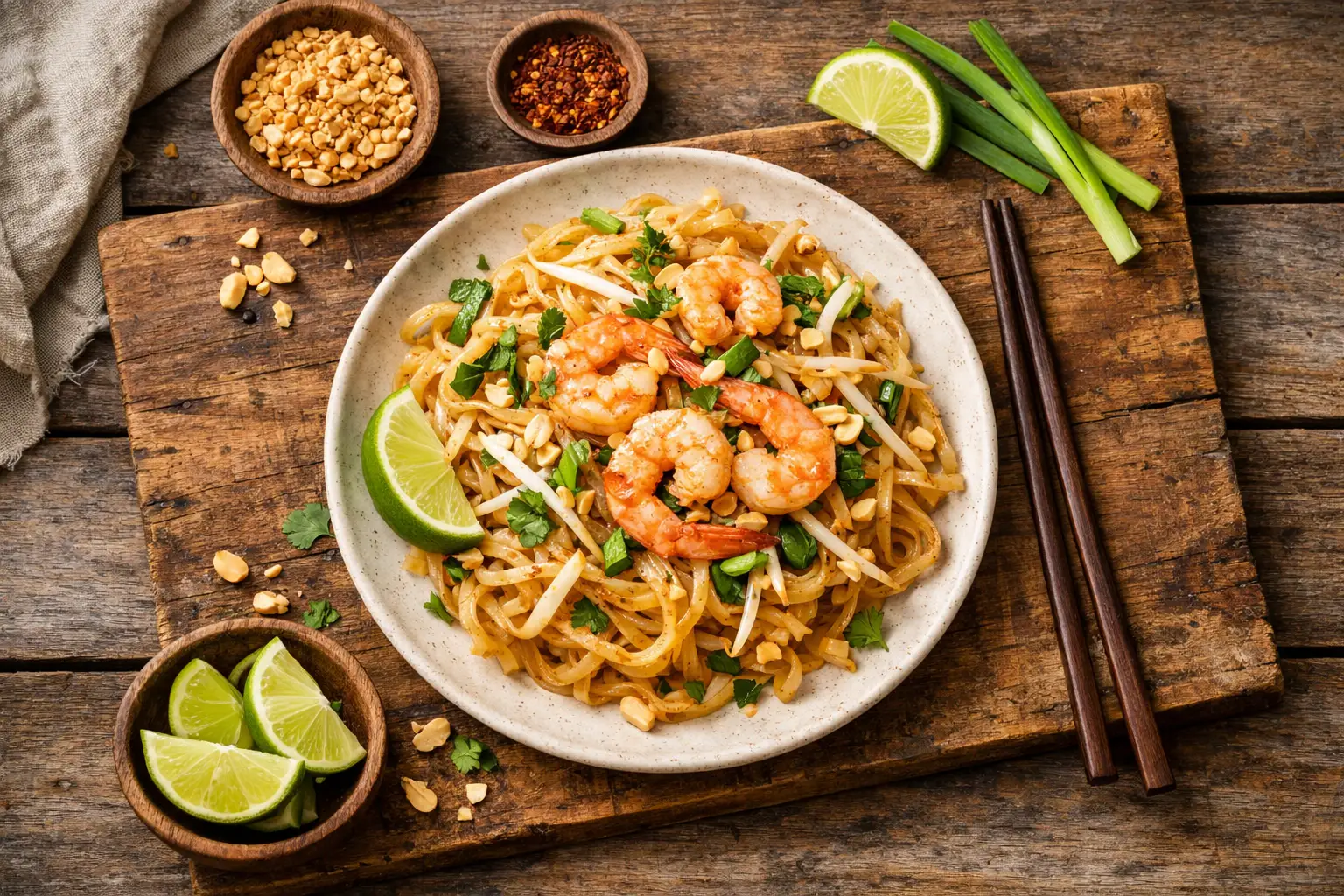
Quick Nutrition Facts
Per 1 Serving (250g, with shrimp)
| Nutrient | Amount |
|---|---|
| Calories | 350 kcal |
| Protein | 15g |
| Carbohydrates | 40g |
| Fiber | 3g |
| Sugars | 8g |
| Fat | 14g |
| Saturated Fat | 2g |
| Sodium | 800mg |
| Cholesterol | 120mg |
| Vitamin C | 12mg |
Macronutrient Breakdown
 ChatGPT
  Claude
  AI Mode
  Perplexity
NUTRITIONIST INSIGHT
Pad Thai offers balanced macros with 40g carbs for energy, 15g protein for muscle support, and healthy fats from peanuts. The tamarind sauce provides antioxidants, while bean sprouts and lime add vitamin C. Request less oil and sugar for a healthier version.
Myth Busters
MYTH #1: Pad Thai Is Always Unhealthy
TRUTH: Pad Thai can be nutritious when prepared properly. A standard serving provides balanced macros with quality protein from shrimp or tofu, complex carbs from rice noodles, and healthy fats from peanuts. The key is portion control and requesting less oil/sugar when ordering.
MYTH #2: All Pad Thai Has Same Calories
TRUTH: Calories vary significantly based on preparation: street vendor versions average 350-400 calories per serving; restaurant portions can reach 600-800 calories due to extra oil and larger portions; homemade versions allow control over ingredients and typically range 300-400 calories.
MYTH #3: Rice Noodles Spike Blood Sugar Instantly
TRUTH: While rice noodles have moderate glycemic index (GI 53-61), pairing with protein (shrimp, tofu) and vegetables slows glucose absorption. The balanced macros in Pad Thai create a more moderate blood sugar response than plain noodles alone.
MYTH #4: Pad Thai Has No Nutritional Value
TRUTH: Beyond macros, Pad Thai provides vitamin C from bean sprouts and lime, B vitamins from eggs and protein, antioxidants from tamarind, heart-healthy fats from peanuts, and minerals like iron and zinc from shrimp.
MYTH #5: You Should Avoid Pad Thai When Dieting
TRUTH: Pad Thai can fit weight loss diets in moderation. At 350 calories per serving with balanced macros, it's reasonable for lunch. Request modifications: less oil, more vegetables, smaller portion, and pair with side salad.
MYTH #6: Street Food Pad Thai Is Unsafe
TRUTH: Street food Pad Thai from busy vendors with high turnover is generally safe. Fresh ingredients cook at high heat, killing bacteria. Look for vendors with crowds (indicates freshness), visible cooking process, and proper food handling practices.
NutriScore by Health Goals
| Health Goal | NutriScore | Why This Score? |
|---|---|---|
| Weight Loss |  | 350 calories is moderate; fits calorie budgets with portion control. Request less oil/sugar, extra vegetables. |
| Muscle Gain |  | 15g protein plus 40g carbs ideal for post-workout glycogen replenishment. Choose chicken/tofu for higher protein (18-20g). |
| Diabetes Management | | Moderate GI rice noodles (53-61) require portion control. Request no added sugar, extra protein and vegetables. |
| PCOS Management | | 8g sugar may affect insulin sensitivity; choose versions with minimal added sugar, more protein, and limit to occasional consumption. |
| Pregnancy Nutrition | | Good protein source; ensure shrimp is fully cooked. Provides B vitamins from eggs; watch sodium (800mg per serving). |
| Viral/Flu Recovery | | Easy to digest, provides quick energy, vitamin C from lime and sprouts, protein for immune repair. |
PERSONALIZED NUTRITION
Track your meals with NutriScan for personalized NutriScores based on your specific health goals!
Blood Sugar Response to Pad Thai
Understanding how Pad Thai affects blood glucose helps you make informed decisions about portions and timing.
Typical Glucose Response Curve
*This chart shows typical blood glucose response for general healthy individuals. Individual responses may vary. Not medical advice.*
How to Moderate the Blood Sugar Impact
Pad Thai contains moderate-GI rice noodles (53-61), but you can reduce glucose spikes:
- 🥦 Add extra vegetables - Request double bean sprouts, add broccoli or cabbage
- 🦐 Increase protein - Extra shrimp, chicken, or tofu slows carb absorption
- 🍋 Extra lime - Acidity can help moderate glucose response
- 🥜 Keep the peanuts - Healthy fats slow digestion and glucose absorption
- 📏 Portion control - Eat half serving if managing blood sugar strictly
This combination provides more balanced energy release and prevents rapid glucose spikes.
Cultural Significance
Pad Thai emerged during World War II as part of Thailand's nation-building campaign and quickly became the country's most iconic dish.
In Thailand:
- National dish symbolizing Thai identity and culinary pride
- Originally created to promote rice noodle consumption and reduce rice imports
- Street food staple found on virtually every Bangkok corner
- Each region has variations: some sweeter (central), some spicier (northeast)
- Authentic versions balance sweet, sour, salty, and umami flavors perfectly
Global Impact:
- One of the most recognized Thai dishes worldwide
- Featured in top restaurant menus from New York to Tokyo
- Street food inspiration for fusion cuisines globally
- Estimated 50+ million servings consumed daily worldwide
- Gateway dish introducing Western audiences to Thai cuisine
Compare & Substitute
Pad Thai vs Similar Asian Noodle Dishes (Per 250g serving)
| Nutrient | 🍜 Pad Thai | 🍜 Lo Mein | 🍲 Pho Bo | 🥗 Vermicelli Bowl |
|---|---|---|---|---|
| Calories | 350 kcal | 400 kcal | 380 kcal | 320 kcal |
| Carbs | 40g | 48g | 50g | 42g |
| Fiber | 3g | 2g | 3g | 4g |
| Protein | 15g | 12g | 22g | 18g |
| Fat | 14g | 18g | 8g | 6g |
| Sodium | 800mg | 1100mg | 900mg | 650mg |
| Sugar | 8g | 6g | 4g | 6g |
| Key Nutrient | Vitamin C | Iron | Protein | Fresh herbs |
| Best For | Balanced meal | Comfort food | High protein | Light, fresh option |
Frequently Asked Questions
Is Pad Thai good for weight loss?
Pad Thai can fit weight loss goals when consumed mindfully. A 250g serving contains 350 calories with balanced macros that keep you satisfied.
Best practices: Choose shrimp or tofu versions (lower fat than chicken); request less oil and reduced sugar; load extra vegetables (bean sprouts, cabbage); eat as lunch rather than dinner; limit to 1-2 times per week; pair with side salad to increase volume.
Can diabetics eat Pad Thai?
Diabetics can eat Pad Thai with modifications. Rice noodles have moderate GI (53-61), making blood sugar management possible with proper adjustments.
Tips for diabetics: Choose flat rice noodles over thin vermicelli (lower GI); request no added sugar in sauce; double the protein (shrimp, chicken, or tofu); add extra non-starchy vegetables; eat smaller portions (half serving or 125g); pair with high-fiber side; monitor blood sugar 2 hours after eating.
How much protein is in Pad Thai?
A standard Pad Thai with shrimp contains 15g protein per 250g serving. Protein content varies significantly by protein choice and portion size.
Protein by type: Shrimp Pad Thai 15-18g; Chicken Pad Thai 18-20g; Tofu Pad Thai 12-14g; Egg-only Pad Thai 8-10g.
For muscle gain or high-protein diets, request extra protein or choose chicken version.
What are the main health benefits of Pad Thai?
Key Benefits:
- Balanced Energy: 40g carbs provide sustained energy for 3-4 hours
- Muscle Support: 15g protein aids muscle repair and growth
- Healthy Fats: Peanuts provide heart-healthy monounsaturated fats
- Vitamin C: Bean sprouts and lime support immune function
- B Vitamins: Eggs provide B12, riboflavin for energy metabolism
- Antioxidants: Tamarind sauce contains polyphenols with anti-inflammatory properties
When is the best time to eat Pad Thai?
Depends on your goal:
- Weight Management: Lunch (12-2pm) when metabolism is higher and you have hours to burn calories
- Muscle Gain: Post-workout (within 1-2 hours) for optimal glycogen replenishment
- Energy Needs: Before afternoon activities or exercise sessions
- Diabetes: Early lunch with blood sugar monitoring; avoid dinner
IMPORTANT NOTE
Avoid Pad Thai for late dinner (after 8pm) due to higher calorie and carb content that may affect sleep and weight management.
Is Pad Thai healthier than other noodle dishes?
Pad Thai sits in the moderate range compared to other popular noodle dishes.
Healthier than: Fried noodles/chow mein (less oil), instant ramen (less sodium, more nutrients), alfredo pasta (fewer calories, less saturated fat).
Similar to: Lo mein, Singapore noodles, drunken noodles.
Less healthy than: Pho (lower fat), vermicelli bowls (more vegetables, less oil), cold soba salads.
Key factors: Preparation method matters most - request less oil, less sugar, and more vegetables for healthiest version.
How can I make Pad Thai healthier?
Restaurant modifications:
- Request less oil (reduces 50-100 calories)
- Ask for reduced or no sugar in sauce
- Double the vegetables (bean sprouts, cabbage)
- Extra protein, less noodles
- Sauce on the side for portion control
Homemade improvements:
- Use zucchini noodles to replace half the rice noodles
- Swap refined oil for avocado oil
- Increase protein to vegetable ratio
- Use natural tamarind paste instead of pre-made sauce
- Add broccoli, carrots, or snap peas
Track your Pad Thai meals with NutriScan app to see how it fits your personal nutrition goals.




Similar Nutritious Foods
4505 Chicharrones Classic Chili Salt
7 Eleven Japan Crispy Corn Cheese
Explore More Nutrition Tools & Resources
AI Calorie Counter App - Snap a Photo, Get Macros
AI Nutritionist App That Reads Your Logged Meals
Best Protein Supplements for Women
Bulking Meal Plan App That Sets Your Surplus
ChatGPT Calorie Counter Alternative That Keeps the Total
ChatGPT Diet Plan Alternative That Tracks What You Eat
ChatGPT Weight Loss Coach Alternative With a Food Log
Fast Food Calorie Counter App That Reads the Tray
Free Calorie Tracker App with AI Photo Scans | NutriScan
Indian Diet Plan App With Veg and Non Veg Meals
Indian Food Calorie Calculator - Get Instant Nutrition Facts for Desi Meals — 2026
Intermittent Fasting for Women, Timer and Meal Log App
Intermittent Fasting Tracker App - Free Fasting Timer
Macro Tracker App That Fills the Numbers From a Photo
Mediterranean Diet Meal Plan App That Counts the Oil
Micronutrient Tracker App for Vitamins and Minerals
MyFitnessPal Alternative That Stays Free | NutriScan
NutriScore App: A Free Grade on Every Meal | NutriScan
Nutrition Label Scanner App for the Amount You Ate
Second Trimester Protein Guide
Vegetarian Meal Plan App With a Protein Target
Voice Calorie Counter - Speak to Track Meals Hands-Free
Water and Calorie Tracker App - Free Water Log