Paneer with Kaju: Calories, Nutrition and Health Benefits
Premium Indian protein combination—creamy paneer paired with buttery cashews for complete amino acids, healthy fats, and nutrient-dense muscle-building snack.
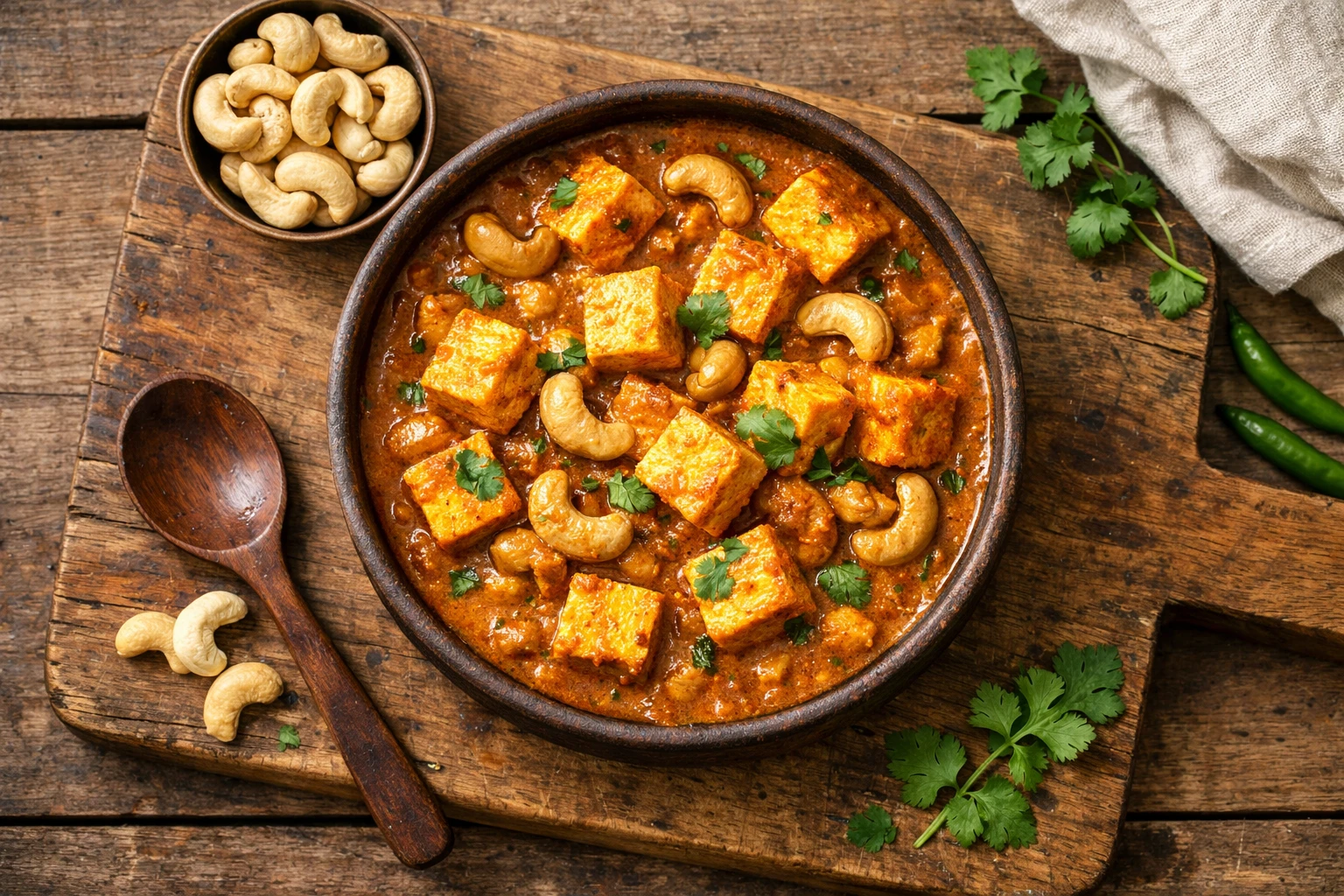
Quick Nutrition Facts
Per 100g (paneer 100g + cashews 25g, combined)
| Nutrient | Amount |
|---|---|
| Calories | 286 kcal |
| Protein | 13g |
| Carbohydrates | 7g |
| Fiber | 1.8g |
| Sugars | 1.2g |
| Fat | 20g |
| Calcium | 380mg |
| Magnesium | 180mg |
| Zinc | 3.8mg |
| Iron | 2.1mg |
Macronutrient Breakdown
 ChatGPT
  Claude
  AI Mode
  Perplexity
NUTRITIONIST INSIGHT
Paneer with kaju combines complete protein (13g) with healthy fats (20g, mostly unsaturated from cashews) and exceptional calcium (380mg per 100g). This synergistic combination supports muscle synthesis, bone density, and sustained satiety—ideal for Indians seeking culturally familiar, nutrient-dense snacking.
Myth Busters
MYTH #1: Paneer with Kaju is Too Fattening
TRUTH: While calorie-dense at 286 per 100g, the fat is primarily healthy. The 13g protein and 20g fat create exceptional satiety—30-50g as a snack prevents overeating at main meals. Quality of calories matters more than quantity.
MYTH #2: Cashews Have Bad Cholesterol
TRUTH: Cashews are rich in monounsaturated fats that improve HDL (good) cholesterol and reduce LDL, supporting heart health. The 3.8mg zinc boosts immunity, and polyphenols fight inflammation.
MYTH #3: Paneer is Unhealthy Due to Fat Content
TRUTH: Paneer's fat (20g per 100g combined serving) includes beneficial components: CLA (conjugated linoleic acid) supporting fat loss, butyric acid for gut health, and fat-soluble vitamins A, D, K. Moderate paneer consumption supports bone density and muscle.
MYTH #4: This Combination Spikes Blood Sugar
TRUTH: Only 7g carbs and 1.8g fiber per 100g mean minimal glucose impact. Protein and fat dramatically slow carb absorption, making paneer with kaju ideal for diabetics seeking nutrient density without blood sugar spikes.
MYTH #5: Paneer with Kaju Lacks Micronutrients
TRUTH: This combination is micronutrient-dense. Paneer provides 380mg calcium (38% DV) and vitamin B12; cashews deliver magnesium (180mg, 45% DV) for muscle function, copper (3.8mg, 425% DV) for collagen synthesis, and zinc (3.8mg) for immunity and wound healing.
MYTH #6: Oil-Cooked Paneer Kaju is Nutritionally Equivalent to Raw
TRUTH: Preparation method matters. Grilled or air-fried versions retain nutrition while reducing added oil. Traditional oil-heavy curried versions add 150-200 calories of empty oil; prepare mindfully for optimal health benefits.
NutriScore by Health Goals
| Health Goal | NutriScore | Why This Score? |
|---|---|---|
| Weight Loss |  | 286 calories per 100g requires portion control (limit to 30-50g). However, 13g protein and 20g healthy fat create satiety. Pair with vegetables; avoid oil-heavy preparations. |
| Muscle Gain |  | 13g complete protein with 20g healthy fat (CLA, omega) supports muscle synthesis and hormonal balance; 380mg calcium prevents muscle cramping; ideal post-workout or snack portion. |
| Diabetes Management |  | Only 7g carbs (minimal GI impact), 13g protein, 20g fat provide stable energy; pair with fiber-rich vegetables; portion control (50-75g) prevents calorie excess. |
| PCOS Management | | Low carbs (7g), healthy fats support hormonal balance; 13g protein improves PCOS-related insulin sensitivity; portion 30-50g prevents excess calories and supports weight management. |
| Pregnancy Nutrition | | Rich in calcium (380mg, 38% DV) for fetal bone development; complete protein (13g) supports placental growth; magnesium (180mg) reduces leg cramps. Perfect snack. |
| Viral/Flu Recovery | | Protein (13g) supports immune antibody synthesis; zinc (3.8mg) accelerates viral recovery; magnesium supports muscle relaxation during illness recovery. |
PERSONALIZED NUTRITION
Track your meals with NutriScan for personalized NutriScores based on your specific health goals!
Blood Sugar Response to Paneer with Kaju
Understanding the minimal glucose impact of this high-protein, high-fat combination helps optimize timing for stable energy.
Typical Glucose Response Curve
This chart shows typical blood glucose response for general healthy individuals. Individual responses may vary. Not medical advice.
Why the Minimal Spike?
Paneer with kaju produces minimal glucose response due to high fat and protein content. The 13g protein and 20g fat create a protective barrier against carbohydrate absorption:
- Protein Effect: Triggers peptide YY and GLP-1 (satiety hormones), slowing gastric emptying
- Fat Effect: Forms chyme layer around carbs, delaying glucose entry into bloodstream
- Synergistic: Together, they create stable, sustained energy without peaks or crashes
This makes paneer with kaju exceptional for pre-workout fuel, sustained afternoon energy, and blood sugar management for diabetics and PCOS.
Cultural Significance
Paneer with cashew represents premium Indian nutrition tradition, combining dairy heritage with nut-based indulgence.
In India:
- Paneer (chhena) cottage cheese is ancient technique, predating modern refrigeration
- Cashew imports from Portuguese colonial era integrated into wealthy households
- Paneer-kaju combination appears in wedding feasts and celebratory meals
- Regional variations: paneer makhani (butter), paneer do pyaza (onion), kaju curry
- Modern trend: healthier grilled/air-fried versions replace traditional ghee-heavy recipes
- Ayurveda values paneer for vata-pitta balance and cashews for ojas (vital essence)
Global Adoption:
- Indian restaurants worldwide feature paneer curries with cashew gravies
- Growing interest in plant-based paneer and cashew cream alternatives
- Recognized as premium protein source by global fitness communities
Compare & Substitute
Paneer with Kaju vs Similar Protein Combos (Per 100g)
| Nutrient | 🧀 Paneer + Kaju | 🥛 Greek Yogurt | 🥚 Boiled Eggs (2) | 🌰 Almonds + Cottage Cheese |
|---|---|---|---|---|
| Calories | 286 kcal | 100 kcal | 155 kcal | 240 kcal |
| Protein | 13g | 10g | 13g | 12g |
| Fat | 20g (healthy) | 0.5g (minimal) | 11g | 18g (mostly unsaturated) |
| Carbs | 7g | 4g | 1.1g | 8g |
| Fiber | 1.8g | 0g | 0g | 3g |
| Calcium | 380mg | 150mg | 56mg | 120mg |
| Magnesium | 180mg | 12mg | 12mg | 270mg |
| Best For | Muscle gain, bones | Weight loss, convenience | Simplicity, complete amino | Sustained energy, flexibility |
Frequently Asked Questions
Is paneer with kaju good for muscle gain?
Excellent. At 13g protein per 100g with complete amino acids, paneer provides the foundation for muscle synthesis. Cashews add 20g fat (CLA, omega-6) supporting hormonal balance critical for testosterone and muscle development.
Best practices: Consume 50-100g post-workout within 30 minutes; pair with carbs (fruit, toast) for glycogen replenishment; repeat daily for consistent muscle stimulus.
Can I eat paneer with kaju for weight loss?
Yes, with portion control. While 286 calories per 100g is higher-density, the 13g protein plus 20g healthy fat creates exceptional satiety—30-50g as a snack prevents overeating at meals.
Weight loss strategy: Use as controlled snack between meals; pair with vegetables (cucumber, carrot) for volume; avoid oil-heavy preparations; track portions; limit to 50g daily unless combined with exercise.
Is paneer with kaju suitable for diabetics?
Excellent for diabetes. Only 7g carbs per 100g means minimal blood glucose impact; 13g protein and 20g fat slow any carb absorption, creating stable energy without spikes.
Diabetes recommendations: Portion 50-75g as snack or meal component; eat with fiber-rich vegetables; monitor individual response; choose grilled or air-fried versions over oil-heavy curries.
What are the main health benefits of paneer with kaju?
Key Benefits:
- Complete Protein: 13g with all 9 essential amino acids for muscle and tissue
- Bone Health: 380mg calcium (38% DV) plus magnesium (180mg) for density and strength
- Immune Support: Zinc (3.8mg), vitamin A, and cashew polyphenols fight infection
- Energy Stability: Protein and healthy fat prevent blood sugar crashes
- Hormonal Balance: Fat-soluble vitamins and minerals support endocrine function
- Inflammation Control: Cashew polyphenols and paneer CLA reduce systemic inflammation
How much calcium is in paneer with kaju?
100g paneer contains approximately 380mg calcium (38% daily value), supporting bone density, muscle contraction, and nervous system function. Cashews add magnesium (180mg, 45% DV) for calcium absorption and utilization.
This combination is ideal for pregnancy (fetal bone development), postmenopausal women, and athletes requiring strong bones and muscles.
When is the best time to eat paneer with kaju?
Depends on your goal:
- Muscle Gain: Post-workout within 30 minutes (50-100g with carbs)
- Weight Loss: Mid-morning or afternoon snack (30-50g with vegetables)
- Diabetes: With meals containing fiber; monitor timing and portion
- Pregnancy: Anytime—excellent calcium and protein source for fetal development
- Energy: 30 minutes before activity or as sustained afternoon fuel
Avoid late night consumption if you have digestive sensitivity; the fat content may delay sleep onset.
Is homemade or store-bought paneer with kaju better?
Homemade advantages: Control over ingredients, no additives, optimal freshness, lower cost. Store-bought advantages: Convenience, consistent nutrition, extended shelf life.
Nutritional differences are minimal if store-bought paneer avoids unnecessary additives. Quality differs more by preparation method: grilled/roasted paneer is superior to oil-heavy curry versions.
Can I pair paneer with kaju with other foods?
Yes. Excellent pairings: fresh vegetables (cucumber, tomato, carrot), whole grain toast, brown rice, salad greens, fruit. Avoid pairing with other high-fat foods (coconut oil, ghee) to prevent excessive calories.
The combination's nutritional completeness means it works as standalone snack or meal component—versatile for Indian and fusion cuisine.


Similar Nutritious Foods
4505 Chicharrones Classic Chili Salt
7 Eleven Japan Crispy Corn Cheese
Explore More Nutrition Tools & Resources
AI Calorie Counter App - Snap a Photo, Get Macros
AI Nutritionist App That Reads Your Logged Meals
Best Protein Supplements for Women
Bulking Meal Plan App That Sets Your Surplus
ChatGPT Calorie Counter Alternative That Keeps the Total
ChatGPT Diet Plan Alternative That Tracks What You Eat
ChatGPT Weight Loss Coach Alternative With a Food Log
Fast Food Calorie Counter App That Reads the Tray
Free Calorie Tracker App with AI Photo Scans | NutriScan
Indian Diet Plan App With Veg and Non Veg Meals
Indian Food Calorie Calculator - Get Instant Nutrition Facts for Desi Meals — 2026
Intermittent Fasting for Women, Timer and Meal Log App
Intermittent Fasting Tracker App - Free Fasting Timer
Macro Tracker App That Fills the Numbers From a Photo
Mediterranean Diet Meal Plan App That Counts the Oil
Micronutrient Tracker App for Vitamins and Minerals
MyFitnessPal Alternative That Stays Free | NutriScan
NutriScore App: A Free Grade on Every Meal | NutriScan
Nutrition Label Scanner App for the Amount You Ate
Second Trimester Protein Guide
Vegetarian Meal Plan App With a Protein Target
Voice Calorie Counter - Speak to Track Meals Hands-Free
Water and Calorie Tracker App - Free Water Log