Pão de Queijo: Calories, Nutrition and Health Benefits
Brazil's beloved gluten-free cheese bread made with tapioca flour, offering chewy texture and savory cheese flavor in every bite.
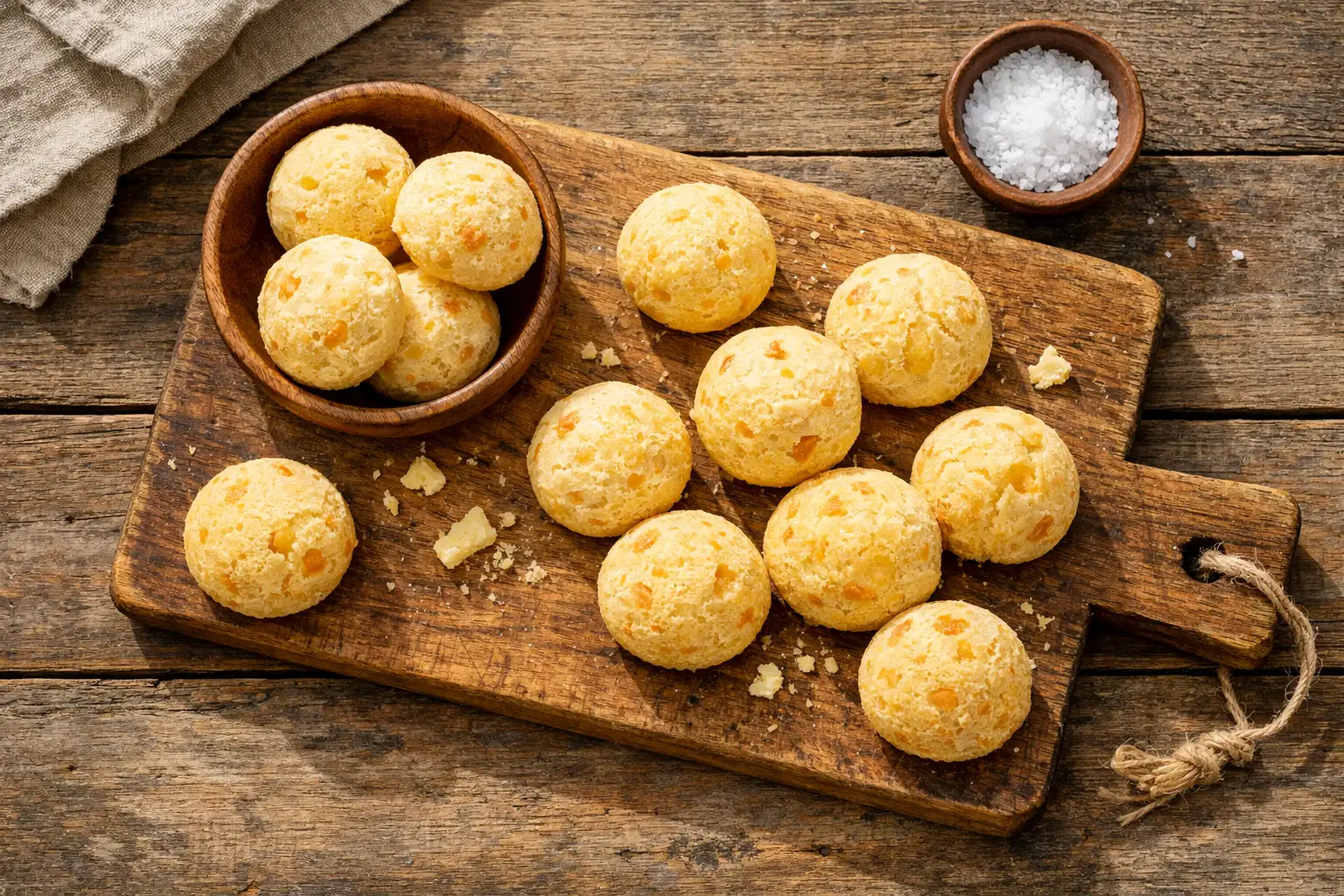
Quick Nutrition Facts
Per 1 Ball (30g)
| Nutrient | Amount |
|---|---|
| Calories | 110 kcal |
| Protein | 3g |
| Carbohydrates | 9g |
| Fiber | 0.5g |
| Sugars | 0.1g |
| Fat | 7g |
| Saturated Fat | 4.5g |
| Calcium | 134mg |
| Sodium | 270mg |
| Cholesterol | 30mg |
Macronutrient Breakdown
 ChatGPT
  Claude
  AI Mode
  Perplexity
NUTRITIONIST INSIGHT
Pão de queijo is naturally gluten-free and provides 134mg of calcium (10% DV) per ball. The tapioca flour base makes it safe for celiac disease while delivering quick energy from easily digestible starches.
Myth Busters
MYTH #1: Pão de Queijo Is Unhealthy Because It's Fried
TRUTH: Traditional pão de queijo is baked, not fried. Each ball has 110 calories and 7g fat from cheese and eggs - not from deep frying. The golden exterior comes from baking at high temperature.
MYTH #2: Gluten-Free Foods Are Always Healthier
TRUTH: While pão de queijo is naturally gluten-free, it's not automatically healthier than wheat bread. Gluten-free foods often have lower protein content and can be higher in refined starches. It's a great option for celiac disease, but not necessarily for weight loss.
MYTH #3: All Cheese Bread Has the Same Calories
TRUTH: Calories vary widely by recipe and size. Brazilian pão de queijo (30g) has ~110 calories. Larger American cheese bread rolls can have 200-300 calories. Always check portion sizes.
MYTH #4: Tapioca Flour Is Low Carb
TRUTH: Tapioca flour is pure starch with 9g carbs per ball. It has a high glycemic index (70-85), meaning it raises blood sugar quickly. Not ideal for strict low-carb or keto diets.
MYTH #5: You Can Eat Unlimited Pão de Queijo Because It's Gluten-Free
TRUTH: Gluten-free doesn't mean calorie-free. At 110 calories per ball, eating 5 balls adds 550 calories to your day. Portion control is essential for weight management.
MYTH #6: Pão de Queijo Has No Nutritional Value
TRUTH: Beyond calories, pão de queijo provides 134mg calcium (10% DV), 3g protein, and essential amino acids from cheese and eggs. It's a source of quick energy and bone-supporting nutrients.
NutriScore by Health Goals
| Health Goal | NutriScore | Why This Score? |
|---|---|---|
| Weight Loss |  | 110 calories per ball, moderate fat (7g). Limit to 1-2 balls, pair with vegetables or lean protein for balanced meals. |
| Muscle Gain | | Only 3g protein per ball. Better as a carb source post-workout. Pair with high-protein foods (eggs, chicken, yogurt) for muscle building. |
| Diabetes Management |  | High glycemic index from tapioca flour (GI 70-85). Limit to 1 ball, pair with protein/fiber, monitor blood sugar. |
| PCOS Management | | High GI impacts insulin sensitivity. Choose occasionally, limit to 1 ball, combine with protein and vegetables. |
| Pregnancy Nutrition |  | Provides 134mg calcium for bone health, safe gluten-free option. Limit to 2-3 balls to control saturated fat intake. |
| Viral/Flu Recovery | | Easy to digest, gentle on upset stomach, provides quick energy. Calcium and protein support immune function during recovery. |
PERSONALIZED NUTRITION
Track your meals with NutriScan for personalized NutriScores based on your specific health goals!
Blood Sugar Response to Pão de Queijo
Understanding how pão de queijo affects blood glucose helps you make informed decisions about portions and pairings.
Typical Glucose Response Curve
This chart shows typical blood glucose response for general healthy individuals. Individual responses may vary. Not medical advice.
How to Flatten the Spike
Pairing pão de queijo with protein or fiber slows glucose absorption and reduces the peak blood sugar level:
- 🥚 Scrambled eggs or omelets - Adds protein and healthy fats
- 🥑 Avocado slices - Provides fiber and monounsaturated fats
- 🥗 Fresh salad with olive oil - Fiber and fat slow digestion
- 🍗 Grilled chicken or beef - Complete protein source
This combination not only reduces the glucose spike but also extends energy release, keeping you fuller for longer.
Cultural Significance
Pão de queijo originated in the Brazilian state of Minas Gerais in the 18th century, created by enslaved Africans using cassava (mandioca) flour left over from processing.
In Brazil:
- Breakfast and afternoon snack staple across all regions
- Each state has variations: Minas uses Parmesan, while coastal areas may add coconut
- Sold at street markets, airports, bakeries, and homes nationwide
- National symbol of Brazilian cuisine, recognized globally
- Traditional recipe passed down through generations
Global Impact:
- Popular in Portuguese-speaking countries and Latin America
- Growing demand in US, Europe, and Asia as gluten-free awareness increases
- Frozen versions exported worldwide, bringing Brazilian flavor to global markets
- Adapted in fusion cuisine with different cheeses and flavor additions
Compare & Substitute
Pão de Queijo vs Similar Breads (Per 100g)
| Nutrient | 🧀 Pão de Queijo | 🥖 French Baguette | 🍞 Whole Wheat Bread | 🫓 Corn Tortilla |
|---|---|---|---|---|
| Calories | 367 kcal | 274 kcal | 247 kcal | 218 kcal |
| Carbs | 30g | 56g | 41g | 46g |
| Fiber | 1.7g | 2.7g | 7g | 4.5g |
| Protein | 10g | 9g | 13g | 6g |
| Fat | 23g | 1.5g | 3.4g | 2.8g |
| Calcium | 447mg | 30mg | 118mg | 159mg |
| Gluten | Gluten-free | Contains gluten | Contains gluten | Gluten-free |
| Best For | Celiac, savory snack | Low-fat diets, sandwiches | Fiber, weight management | Gluten-free, Mexican meals |
Frequently Asked Questions
Is pão de queijo healthy?
Pão de queijo can be part of a healthy diet in moderation. Each ball provides 110 calories, 7g fat, 3g protein, and 134mg calcium (10% DV). It's naturally gluten-free and safe for people with celiac disease.
Best practices: Limit to 1-2 balls per serving, pair with protein or vegetables, and account for the 270mg sodium per ball in your daily intake.
Is pão de queijo gluten-free?
Yes, traditional pão de queijo is naturally gluten-free. It's made with tapioca flour (cassava starch) instead of wheat flour, making it safe for people with celiac disease or gluten sensitivity.
Gluten-free diets are essential for celiac patients and can improve quality of life when properly managed. Always verify ingredients if buying pre-made versions.
How many calories are in pão de queijo?
Calories by serving size:
- 1 small ball (30g) - 110 calories
- 1 large ball (50g) - 184 calories
- Per 100g - 367 calories
Homemade recipes vary based on cheese type and oil content. Restaurant or frozen versions may be higher in calories due to added fats.
Can diabetics eat pão de queijo?
Diabetics can eat pão de queijo in strict moderation. Tapioca flour has a high glycemic index (70-85), causing rapid blood sugar spikes.
Tips for diabetics:
- Limit to 1 small ball at a time
- Always pair with protein (eggs, chicken) or fiber (salad, vegetables)
- Best timing: as part of a balanced meal, not alone as a snack
- Monitor blood sugar 2 hours after eating
Consult your healthcare provider or dietitian for personalized guidance.
Is pão de queijo good for weight loss?
Pão de queijo is moderately calorie-dense at 110 calories per ball. For weight loss, it requires careful portion control.
Weight loss guidelines:
- Limit to 1-2 balls per day (220 calories max)
- Pair with high-volume, low-calorie foods (vegetables, lean protein)
- Track calories - easy to overeat when they're small and tasty
- Choose as an occasional treat rather than daily staple
Better alternatives for frequent consumption: whole grain bread, oatmeal, or eggs for more protein and fiber.
What is pão de queijo made of?
Traditional ingredients:
- Tapioca flour (cassava starch) - Provides the chewy texture, gluten-free base
- Cheese - Parmesan or Minas cheese for flavor and calcium
- Eggs - Binding and protein
- Milk - Moisture and creaminess
- Oil or butter - Fat for richness
- Salt - Flavor enhancement
The unique texture comes from tapioca flour's ability to create a crispy exterior with a soft, chewy interior when baked.
How many pão de queijo should I eat?
General guidelines:
- 1-2 balls - Most people for a snack or side dish (110-220 calories)
- 3-4 balls - Athletes or high-calorie needs (330-440 calories)
- Avoid more than 4-5 per day - Excessive saturated fat (4.5g per ball) and sodium (270mg per ball)
Special considerations:
- Weight loss: 1-2 balls maximum
- Diabetes: 1 ball, paired with protein
- Pregnancy: 2-3 balls for calcium boost
Track your portions with NutriScan app to ensure they fit your daily calorie and nutrition goals.
Can I eat pão de queijo on a keto diet?
Traditional pão de queijo is not keto-friendly due to tapioca flour's high carb content (9g per ball). On strict keto (20-30g carbs daily), one ball uses 30-45% of your carb allowance.
Keto alternatives:
- Look for almond flour or coconut flour pão de queijo recipes
- Make cauliflower cheese bread instead
- Choose fathead dough cheese bread (mozzarella + almond flour base)
If you want to include it occasionally on low-carb (not strict keto), limit to 1 ball and adjust other meal carbs accordingly.


Similar Nutritious Foods
4505 Chicharrones Classic Chili Salt
7 Eleven Japan Crispy Corn Cheese
Explore More Nutrition Tools & Resources
AI Calorie Counter App - Snap a Photo, Get Macros
AI Nutritionist App That Reads Your Logged Meals
Best Protein Supplements for Women
Bulking Meal Plan App That Sets Your Surplus
ChatGPT Calorie Counter Alternative That Keeps the Total
ChatGPT Diet Plan Alternative That Tracks What You Eat
ChatGPT Weight Loss Coach Alternative With a Food Log
Fast Food Calorie Counter App That Reads the Tray
Free Calorie Tracker App with AI Photo Scans | NutriScan
Indian Diet Plan App With Veg and Non Veg Meals
Indian Food Calorie Calculator - Get Instant Nutrition Facts for Desi Meals — 2026
Intermittent Fasting for Women, Timer and Meal Log App
Intermittent Fasting Tracker App - Free Fasting Timer
Macro Tracker App That Fills the Numbers From a Photo
Mediterranean Diet Meal Plan App That Counts the Oil
Micronutrient Tracker App for Vitamins and Minerals
MyFitnessPal Alternative That Stays Free | NutriScan
NutriScore App: A Free Grade on Every Meal | NutriScan
Nutrition Label Scanner App for the Amount You Ate
Second Trimester Protein Guide
Vegetarian Meal Plan App With a Protein Target
Voice Calorie Counter - Speak to Track Meals Hands-Free
Water and Calorie Tracker App - Free Water Log