Papas Arrugadas with Mojo: Calories, Nutrition and Health Benefits
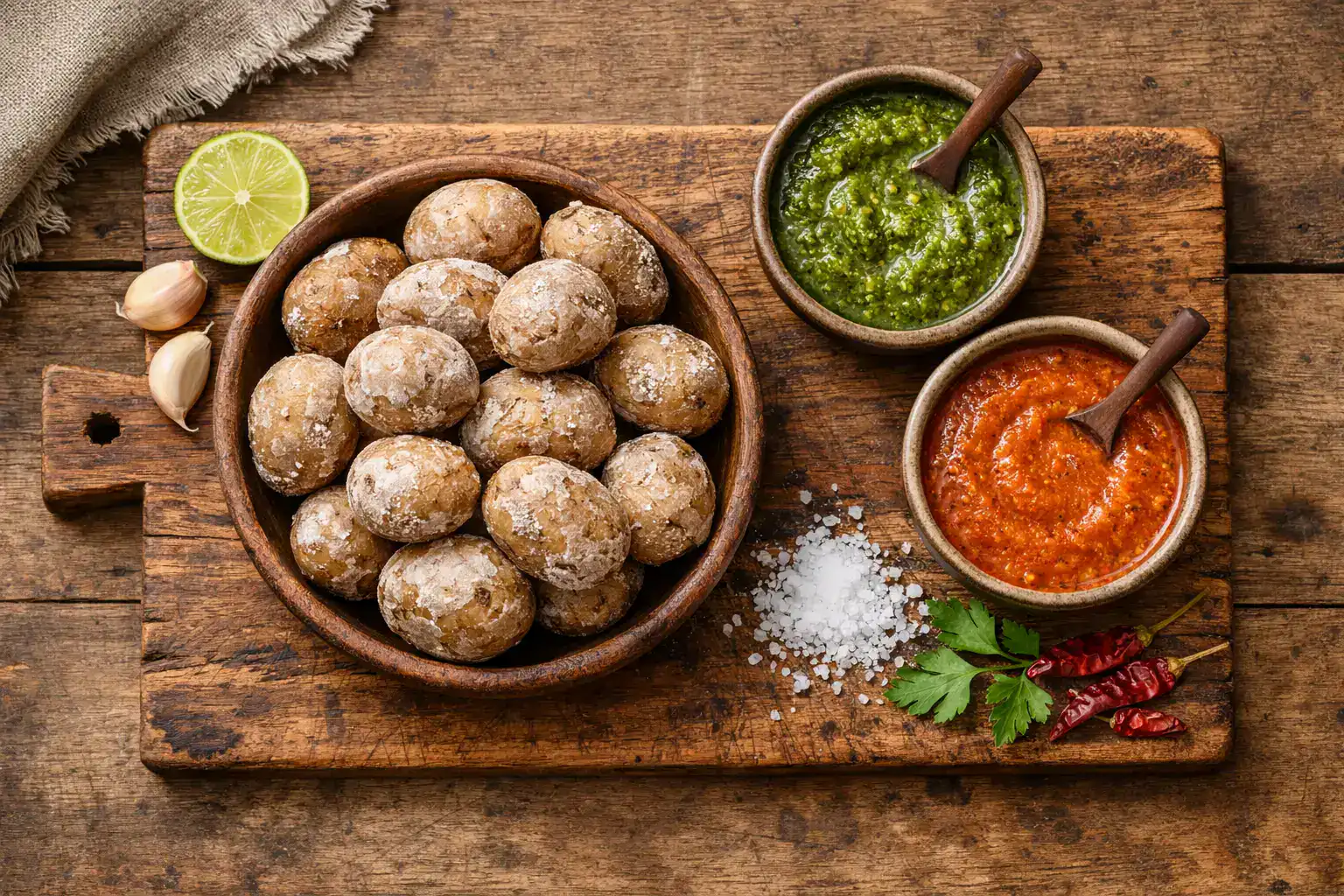
Canary Islands' iconic salt-crusted potatoes served with vibrant mojo sauces, delivering potassium, vitamin C, and resistant starch in every bite.
Quick Nutrition Facts
Per 1 Serving (200g, ~5 small potatoes with mojo)
| Nutrient | Amount |
|---|---|
| Calories | 150 kcal |
| Protein | 3g |
| Carbohydrates | 24g |
| Fiber | 2.4g |
| Sugars | 1.2g |
| Fat | 5g |
| Potassium | 656mg |
| Vitamin C | 22mg |
| Vitamin B6 | 0.4mg |
| Magnesium | 40mg |
Macronutrient Breakdown
 ChatGPT
  Claude
  AI Mode
  Perplexity
NUTRITIONIST INSIGHT
Papas arrugadas deliver 19% of your daily potassium in a single serving, supporting healthy blood pressure. The salt-crust cooking method preserves more vitamin C and B6 than standard peeling and boiling. Letting them cool before eating increases resistant starch, benefiting gut health and blood sugar control.
Myth Busters
MYTH #1: Potatoes Are Fattening and Should Be Avoided
TRUTH: A serving of papas arrugadas has only 150 calories. Potatoes themselves are low-fat (0.1g per 100g). Weight gain comes from excess calories and high-fat toppings, not from potatoes. Boiled potatoes rank highest on the satiety index, keeping you fuller longer than most foods.
MYTH #2: The Salt Crust Makes Papas Arrugadas Unhealthy
TRUTH: While heavily salted during cooking, most salt remains on the skin surface and is not fully absorbed. The actual sodium intake depends on how much crust you eat. Potassium in potatoes (328mg per 100g) helps counterbalance sodium effects on blood pressure.
MYTH #3: Potatoes Have No Nutritional Value
TRUTH: Potatoes provide vitamin C (22mg per 100g, 25% DV), vitamin B6 (0.4mg, 24% DV), potassium, and fiber. Harvard Nutrition Source confirms potatoes contain substantial potassium and modest fiber when eaten with skin.
MYTH #4: Mojo Sauce Is Just Empty Calories
TRUTH: Mojo verde and rojo contain garlic, olive oil, cumin, and fresh herbs or peppers. Garlic provides allicin with anti-inflammatory properties. Olive oil delivers heart-healthy monounsaturated fats, and red peppers in mojo rojo are rich in vitamin C and capsaicin.
MYTH #5: You Should Always Peel Potatoes Before Eating
TRUTH: Potato skin contains the highest concentration of fiber, potassium, and vitamin C. Papas arrugadas are traditionally eaten with their skin, which also provides resistant starch that feeds beneficial gut bacteria.
NutriScore by Health Goals
| Health Goal | NutriScore | Why This Score? |
|---|---|---|
| Weight Loss |  | 150 calories per serving with high satiety index. Fiber and resistant starch promote fullness. Use mojo verde (lower fat) over rojo. |
| Muscle Gain | | Quality carbs (24g) for glycogen replenishment, 656mg potassium prevents cramps. Pair with grilled fish or meat for complete protein. |
| Diabetes Management |  | Boiled potatoes have moderate GI of 59. Cool before eating to increase resistant starch. Limit to 3-4 small potatoes per meal. |
| PCOS Management | | Moderate glycemic load may affect insulin sensitivity. Choose cooled portions and pair with protein-rich sides to reduce blood sugar impact. |
| Pregnancy Nutrition | | Good source of folate and vitamin B6 important during pregnancy. Potassium helps prevent leg cramps. Moderate salt intake recommended. |
| Viral/Flu Recovery |  | Easy to digest, gentle on stomach, vitamin C for immunity. Electrolytes from potassium and sodium aid rehydration during illness. |
PERSONALIZED NUTRITION
Track your meals with NutriScan for personalized NutriScores based on your specific health goals!
Blood Sugar Response to Papas Arrugadas
Understanding how papas arrugadas affect your blood glucose helps you make informed decisions about when and how to enjoy them.
Typical Glucose Response Curve
This chart shows typical blood glucose response for general healthy individuals. Individual responses may vary. Not medical advice.
How to Flatten the Spike
Cooling potatoes after cooking increases resistant starch and lowers glycemic response. Pairing with protein or fat slows glucose absorption:
- 🐟 Grilled fish - Traditional Canarian pairing adds protein and omega-3 fats
- 🧀 Queso fresco (fresh cheese) - Adds protein and calcium
- 🥑 Avocado - Healthy fats slow carb absorption
- 🥗 Mixed green salad - Extra fiber reduces glycemic impact
This combination not only reduces the glucose spike but also extends energy release, keeping you fuller for longer.
Cultural Significance
Papas arrugadas (literally "wrinkled potatoes") are the signature dish of the Canary Islands, Spain, with roots stretching back to the 16th century when potatoes first arrived from the Americas.
In the Canary Islands:
- Traditionally prepared with small local potato varieties (papa negra, papa bonita)
- Boiled in seawater or heavily salted water until the water evaporates, creating the distinctive salt crust
- Always served with mojo verde (green, cilantro-based) and mojo rojo (red, pepper-based) sauces
- A staple at every Canarian celebration, family gathering, and local restaurant
Global Impact:
- UNESCO-recognized as part of Canarian culinary heritage
- Spanish tourism has spread the dish across Europe and the Americas
- Simple preparation with minimal ingredients makes it accessible worldwide
- Represents the fusion of New World potatoes with Old World Mediterranean flavors
Compare & Substitute
Papas Arrugadas vs Similar Potato Dishes (Per 100g)
| Nutrient | 🥔 Papas Arrugadas | 🥔 Boiled Potato | 🍟 Roasted Potato | 🥔 Patatas Bravas |
|---|---|---|---|---|
| Calories | 87 kcal | 87 kcal | 149 kcal | 175 kcal |
| Carbs | 20g | 20g | 24g | 22g |
| Fiber | 1.8g | 1.8g | 2.1g | 1.6g |
| Protein | 1.7g | 1.7g | 2.1g | 2.0g |
| Fat | 0.1g | 0.1g | 5.2g | 8.5g |
| Potassium | 328mg | 328mg | 535mg | 310mg |
| Vitamin C | 22mg | 13mg | 12mg | 10mg |
| Best For | Nutrient retention, low fat | Simple preparation | Crispy texture, higher energy | Flavor, indulgence |
Frequently Asked Questions
How many calories are in papas arrugadas with mojo?
A typical serving of 5 small potatoes (200g) with 2 tablespoons of mojo sauce contains approximately 150 calories. The potatoes contribute about 87 calories per 100g, while each tablespoon of mojo adds 30-40 calories depending on olive oil content.
Calorie breakdown by component:
- 5 small potatoes (170g): ~148 calories
- 1 tbsp mojo verde: ~35 calories
- 1 tbsp mojo rojo: ~30 calories
Are papas arrugadas healthy?
Yes, papas arrugadas retain more nutrients than standard boiled potatoes because they are cooked whole with skin in salted water. Each serving provides 19% daily potassium, 25% daily vitamin C, and 24% daily vitamin B6.
Key health advantages: The skin-on cooking preserves water-soluble vitamins. The mojo sauces add garlic (anti-inflammatory), olive oil (heart-healthy fats), and herbs rich in antioxidants.
Can diabetics eat papas arrugadas?
Diabetics can enjoy papas arrugadas in moderation. Boiled potatoes have a moderate glycemic index of 59, lower than baked (69) or mashed (78) potatoes.
Tips for diabetics:
- Cool potatoes before eating to increase resistant starch
- Limit to 3-4 small potatoes per serving
- Always pair with protein (fish, cheese) or healthy fat
- Choose mojo verde over rojo for lower calorie density
- Monitor blood sugar 2 hours after eating
What is the difference between mojo verde and mojo rojo?
Mojo verde (green): Made with cilantro, garlic, cumin, green pepper, olive oil, and white wine vinegar. Lighter, herbaceous flavor. About 65 calories per serving.
Mojo rojo (red): Made with red peppers, garlic, paprika, cumin, olive oil, and red wine vinegar. Bolder, slightly spicy. About 55 calories per serving.
Both are gluten-free, dairy-free, and vegan-friendly.
Does cooling papas arrugadas increase resistant starch?
Yes. Research shows cooling cooked potatoes nearly doubles resistant starch content from 0.8% to 1.6%. This resistant starch acts as prebiotic fiber, feeding beneficial gut bacteria and producing short-chain fatty acids that support digestive health.
Even reheating cooled potatoes retains more resistant starch than eating them freshly cooked.
How much sodium is in papas arrugadas?
The salt content varies by preparation. Traditional recipes use generous salt (up to 200g per liter of water), but most remains on the surface. Typical sodium per serving ranges from 400-800mg depending on how much crust you consume.
To reduce sodium: Brush off excess salt crystals, eat with less crust, or use reduced salt during cooking. The 656mg potassium per serving helps offset sodium's blood pressure effects.


Similar Nutritious Foods
4505 Chicharrones Classic Chili Salt
7 Eleven Japan Crispy Corn Cheese
Explore More Nutrition Tools & Resources
AI Calorie Counter App - Snap a Photo, Get Macros
AI Nutritionist App That Reads Your Logged Meals
Best Protein Supplements for Women
Bulking Meal Plan App That Sets Your Surplus
ChatGPT Calorie Counter Alternative That Keeps the Total
ChatGPT Diet Plan Alternative That Tracks What You Eat
ChatGPT Weight Loss Coach Alternative With a Food Log
Fast Food Calorie Counter App That Reads the Tray
Free Calorie Tracker App with AI Photo Scans | NutriScan
Indian Diet Plan App With Veg and Non Veg Meals
Indian Food Calorie Calculator - Get Instant Nutrition Facts for Desi Meals — 2026
Intermittent Fasting for Women, Timer and Meal Log App
Intermittent Fasting Tracker App - Free Fasting Timer
Macro Tracker App That Fills the Numbers From a Photo
Mediterranean Diet Meal Plan App That Counts the Oil
Micronutrient Tracker App for Vitamins and Minerals
MyFitnessPal Alternative That Stays Free | NutriScan
NutriScore App: A Free Grade on Every Meal | NutriScan
Nutrition Label Scanner App for the Amount You Ate
Second Trimester Protein Guide
Vegetarian Meal Plan App With a Protein Target
Voice Calorie Counter - Speak to Track Meals Hands-Free
Water and Calorie Tracker App - Free Water Log