Papaya: Calories, Nutrition and Health Benefits
The "fruit of angels" - a tropical powerhouse loaded with digestive enzymes, vitamin C, and antioxidants for optimal health.
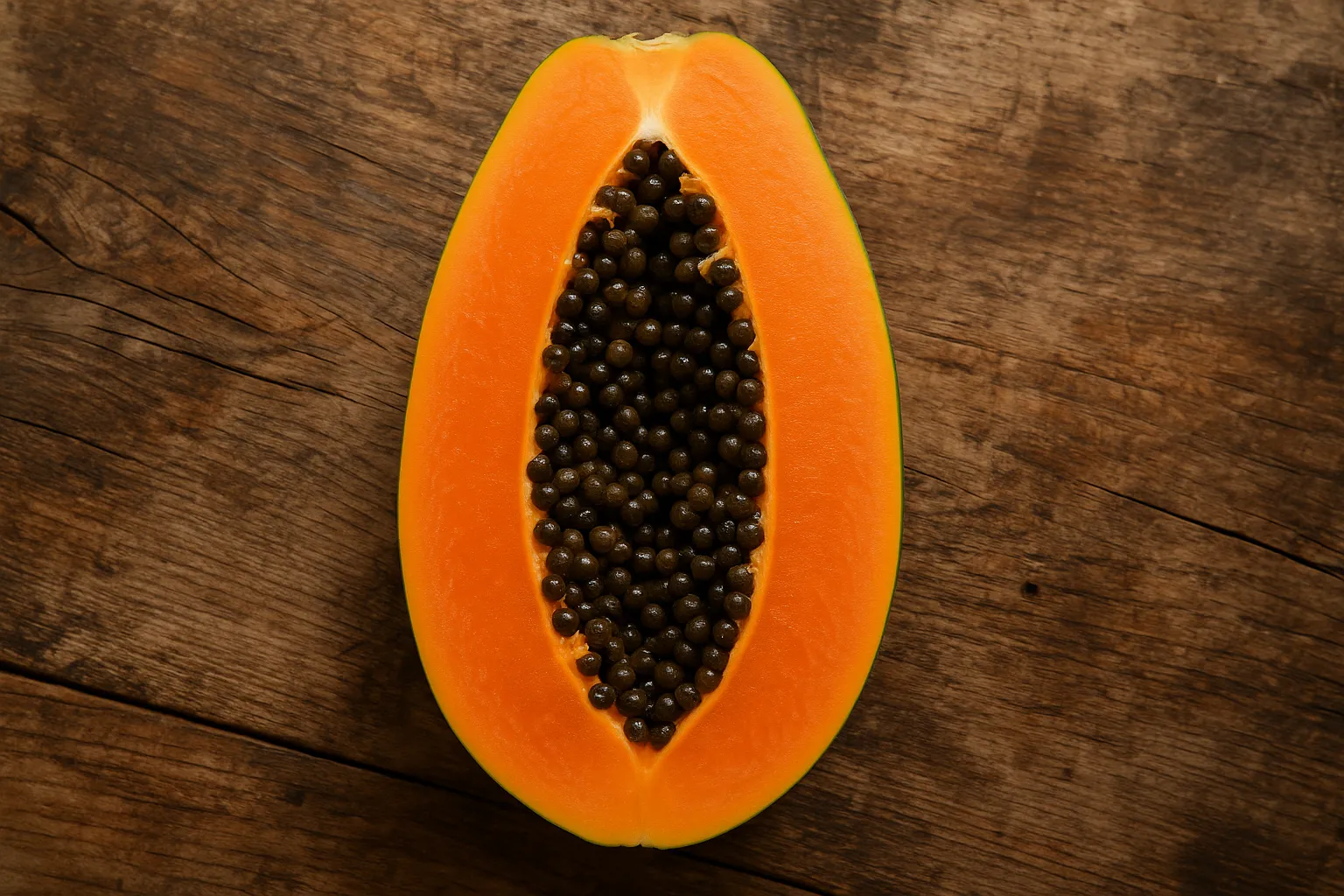
Quick Nutrition Facts
Per 100g (1 cup cubed)
| Nutrient | Amount |
|---|---|
| Calories | 43 kcal |
| Protein | 0.5g |
| Carbohydrates | 11g |
| Fiber | 1.7g |
| Sugars | 7.8g |
| Fat | 0.3g |
| Vitamin C | 60.9mg |
| Vitamin A | 950 IU |
| Folate | 37mcg |
| Potassium | 182mg |
Macronutrient Breakdown
 ChatGPT
  Claude
  AI Mode
  Perplexity
NUTRITIONIST INSIGHT
Papaya contains papain enzyme that breaks down proteins and aids digestion. With 157% of daily vitamin C in just one cup, it's a powerful immune booster and antioxidant source.
Myth Busters
MYTH #1: Papaya Causes Miscarriage in Pregnancy
TRUTH: Only unripe/semi-ripe papaya poses risk due to latex content that may trigger contractions. Fully ripe orange papaya is safe and beneficial during pregnancy, providing folate, vitamin C, and fiber. Always choose ripe fruit; avoid green or semi-ripe papaya.
MYTH #2: Papaya Seeds are Toxic
TRUTH: Papaya seeds are edible and contain beneficial compounds. Studies show antibacterial and digestive benefits when consumed in moderation (1-2 teaspoons daily). They have a peppery taste and may support liver health. Excessive consumption should be avoided.
MYTH #3: Eating Papaya on Empty Stomach is Harmful
TRUTH: Eating papaya on empty stomach is actually beneficial for most people. The papain enzyme aids digestion, and fiber promotes gut health. Only avoid if you have acid reflux or sensitive stomach. For everyone else, morning papaya supports digestive wellness.
MYTH #4: Papaya Has Too Much Sugar for Weight Loss
TRUTH: At 7.8g natural sugar per 100g, papaya is moderate compared to other tropical fruits. The 1.7g fiber slows sugar absorption, and 43 calories per 100g makes it excellent for weight loss. The papain enzyme also aids fat metabolism.
MYTH #5: Green Papaya is Just Unripe Fruit
TRUTH: Green papaya is culinarily distinct from ripe papaya. Used in Southeast Asian cuisine (som tam salad), it has different nutritional properties - higher enzyme content, lower sugar, more fiber. It's intentionally harvested green for specific dishes, not just "unripe."
MYTH #6: Papaya Provides Enough Vitamin A to Skip Supplements
TRUTH: While papaya is rich in vitamin A (950 IU or 19% DV per 100g), it shouldn't replace medical recommendations. The beta-carotene in papaya is beneficial, but those with vitamin A deficiency need comprehensive supplementation. Papaya supports, not replaces, medical treatment.
NutriScore by Health Goals
| Health Goal | NutriScore | Why This Score? |
|---|---|---|
| Weight Loss |  | Only 43 calories per 100g, 1.7g fiber promotes fullness, papain enzyme aids digestion and fat metabolism. |
| Muscle Gain |  | Low protein (0.5g) not ideal for muscle building. Use as vitamin source; pair with protein-rich foods. |
| Diabetes Management |  | Moderate GI (60). Choose ripe but not overripe, limit to 1 cup (140g), pair with nuts or yogurt. |
| PCOS Management | | Moderate sugar content requires portion control. Rich in antioxidants and fiber. Limit to 1 cup daily, preferably morning. |
| Pregnancy Nutrition | | Excellent folate source (37mcg), vitamin C supports iron absorption, fiber prevents constipation. Only ripe! |
| Viral/Flu Recovery | | 157% daily vitamin C boosts immunity, easy to digest, provides quick energy, antioxidants support recovery. |
PERSONALIZED NUTRITION
Track your meals with NutriScan for personalized NutriScores based on your specific health goals!
Blood Sugar Response to Papaya
Understanding how papaya affects blood glucose helps optimize consumption for diabetes and weight management.
Typical Glucose Response Curve
This chart shows typical blood glucose response for general healthy individuals. Individual responses may vary. Not medical advice.
How to Flatten the Spike
Pairing papaya with protein or healthy fat reduces the glycemic impact:
- 🥜 Handful of almonds or cashews - Healthy fats slow sugar absorption
- 🥛 Greek yogurt or cottage cheese - Protein balances carbs
- 🥄 Chia seeds or flaxseeds - Add fiber and omega-3s
- 🧈 Nut butter (1 tablespoon) - Provides protein and healthy fats
This combination extends satiety, moderates blood sugar response, and provides balanced nutrition for sustained energy.
Cultural Significance
Papaya originated in southern Mexico and Central America over 5,000 years ago, spreading globally through Spanish and Portuguese explorers.
In India:
- Introduced by Portuguese traders in 16th century
- Hindi names: "Papita" (Hindi), "Pappayi" (Tamil), "Papaya" (Malayalam)
- Ayurveda uses papaya for digestive disorders and skin health
- Green papaya used in Northeastern cuisines (salads, chutneys)
- Major producer: India grows 6 million tons annually (largest globally)
Traditional Medicinal Uses:
- Papaya leaves for dengue fever treatment (traditional remedy)
- Seeds for intestinal parasites and liver detox
- Latex from unripe fruit for meat tenderizing
- Fruit pulp for wound healing and skin care
Global Impact:
- Cultivated in 60+ countries across tropical regions
- Christopher Columbus called it "fruit of angels"
- Essential crop for tropical economies
- Sustainable farming: fast-growing, year-round production
Compare & Substitute
Papaya vs Similar Tropical Fruits (Per 100g)
| Nutrient | 🍈 Papaya | 🥭 Mango | 🍍 Pineapple | 🥝 Kiwi |
|---|---|---|---|---|
| Calories | 43 kcal | 60 kcal | 50 kcal | 61 kcal |
| Carbs | 11g | 15g | 13g | 15g |
| Fiber | 1.7g | 1.6g | 1.4g | 3g |
| Protein | 0.5g | 0.8g | 0.5g | 1.1g |
| Fat | 0.3g | 0.4g | 0.1g | 0.5g |
| Vitamin C | 60.9mg | 36.4mg | 47.8mg | 92.7mg |
| Vitamin A | 950 IU | 1,082 IU | 58 IU | 87 IU |
| Potassium | 182mg | 168mg | 109mg | 312mg |
| Best For | Digestion | Energy | Anti-inflammatory | High fiber |
Frequently Asked Questions
Is papaya good for weight loss?
Yes, papaya is excellent for weight loss. At only 43 calories per 100g with 1.7g fiber, it provides satiety without excess calories. The papain enzyme aids protein digestion and may support fat metabolism.
Best practices: Consume as breakfast fruit or mid-morning snack; limit to 1-2 cups daily; pair with protein (Greek yogurt, nuts) for sustained fullness; avoid late-night consumption due to natural sugars.
Papaya's high water content (88%) also promotes hydration and helps control appetite.
Can diabetics eat papaya?
Diabetics can eat papaya in moderation. With glycemic index of 60 (medium), it requires portion control and strategic pairing.
Tips for diabetics:
- Limit to 1 cup (140g) per serving
- Choose ripe but not overripe fruit (lower sugar)
- Always pair with protein (nuts, cheese) or healthy fat
- Best timing: mid-morning or afternoon, not on empty stomach
- Monitor blood sugar 2 hours after consumption
The fiber content helps slow sugar absorption. Always consult healthcare provider for personalized guidance.
What are the digestive benefits of papaya?
Papaya offers multiple digestive benefits through its enzyme content and fiber.
Key Benefits:
- Papain Enzyme: Breaks down proteins, eases digestion, reduces bloating
- Fiber (1.7g): Promotes regular bowel movements, prevents constipation
- Anti-inflammatory: Soothes digestive tract, reduces inflammation
- Gut Health: Supports beneficial bacteria growth
Best consumption: Empty stomach in morning or 30 minutes before meals for maximum digestive benefits. The enzyme activity is highest when consumed alone.
Is papaya safe during pregnancy?
Ripe papaya is safe and beneficial during pregnancy, providing essential nutrients:
- Folate (37mcg): Supports fetal neural development
- Vitamin C: Enhances iron absorption
- Fiber: Prevents pregnancy-related constipation
Critical Warning: Avoid unripe or semi-ripe papaya (green or yellow-green). Unripe papaya contains latex that may trigger uterine contractions and increase miscarriage risk. Only consume fully ripe, orange papaya.
Safe consumption: 1 cup ripe papaya daily; choose soft, bright orange fruit; discard if any green areas remain.
When is the best time to eat papaya?
Optimal timing varies by goal:
- Digestive Health: Empty stomach in morning (6-8 AM) or 30 minutes before meals. Papain enzyme works best alone.
- Weight Loss: Breakfast or mid-morning snack (10-11 AM). Provides energy, controls lunch appetite.
- Diabetes: Mid-morning (10 AM) or afternoon (3-4 PM), paired with protein/fat. Avoid empty stomach.
- General Health: Any time except late night. Avoid 2 hours before bed due to natural sugars.
Avoid: Late evening (after 8 PM) as sugars may affect sleep and overnight metabolism.
Are papaya seeds edible and healthy?
Yes, papaya seeds are edible and offer health benefits, though they taste peppery and bitter.
Benefits:
- Antibacterial and antiparasitic compounds
- May support liver detoxification
- Contains healthy fats and fiber
- Traditional remedy for intestinal parasites
How to consume: 1-2 teaspoons daily; blend into smoothies; dry and use as pepper substitute; mix with honey to mask bitterness.
Caution: Consume in moderation; excessive intake may cause digestive upset. Avoid during pregnancy. Not suitable for children under 5 years.
Research on therapeutic benefits is preliminary; use as supplement, not medicine replacement.
Does papaya help with skin health?
Yes, papaya benefits skin through both consumption and topical application.
Internal Benefits:
- Vitamin C (157% DV): Collagen synthesis, reduces wrinkles
- Vitamin A: Cell turnover, reduces acne
- Antioxidants: Protect against UV damage and aging
Topical Use:
- Papain enzyme exfoliates dead skin cells
- Reduces hyperpigmentation and dark spots
- Soothes inflammation and acne
DIY Face Mask: Mash ripe papaya, apply for 15 minutes, rinse. Use 1-2 times weekly. Patch test first for sensitivity.
Regular consumption (1 cup daily) combined with occasional topical use provides comprehensive skin benefits.


Similar Nutritious Fruits
4505 Chicharrones Classic Chili Salt
7 Eleven Japan Crispy Corn Cheese
Explore More Nutrition Tools & Resources
AI Calorie Counter App - Snap a Photo, Get Macros
AI Nutritionist App That Reads Your Logged Meals
Best Protein Supplements for Women
Bulking Meal Plan App That Sets Your Surplus
ChatGPT Calorie Counter Alternative That Keeps the Total
ChatGPT Diet Plan Alternative That Tracks What You Eat
ChatGPT Weight Loss Coach Alternative With a Food Log
Fast Food Calorie Counter App That Reads the Tray
Free Calorie Tracker App with AI Photo Scans | NutriScan
Indian Diet Plan App With Veg and Non Veg Meals
Indian Food Calorie Calculator - Get Instant Nutrition Facts for Desi Meals — 2026
Intermittent Fasting for Women, Timer and Meal Log App
Intermittent Fasting Tracker App - Free Fasting Timer
Macro Tracker App That Fills the Numbers From a Photo
Mediterranean Diet Meal Plan App That Counts the Oil
Micronutrient Tracker App for Vitamins and Minerals
MyFitnessPal Alternative That Stays Free | NutriScan
NutriScore App: A Free Grade on Every Meal | NutriScan
Nutrition Label Scanner App for the Amount You Ate
Second Trimester Protein Guide
Vegetarian Meal Plan App With a Protein Target
Voice Calorie Counter - Speak to Track Meals Hands-Free
Water and Calorie Tracker App - Free Water Log