Paris-Brest: Calories, Nutrition and Health Benefits
A classic French choux pastry ring filled with rich praline mousseline cream, celebrating the legendary Paris-Brest bicycle race since 1910.
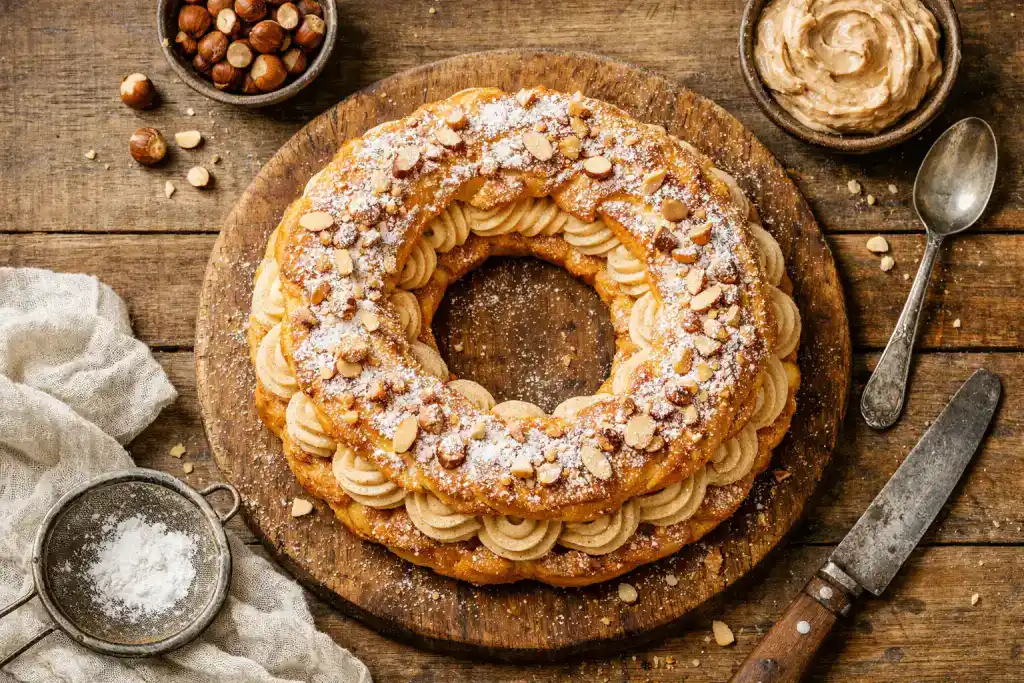
Quick Nutrition Facts
Per 1 Serving (150g)
| Nutrient | Amount |
|---|---|
| Calories | 400 kcal |
| Protein | 8g |
| Carbohydrates | 40g |
| Fiber | 1.5g |
| Sugars | 22g |
| Fat | 24g |
| Saturated Fat | 12g |
| Vitamin E | 3.4mg |
| Calcium | 65mg |
| Iron | 1.8mg |
Macronutrient Breakdown
 ChatGPT
  Claude
  AI Mode
  Perplexity
NUTRITIONIST INSIGHT
Paris-Brest gets most of its calories from fat (54%) due to the butter-rich choux and praline cream. The hazelnut praline provides vitamin E and monounsaturated fats, but the high saturated fat (12g) and sugar (22g) make portion control essential. Enjoy a half portion after a protein-rich meal for the best blood sugar response.
Myth Busters
MYTH #1: Paris-Brest Is the Unhealthiest French Pastry
TRUTH: At 267 calories per 100g, Paris-Brest is actually lower in calories than croissants (406 cal/100g) or pain au chocolat (420 cal/100g). The hazelnut praline provides beneficial vitamin E and antioxidants not found in butter-only pastries.
MYTH #2: The Praline Cream Has No Nutritional Value
TRUTH: Hazelnut praline contains monounsaturated fatty acids, vitamin E (15% DV per serving), and polyphenol antioxidants that support cardiovascular health. The eggs in choux pastry add complete protein and B vitamins.
MYTH #3: You Should Never Eat Paris-Brest if You Have Diabetes
TRUTH: Pairing high-carb foods with protein and fat slows glucose absorption by 20-40%. A small portion of Paris-Brest after a balanced meal has less glycemic impact than eating it alone on an empty stomach.
MYTH #4: Choux Pastry Is Full of Unhealthy Ingredients
TRUTH: Choux pastry uses simple ingredients: flour, eggs, butter, and water. The eggs provide high-quality protein and choline. Compared to puff pastry, choux has fewer layers of butter and lower overall fat content per gram.
MYTH #5: All Calories in Paris-Brest Come from Sugar
TRUTH: Only 22% of calories come from sugar. The majority (54%) comes from fat, primarily from butter and hazelnuts. Hazelnuts contribute heart-healthy monounsaturated fats that differ significantly from refined sugar in metabolic impact.
NutriScore by Health Goals
| Health Goal | NutriScore | Why This Score? |
|---|---|---|
| Weight Loss |  | 400 calories per serving with 24g fat. Limit to occasional small portions (half serving). Choose fruit-based desserts instead for daily treats. |
| Muscle Gain |  | Provides 8g protein and 40g carbs for post-workout glycogen. Better as an occasional high-calorie treat during bulking phases. |
| Diabetes Management | | High sugar (22g) and refined carbs spike blood glucose. Pair with protein to slow absorption. Limit to small portions on special occasions. |
| PCOS Management | | High sugar affects insulin sensitivity. Avoid as regular snack. If consuming, eat after a fiber and protein-rich meal. |
| Pregnancy Nutrition | | Ensure pasteurized eggs are used. Provides iron (1.8mg) and calcium. Limit due to high sugar; watch for gestational diabetes risk. |
| Viral/Flu Recovery | | Quick energy from carbs and fats when appetite is low. Eggs provide immune-supporting zinc and selenium. Better options exist for sustained recovery nutrition. |
PERSONALIZED NUTRITION
Track your meals with NutriScan for personalized NutriScores based on your specific health goals!
Blood Sugar Response to Paris-Brest
Understanding how Paris-Brest affects your blood glucose can help you make informed decisions about when and how to enjoy it.
Typical Glucose Response Curve
*This chart shows typical blood glucose response for general healthy individuals. Individual responses may vary. Not medical advice.*
How to Flatten the Spike
Adding protein and fat to high-carb foods reduces blood glucose spikes by 20-40%:
- 🥛 Glass of milk or unsweetened tea - Protein slows carb digestion
- 🥜 Handful of almonds before dessert - Healthy fats delay gastric emptying
- 🍗 Eat after a protein-rich main course - Pre-existing protein buffer reduces spike
- 🚶 Short walk after eating - 15-minute post-meal walk lowers glucose by 10-15%
This approach helps reduce the glucose spike while still allowing you to enjoy this classic French dessert.
Cultural Significance
Paris-Brest was created in 1910 by pâtissier Louis Durand in Maisons-Laffitte, a suburb of Paris, to commemorate the Paris-Brest-Paris bicycle race.
French Heritage:
- The ring shape represents a bicycle wheel, honoring the famous 1,200 km race
- One of the "grand classiques" of French pâtisserie alongside eclairs and mille-feuille
- Traditionally made with praline mousseline (hazelnut and almond praline with pastry cream and butter)
- Featured in the curriculum of every French pastry school
Global Spread:
- Modern variations include pistachio, chocolate, and seasonal fruit pralines
- Japanese pastry chefs have created matcha and yuzu versions
- Miniature "Paris-Brest individuels" are popular in upscale bakeries worldwide
- The recipe was popularized internationally through cooking shows and pastry competitions
In India:
- Gaining popularity in metropolitan bakeries and five-star hotel patisseries
- Often adapted with local nuts like cashews or pistachios replacing hazelnuts
- Served at French-themed restaurants and luxury dessert establishments
Compare & Substitute
Paris-Brest vs Similar French Pastries (Per 100g)
| Nutrient | 🥐 Paris-Brest | 🍩 Eclair | 🥧 Mille-Feuille | 🧁 Profiterole |
|---|---|---|---|---|
| Calories | 267 kcal | 262 kcal | 300 kcal | 250 kcal |
| Carbs | 27g | 24g | 32g | 26g |
| Fiber | 1g | 0.5g | 0.8g | 0.4g |
| Protein | 5.3g | 6g | 4.5g | 5.5g |
| Fat | 16g | 14g | 18g | 14g |
| Sugar | 15g | 16g | 18g | 17g |
| Vitamin E | 2.3mg | 0.5mg | 0.3mg | 0.4mg |
| Best For | Hazelnut lovers, special occasions | Chocolate cravings, lighter option | Rich, layered texture experience | Portion control, celebrations |
Frequently Asked Questions
How many calories are in a Paris-Brest?
A typical Paris-Brest serving (150g) contains approximately 400 calories. Per 100g, it provides about 267 calories. Most energy comes from fat (54%) followed by carbohydrates (40%) and protein (8%).
Portion tip: Many bakeries sell individual-sized Paris-Brest (80-100g) at 215-267 calories, making portion control easier.
Is Paris-Brest safe during pregnancy?
Paris-Brest is generally safe during pregnancy when made with pasteurized eggs and fully baked. The choux pastry reaches high temperatures during baking, eliminating bacterial concerns.
Precautions:
- Ensure pastry cream uses pasteurized eggs
- Consume fresh (within 24 hours of purchase)
- Limit portions due to high sugar content
- Monitor blood sugar if managing gestational diabetes
Can diabetics eat Paris-Brest?
Diabetics should enjoy Paris-Brest sparingly. The 22g sugar and 40g carbs per serving will raise blood glucose significantly.
Tips for diabetics:
- Eat a half portion (75g, ~200 calories)
- Consume after a protein and fiber-rich meal
- Never eat on an empty stomach
- Monitor blood sugar 2 hours after eating
The fat content naturally slows absorption somewhat, but the refined carbs still cause a notable spike.
What makes Paris-Brest different from other choux pastries?
Paris-Brest stands apart through its praline mousseline cream filling, made with caramelized hazelnuts and almonds blended into a rich paste, then folded into buttercream and pastry cream.
Key differences from other choux pastries:
- Ring shape vs individual pieces (eclairs, profiteroles)
- Hazelnut praline vs chocolate or vanilla custard
- Higher vitamin E content from nuts
- Sliced almonds on top for crunch and presentation
How should I store Paris-Brest?
Storage guidelines:
- Refrigerate immediately (2-4 hours at room temperature max)
- Best within 24 hours of purchase for optimal texture
- Do not freeze the assembled pastry (choux becomes soggy)
- Choux shells can be frozen separately and filled fresh
What are healthier alternatives to Paris-Brest?
Lower-calorie options:
- Fruit tart (180 cal/100g) with fresh berries
- Plain choux with Greek yogurt (150 cal/100g) for protein boost
- Dark chocolate mousse (200 cal/100g) with more antioxidants
- Mini Paris-Brest (80g portion) for controlled indulgence
Track your meals with NutriScan app to see how Paris-Brest fits your personal nutrition goals.




Similar Nutritious Foods
4505 Chicharrones Classic Chili Salt
7 Eleven Japan Crispy Corn Cheese
Explore More Nutrition Tools & Resources
AI Calorie Counter App - Snap a Photo, Get Macros
AI Nutritionist App That Reads Your Logged Meals
Best Protein Supplements for Women
Bulking Meal Plan App That Sets Your Surplus
ChatGPT Calorie Counter Alternative That Keeps the Total
ChatGPT Diet Plan Alternative That Tracks What You Eat
ChatGPT Weight Loss Coach Alternative With a Food Log
Fast Food Calorie Counter App That Reads the Tray
Free Calorie Tracker App with AI Photo Scans | NutriScan
Indian Diet Plan App With Veg and Non Veg Meals
Indian Food Calorie Calculator - Get Instant Nutrition Facts for Desi Meals — 2026
Intermittent Fasting for Women, Timer and Meal Log App
Intermittent Fasting Tracker App - Free Fasting Timer
Macro Tracker App That Fills the Numbers From a Photo
Mediterranean Diet Meal Plan App That Counts the Oil
Micronutrient Tracker App for Vitamins and Minerals
MyFitnessPal Alternative That Stays Free | NutriScan
NutriScore App: A Free Grade on Every Meal | NutriScan
Nutrition Label Scanner App for the Amount You Ate
Second Trimester Protein Guide
Vegetarian Meal Plan App With a Protein Target
Voice Calorie Counter - Speak to Track Meals Hands-Free
Water and Calorie Tracker App - Free Water Log