Pastel de Nata: Calories, Nutrition and Health Benefits
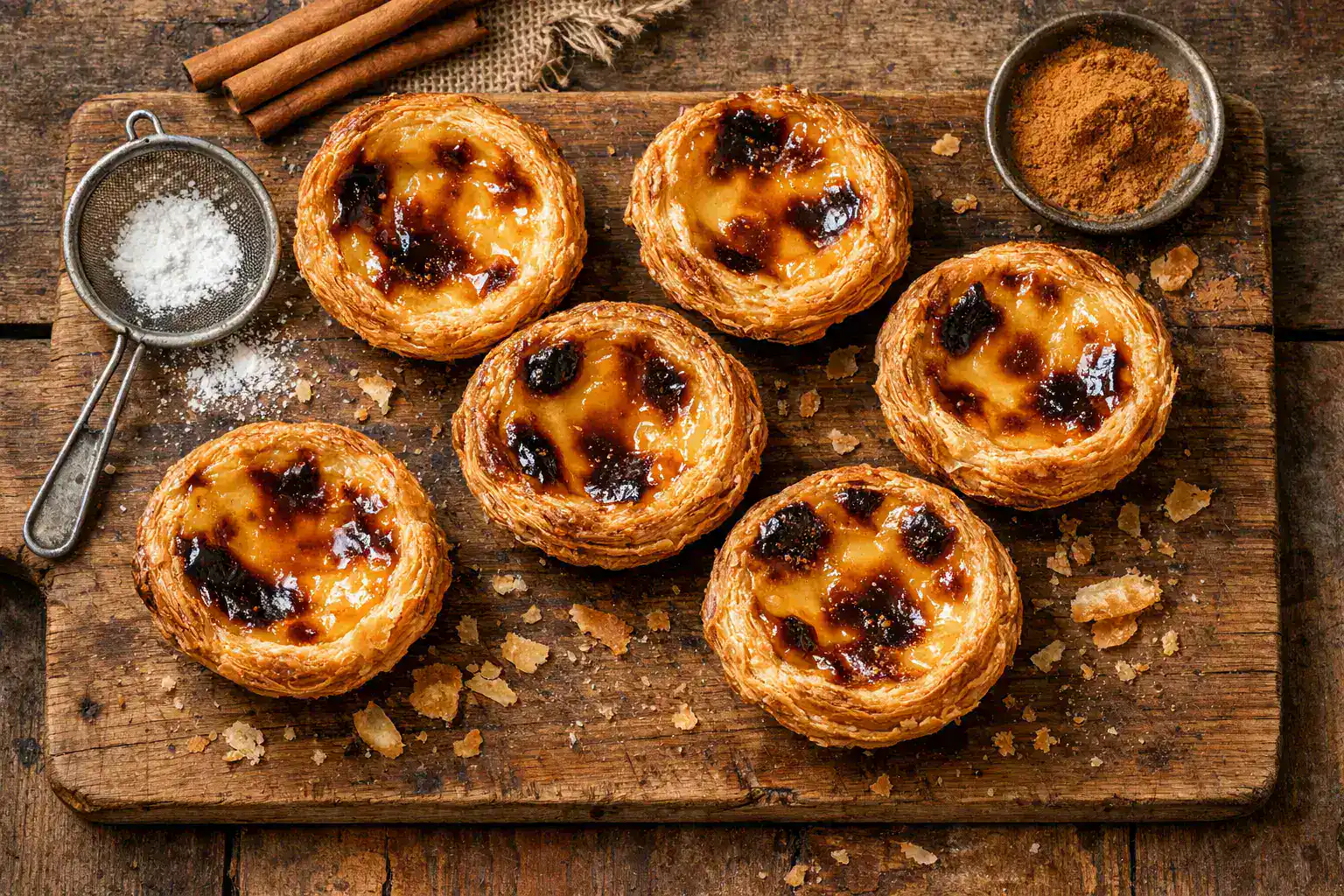
Iconic Lisbon custard tarts with flaky caramelized pastry, creamy egg custard, and the perfect balance of sweetness for mindful indulgence.
Quick Nutrition Facts
Per 1 Tart (65g)
| Nutrient | Amount |
|---|---|
| Calories | 180 kcal |
| Protein | 3g |
| Carbohydrates | 22g |
| Fiber | 0.5g |
| Sugars | 12g |
| Fat | 9g |
| Saturated Fat | 4.5g |
| Cholesterol | 85mg |
| Sodium | 95mg |
| Calcium | 35mg |
Macronutrient Breakdown
 ChatGPT
  Claude
  AI Mode
  Perplexity
NUTRITIONIST INSIGHT
Pastel de nata's portion-controlled size (65g) makes it easier to enjoy mindfully than larger pastries. The egg custard provides some protein and B vitamins, while the caramelized top adds antioxidants from the Maillard reaction.
Myth Busters
MYTH #1: All Custard Tarts Have the Same Calories
TRUTH: Pastel de nata typically has 160-200 calories per tart, while Chinese egg tarts may have 150-180 and Hong Kong-style egg tarts 200-250 calories. The butter content in puff pastry is the key differentiator.
MYTH #2: The Eggs Make It a High-Protein Snack
TRUTH: With only 3g protein per tart, pastel de nata is primarily a carbohydrate and fat source, not a protein food. The custard uses mostly egg yolks for richness rather than protein-rich egg whites.
MYTH #3: The Burnt Top Means It's Overcooked
TRUTH: The characteristic charred spots on pastel de nata are intentional. This caramelization (Maillard reaction) creates the distinctive flavor. Traditional Lisbon bakeries heat ovens to 400°C (750°F) specifically for this effect.
MYTH #4: You Should Avoid All Pastries for Weight Loss
TRUTH: At 180 calories, a single pastel de nata can fit into most weight loss plans when eaten mindfully and in moderation. The key is portion control—enjoy one tart rather than multiple.
MYTH #5: Pastel de Nata Is Too Sugary for Anyone
TRUTH: With 12g sugar per tart, pastel de nata has less sugar than a 12oz soda (39g) or a glazed donut (20g). The fat content actually slows sugar absorption, reducing the glycemic impact compared to pure sugar.
NutriScore by Health Goals
| Health Goal | NutriScore | Why This Score? |
|---|---|---|
| Weight Loss |  | 180 calories in a small pastry is calorie-dense. Limit to 1 per week; not a daily treat. |
| Muscle Gain |  | Only 3g protein limits muscle-building value. Okay as occasional post-workout carbs with additional protein. |
| Diabetes Management | | High refined carbs (22g) and sugar (12g) cause blood glucose spikes. Eat half portion, paired with protein, after meals only. |
| PCOS Management | | Refined carbs and sugar affect insulin sensitivity. Reserve for rare occasions only. |
| Pregnancy Nutrition | | Provides some folate and B vitamins from eggs, but high in saturated fat. Occasional treat, max 1 per week. |
| Viral/Flu Recovery | | Easily digestible carbs for energy when sick. The gentle sweetness may help when appetite is low. |
PERSONALIZED NUTRITION
Track your treats with NutriScan for personalized NutriScores based on your specific health goals!
Blood Sugar Response to Pastel de Nata
Understanding how pastel de nata affects your blood glucose helps with mindful consumption, especially for those managing diabetes or blood sugar.
Typical Glucose Response Curve
This chart shows typical blood glucose response for general healthy individuals. Individual responses may vary. Not medical advice.
How to Flatten the Spike
Pairing refined carbs with protein or fat slows glucose absorption and reduces blood sugar peaks:
- 🥜 Eat after a protein-rich meal - Never on an empty stomach
- ☕ Pair with unsweetened coffee or tea - Caffeine may slightly slow absorption
- 🧀 Add cheese or nuts - Extra fat and protein buffer the carbs
- 🚶 Take a walk after eating - Light activity helps clear blood glucose
This combination reduces the glucose spike and extends energy release, preventing the crash that often follows sweet treats.
Cultural Significance
Pastel de nata (also called pastéis de nata, plural) originated in Lisbon's Jerónimos Monastery before 1837.
In Portugal:
- Created by monks who used egg whites to starch clothing, finding uses for leftover yolks
- The original recipe from Belém is still a closely guarded secret at Pastéis de Belém
- Traditionally enjoyed warm with a dusting of cinnamon and powdered sugar
- Served with espresso (bica) as a morning or afternoon ritual
Global Spread:
- Former Portuguese colonies (Macau, Brazil, Goa) developed their own versions
- Macanese egg tarts influenced Hong Kong and East Asian variations
- British chain Nando's helped popularize them in the UK
- Now found in specialty bakeries worldwide, from Melbourne to New York
Compare & Substitute
Pastel de Nata vs Similar Desserts (Per Serving)
| Nutrient | 🥮 Pastel de Nata | 🥐 Croissant | 🍩 Glazed Donut | 🥧 Egg Tart (HK) |
|---|---|---|---|---|
| Calories | 180 kcal | 250 kcal | 270 kcal | 220 kcal |
| Carbs | 22g | 26g | 31g | 25g |
| Fiber | 0.5g | 1.2g | 0.8g | 0.3g |
| Protein | 3g | 5g | 3g | 4g |
| Fat | 9g | 14g | 14g | 12g |
| Sugar | 12g | 6g | 20g | 15g |
| Best For | Portion-controlled treat | Higher protein breakfast | Sweet cravings (less ideal) | Similar custard experience |
Frequently Asked Questions
How many calories are in a pastel de nata?
A typical pastel de nata contains 160-200 calories per tart (65g serving). Commercial versions may range from 140 calories (smaller/lighter) to 240 calories (larger/richer). The calories come primarily from butter-rich puff pastry (9g fat) and sugar in the custard (12g).
Size matters: Mini versions at 35g have about 100 calories; jumbo versions at 90g can reach 280 calories.
Can diabetics eat pastel de nata?
Diabetics should approach pastel de nata with caution due to 22g carbs and 12g sugar per tart.
Tips for diabetics:
- Limit to half a tart (11g carbs)
- Never eat on empty stomach—always after protein
- Monitor blood glucose 2 hours after eating
- Choose as a rare treat, not regular consumption
- Consider splitting with someone
The American Diabetes Association recommends minimizing refined carbs and added sugars for better glycemic control.
Is pastel de nata healthy?
Pastel de nata is a treat, not a health food. It provides modest nutritional benefits—3g protein, some B vitamins, and calcium from eggs and milk—but is high in saturated fat (4.5g) and refined sugar (12g).
The balanced view: No food is inherently unhealthy when consumed mindfully. One tart occasionally fits into a healthy lifestyle. Daily consumption or multiple tarts at once undermines health goals.
What makes pastel de nata high in calories?
The 180 calories come from:
- Puff pastry (butter layers = 60% of fat content)
- Egg yolks (rich and creamy custard)
- Sugar (12g per tart for sweetness)
- Cream/milk (custard richness)
The 20+ layers of butter-brushed pastry dough contribute most of the saturated fat and calories.
How does pastel de nata compare to other desserts?
At 180 calories per portion-controlled tart, pastel de nata compares favorably to larger pastries. A croissant (250 cal) or glazed donut (270 cal) contains significantly more. However, it's higher than a macaron (75 cal) or fruit sorbet (100 cal).
Best alternative: If watching calories closely, share one tart or choose mini versions.
How many pastel de nata can I eat per day?
Recommendations by goal:
- Weight loss: 0-1 per week
- Maintenance: 1-2 per week maximum
- Athletes: 1-2 after intense workouts (for quick carbs)
- Diabetes/PCOS: Avoid or limit to half per week
Avoid making it a daily habit. The 9g fat (half saturated) and 12g sugar add up quickly with multiple tarts.
When is the best time to eat pastel de nata?
Optimal timing:
- After a meal - Fat and protein slow sugar absorption
- Post-workout - Carbs help glycogen recovery
- Mid-afternoon - When you need an energy boost
Avoid:
- On empty stomach (causes blood sugar spike)
- Late night (calories less likely to be burned)
- Before exercise (may cause sluggishness)


Similar Nutritious Foods
4505 Chicharrones Classic Chili Salt
7 Eleven Japan Crispy Corn Cheese
Explore More Nutrition Tools & Resources
AI Calorie Counter App - Snap a Photo, Get Macros
AI Nutritionist App That Reads Your Logged Meals
Best Protein Supplements for Women
Bulking Meal Plan App That Sets Your Surplus
ChatGPT Calorie Counter Alternative That Keeps the Total
ChatGPT Diet Plan Alternative That Tracks What You Eat
ChatGPT Weight Loss Coach Alternative With a Food Log
Fast Food Calorie Counter App That Reads the Tray
Free Calorie Tracker App with AI Photo Scans | NutriScan
Indian Diet Plan App With Veg and Non Veg Meals
Indian Food Calorie Calculator - Get Instant Nutrition Facts for Desi Meals — 2026
Intermittent Fasting for Women, Timer and Meal Log App
Intermittent Fasting Tracker App - Free Fasting Timer
Macro Tracker App That Fills the Numbers From a Photo
Mediterranean Diet Meal Plan App That Counts the Oil
Micronutrient Tracker App for Vitamins and Minerals
MyFitnessPal Alternative That Stays Free | NutriScan
NutriScore App: A Free Grade on Every Meal | NutriScan
Nutrition Label Scanner App for the Amount You Ate
Second Trimester Protein Guide
Vegetarian Meal Plan App With a Protein Target
Voice Calorie Counter - Speak to Track Meals Hands-Free
Water and Calorie Tracker App - Free Water Log