Pav Bhaji: Calories, Nutrition and Health Benefits
Mumbai's beloved street food combining spiced mashed vegetables with buttered bread rolls, offering comfort food satisfaction with vegetable nutrition.
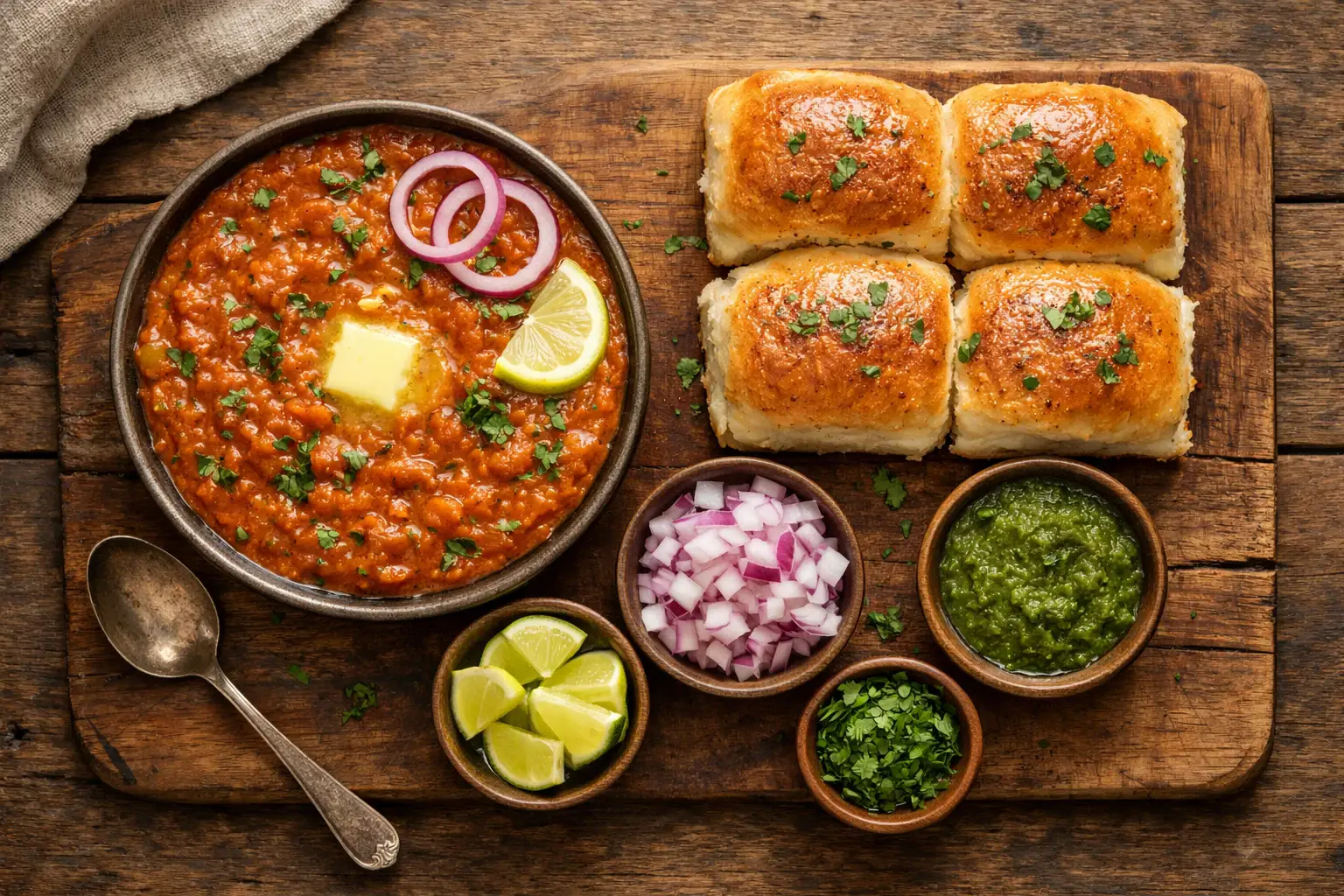
Quick Nutrition Facts
Per 1 Serving (Bhaji 200g + 2 Pav 100g)
| Nutrient | Amount |
|---|---|
| Calories | 400 kcal |
| Protein | 10g |
| Carbohydrates | 52g |
| Fiber | 6g |
| Sugars | 8g |
| Fat | 18g |
| Saturated Fat | 8g |
| Potassium | 580mg |
| Vitamin A | 1200 IU |
| Vitamin C | 25mg |
Macronutrient Breakdown
 ChatGPT
  Claude
  AI Mode
  Perplexity
NUTRITIONIST INSIGHT
Pav bhaji provides 6g fiber from mixed vegetables per serving. The spice blend includes turmeric with anti-inflammatory curcumin. To maximize nutrition, increase vegetable portions and reduce butter content.
Myth Busters
MYTH #1: Pav Bhaji Is Always Unhealthy
TRUTH: The vegetable bhaji itself is nutritious, providing fiber, vitamins A and C, and potassium. The unhealthy aspects come from excessive butter and refined flour pav. Higher-fiber diets improve glycemic control and reduce inflammation.
MYTH #2: Diabetics Must Completely Avoid Pav Bhaji
TRUTH: Diabetics can enjoy modified pav bhaji occasionally. Use whole wheat pav, reduce potatoes, increase other vegetables, and skip extra butter. Adding vegetables to potatoes can lower glycemic response by up to 20%.
MYTH #3: Street Food Pav Bhaji Has Same Calories as Homemade
TRUTH: Street vendors often use 3-4 tablespoons of butter per serving, pushing calories to 600+. Homemade versions with controlled butter use 350-400 calories. Always ask for "kam butter" (less butter) when ordering outside.
MYTH #4: Pav Bhaji Has No Nutritional Value
TRUTH: The bhaji provides diverse vegetables including tomatoes (lycopene), bell peppers (vitamin C), peas (protein), and potatoes (potassium). The spice blend offers turmeric, cumin, and coriander with antioxidant properties.
MYTH #5: White Pav Is As Bad As Eating Sugar
TRUTH: While white pav has a high glycemic index (around 70), it provides carbohydrates for energy and some B vitamins. Pairing with protein and fat from the bhaji helps moderate blood sugar response.
MYTH #6: Butter in Pav Bhaji Causes Heart Disease
TRUTH: Moderate butter consumption as part of an overall healthy diet doesn't significantly increase heart disease risk. The concern is excessive consumption - street food versions with 4+ tablespoons per serving are problematic.
NutriScore by Health Goals
| Health Goal | NutriScore | Why This Score? |
|---|---|---|
| Weight Loss |  | 400+ calories per serving, high fat from butter. Limit portions, skip extra butter, use 1 pav instead of 2. |
| Muscle Gain |  | Good carb source (52g) for energy, moderate protein (10g). Add paneer or eggs on side for complete meal. |
| Diabetes Management |  | High GI from potatoes and white pav. Fiber from vegetables helps but doesn't fully offset potato GI. Use whole wheat pav, smaller portions. |
| PCOS Management | | Moderate insulin impact when eaten with modifications. Reduce potato content, increase low-GI vegetables. |
| Pregnancy Nutrition | | Good source of folate from vegetables and iron from spices. Vitamin A supports fetal development. Ensure food safety - eat freshly prepared. |
| Viral/Flu Recovery |  | Easy to digest, comforting, provides vitamin C and immune-supporting spices like turmeric. Warm preparation soothes throat. |
PERSONALIZED NUTRITION
Track your meals with NutriScan for personalized NutriScores based on your specific health goals!
Blood Sugar Response to Pav Bhaji
Understanding how pav bhaji affects your blood glucose can help you make informed decisions about portion sizes and modifications.
Typical Glucose Response Curve
This chart shows typical blood glucose response for general healthy individuals. Individual responses may vary. Not medical advice.
How to Flatten the Spike
Pairing high-GI foods with protein or healthy fat slows glucose absorption and reduces the peak blood sugar level:
- 🧀 Add paneer cubes - Provides protein to slow digestion
- 🥗 Side salad with lemon - Fiber and acidity reduce GI
- 🫘 Dal accompaniment - Protein and fiber combination
- 🥒 Cucumber raita - Yogurt protein plus cooling effect
Choosing whole wheat pav instead of white pav can reduce the glycemic impact by approximately 15-20%.
Cultural Significance
Pav bhaji originated in Mumbai in the 1850s as a quick, affordable meal for textile mill workers who needed filling food during short breaks.
In India:
- Street food icon of Mumbai, available at virtually every corner
- Traditionally served on steel plates with raw onion and lemon wedges
- Butter is generously added tableside as part of the experience
- Regional variations: Jain pav bhaji (no onion/garlic), cheese pav bhaji, paneer pav bhaji
Evolution:
- Originally created to repurpose leftover vegetables
- The "pav" came from Portuguese bread-making influence in Mumbai
- Now found across India and internationally in Indian restaurants
- Modern health-conscious versions use olive oil, multi-grain pav
Compare & Substitute
Pav Bhaji vs Similar Indian Dishes (Per Serving)
| Nutrient | 🥔 Pav Bhaji | 🍛 Chole Bhature | 🥗 Bhel Puri | 🫓 Masala Dosa |
|---|---|---|---|---|
| Calories | 400 kcal | 650 kcal | 250 kcal | 350 kcal |
| Carbs | 52g | 75g | 40g | 55g |
| Fiber | 6g | 8g | 4g | 3g |
| Protein | 10g | 15g | 6g | 8g |
| Fat | 18g | 28g | 8g | 12g |
| Potassium | 580mg | 450mg | 320mg | 280mg |
| Best For | Comfort food, quick energy | High protein, indulgent meal | Light snack, low calorie | Fermented benefits, crispy |
Frequently Asked Questions
Is pav bhaji good for weight loss?
Pav bhaji can fit into a weight loss diet with modifications. A typical serving has 400+ calories, so portion control is essential.
Weight loss tips:
- Use only 1 pav instead of 2 (saves 150 calories)
- Ask for "kam butter" or make at home with 1 tsp oil
- Increase vegetable portions, especially non-starchy ones
- Choose whole wheat pav for added fiber
Can diabetics eat pav bhaji?
Diabetics can enjoy pav bhaji occasionally with modifications. The combination of potatoes (high GI) and white pav makes traditional versions spike blood sugar.
Tips for diabetics:
- Replace half the potatoes with cauliflower or bottle gourd
- Use multigrain or whole wheat pav
- Eat smaller portions (1 pav, half serving bhaji)
- Add protein side dish like paneer or dal
- Monitor blood sugar 2 hours after eating
How many calories are in pav bhaji?
Calories vary significantly based on preparation:
- Homemade (controlled butter): 350-400 kcal
- Restaurant style: 450-550 kcal
- Street food (extra butter): 600-700 kcal
The main calorie contributors are butter (100 kcal per tablespoon) and pav (150 kcal for 2 pieces).
What are the health benefits of pav bhaji?
Key Benefits:
- Vegetable Nutrition: 6g fiber, vitamins A and C from mixed vegetables
- Anti-inflammatory Spices: Turmeric, cumin, coriander in the masala blend
- Potassium Rich: 580mg from potatoes and vegetables supports blood pressure
- Easy Digestibility: Mashed vegetables are gentle on the digestive system
- Comfort Factor: Warm, satisfying meal supports mental wellbeing
How can I make pav bhaji healthier?
Healthier Modifications:
- Use 1 tsp oil instead of multiple tablespoons butter
- Add extra vegetables: carrots, beans, spinach
- Reduce potato content by 50%
- Choose whole wheat or multigrain pav
- Serve with side salad instead of extra butter
- Skip the butter garnish on top
What vegetables are used in pav bhaji?
Traditional pav bhaji includes potatoes, tomatoes, onions, green peas, cauliflower, and bell peppers (capsicum). All vegetables are boiled, mashed together, and cooked with pav bhaji masala.
Optional additions: Carrots, beans, beetroot (for color), spinach, or bottle gourd for added nutrition.
IMPORTANT NOTE
Street food pav bhaji may use excessive butter and reheated oil. For health-conscious eating, prepare at home or choose restaurants with transparent preparation.


Similar Nutritious Foods
4505 Chicharrones Classic Chili Salt
7 Eleven Japan Crispy Corn Cheese
Explore More Nutrition Tools & Resources
AI Calorie Counter App - Snap a Photo, Get Macros
AI Nutritionist App That Reads Your Logged Meals
Best Protein Supplements for Women
Bulking Meal Plan App That Sets Your Surplus
ChatGPT Calorie Counter Alternative That Keeps the Total
ChatGPT Diet Plan Alternative That Tracks What You Eat
ChatGPT Weight Loss Coach Alternative With a Food Log
Fast Food Calorie Counter App That Reads the Tray
Free Calorie Tracker App with AI Photo Scans | NutriScan
Indian Diet Plan App With Veg and Non Veg Meals
Indian Food Calorie Calculator - Get Instant Nutrition Facts for Desi Meals — 2026
Intermittent Fasting for Women, Timer and Meal Log App
Intermittent Fasting Tracker App - Free Fasting Timer
Macro Tracker App That Fills the Numbers From a Photo
Mediterranean Diet Meal Plan App That Counts the Oil
Micronutrient Tracker App for Vitamins and Minerals
MyFitnessPal Alternative That Stays Free | NutriScan
NutriScore App: A Free Grade on Every Meal | NutriScan
Nutrition Label Scanner App for the Amount You Ate
Second Trimester Protein Guide
Vegetarian Meal Plan App With a Protein Target
Voice Calorie Counter - Speak to Track Meals Hands-Free
Water and Calorie Tracker App - Free Water Log