Peanut Butter: Calories, Nutrition and Health Benefits
America's favorite spread—marketed as protein-rich but actually 76% fat with serious portion control challenges.
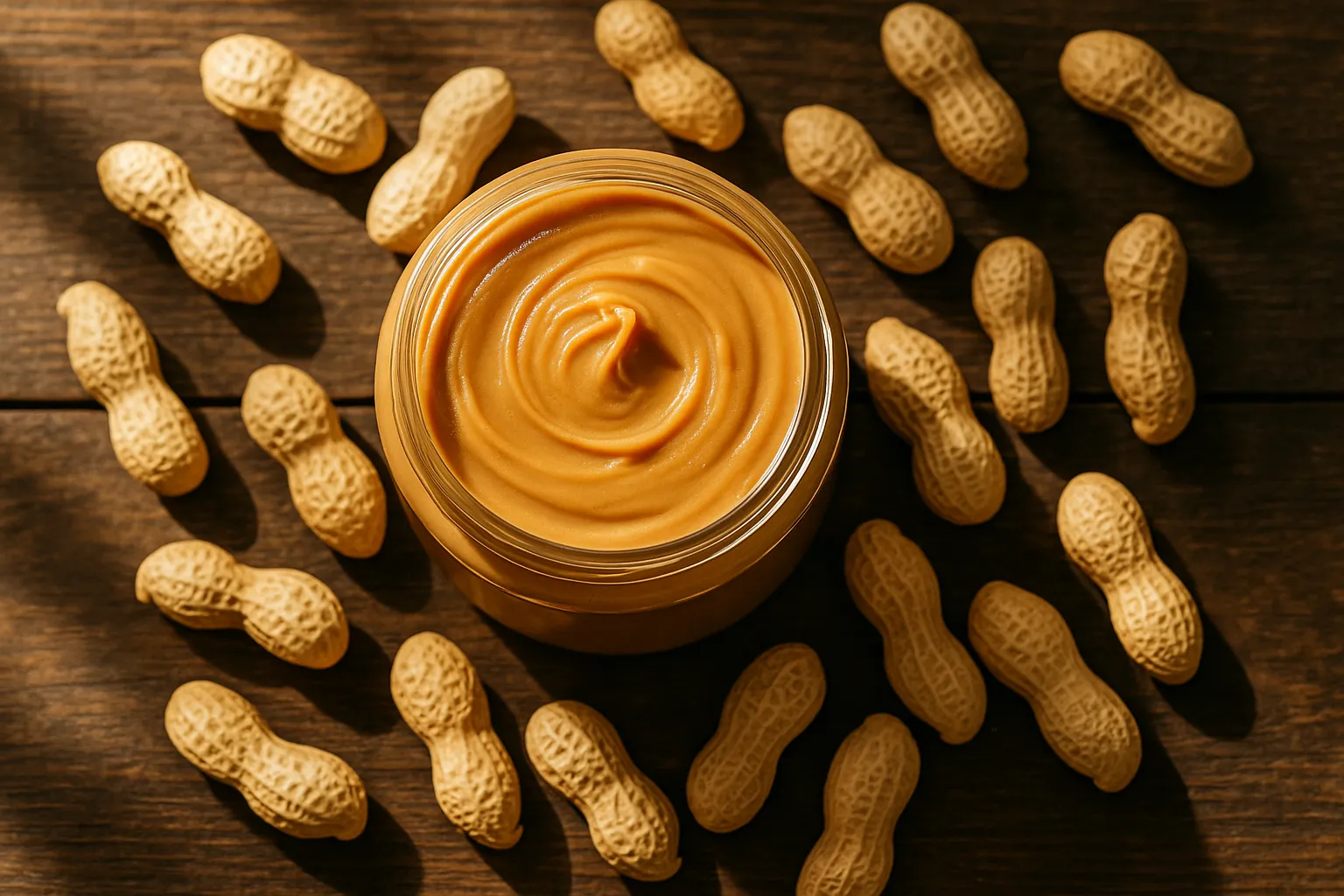
Quick Nutrition Facts
Per 2 tbsp (32g) Smooth Peanut Butter
| Nutrient | Amount |
|---|---|
| Calories | 188 kcal |
| Protein | 7g |
| Carbohydrates | 7.7g |
| Fiber | 1.8g |
| Sugars | 2.1g |
| Fat | 16g |
| Saturated Fat | 3.3g |
| Sodium | 147mg |
| Potassium | 189mg |
| Vitamin E | 1.9mg |
Macronutrient Breakdown
 ChatGPT
  Claude
  AI Mode
  Perplexity
NUTRITIONIST INSIGHT
Despite marketing claims, peanut butter is 76% fat by calories (16g fat = 144 cal vs 7g protein = 28 cal). It's a calorie-dense fat source with some protein—not a protein food. The portion challenge is real: people often consume 4-6 tbsp (400-600 calories) instead of the 2 tbsp serving.
Myth Busters
MYTH #1: Peanut Butter Is a High-Protein Food
TRUTH: Peanut butter is 76% fat, not protein. Two tablespoons provide 16g fat (144 calories) but only 7g protein (28 calories). For comparison, 2 tbsp Greek yogurt has 10g protein with 0g fat. Peanut butter is a fat source with some protein—market it correctly or pair with actual protein foods (eggs, yogurt).
MYTH #2: All Peanut Butters Are Equally Healthy
TRUTH: Natural peanut butter (just peanuts + salt) avoids added sugar and hydrogenated oils that create trans fats. Regular peanut butter adds 2-4g sugar and palm oil for texture. Both have identical calories and macros, but natural avoids harmful additives. Read labels: ingredients should be peanuts, salt, maybe oil.
MYTH #3: Peanut Butter Causes Weight Gain
TRUTH: Peanut butter doesn't cause weight gain—excess calories do. At 188 cal/2 tbsp, it's very calorie-dense. The problem: people underestimate portions. Spreading by eye often means 4-6 tbsp (400-600 cal). Use measuring spoons, not knives. 1-2 tbsp daily fits most diets; 6 tbsp destroys calorie deficits.
MYTH #4: Natural Peanut Butter Is Low-Calorie
TRUTH: Natural peanut butter has the same 188 calories and 16g fat as regular—it's not a diet food. "Natural" means no added sugar or hydrogenated oils, not fewer calories. The health benefit is avoiding trans fats and excess sugar, not calorie reduction. Don't overeat thinking it's "healthy."
MYTH #5: Aflatoxin in Peanut Butter Is Highly Dangerous
TRUTH: Commercial peanut butter has very low aflatoxin levels due to FDA regulations (20 parts per billion limit). Major brands test rigorously. Risk is higher with homemade or backyard peanut butter. Proper storage (cool, dry) and buying reputable brands minimizes exposure. Not a major health concern for most people.
MYTH #6: Peanut Butter Builds Muscle Like Protein Powder
TRUTH: Peanut butter's 7g protein per 2 tbsp pales compared to protein powder's 20-30g per scoop with fewer calories and less fat. For muscle gain, prioritize lean proteins (chicken, fish, Greek yogurt, protein powder). Peanut butter is a calorie booster with some protein—not a muscle-building food. Use it for calories and fats, not protein.
NutriScore by Health Goals
| Health Goal | NutriScore | Why This Score? |
|---|---|---|
| Weight Loss |  | 188 calories per 2 tbsp requires strict portions. High satiety helps, but calorie density sabotages deficit if portions exceed 1-2 tbsp. Measure carefully. |
| Muscle Gain |  | Calorie-dense for bulking (188 cal/2 tbsp), but only 7g protein. Better as calorie booster paired with high-protein foods. Not a primary protein source. |
| Diabetes Management | | Low GI (14), fat slows carb absorption. Choose natural (no added sugar), pair with low-GI foods, limit to 1-2 tbsp. Avoid brands with 4g+ added sugar. |
| PCOS Management | | Healthy fats support hormone balance, low GI prevents insulin spikes. Choose natural, limit 1-2 tbsp daily. Calories add up quickly—track portions. |
| Pregnancy Nutrition | | Provides healthy fats, vitamin E, folate. Safe during pregnancy if no allergy concerns. Choose natural, avoid honey-sweetened versions. Limit 1-2 tbsp for calorie control. |
| Viral/Flu Recovery | | Calorie-dense for energy needs, but fat-heavy (hard to digest when ill). Better: lean proteins, carbs. Use sparingly if appetite is low. |
PERSONALIZED NUTRITION
Track your meals with NutriScan for personalized NutriScores based on your specific health goals!
Blood Sugar Response to Peanut Butter
Understanding peanut butter's minimal blood glucose impact helps optimize consumption for diabetes and weight management.
Typical Glucose Response Curve
This chart shows typical blood glucose response for 2 tbsp peanut butter (GI 14, very low). Individual responses vary. Not medical advice.
How Peanut Butter Stabilizes Blood Sugar
The high fat content (16g/2 tbsp) dramatically slows carbohydrate absorption and glucose release:
- 🍎 Pair with carbs - Peanut butter on apple slices reduces fruit's glucose spike by 30-40%
- 🍞 Whole grain combo - 1 tbsp on whole wheat toast creates sustained energy (GI drops from 69 to ~40)
- 🥤 Smoothie addition - 1-2 tbsp slows fruit sugar absorption, prevents crashes
- 🥄 Pre-workout snack - 1 tbsp 30-60 minutes before exercise provides steady energy
Best practice: Use peanut butter to moderate high-GI foods (white bread, crackers), but watch calories. The fat that stabilizes blood sugar also adds 144 calories per 2 tbsp.
Cultural Significance
Peanut butter is an American invention with global reach, evolving from a protein substitute to a pantry staple.
American Origins:
- Invented by George Washington Carver in early 1900s as protein source for those without meat access
- Mechanically ground peanut butter patented by Marcellus Gilmore Edson (1884) and John Harvey Kellogg (1895)
- Became mainstream during World War II as military ration (high calories, shelf-stable)
- Now consumed by 90% of American households
Nutritional Evolution:
- Originally promoted as meat alternative (protein focus)
- 1950s-60s: Added sugar and hydrogenated oils for texture and shelf life
- 1980s-90s: Health movement sparked "natural" peanut butter revival
- 2000s-present: Portion awareness movement highlights calorie density
Global Impact:
- U.S. consumes 700 million pounds annually (3.3 lbs per person/year)
- Popular in Netherlands, UK, Canada, Australia (American influence)
- Still uncommon in many Asian, European, South American countries
- Global peanut butter market: $3.89 billion (2024)
Modern Variations:
- Powdered peanut butter (PB2): 85% fewer calories, 90% less fat (pressed peanuts)
- Almond/cashew butter alternatives: Similar calories, different micronutrients
- Protein-enriched peanut butter: 10-12g protein per 2 tbsp (still 200+ calories)
Compare & Substitute
Peanut Butter vs Nut Butter Alternatives (Per 2 tbsp/32g)
| Nutrient | 🥜 Peanut Butter | 🌰 Almond Butter | 🌰 Cashew Butter | 🌻 Sunflower Seed Butter | 🥜 PB2 Powder |
|---|---|---|---|---|---|
| Calories | 188 kcal | 196 kcal | 188 kcal | 186 kcal | 45 kcal |
| Fat | 16g | 18g | 16g | 16g | 1.5g |
| Protein | 7g | 6.7g | 5.6g | 5.5g | 5g |
| Carbs | 7.7g | 6g | 9g | 6.5g | 5g |
| Fiber | 1.8g | 3.3g | 1g | 2g | 2g |
| Vitamin E | 1.9mg | 7.4mg | 0.4mg | 8mg | 0.2mg |
| Calcium | 17mg | 111mg | 14mg | 20mg | 20mg |
| Price | $0.20/serving | $0.40/serving | $0.50/serving | $0.45/serving | $0.35/serving |
| Best For | Budget, flavor, availability | Vitamin E, calcium, fiber | Creamy texture, iron | Nut allergy alternative | Weight loss, protein boost |
Frequently Asked Questions
Is peanut butter high in protein?
No, it's a common misconception. Peanut butter is 76% fat, not protein. Two tablespoons provide 16g fat (144 calories) but only 7g protein (28 calories)—that's protein-to-calorie ratio of 14%, far below the 40%+ for lean proteins like chicken breast, Greek yogurt, or fish. Peanut butter is a fat source with some protein; use it for calories and healthy fats, not protein. For muscle gain or high-protein diets, prioritize Greek yogurt (20g/cup), chicken (26g/3oz), or protein powder (25g/scoop) with fewer calories.
Is peanut butter good for weight loss?
Peanut butter can support weight loss if portions are controlled, but it's a double-edged sword. Pros: high satiety keeps you full 3-4 hours; healthy fats support hormone function. Cons: 188 calories per 2 tbsp is very calorie-dense; people routinely underestimate portions, consuming 4-6 tbsp (400-600 calories) unknowingly. Studies show spreading by eye vs measuring results in 2-3x serving sizes. Best for weight loss: measure exactly 1-2 tbsp, pair with protein (apple + peanut butter + hard-boiled egg), track in food diary. Skip if you can't control portions.
Is aflatoxin in peanut butter dangerous?
Not for commercial peanut butter in developed countries. The FDA limits aflatoxin to 20 parts per billion, and major brands (Jif, Skippy, natural brands) test rigorously—contamination is rare. Risk is higher with: homemade peanut butter, backyard/small-batch production, peanuts stored in warm/humid conditions. To minimize exposure: buy reputable brands, store in cool/dry place, discard moldy peanuts, refrigerate after opening. Aflatoxin causes liver damage with chronic high exposure, but commercial peanut butter poses minimal risk for occasional consumers (1-2 servings daily).
Is natural peanut butter healthier than regular?
Yes, but not for calories. Natural peanut butter (ingredients: peanuts, salt) has identical calories (188/2 tbsp) and macros as regular, but avoids: added sugar (2-4g in regular), hydrogenated oils (trans fats), stabilizers, preservatives. Health benefits of natural: no trans fats (heart health), no added sugars (diabetes management), minimal processing. Downsides: requires stirring (oil separates), shorter shelf life, must refrigerate after opening. Both have 16g fat—choose natural if avoiding additives, regular for convenience. Read labels: "natural" should list 1-2 ingredients only.
How much peanut butter should I eat daily?
General recommendation: 1-2 tablespoons (188-376 calories) daily for most people. Adjust based on goals: Weight loss: 1 tbsp daily max (94 calories), measured carefully, paired with protein; Muscle gain: 2-4 tbsp (376-752 calories) as calorie booster with high-protein foods; Maintenance: 2 tbsp daily (188 calories), focus on natural varieties. Critical: use measuring spoons, not knives—spreading by eye results in 4-6 tbsp (400-600 calories). Track portions in food diary. Eating directly from jar risks overeating 500+ calories unknowingly.
Can diabetics eat peanut butter?
Yes, peanut butter is diabetes-friendly due to low glycemic index (14) and high fat content that slows carb absorption. Best practices for diabetics: choose natural peanut butter (no added sugar—check labels for 0-2g sugar); limit to 1-2 tbsp per serving (7.7g carbs manageable); pair with low-GI foods (apple slices, whole grain crackers, celery) to further stabilize blood sugar; avoid sweetened varieties (4-6g added sugar raises glucose). The 16g fat per 2 tbsp slows glucose release, preventing spikes. Monitor blood sugar 2 hours after eating to determine personal response; some diabetics tolerate 2 tbsp well, others need 1 tbsp limit.


Similar Nutritious Foods
4505 Chicharrones Classic Chili Salt
7 Eleven Japan Crispy Corn Cheese
Explore More Nutrition Tools & Resources
AI Calorie Counter App - Snap a Photo, Get Macros
AI Nutritionist App That Reads Your Logged Meals
Best Protein Supplements for Women
Bulking Meal Plan App That Sets Your Surplus
ChatGPT Calorie Counter Alternative That Keeps the Total
ChatGPT Diet Plan Alternative That Tracks What You Eat
ChatGPT Weight Loss Coach Alternative With a Food Log
Fast Food Calorie Counter App That Reads the Tray
Free Calorie Tracker App with AI Photo Scans | NutriScan
Indian Diet Plan App With Veg and Non Veg Meals
Indian Food Calorie Calculator - Get Instant Nutrition Facts for Desi Meals — 2026
Intermittent Fasting for Women, Timer and Meal Log App
Intermittent Fasting Tracker App - Free Fasting Timer
Macro Tracker App That Fills the Numbers From a Photo
Mediterranean Diet Meal Plan App That Counts the Oil
Micronutrient Tracker App for Vitamins and Minerals
MyFitnessPal Alternative That Stays Free | NutriScan
NutriScore App: A Free Grade on Every Meal | NutriScan
Nutrition Label Scanner App for the Amount You Ate
Second Trimester Protein Guide
Vegetarian Meal Plan App With a Protein Target
Voice Calorie Counter - Speak to Track Meals Hands-Free
Water and Calorie Tracker App - Free Water Log