Peanuts: Calories, Nutrition and Health Benefits
Nutrient-dense legumes packed with plant protein, heart-healthy fats, and essential vitamins for energy, muscle health, and disease prevention.
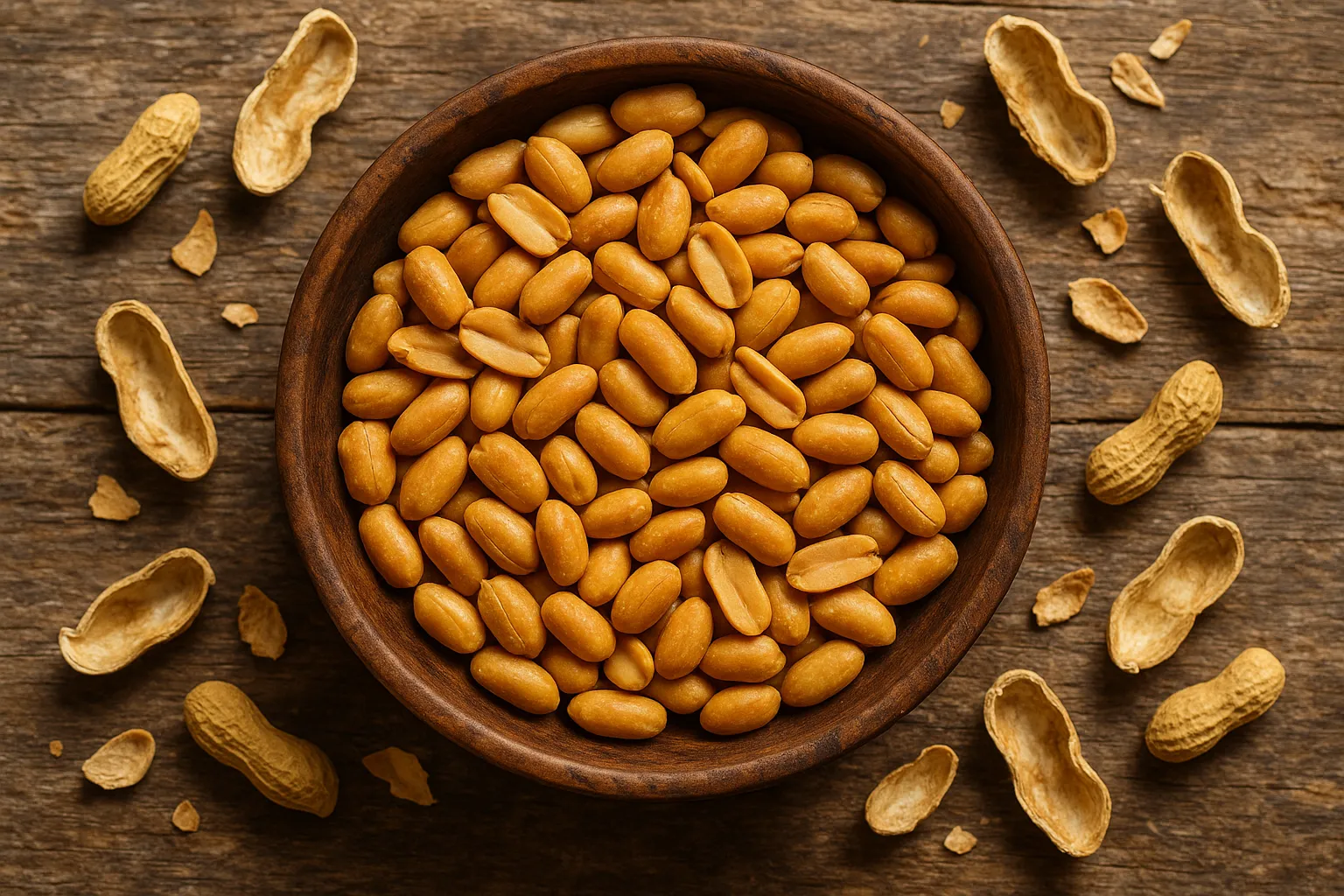
Quick Nutrition Facts
Per 1 oz / 28g (about 28 peanuts)
| Nutrient | Amount |
|---|---|
| Calories | 161 kcal |
| Protein | 7.3g |
| Carbohydrates | 4.6g |
| Fiber | 2.4g |
| Sugars | 1.3g |
| Fat | 14g |
| Magnesium | 48mg |
| Folate | 68mcg |
| Niacin (B3) | 3.4mg |
| Vitamin E | 2.4mg |
Macronutrient Breakdown
 ChatGPT
  Claude
  AI Mode
  Perplexity
NUTRITIONIST INSIGHT
Peanuts provide 7.3g of plant-based protein per ounce, rivaling many animal sources. The high content of heart-healthy monounsaturated fats and resveratrol—the same antioxidant found in red wine—supports cardiovascular health and longevity.
Myth Busters
MYTH #1: Peanuts Cause Weight Gain
TRUTH: Despite being calorie-dense (161 per oz), peanut consumption is associated with lower body weight. The protein and fiber promote satiety, reducing overall calorie intake. Studies show people who eat peanuts regularly maintain healthier weights.
MYTH #2: Peanuts Are Bad for Diabetics
TRUTH: Peanuts are excellent for diabetics with a glycemic index of just 14. Research shows peanuts improve blood sugar control and insulin sensitivity. The healthy fats and protein help stabilize glucose levels throughout the day.
MYTH #3: Peanuts Have Too Much Fat
TRUTH: Most fat in peanuts is heart-healthy monounsaturated and polyunsaturated fat. These fats lower bad cholesterol and reduce cardiovascular disease risk. The fat content actually helps nutrient absorption and provides sustained energy.
MYTH #4: Peanut Allergies Are Common
TRUTH: While serious, peanut allergies affect only 1-2% of the population. For the vast majority, peanuts are safe and nutritious. Early introduction (4-6 months) may actually reduce allergy risk in high-risk infants under medical supervision.
MYTH #5: All Peanuts Contain Aflatoxins
TRUTH: Modern agricultural practices and strict testing ensure commercial peanuts have negligible aflatoxin levels, well below safety limits. Proper storage in cool, dry places prevents mold growth. Quality brands follow rigorous safety protocols.
MYTH #6: Roasted Peanuts Are Unhealthy
TRUTH: Roasting actually increases antioxidant content. Dry-roasted peanuts without added oils are just as healthy as raw. The key is choosing unsalted varieties and avoiding those roasted in unhealthy oils.
NutriScore by Health Goals
| Health Goal | NutriScore | Why This Score? |
|---|---|---|
| Weight Loss |  | High protein and fiber promote fullness despite 161 calories per oz. Limit to 1 oz daily, choose unsalted. |
| Muscle Gain |  | Excellent plant protein (7.3g per oz), healthy fats for hormone production, magnesium for muscle function. |
| Diabetes Management | | Glycemic index of 14, improves insulin sensitivity, stabilizes blood sugar. Consume 1-2 oz daily. |
| PCOS Management | | Low GI helps insulin resistance, anti-inflammatory fats support hormone balance. Limit to 1 oz daily. |
| Pregnancy Nutrition | | Rich in folate (68mcg per oz) essential for fetal development, protein, and healthy fats. |
| Heart Health | | Monounsaturated fats, resveratrol, and phytosterols reduce cholesterol and cardiovascular disease risk. Consume 1-2 oz daily for optimal benefits. |
PERSONALIZED NUTRITION
Track your meals with NutriScan for personalized NutriScores based on your specific health goals!
Blood Sugar Response to Peanuts
Peanuts have one of the lowest glycemic indices among snack foods, making them ideal for blood sugar management.
Typical Glucose Response Curve
This chart shows minimal blood glucose response due to peanuts' very low GI (14). Individual responses may vary. Not medical advice.
Blood Sugar Benefits
Peanuts help stabilize blood glucose through multiple mechanisms:
- 🥜 Low Glycemic Index (14) - Minimal impact on blood sugar compared to most snacks
- 💪 High Protein & Healthy Fats - Slow carbohydrate absorption and extend satiety
- 🌾 Fiber Content - 2.4g fiber per oz improves glucose metabolism
- ⚡ When Added to High-GI Foods - Reduces overall glycemic response of the meal
Consuming 1-2 oz of peanuts with meals can significantly reduce blood sugar spikes from other carbohydrates.
Cultural Significance
Peanuts originated in South America over 7,600 years ago and have become a global dietary staple.
In India:
- Essential ingredient in South Indian cuisine (chutneys, gravies, sambar)
- Festival offering during Ganesh Chaturthi and Navratri
- Ayurveda recognizes peanuts for building strength and energy
- Major producer: Gujarat, Rajasthan, Tamil Nadu, Andhra Pradesh
Global Impact:
- 44+ million tons produced annually worldwide
- Primary protein source for millions in developing nations
- George Washington Carver identified 300+ uses beyond food
- Peanut butter: American staple invented in 1895, now global phenomenon
Compare & Substitute
Peanuts vs Similar Nuts & Legumes (Per 100g)
| Nutrient | 🥜 Peanuts | 🌰 Almonds | 🌰 Cashews | 🫘 Chickpeas (Roasted) |
|---|---|---|---|---|
| Calories | 567 kcal | 579 kcal | 553 kcal | 364 kcal |
| Carbs | 16g | 22g | 30g | 61g |
| Fiber | 8.5g | 12.5g | 3.3g | 12.5g |
| Protein | 26g | 21g | 18g | 19g |
| Fat | 49g | 50g | 44g | 6g |
| Magnesium | 168mg | 270mg | 292mg | 79mg |
| Folate | 240mcg | 44mcg | 25mcg | 180mcg |
| Vitamin E | 8.3mg | 25.6mg | 0.9mg | 0.4mg |
| Best For | High protein, low-GI snack | Vitamin E, weight loss, fiber | Creamy texture, copper, zinc | Lower fat, high fiber |
Frequently Asked Questions
Are peanuts good for weight loss?
Yes, peanuts support weight loss despite being calorie-dense at 161 calories per ounce. The 7.3g protein and 2.4g fiber promote satiety, reducing overall food intake; research shows regular peanut consumers maintain healthier body weights.
Best practices: Limit to 1-1.5 oz daily (28-42g), choose dry-roasted unsalted varieties, use as meal replacement or pre-workout snack, avoid sweetened or heavily salted versions.
Can diabetics eat peanuts?
Absolutely. Peanuts are among the best snacks for diabetics with a glycemic index of just 14. They improve blood sugar control, enhance insulin sensitivity, and reduce diabetes risk when consumed regularly.
Tips for diabetics: Eat 1-2 oz daily as snack or with meals, pair with vegetables or whole grains to further reduce meal GI, monitor blood sugar to find optimal portion, choose unsalted varieties to support blood pressure management.
How much protein is in peanuts?
One ounce (28g) of peanuts provides 7.3g of complete plant protein, containing all essential amino acids. While lysine content is slightly lower than animal proteins, peanuts rival many meat sources in total protein quality and digestibility.
For muscle gain or high-protein diets, consume 1.5-2 oz daily, combine with complementary proteins like whole grains or dairy for complete amino acid profile.
What are the main health benefits of peanuts?
Key Benefits:
- Heart Health: Monounsaturated fats and resveratrol reduce cardiovascular disease risk by 30%
- Blood Sugar Control: Very low GI (14) stabilizes glucose; improves insulin sensitivity
- Weight Management: High satiety prevents overeating despite calorie density
- Muscle Maintenance: 7.3g protein per oz supports lean mass and recovery
- Brain Function: Niacin and vitamin E support cognitive health and memory
- Pregnancy Support: Folate (68mcg per oz) essential for fetal neural development
Are roasted or raw peanuts healthier?
Both are healthy—choose based on preference. Raw peanuts retain heat-sensitive nutrients; roasted peanuts have higher antioxidant content and better digestibility.
Roasted advantages: Enhanced flavor, increased antioxidants, better nutrient bioavailability, improved digestibility. Raw advantages: Slightly higher folate, enzyme preservation, no added oils or sodium.
Recommendation: Choose dry-roasted over oil-roasted; avoid heavily salted varieties; both raw and roasted provide excellent nutrition when unsalted.
How many peanuts should I eat per day?
General Guidelines:
- 1 oz daily (28 peanuts, 161 cal) - Most people for heart health and nutrition
- 1-1.5 oz daily - Weight loss goals
- 1.5-2 oz daily - Muscle gain, pregnancy, active lifestyles
- 2-3 oz daily - Athletes or very high calorie needs
Avoid excess: More than 3 oz daily provides excessive calories (480+) and may cause digestive discomfort. Always choose unsalted varieties; monitor portions carefully as peanuts are easy to overeat.
Can I eat peanuts if I have high cholesterol?
Yes, peanuts actively improve cholesterol profiles. The monounsaturated and polyunsaturated fats lower LDL (bad cholesterol) while maintaining or raising HDL (good cholesterol); phytosterols in peanuts block cholesterol absorption.
Studies show 1.5-2 oz daily can reduce total cholesterol by 5-10%. Choose unsalted varieties, avoid honey-roasted or oil-roasted options, combine with other heart-healthy foods for maximum benefit.


Similar Nutritious Foods
4505 Chicharrones Classic Chili Salt
7 Eleven Japan Crispy Corn Cheese
Explore More Nutrition Tools & Resources
AI Calorie Counter App - Snap a Photo, Get Macros
AI Nutritionist App That Reads Your Logged Meals
Best Protein Supplements for Women
Bulking Meal Plan App That Sets Your Surplus
ChatGPT Calorie Counter Alternative That Keeps the Total
ChatGPT Diet Plan Alternative That Tracks What You Eat
ChatGPT Weight Loss Coach Alternative With a Food Log
Fast Food Calorie Counter App That Reads the Tray
Free Calorie Tracker App with AI Photo Scans | NutriScan
Indian Diet Plan App With Veg and Non Veg Meals
Indian Food Calorie Calculator - Get Instant Nutrition Facts for Desi Meals — 2026
Intermittent Fasting for Women, Timer and Meal Log App
Intermittent Fasting Tracker App - Free Fasting Timer
Macro Tracker App That Fills the Numbers From a Photo
Mediterranean Diet Meal Plan App That Counts the Oil
Micronutrient Tracker App for Vitamins and Minerals
MyFitnessPal Alternative That Stays Free | NutriScan
NutriScore App: A Free Grade on Every Meal | NutriScan
Nutrition Label Scanner App for the Amount You Ate
Second Trimester Protein Guide
Vegetarian Meal Plan App With a Protein Target
Voice Calorie Counter - Speak to Track Meals Hands-Free
Water and Calorie Tracker App - Free Water Log