Pelmeni: Calories, Nutrition and Health Benefits
Siberia's legendary meat dumplings: small, protein-packed pockets that have fueled Russian families through the coldest winters for centuries.
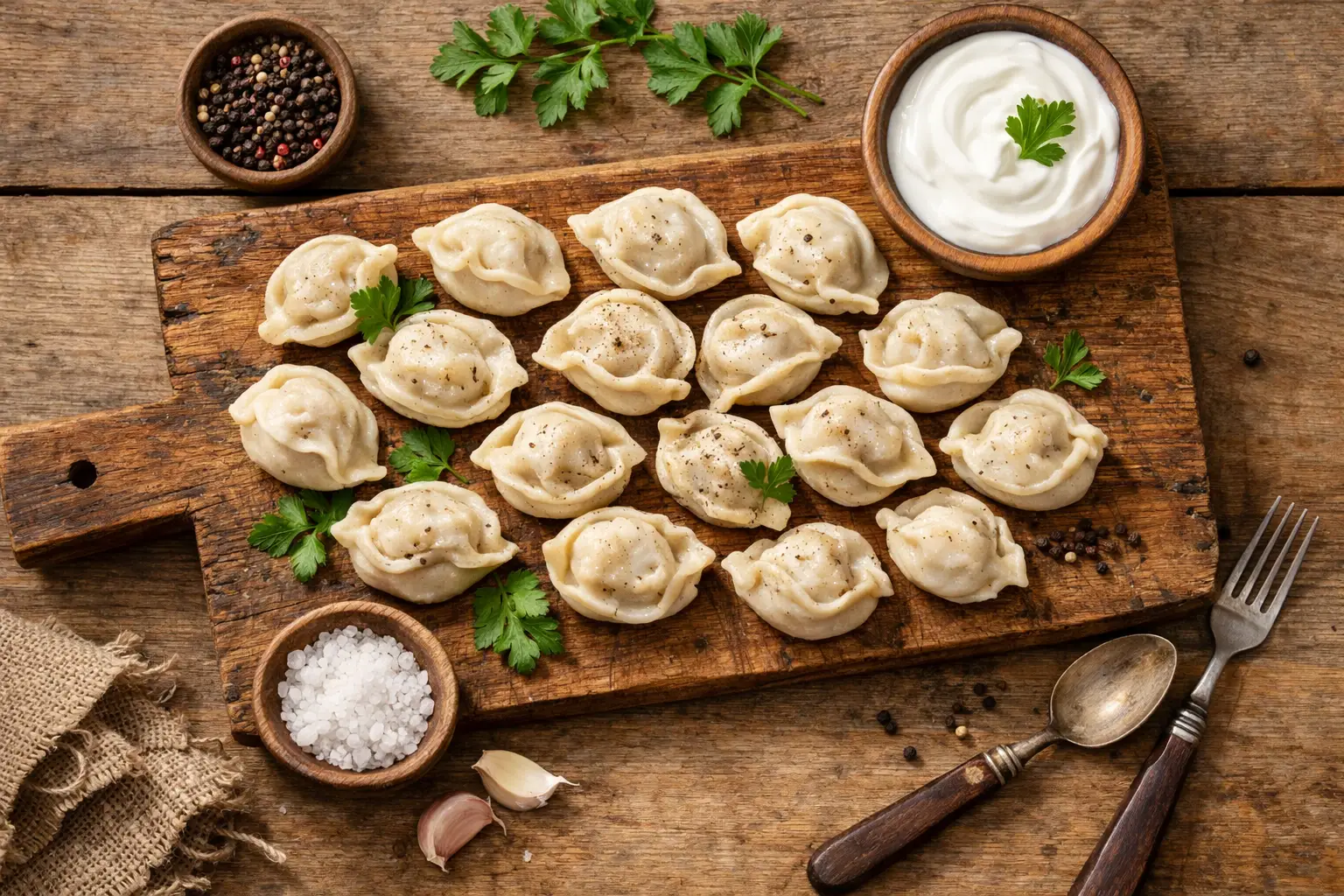
Quick Nutrition Facts
Per 6 Pelmeni (130g) - Beef & Pork
| Nutrient | Amount |
|---|---|
| Calories | 220 kcal |
| Protein | 12g |
| Carbohydrates | 22g |
| Fiber | 1g |
| Sugars | 1g |
| Fat | 10g |
| Saturated Fat | 4g |
| Sodium | 420mg |
| Iron | 2.5mg |
| Zinc | 3mg |
Macronutrient Breakdown
 ChatGPT
  Claude
  AI Mode
  Perplexity
NUTRITIONIST INSIGHT
Pelmeni are among the highest-protein dumplings with 12g per serving. The combination of beef and pork provides complete protein with all essential amino acids, plus iron (2.5mg) and zinc (3mg) for immunity.
Myth Busters
MYTH #1: Pelmeni Are Just Unhealthy Junk Food
TRUTH: Pelmeni provide 12g quality protein per serving—more than most comfort foods. When boiled (not fried) and served with vegetables, they're a balanced meal. Protein from meat supports muscle maintenance and satiety.
MYTH #2: You Can't Eat Pelmeni on a Diet
TRUTH: A 6-piece serving has 220 calories—comparable to a chicken sandwich. Portion control is key. Pair with a large salad for a filling 350-calorie meal that keeps you satisfied for hours.
MYTH #3: Frozen Pelmeni Are Less Nutritious
TRUTH: Freezing preserves nutrients effectively. Studies show frozen foods retain vitamins and minerals comparable to fresh. Frozen pelmeni are convenient without significant nutritional loss.
MYTH #4: Pelmeni Are Too High in Fat
TRUTH: A serving has 10g fat—40% of which comes from the protein-rich meat filling. Compare to a burger (15-25g fat) or fried chicken (20g+). Boiled pelmeni are relatively lean for a meat dish.
MYTH #5: Only Beef Pelmeni Are Traditional
TRUTH: Traditional Siberian pelmeni use a mix of beef, pork, and sometimes lamb. This combination creates the authentic flavor and provides a complete amino acid profile. Single-meat versions are variations, not the original.
NutriScore by Health Goals
| Health Goal | NutriScore | Why This Score? |
|---|---|---|
| Weight Loss |  | Moderate calories (220/6 pieces), high protein keeps you full. Limit to 6-8 pieces, add vegetables. |
| Muscle Gain |  | Excellent protein source (12g). Complete amino acids from meat. Perfect post-workout meal with carbs for recovery. |
| Diabetes Management | | Lower carbs than other dumplings (22g). High protein slows glucose absorption. Limit to 6 pieces, skip sour cream. |
| PCOS Management | | Protein-focused, lower carb than pierogi. Moderate portions support blood sugar control. |
| Pregnancy Nutrition |  | Iron (2.5mg) and zinc (3mg) support fetal development. Ensure meat is fully cooked. |
| Viral/Flu Recovery | | Protein and zinc support immune function. Served in broth provides hydration. Traditional sick-day comfort food. |
PERSONALIZED NUTRITION
Track your pelmeni portions with NutriScan for personalized NutriScores based on your specific health goals!
Blood Sugar Response to Pelmeni
Understanding how pelmeni affect your blood glucose can help you make informed decisions about portions and pairings.
Typical Glucose Response Curve
This chart shows typical blood glucose response for general healthy individuals. Individual responses may vary. Not medical advice.
How to Flatten the Spike
The high protein content in pelmeni already moderates glucose response. Further improvements:
- 🥒 Pickled vegetables - Traditional Russian pairing, adds fiber and probiotics
- 🥗 Fresh vegetable salad - Fiber slows absorption
- 🍵 Serving in broth - Adds liquid, slows eating pace
- 🥬 Sauerkraut on the side - Fermented cabbage aids digestion
Pelmeni have a moderate glycemic response due to their high protein and fat content.
Cultural Significance
Pelmeni are Siberia's gift to Russian cuisine—a survival food that became a national treasure.
Origins & History:
- Originated in Siberia, possibly influenced by Chinese jiaozi via Mongol trade routes
- Name comes from Finno-Ugric languages: "pel" (ear) + "nyan" (bread) = "bread ears"
- Traditionally made in large batches and frozen in snow—nature's freezer
- Siberian families would make thousands before winter
In Russian Culture:
- Symbol of home cooking and family gatherings
- Making pelmeni together is a traditional bonding activity
- Every region has signature variations (Ural, Siberian, Udmurt)
- Often served on New Year's Eve with a lucky pelmeni containing a coin
Traditional Preparation:
- Thin dough rolled by hand
- Filling of beef, pork, and/or lamb with onion
- Traditionally frozen outdoors in winter
- Boiled and served with sour cream, butter, or vinegar
Compare & Substitute
Pelmeni vs Similar Dumplings (Per Serving)
| Nutrient | 🥟 Pelmeni (6 pcs) | 🥟 Pierogi (3 pcs) | 🥟 Manti (3 pcs) | 🥟 Gyoza (5 pcs) |
|---|---|---|---|---|
| Calories | 220 kcal | 210 kcal | 250 kcal | 230 kcal |
| Carbs | 22g | 34g | 28g | 25g |
| Fiber | 1g | 2g | 2g | 1g |
| Protein | 12g | 7g | 14g | 10g |
| Fat | 10g | 5g | 10g | 10g |
| Sodium | 420mg | 380mg | 380mg | 400mg |
| Best For | Highest protein, meat lovers | Vegetarian options, lower fat | Central Asian flavors | Asian flavors, pan-fried |
Frequently Asked Questions
How many calories are in pelmeni?
A serving of 6 pelmeni contains approximately 220 calories. Each individual pelmeni has about 35-40 calories.
Portion awareness:
- 6 pelmeni (appetizer): 220 calories
- 12 pelmeni (typical meal): 440 calories
- 20 pelmeni (restaurant portion): 730 calories
Are pelmeni healthy?
Pelmeni can be part of a healthy diet with these considerations:
Nutritional benefits:
- High protein (12g per serving)
- Iron and zinc from meat
- Complete amino acids
- Satisfying and portion-controlled
Healthiest practices:
- Boil instead of fry
- Limit to 8-10 pieces per meal
- Pair with vegetables or salad
- Use minimal sour cream
What is the difference between pelmeni and pierogi?
| Feature | Pelmeni | Pierogi |
|---|---|---|
| Origin | Siberia/Russia | Poland/Ukraine |
| Size | Small (bite-sized) | Larger |
| Filling | Always meat | Various (potato, cheese, fruit) |
| Shape | Round, ear-shaped | Half-moon, crimped edge |
| Protein | Higher (12g) | Lower (7g) |
| Tradition | Frozen for winter | Fresh or frozen |
Can diabetics eat pelmeni?
Diabetics can eat pelmeni in moderation:
Why they can work:
- Lower carbs than pierogi (22g vs 34g)
- High protein slows glucose absorption
- Fat content moderates blood sugar spike
Tips for diabetics:
- Limit to 6-8 pieces per meal
- Skip or minimize sour cream
- Pair with non-starchy vegetables
- Monitor blood sugar response
- Choose boiled over fried
How much protein is in pelmeni?
A serving of 6 pelmeni provides 12g of protein—one of the highest among dumplings.
Protein sources:
- Ground beef: 6-7g
- Ground pork: 4-5g
- Wheat dough: 1-2g
This makes pelmeni suitable for muscle building and high-protein diets.
What are pelmeni made of?
Traditional ingredients:
Dough:
- Wheat flour
- Eggs
- Water
- Salt
Filling:
- Ground beef (primary)
- Ground pork (adds juiciness)
- Onion (finely minced)
- Garlic
- Black pepper
- Salt
Regional variations:
- Siberian: beef, pork, and lamb mix
- Ural: more onion, sometimes horse meat
- Udmurt: with game meat
How do you cook frozen pelmeni?
Boiling (traditional):
- Bring salted water to rolling boil
- Add frozen pelmeni (don't thaw)
- Stir gently to prevent sticking
- Cook 8-10 minutes until they float
- Drain and serve with sour cream
In broth:
- Bring chicken or beef broth to boil
- Add frozen pelmeni
- Cook 10 minutes
- Serve in broth with fresh dill
Are pelmeni safe during pregnancy?
Yes, pelmeni are safe during pregnancy when properly cooked:
Benefits:
- Iron prevents anemia
- Protein supports fetal growth
- Zinc supports immunity
Safety tips:
- Ensure meat is thoroughly cooked (internal temp 165°F/74°C)
- Avoid undercooked pelmeni
- Moderate portions due to sodium
- Choose quality meat sources


Similar Nutritious Foods
4505 Chicharrones Classic Chili Salt
7 Eleven Japan Crispy Corn Cheese
Explore More Nutrition Tools & Resources
AI Calorie Counter App - Snap a Photo, Get Macros
AI Nutritionist App That Reads Your Logged Meals
Best Protein Supplements for Women
Bulking Meal Plan App That Sets Your Surplus
ChatGPT Calorie Counter Alternative That Keeps the Total
ChatGPT Diet Plan Alternative That Tracks What You Eat
ChatGPT Weight Loss Coach Alternative With a Food Log
Fast Food Calorie Counter App That Reads the Tray
Free Calorie Tracker App with AI Photo Scans | NutriScan
Indian Diet Plan App With Veg and Non Veg Meals
Indian Food Calorie Calculator - Get Instant Nutrition Facts for Desi Meals — 2026
Intermittent Fasting for Women, Timer and Meal Log App
Intermittent Fasting Tracker App - Free Fasting Timer
Macro Tracker App That Fills the Numbers From a Photo
Mediterranean Diet Meal Plan App That Counts the Oil
Micronutrient Tracker App for Vitamins and Minerals
MyFitnessPal Alternative That Stays Free | NutriScan
NutriScore App: A Free Grade on Every Meal | NutriScan
Nutrition Label Scanner App for the Amount You Ate
Second Trimester Protein Guide
Vegetarian Meal Plan App With a Protein Target
Voice Calorie Counter - Speak to Track Meals Hands-Free
Water and Calorie Tracker App - Free Water Log