Pepitas (Pumpkin Seeds): Calories, Nutrition and Health Benefits
A nutrient-dense superfood seed packed with 30g protein per 100g, exceptional magnesium, zinc, and iron for every health goal.
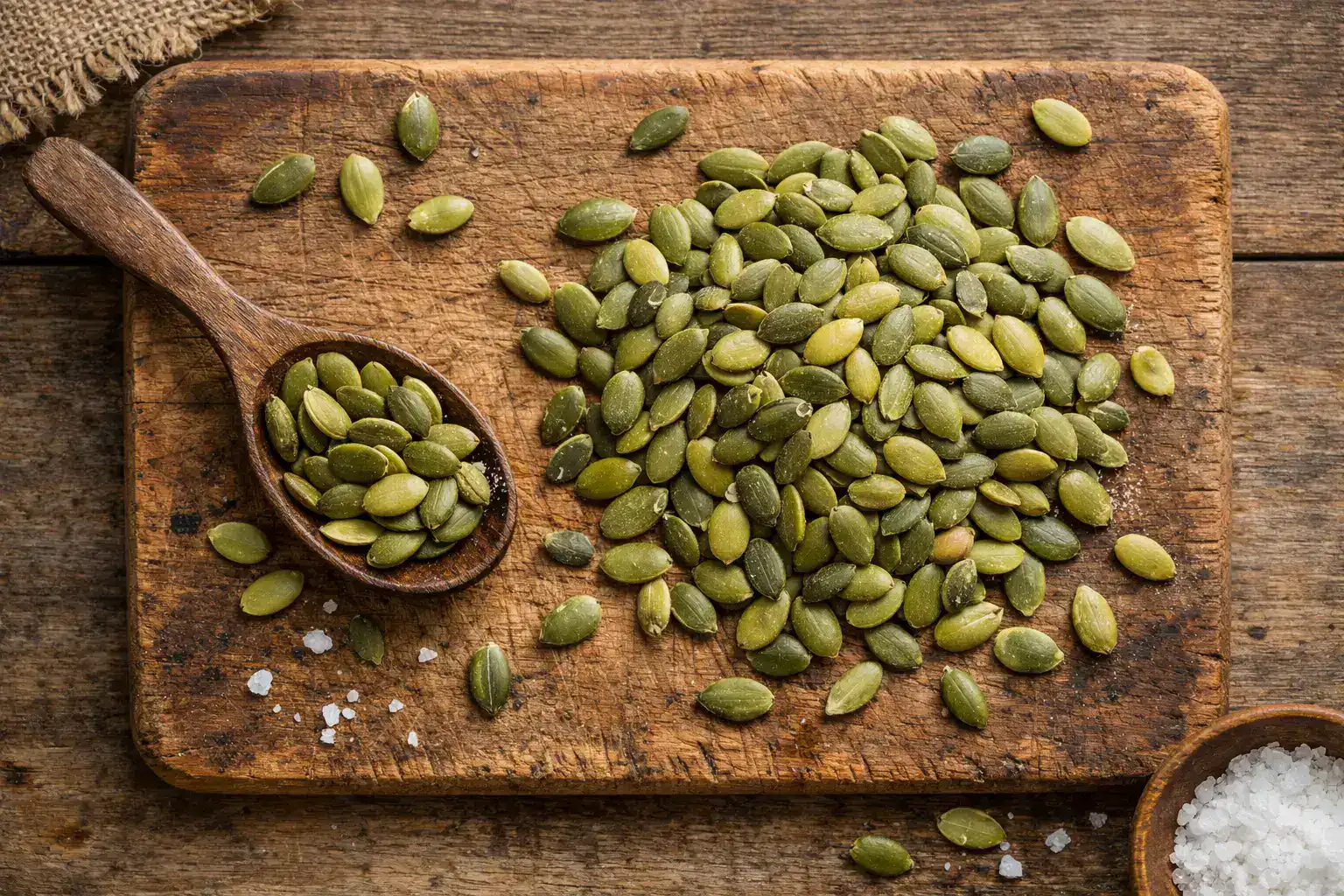
Quick Nutrition Facts
Per 1 oz / 28g (about 85 seeds)
| Nutrient | Amount |
|---|---|
| Calories | 163 kcal |
| Protein | 8.5g |
| Carbohydrates | 4g |
| Fiber | 1.7g |
| Sugars | 0.3g |
| Fat | 14g |
| Magnesium | 156mg |
| Zinc | 2.2mg |
| Iron | 2.5mg |
| Phosphorus | 332mg |
Macronutrient Breakdown
 ChatGPT
  Claude
  AI Mode
  Perplexity
NUTRITIONIST INSIGHT
Pepitas are one of the richest plant sources of magnesium (156mg per oz, 37% DV) and zinc (2.2mg per oz, 20% DV). Their exceptional protein-to-carb ratio makes them ideal for blood sugar control and muscle recovery.
Pepitas Nutrition Facts Per Ounce and Per 100 g
The quick facts table above is a 1 oz (28 g) serving, the standard portion for nuts and seeds. Most pepitas nutrition searches want the per 100 g column too, so here are both side by side.
| Nutrient | Per 1 oz (28 g) | Per 100 g |
|---|---|---|
| Calories | 163 kcal | 574 kcal |
| Protein | 8.5 g | 29.8 g |
| Carbohydrates | 4 g | 14.7 g |
| Sugars | 0.3 g | 1.1 g |
| Fiber | 1.7 g | 6.5 g |
| Fat | 14 g | 49 g |
| Sodium | 5 mg | 18 mg |
| Magnesium | 156 mg | 550 mg |
| Zinc | 2.2 mg | 7.6 mg |
| Iron | 2.5 mg | 8.1 mg |
Per 100 g figures are USDA FoodData Central values for roasted, unsalted pumpkin seed kernels.
Fat does almost all the work in that calorie count. The 49 g of fat per 100 g, about three quarters of it unsaturated, supplies roughly 440 of the 574 calories. That is why portion size swings the total so hard: one small handful is 163 calories, the same seeds weighed out at 100 g are 574.
Pepitas vs two close seeds, per 1 oz (28 g)
| Per 1 oz (28 g) | Pepitas | Sunflower seeds | Chia seeds |
|---|---|---|---|
| Calories | 163 kcal | 165 kcal | 138 kcal |
| Protein | 8.5 g | 5.5 g | 4.7 g |
| Fiber | 1.7 g | 3.2 g | 9.8 g |
Pepitas lead on protein and on magnesium, where one ounce covers close to 40 percent of a day's target. Chia wins fiber outright, so the two work better together on a bowl than either does alone.
Myth Busters
MYTH #1: Pepitas Are Too High in Fat to Be Healthy
TRUTH: The 14g fat per oz is predominantly unsaturated — including heart-healthy omega-6 and omega-9 fatty acids. Studies show these fats improve cholesterol profiles and reduce cardiovascular risk. Portion control (1 oz/day) keeps calories reasonable at 163 kcal.
MYTH #2: Pepitas Don't Have Enough Protein to Matter
TRUTH: At 30g protein per 100g, pepitas are among the highest-protein seeds available — higher than almonds (21g), flaxseeds (18g), and chia seeds (17g). They provide all essential amino acids, making them valuable for plant-based diets.
MYTH #3: Diabetics Should Avoid Seeds Because of Fat Content
TRUTH: Pepitas have a very low glycemic index (~10-15). A randomized clinical trial found that pumpkin seeds significantly reduced postprandial blood glucose by ~35%. Their magnesium content also improves insulin sensitivity.
MYTH #4: You Need to Eat Huge Amounts to Get Benefits
TRUTH: Just 1 oz (28g) provides 37% DV magnesium, 20% DV zinc, 14% DV iron, and 8.5g protein. Small daily portions deliver significant nutrition without excess calories.
MYTH #5: Roasted Seeds Lose All Their Nutrition
TRUTH: While light roasting reduces some heat-sensitive nutrients like vitamin E, the core minerals (magnesium, zinc, iron, phosphorus) remain stable through roasting. Dry-roasted at moderate temperatures preserves most benefits.
NutriScore by Health Goals
| Health Goal | NutriScore | Why This Score? |
|---|---|---|
| Weight Loss |  | 163 cal/oz with 8.5g protein and 1.7g fiber promotes satiety. Calorie-dense, so portion control is key — stick to 1 oz/day. |
| Muscle Gain |  | 30g protein per 100g, complete amino acid profile, 156mg magnesium for muscle recovery and cramp prevention. |
| Diabetes Management | | Very low GI (~10-15), pumpkin seeds reduce postprandial glycemia by ~35%. High magnesium improves insulin sensitivity. |
| PCOS Management | | Zinc supports hormone balance, magnesium aids insulin resistance. Anti-inflammatory fats may help manage symptoms. Limit to 1 oz daily. |
| Pregnancy Nutrition | | Rich in iron (2.5mg/oz), folate, zinc for fetal development. Seeds are recommended protein sources during pregnancy. Magnesium helps prevent leg cramps. |
| Viral/Flu Recovery | | 2.2mg zinc per oz supports immune function, protein for tissue repair, iron for oxygen transport during recovery. |
PERSONALIZED NUTRITION
Track your meals with NutriScan for personalized NutriScores based on your specific health goals!
Blood Sugar Response to Pepitas
Understanding how pepitas affect your blood glucose can help you make informed decisions about when and how to eat them.
Typical Glucose Response Curve
This chart shows typical blood glucose response for general healthy individuals. Individual responses may vary. Not medical advice.
How to Flatten the Spike
Pepitas already have a minimal blood sugar impact due to their high fat and protein content. To further optimize:
- 🥗 Add to salads - Combine with leafy greens and olive oil for a balanced meal
- 🥣 Mix into oatmeal or yogurt - Adds protein and healthy fats to carb-rich foods
- 🍞 Sprinkle on whole-grain toast - Fiber + protein combination slows digestion
- 🥤 Blend into smoothies - Adds creaminess and stabilizes blood sugar from fruit sugars
This combination not only maintains stable glucose levels but also extends energy release, keeping you fuller for longer.
Cultural Significance
Pepitas have been cultivated in the Americas for over 7,000 years, originating in Mesoamerica where they were prized by Aztec and Mayan civilizations.
In Mexico & Central America:
- "Pepita" means "little seed" in Spanish — the name used for hulled pumpkin seeds
- Key ingredient in mole verde, pipián sauce, and traditional salsas
- Used in Day of the Dead celebrations and harvest festivals
- Ancient Aztecs valued them for medicinal and nutritional purposes
In India:
- Known as "kaddu ke beej" — gaining popularity as a superfood snack
- Used in Ayurvedic medicine for prostate health and sleep improvement
- Added to laddoos, chikkis, and trail mixes
- Growing commercial cultivation in Rajasthan and Maharashtra
Global Impact:
- China is the world's largest producer (~8 million tonnes annually)
- Used in Austrian, German, and Slovenian cuisines (Styrian pumpkin seed oil)
- Growing demand in plant-based protein market worldwide
Compare & Substitute
Pepitas vs Similar Seeds & Nuts (Per 100g)
| Nutrient | 🎃 Pepitas | 🌻 Sunflower Seeds | 🥜 Almonds | 🌿 Chia Seeds |
|---|---|---|---|---|
| Calories | 559 kcal | 584 kcal | 579 kcal | 486 kcal |
| Carbs | 15g | 20g | 22g | 42g |
| Fiber | 6g | 8.6g | 12.5g | 34g |
| Protein | 30g | 21g | 21g | 17g |
| Fat | 49g | 51g | 50g | 31g |
| Magnesium | 550mg | 325mg | 270mg | 335mg |
| Zinc | 7.8mg | 5mg | 3.1mg | 4.6mg |
| Iron | 8.8mg | 5.3mg | 3.7mg | 7.7mg |
| Best For | Protein, magnesium, prostate | Vitamin E, selenium, heart | Vitamin E, calcium, snacking | Omega-3, fiber, hydration |
Frequently Asked Questions
Are pepitas good for weight loss?
Pepitas can support weight loss when eaten in controlled portions. A 1 oz (28g) serving provides 163 calories, 8.5g protein, and 1.7g fiber — promoting satiety and preserving muscle mass during calorie restriction.
Best practices: Limit to 1 oz per day, choose raw or dry-roasted unsalted, add to salads or yogurt instead of eating handfuls, avoid oil-roasted or heavily salted varieties.
Can diabetics eat pepitas?
Yes, pepitas are excellent for diabetics. They have a very low glycemic index (~10-15) and research shows they significantly reduce postprandial blood glucose.
Tips for diabetics:
- Choose unsalted, raw or dry-roasted varieties
- 1-2 oz daily provides optimal magnesium for insulin sensitivity
- Add to meals as a protein and healthy fat source
- Monitor portion sizes due to calorie density
Their high magnesium content (37% DV per oz) directly supports insulin function. Always consult your healthcare provider.
How much protein is in pepitas?
Pepitas contain 30g protein per 100g — making them one of the most protein-rich seeds available. A 1 oz (28g) serving provides 8.5g protein.
For muscle gain or plant-based diets, combine pepitas with complementary proteins like legumes, whole grains, or dairy for a complete amino acid profile.
What are the main health benefits of pepitas?
Key Benefits:
- Heart Health: Magnesium (550mg/100g) and unsaturated fats support cardiovascular function
- Immune Support: Zinc (7.8mg/100g) is essential for immune cell development
- Blood Health: Iron (8.8mg/100g) prevents anemia and supports oxygen transport
- Sleep Quality: Tryptophan content promotes serotonin and melatonin production
- Prostate Health: Studies show benefits for urinary tract symptoms in men
- Bone Health: Magnesium, phosphorus, and zinc support bone mineral density
How many pepitas should I eat per day?
General Guidelines:
- 1 oz (28g) daily - Most adults (163 calories, 37% DV magnesium)
- 1/2 oz (14g) daily - Weight loss or calorie-restricted diets
- 1-2 oz (28-56g) daily - Athletes, muscle gain, pregnancy
Avoid excess: More than 3 oz per day can provide excess calories (489 kcal) and may cause digestive discomfort from high fiber and fat.
Track your meals with NutriScan app to see how pepitas fit your personal nutrition goals.
Are raw or roasted pepitas healthier?
Both have unique benefits — choose based on your priorities:
Raw Pepitas:
- Higher vitamin E and heat-sensitive antioxidants
- More phytic acid (may reduce mineral absorption)
- Slightly harder to digest
- Best for maximum nutrient retention
Roasted Pepitas:
- Easier to digest with nuttier flavor
- Reduced phytic acid improves mineral absorption
- Stable core minerals (magnesium, zinc, iron)
- Better for sensitive stomachs
Recommendation: Raw for nutrient density. Dry-roasted at low temperature for digestibility. Avoid oil-roasted or heavily salted.
Can I eat pepitas on an empty stomach?
Generally safe for most people — pepitas are gentle on the stomach and provide sustained energy from protein and healthy fats.
May want to limit if you have:
- IBS/Digestive sensitivity: Start with a small amount (1 tablespoon)
- Nut/Seed allergies: Cross-reactivity possible with other Cucurbitaceae
- Kidney stones: High oxalate content may be a concern
Better approach: Pair with carbs (toast, fruit, oatmeal) for a balanced snack that provides quick and sustained energy.
What are pepitas nutrition facts per ounce?
One ounce (28 g) of roasted, unsalted pepitas has 163 calories, 8.5 g protein, 4 g carbohydrate, 1.7 g fiber, 14 g fat, 156 mg magnesium and 2.2 mg zinc. Scaled to 100 g that becomes 574 calories and 29.8 g protein. The 1 oz column is the serving on most packs, so match the label before you log it.


Similar Nutritious Foods
4505 Chicharrones Classic Chili Salt
7 Eleven Japan Crispy Corn Cheese
Explore More Nutrition Tools & Resources
AI Calorie Counter App - Snap a Photo, Get Macros
AI Nutritionist App That Reads Your Logged Meals
Best Protein Supplements for Women
Bulking Meal Plan App That Sets Your Surplus
ChatGPT Calorie Counter Alternative That Keeps the Total
ChatGPT Diet Plan Alternative That Tracks What You Eat
ChatGPT Weight Loss Coach Alternative With a Food Log
Fast Food Calorie Counter App That Reads the Tray
Free Calorie Tracker App with AI Photo Scans | NutriScan
Indian Diet Plan App With Veg and Non Veg Meals
Indian Food Calorie Calculator - Get Instant Nutrition Facts for Desi Meals — 2026
Intermittent Fasting for Women, Timer and Meal Log App
Intermittent Fasting Tracker App - Free Fasting Timer
Macro Tracker App That Fills the Numbers From a Photo
Mediterranean Diet Meal Plan App That Counts the Oil
Micronutrient Tracker App for Vitamins and Minerals
MyFitnessPal Alternative That Stays Free | NutriScan
NutriScore App: A Free Grade on Every Meal | NutriScan
Nutrition Label Scanner App for the Amount You Ate
Second Trimester Protein Guide
Vegetarian Meal Plan App With a Protein Target
Voice Calorie Counter - Speak to Track Meals Hands-Free
Water and Calorie Tracker App - Free Water Log