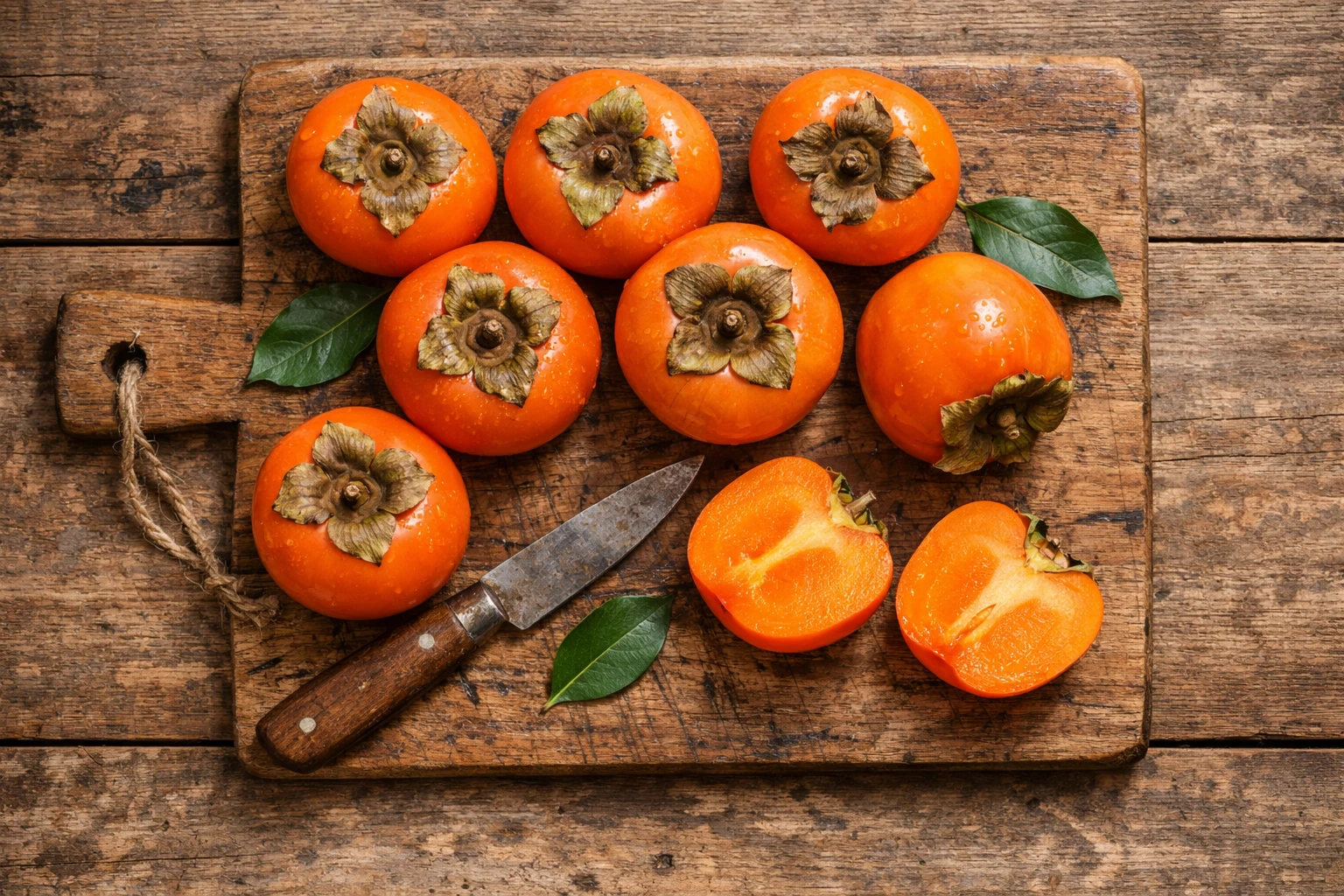
Persimmon: Calories, Nutrition and Health Benefits
A sweet winter fruit packed with vitamin A, fiber, and powerful antioxidants for seasonal immune support.
Quick Nutrition Facts
Per 100g Raw Persimmon
| Nutrient | Amount |
|---|---|
| Calories | 70 kcal |
| Protein | 0.6g |
| Carbohydrates | 18.6g |
| Fiber | 3.6g |
| Sugars | 12.5g |
| Fat | 0.2g |
| Vitamin A | 80mcg |
| Vitamin C | 7.5mg |
| Potassium | 161mg |
| Manganese | 0.36mg |
Macronutrient Breakdown
 ChatGPT
  Claude
  AI Mode
  Perplexity
NUTRITIONIST INSIGHT
Persimmons provide 55% of daily vitamin A needs per fruit. The orange pigment comes from beta-carotene and beta-cryptoxanthin, powerful antioxidants that support eye health and immunity during winter months.
Myth Busters
MYTH #1: Persimmons Are Too High in Sugar for Healthy Eating
TRUTH: While persimmons contain 12.5g natural sugars per 100g, they also provide 3.6g fiber that slows sugar absorption. The tannins in persimmons inhibit digestive enzymes, helping moderate blood sugar response.
MYTH #2: You Can Eat Any Persimmon Like an Apple
TRUTH: Only Fuyu (non-astringent) persimmons can be eaten firm. Hachiya persimmons must be fully ripe and soft, or the high tannin content causes extreme mouth-puckering astringency.
MYTH #3: Persimmons Cause Stomach Problems
TRUTH: Ripe persimmons are easily digestible. Stomach issues occur only from eating large amounts of unripe persimmons on an empty stomach, which can form bezoars (fiber masses) in rare cases.
MYTH #4: Persimmons Have No Nutritional Value
TRUTH: Persimmons are nutrient-dense with 80mcg vitamin A (eye health), 7.5mg vitamin C (immunity), and carotenoids that improve insulin sensitivity in research studies.
MYTH #5: Diabetics Must Avoid Persimmons Completely
TRUTH: Diabetics can enjoy persimmons in moderation. Persimmon leaf extracts show antidiabetic effects by inhibiting alpha-glucosidase. Eat half portions paired with protein to minimize blood sugar spikes.
NutriScore by Health Goals
| Health Goal | NutriScore | Why This Score? |
|---|---|---|
| Weight Loss |  | 70 calories/100g, 3.6g fiber promotes fullness, natural sweetness satisfies cravings. Limit to 1 per day. |
| Muscle Gain |  | Good carbs (18.6g) for energy, but low protein. Pair with Greek yogurt or nuts for complete nutrition. |
| Diabetes Management | | Moderate-high GI (50-70). Choose less ripe fruit, eat half portions, pair with protein to reduce glucose spike. |
| PCOS Management | | Natural sugars affect insulin. Limit to 1/2 persimmon daily, pair with healthy fats. |
| Pregnancy Nutrition |  | Rich in vitamin A (55% DV) essential for fetal development, fiber prevents constipation, potassium supports circulation. |
| Viral/Flu Recovery | | Vitamin C for immunity, easy to digest, antioxidants reduce inflammation, natural energy when appetite is low. |
PERSONALIZED NUTRITION
Track your meals with NutriScan for personalized NutriScores based on your specific health goals!
Blood Sugar Response to Persimmon
Understanding how persimmons affect your blood glucose can help you make informed decisions about when and how to eat them.
Typical Glucose Response Curve
*This chart shows typical blood glucose response for general healthy individuals. Individual responses may vary. Not medical advice.*
How to Flatten the Spike
Pairing persimmon with protein or healthy fat slows glucose absorption and reduces the peak blood sugar level:
- 🥜 Almond butter or walnuts - Adds healthy fats and protein
- 🧀 Cheese or cottage cheese - Provides protein and slows digestion
- 🥛 Greek yogurt - Complete protein source with probiotics
- 🌰 A handful of pecans - Healthy fats and fiber
This combination not only reduces the glucose spike but also extends energy release, keeping you fuller for longer.
Cultural Significance
Persimmons have been cultivated for over 2,000 years, originating in China and spreading throughout East Asia.
In East Asia:
- Japan's national fruit, with over 1,000 cultivated varieties
- Symbol of autumn and good fortune in Chinese culture
- Dried persimmons (hoshigaki) are traditional Japanese delicacies
- Used in traditional medicine for coughs and digestive ailments
Global Varieties:
- Fuyu: Squat, non-astringent, eaten firm like apples
- Hachiya: Acorn-shaped, astringent until fully ripe
- Sharon Fruit: Israeli variety, seedless, can be eaten firm
- American Persimmon: Smaller, native to eastern US
Modern Uses:
- Fresh eating, salads, and baking
- Dried as healthy snacks
- Persimmon vinegar and wine in Korea
- Leaves used for tea with potential health benefits
Compare & Substitute
Persimmon vs Similar Fruits (Per 100g)
| Nutrient | 🍊 Persimmon | 🥭 Mango | 🍑 Peach | 🍐 Pear |
|---|---|---|---|---|
| Calories | 70 kcal | 60 kcal | 39 kcal | 57 kcal |
| Carbs | 18.6g | 15g | 10g | 15g |
| Fiber | 3.6g | 1.6g | 1.5g | 3.1g |
| Protein | 0.6g | 0.8g | 0.9g | 0.4g |
| Fat | 0.2g | 0.4g | 0.3g | 0.1g |
| Vitamin A | 80mcg | 54mcg | 16mcg | 1mcg |
| Sugar | 12.5g | 14g | 8g | 10g |
| Vitamin C | 7.5mg | 36mg | 6.6mg | 4.3mg |
| Best For | Vitamin A, fiber, antioxidants | Vitamin C, tropical flavor | Low calorie, summer snacking | Fiber, gentle digestion |
Frequently Asked Questions
Are persimmons good for weight loss?
Yes, persimmons support weight loss at only 70 calories per 100g with 3.6g fiber. The natural sweetness satisfies cravings while the fiber keeps you full longer.
Best practices: Limit to 1 persimmon per day, choose Fuyu variety for easier portioning, eat as afternoon snack, combine with nuts for sustained energy.
Can diabetics eat persimmons?
Diabetics can eat persimmons in moderation. The GI ranges 50-70 depending on ripeness; less ripe = lower GI.
Tips for diabetics:
- Eat half a persimmon at a time
- Always pair with protein or healthy fat
- Best timing: mid-morning or afternoon, not on empty stomach
- Monitor blood sugar 2 hours after eating
Research shows persimmon tannins may inhibit digestive enzymes, potentially moderating blood sugar response.
What vitamins are in persimmons?
A medium persimmon provides: vitamin A (55% DV) for eye health; vitamin C (13% DV) for immunity; manganese (16% DV) for metabolism; potassium (5% DV) for heart health.
The orange color indicates high beta-carotene and beta-cryptoxanthin content, both powerful antioxidants.
What are the main health benefits of persimmons?
Key Benefits:
- Eye Health: 80mcg vitamin A (55% DV) from beta-carotene
- Digestive Health: 3.6g fiber supports regular bowel movements
- Immune Support: Vitamin C and antioxidants boost winter immunity
- Heart Health: Potassium and fiber support cardiovascular function
- Anti-inflammatory: Tannins and carotenoids reduce inflammation
- Blood Sugar Support: Tannins may help moderate glucose response
What is the difference between Fuyu and Hachiya persimmons?
Fuyu Persimmons:
- Squat, tomato-shaped
- Non-astringent; can eat when firm
- Crunchy texture like apples
- Sweeter, milder flavor
Hachiya Persimmons:
- Acorn-shaped, pointed bottom
- Astringent until fully ripe
- Must be jelly-soft before eating
- Richer, more complex honey-like flavor
Tip: If your persimmon puckers your mouth, it's a Hachiya that isn't ripe yet. Ripen at room temperature until very soft.
How many persimmons should I eat per day?
General Guidelines:
- 1 medium persimmon daily - Most people (118 calories, 55% vitamin A)
- 1/2 persimmon daily - Diabetes, PCOS, or low-carb diets
- 1-2 persimmons daily - Athletes, children, pregnancy
Note: Persimmons are seasonal (October-February); enjoy them during peak season for best flavor and nutrition.




Similar Nutritious Fruits
4505 Chicharrones Classic Chili Salt
7 Eleven Japan Crispy Corn Cheese
Explore More Nutrition Tools & Resources
AI Calorie Counter App - Snap a Photo, Get Macros
AI Nutritionist App That Reads Your Logged Meals
Best Protein Supplements for Women
Bulking Meal Plan App That Sets Your Surplus
ChatGPT Calorie Counter Alternative That Keeps the Total
ChatGPT Diet Plan Alternative That Tracks What You Eat
ChatGPT Weight Loss Coach Alternative With a Food Log
Fast Food Calorie Counter App That Reads the Tray
Free Calorie Tracker App with AI Photo Scans | NutriScan
Indian Diet Plan App With Veg and Non Veg Meals
Indian Food Calorie Calculator - Get Instant Nutrition Facts for Desi Meals — 2026
Intermittent Fasting for Women, Timer and Meal Log App
Intermittent Fasting Tracker App - Free Fasting Timer
Macro Tracker App That Fills the Numbers From a Photo
Mediterranean Diet Meal Plan App That Counts the Oil
Micronutrient Tracker App for Vitamins and Minerals
MyFitnessPal Alternative That Stays Free | NutriScan
NutriScore App: A Free Grade on Every Meal | NutriScan
Nutrition Label Scanner App for the Amount You Ate
Second Trimester Protein Guide
Vegetarian Meal Plan App With a Protein Target
Voice Calorie Counter - Speak to Track Meals Hands-Free
Water and Calorie Tracker App - Free Water Log