Pho Bo: Calories, Nutrition and Health Benefits
Vietnam's national treasure: aromatic beef bone broth with rice noodles, fresh herbs, and tender beef slices for balanced nutrition.
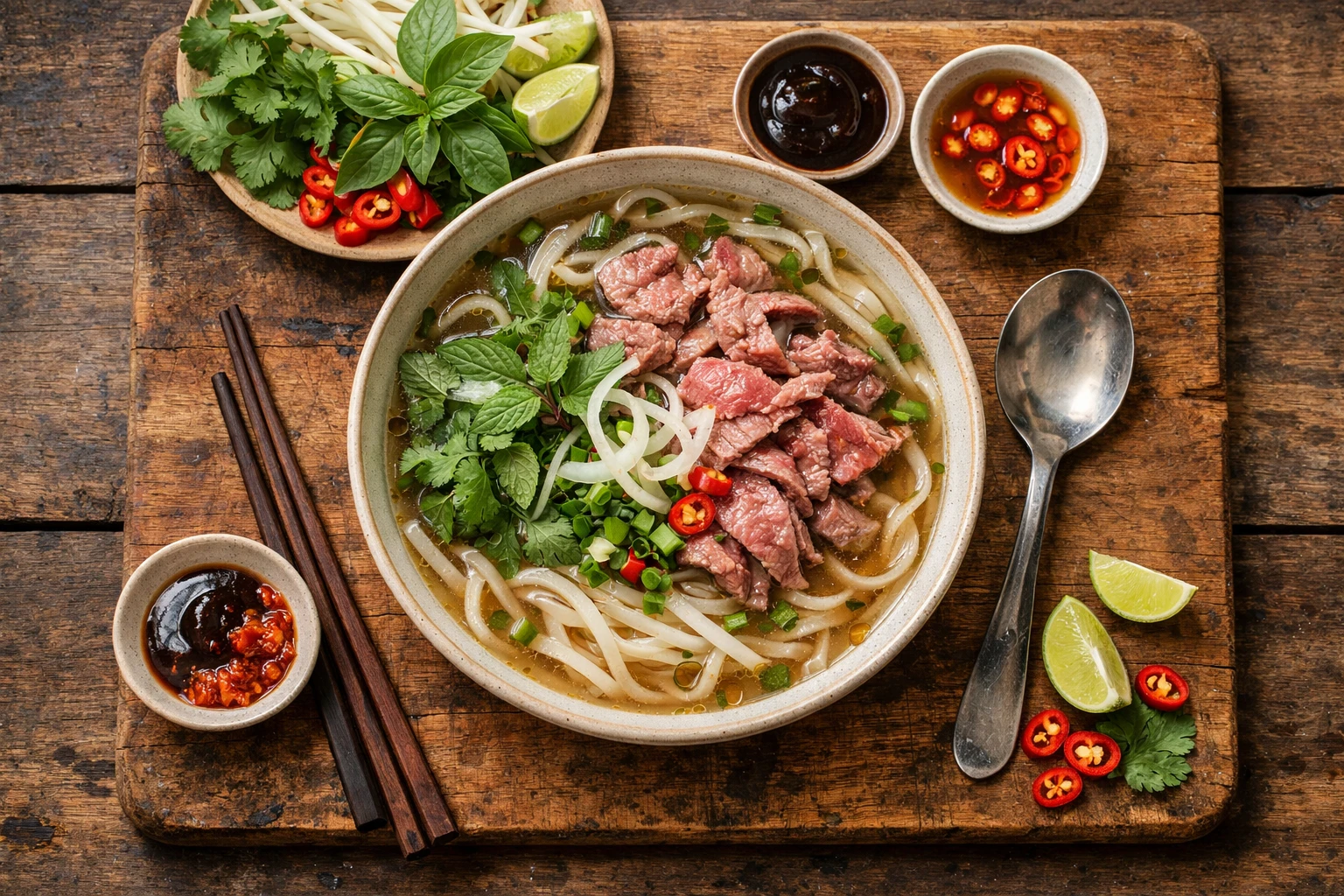
Quick Nutrition Facts
Per 1 Large Bowl (600ml)
| Nutrient | Amount |
|---|---|
| Calories | 450 kcal |
| Protein | 28g |
| Carbohydrates | 55g |
| Fiber | 3g |
| Sugars | 4g |
| Fat | 10g |
| Sodium | 1500mg |
| Iron | 3.5mg |
| Vitamin A | 850 IU |
| Vitamin C | 15mg |
Macronutrient Breakdown
 ChatGPT
  Claude
  AI Mode
  Perplexity
NUTRITIONIST INSIGHT
Pho's bone broth base provides collagen and glycine that support joint health and gut healing. The aromatic spices (star anise, cinnamon, ginger) offer anti-inflammatory benefits while fresh herbs add antioxidants.
Myth Busters
MYTH #1: Pho Is Too High in Sodium
TRUTH: Traditional pho has 1500mg sodium per bowl, which is moderate compared to instant ramen (2000-2500mg). You can reduce sodium by requesting less fish sauce, skipping table salt, and adding fresh lime juice for flavor instead.
MYTH #2: Rice Noodles Spike Blood Sugar
TRUTH: Rice noodles have a moderate glycemic index (GI 53-58), especially when paired with protein and fat in pho. The beef protein and broth slow glucose absorption, reducing blood sugar spikes compared to eating noodles alone.
MYTH #3: Pho Is Not Filling Enough
TRUTH: With 28g protein and warm broth, pho promotes satiety effectively. Studies show protein-rich soups increase fullness hormones and reduce subsequent calorie intake by 20%. The volume from broth enhances the feeling of fullness.
MYTH #4: Pho Has No Nutritional Value
TRUTH: Pho delivers complete protein from beef, B vitamins (B12, niacin), iron, collagen from bone broth, antioxidants from herbs, and complex carbs for energy. It's a nutritionally complete meal when loaded with vegetables.
MYTH #5: You Should Avoid Pho When Sick
TRUTH: Pho is excellent when sick. The hot broth provides hydration, ginger and star anise have antimicrobial properties, protein supports immune function, and steam helps clear congestion. It's Vietnam's traditional remedy for colds.
MYTH #6: All Pho Is the Same Nutritionally
TRUTH: Nutrition varies widely. Chicken pho has 350 calories vs beef pho's 450; rare beef adds more protein than meatballs; extra vegetables increase fiber; and restaurant portions can be 30-50% larger than standard servings, affecting total calories.
NutriScore by Health Goals
| Health Goal | NutriScore | Why This Score? |
|---|---|---|
| Weight Loss |  | 450 calories with 28g protein promotes fullness. Request half noodles and extra vegetables to reduce calories to 300 while maintaining satiety. |
| Muscle Gain |  | Excellent post-workout meal: 28g protein for recovery, 55g carbs for glycogen replenishment, collagen for joint support, easy to digest. |
| Diabetes Management |  | Moderate GI noodles (53-58). Choose half noodles, add protein and vegetables, eat slowly, monitor blood sugar response. |
| PCOS Management | | Rice noodles affect insulin sensitivity. Limit to half portion, prioritize protein and vegetables, choose lean beef cuts. |
| Pregnancy Nutrition | | Rich in iron (3.5mg), B12, protein for fetal development, collagen supports tissue growth, easily digested. |
| Viral/Flu Recovery | | Hydrating broth, ginger and star anise have antimicrobial properties, protein supports immunity, easy to eat when appetite is low. |
PERSONALIZED NUTRITION
Track your meals with NutriScan for personalized NutriScores based on your specific health goals!
Blood Sugar Response to Pho
Understanding how pho affects your blood glucose helps optimize portion sizes and timing.
Typical Glucose Response Curve
*This chart shows typical blood glucose response for general healthy individuals. Individual responses may vary. Not medical advice.*
How to Flatten the Spike
Optimizing pho composition reduces glucose peaks and extends energy release:
- 🥩 Request extra beef or rare beef slices - Increases protein, slows carb absorption
- 🥬 Load up on bean sprouts, herbs, and vegetables - Adds fiber and micronutrients
- 🍜 Ask for half noodles - Reduces carb load from 55g to 28g
- 🥚 Add a side of boiled eggs - Complete protein source for better glucose control
This combination reduces the glucose spike by 30-40% while maintaining satiety and flavor.
Cultural Significance
Pho originated in early 20th century northern Vietnam, blending French culinary influence (beef bones) with Vietnamese flavors.
In Vietnam:
- National dish eaten for breakfast, lunch, or dinner
- Each region has variations: Hanoi (clear broth, simple garnishes) vs Saigon (sweeter, abundant herbs)
- Street vendors start serving at 5 AM; pho is considered the perfect breakfast
- Family recipes for broth are closely guarded secrets, simmered 12-24 hours
Global Impact:
- Vietnamese diaspora spread pho worldwide after 1975
- Recognized by UNESCO as intangible cultural heritage candidate
- 2+ billion bowls consumed annually worldwide
- Pho restaurants are often community gathering spaces
Compare & Substitute
Pho vs Similar Asian Soups (Per Bowl)
| Nutrient | 🍜 Pho Bo | 🍜 Ramen | 🍲 Tom Yum | 🥘 Laksa |
|---|---|---|---|---|
| Calories | 450 kcal | 500-700 kcal | 180 kcal | 500 kcal |
| Carbs | 55g | 65g | 12g | 50g |
| Fiber | 3g | 2g | 2g | 3g |
| Protein | 28g | 18g | 20g | 20g |
| Fat | 10g | 20-30g | 6g | 25g |
| Sodium | 1500mg | 2000-2500mg | 1200mg | 1800mg |
| Iron | 3.5mg | 2mg | 2.5mg | 2mg |
| Best For | Balanced nutrition | Comfort food, indulgent | Low-cal, keto-ish | Rich coconut flavor |
Frequently Asked Questions
Is pho good for weight loss?
Yes, pho supports weight loss at 450 calories with 28g protein that promotes fullness. Choose lean beef cuts (rare beef, eye round), request half noodles to reduce calories to 300, load extra bean sprouts and vegetables, skip hoisin and sweet sauces. Best eaten for lunch to maximize satiety through the day.
Can diabetics eat pho?
Diabetics can eat pho with modifications. Rice noodles have moderate GI (53-58) when paired with protein.
Tips for diabetics:
- Request half or one-third noodle portion (reduce carbs from 55g to 20-28g)
- Add extra beef for protein
- Load vegetables and herbs
- Eat slowly and drink broth throughout
- Best timing: lunch, not dinner; monitor blood sugar 2 hours after
The protein and broth slow glucose absorption significantly compared to plain noodles.
How much protein is in pho?
A large bowl contains 28g of protein from beef slices and bone broth. Chicken pho has 22-24g. You can increase protein by requesting extra rare beef, adding a side of boiled eggs, or choosing tendon/brisket cuts. This makes pho excellent for muscle recovery and satiety.
What are the main health benefits of pho?
Key Benefits:
- High-Quality Protein: 28g supports muscle recovery and satiety
- Joint Health: Collagen and glycine from bone broth support connective tissue
- Hydration: Broth provides electrolytes and fluids
- Anti-Inflammatory: Star anise, cinnamon, ginger reduce inflammation
- Immune Support: Vitamin A, C, zinc from beef and herbs boost immunity
- Digestive Health: Warm broth aids digestion; herbs like cilantro support gut health
When is the best time to eat pho?
Depends on your goal:
- Weight Loss: Lunch with extra vegetables and half noodles. Avoid dinner due to carb content.
- Muscle Gain: Post-workout within 1 hour for protein and carb replenishment.
- Recovery/Illness: Anytime for hydration, nutrients, and easy digestion.
- Traditional Vietnamese Style: Breakfast (provides sustained energy for the day).
IMPORTANT NOTE
Pho is best consumed fresh and hot. Leftover pho loses nutritional value as herbs wilt and noodles absorb broth.
Is pho healthier than ramen?
Yes, pho is generally healthier. With 450 vs 500-700 calories, 10g vs 20-30g fat, and clearer broth with less sodium (1500mg vs 2000-2500mg), pho wins nutritionally. Pho uses rice noodles and emphasizes fresh herbs (basil, cilantro, lime) while ramen uses wheat noodles in rich, fatty tonkotsu or miso broth. Pho offers more vegetables and lighter digestion; ramen is richer and more indulgent. Choose pho for regular meals, ramen for occasional comfort food.
How many bowls of pho can I eat per week?
General Guidelines:
- 3-4 bowls weekly - Most people (balanced nutrition, moderate sodium)
- 2-3 bowls weekly - Diabetes, PCOS, strict low-carb diets (watch noodles)
- 4-5 bowls weekly - Athletes, muscle gain, high protein needs
Sodium consideration: 1500mg per bowl means 3-4 bowls weekly stays within recommended 2300mg daily limit when averaged. Request less fish sauce to reduce sodium.
Track your meals with NutriScan app to see how pho fits your personal nutrition goals.
Can I eat pho on a keto diet?
Traditional pho doesn't fit strict keto (55g carbs exceeds daily limit). However, you can make it keto-friendly by requesting no noodles and doubling the beef, adding fatty cuts like brisket, including a side of boiled eggs, using extra herbs and bean sprouts, and drinking the broth. This modified version has 5-8g net carbs and fits keto macros while preserving the authentic flavor.




Similar Nutritious Soups
4505 Chicharrones Classic Chili Salt
7 Eleven Japan Crispy Corn Cheese
Explore More Nutrition Tools & Resources
AI Calorie Counter App - Snap a Photo, Get Macros
AI Nutritionist App That Reads Your Logged Meals
Best Protein Supplements for Women
Bulking Meal Plan App That Sets Your Surplus
ChatGPT Calorie Counter Alternative That Keeps the Total
ChatGPT Diet Plan Alternative That Tracks What You Eat
ChatGPT Weight Loss Coach Alternative With a Food Log
Fast Food Calorie Counter App That Reads the Tray
Free Calorie Tracker App with AI Photo Scans | NutriScan
Indian Diet Plan App With Veg and Non Veg Meals
Indian Food Calorie Calculator - Get Instant Nutrition Facts for Desi Meals — 2026
Intermittent Fasting for Women, Timer and Meal Log App
Intermittent Fasting Tracker App - Free Fasting Timer
Macro Tracker App That Fills the Numbers From a Photo
Mediterranean Diet Meal Plan App That Counts the Oil
Micronutrient Tracker App for Vitamins and Minerals
MyFitnessPal Alternative That Stays Free | NutriScan
NutriScore App: A Free Grade on Every Meal | NutriScan
Nutrition Label Scanner App for the Amount You Ate
Second Trimester Protein Guide
Vegetarian Meal Plan App With a Protein Target
Voice Calorie Counter - Speak to Track Meals Hands-Free
Water and Calorie Tracker App - Free Water Log