Pho Ga: Calories, Nutrition and Health Benefits
Vietnam's beloved chicken noodle soup—aromatic broth simmered with ginger and spices, topped with tender chicken, rice noodles, and fresh herbs.
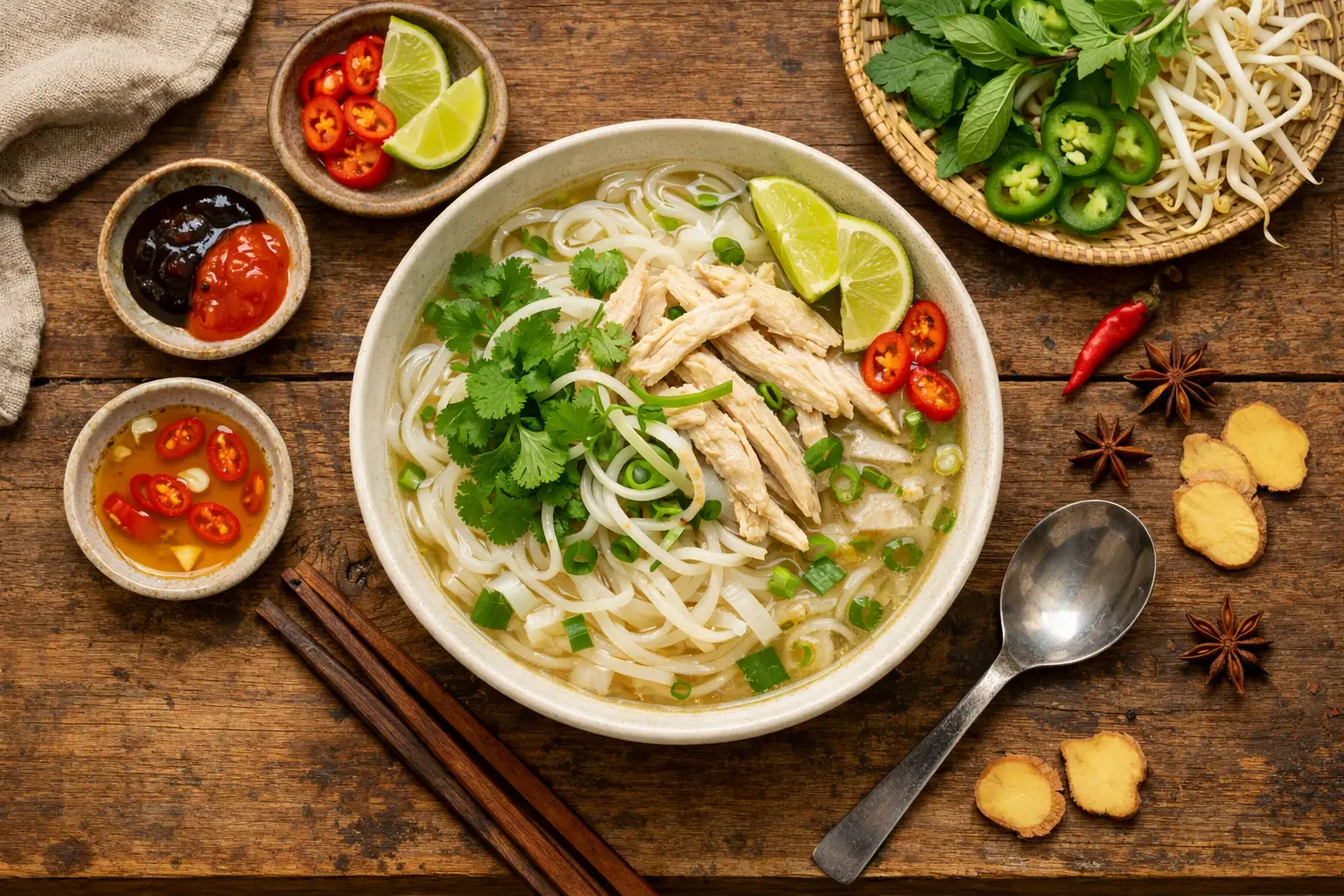
Quick Nutrition Facts
Per 1 Bowl (500g)
| Nutrient | Amount |
|---|---|
| Calories | 380 kcal |
| Protein | 28g |
| Carbohydrates | 48g |
| Fiber | 2g |
| Sugars | 3g |
| Fat | 8g |
| Saturated Fat | 2g |
| Sodium | 1200mg |
| Vitamin B6 | 0.8mg |
| Iron | 2.5mg |
Macronutrient Breakdown
 ChatGPT
  Claude
  AI Mode
  Perplexity
NUTRITIONIST INSIGHT
Pho ga delivers 28g of lean protein with only 8g fat per bowl—one of the best protein-to-calorie ratios among comfort foods. The chicken broth provides collagen precursors and the fresh herbs add antioxidants with minimal calories.
Myth Busters
MYTH #1: Pho Is Too High in Sodium to Be Healthy
TRUTH: While pho contains 1200mg sodium (52% DV), this is comparable to most restaurant soups. You can reduce sodium by drinking less broth, requesting low-sodium broth, or balancing with low-sodium foods throughout the day. The nutrients outweigh the sodium concern for most people.
MYTH #2: The Rice Noodles Make Pho Unhealthy
TRUTH: Rice noodles in pho have a moderate glycemic index (39-61), lower than white rice. When combined with protein from chicken and fat from broth, the glycemic response is further moderated. Request half noodles if managing carbs.
MYTH #3: Pho Ga Has No Real Health Benefits
TRUTH: Research confirms chicken soup has anti-inflammatory properties that help with upper respiratory infections. The broth provides hydration, the ginger offers digestive benefits, and fresh herbs supply antioxidants.
MYTH #4: All Pho Is the Same Nutritionally
TRUTH: Pho ga (chicken) has 380 calories and 8g fat, while pho bo (beef) has 450+ calories and 12g+ fat. Pho with rare beef adds more calories. Vegetable pho has even fewer calories. Choose based on your nutrition goals.
MYTH #5: You Shouldn't Eat Pho When Sick
TRUTH: Pho ga is excellent for illness recovery. Studies show chicken soup has immunomodulatory effects, the warm broth provides hydration, ginger eases nausea, and the steam helps clear congestion.
NutriScore by Health Goals
| Health Goal | NutriScore | Why This Score? |
|---|---|---|
| Weight Loss |  | 380 calories with 28g protein for excellent satiety. High volume from broth, low fat. Request extra vegetables, less noodles. |
| Muscle Gain | | Excellent 28g protein with 48g carbs for recovery. Lean protein source, easy to digest post-workout. |
| Diabetes Management |  | Rice noodles have moderate GI (39-61). Protein slows glucose absorption. Request half noodles, extra chicken. |
| PCOS Management | | Lean protein supports hormone balance. Moderate carbs—choose smaller portion or less noodles. |
| Pregnancy Nutrition | | Excellent protein (28g), hydrating broth, ginger helps morning sickness. Ensure chicken is fully cooked. Easy to digest. |
| Viral/Flu Recovery | | Chicken soup has documented anti-inflammatory effects. Warm broth hydrates, ginger and herbs support immunity. |
PERSONALIZED NUTRITION
Track your meals with NutriScan for personalized NutriScores based on your specific health goals!
Blood Sugar Response to Pho Ga
Understanding how pho ga affects your blood glucose helps you make informed choices about portions and accompaniments.
Typical Glucose Response Curve
This chart shows typical blood glucose response for general healthy individuals. Individual responses may vary. Not medical advice.
How to Flatten the Spike
Pairing carbohydrates with protein and fiber slows glucose absorption and reduces blood sugar peaks:
- 🍗 Request extra chicken - More protein moderates glucose response
- 🥬 Add extra bean sprouts and herbs - Fiber slows carb absorption
- 🍜 Ask for half noodles - Reduces carb load from 48g to 24g
- 🍵 Drink broth first - Liquid volume promotes satiety before eating noodles
This combination not only reduces the glucose spike but also extends energy release, keeping you satisfied longer.
Cultural Significance
Pho originated in early 20th century northern Vietnam, likely in Hanoi, blending French colonial and Chinese influences with Vietnamese traditions.
In Vietnam:
- National dish, eaten for breakfast, lunch, or dinner
- Each region has distinct styles: Hanoi (subtle, clear broth) vs Saigon (sweeter, more herbs)
- Street vendors start cooking broth at 3 AM for morning customers
- Pho shops are social gathering places, often passed down through generations
Global Impact:
- Vietnamese diaspora spread pho worldwide after 1975
- Now recognized globally as quintessential Vietnamese food
- Pho restaurants found in every major city worldwide
- Oxford English Dictionary added "pho" in 2007
- Associated with comfort, healing, and home cooking
Compare & Substitute
Pho Ga vs Similar Soups (Per Bowl)
| Nutrient | 🍜 Pho Ga (500g) | 🍜 Pho Bo (500g) | 🍜 Ramen (550g) | 🍲 Chicken Noodle (400g) |
|---|---|---|---|---|
| Calories | 380 kcal | 450 kcal | 550 kcal | 220 kcal |
| Carbs | 48g | 50g | 65g | 25g |
| Fiber | 2g | 2g | 3g | 2g |
| Protein | 28g | 32g | 22g | 15g |
| Fat | 8g | 12g | 18g | 6g |
| Sodium | 1200mg | 1400mg | 1800mg | 900mg |
| Best For | Light meal, high protein | Higher protein, richer | Indulgent comfort | Low-calorie option |
Frequently Asked Questions
Is pho ga good for weight loss?
Yes, pho ga is excellent for weight loss at 380 calories with 28g protein. The high protein promotes satiety, warm broth adds volume without significant calories, and fresh herbs provide nutrients.
Best practices: Request extra vegetables and bean sprouts, ask for half noodles (saves 100 calories), choose white meat chicken, drink broth for fullness, skip extra sauces.
Can diabetics eat pho ga?
Diabetics can enjoy pho ga with modifications. Rice noodles have moderate GI (39-61), and the protein content helps moderate blood sugar response.
Tips for diabetics:
- Request half noodles (24g carbs vs 48g)
- Ask for extra chicken to increase protein
- Include all the bean sprouts and herbs for fiber
- Choose a smaller bowl if available
- Monitor blood sugar 2 hours after eating
The protein and fat in the broth slow glucose absorption compared to plain rice.
How much protein is in pho ga?
A standard bowl of pho ga contains 28g of protein from the chicken breast and broth. This provides about 56% of daily value for a 2000-calorie diet.
For higher protein, request extra chicken (adds 15-20g), add a soft-boiled egg (6g), or choose dark meat chicken for slightly more protein and flavor.
Is pho ga good when you're sick?
Yes, pho ga is scientifically supported for illness recovery. Research confirms chicken soup has anti-inflammatory effects that may reduce cold symptoms.
Why pho ga helps:
- Hydration: Warm broth replaces lost fluids
- Protein: Chicken provides easily digestible protein for recovery
- Ginger: Eases nausea and has anti-inflammatory properties
- Steam: Helps clear nasal congestion
- Herbs: Fresh basil and cilantro offer antioxidants
What makes pho ga different from pho bo?
Pho ga (chicken) and pho bo (beef) differ in several ways:
Pho Ga:
- Lighter, clearer broth
- 380 calories, 8g fat
- More delicate, aromatic flavor
- Quicker cooking time
- Traditional in northern Vietnam
Pho Bo:
- Richer, darker broth
- 450+ calories, 12g+ fat
- More robust, meaty flavor
- Simmered longer with beef bones
- Popular nationwide
Choose pho ga for a lighter option; pho bo for richer flavor.
When is the best time to eat pho ga?
Depends on your goal:
- Weight Loss: Lunch or early dinner for satisfaction without late-night carbs
- Muscle Gain: Post-workout within 2 hours for protein recovery
- Illness Recovery: Any time, especially morning when appetite returns
- Traditional Vietnamese: Breakfast—the authentic way to start the day
IMPORTANT NOTE
Best eaten fresh. Pho loses texture and flavor if noodles sit in broth too long.
Can I make pho ga at home?
Yes, homemade pho ga is healthier and cost-effective:
Quick method (1 hour):
- Simmer chicken bones or whole chicken with ginger, onion, star anise
- Add fish sauce and salt to taste
- Cook rice noodles separately
- Assemble with sliced chicken, noodles, fresh herbs
Benefits of homemade:
- Control sodium (use 50% less fish sauce)
- More vegetables and herbs
- Fresher ingredients
- Costs 70% less than restaurant
Track your meals with NutriScan app to see how pho ga fits your personal nutrition goals.


Similar Nutritious Soups
4505 Chicharrones Classic Chili Salt
7 Eleven Japan Crispy Corn Cheese
Explore More Nutrition Tools & Resources
AI Calorie Counter App - Snap a Photo, Get Macros
AI Nutritionist App That Reads Your Logged Meals
Best Protein Supplements for Women
Bulking Meal Plan App That Sets Your Surplus
ChatGPT Calorie Counter Alternative That Keeps the Total
ChatGPT Diet Plan Alternative That Tracks What You Eat
ChatGPT Weight Loss Coach Alternative With a Food Log
Fast Food Calorie Counter App That Reads the Tray
Free Calorie Tracker App with AI Photo Scans | NutriScan
Indian Diet Plan App With Veg and Non Veg Meals
Indian Food Calorie Calculator - Get Instant Nutrition Facts for Desi Meals — 2026
Intermittent Fasting for Women, Timer and Meal Log App
Intermittent Fasting Tracker App - Free Fasting Timer
Macro Tracker App That Fills the Numbers From a Photo
Mediterranean Diet Meal Plan App That Counts the Oil
Micronutrient Tracker App for Vitamins and Minerals
MyFitnessPal Alternative That Stays Free | NutriScan
NutriScore App: A Free Grade on Every Meal | NutriScan
Nutrition Label Scanner App for the Amount You Ate
Second Trimester Protein Guide
Vegetarian Meal Plan App With a Protein Target
Voice Calorie Counter - Speak to Track Meals Hands-Free
Water and Calorie Tracker App - Free Water Log