Picanha: Calories, Nutrition and Health Benefits
Brazil's prized beef cut packed with protein, iron, and rich flavor - the crown jewel of churrasco barbecue.
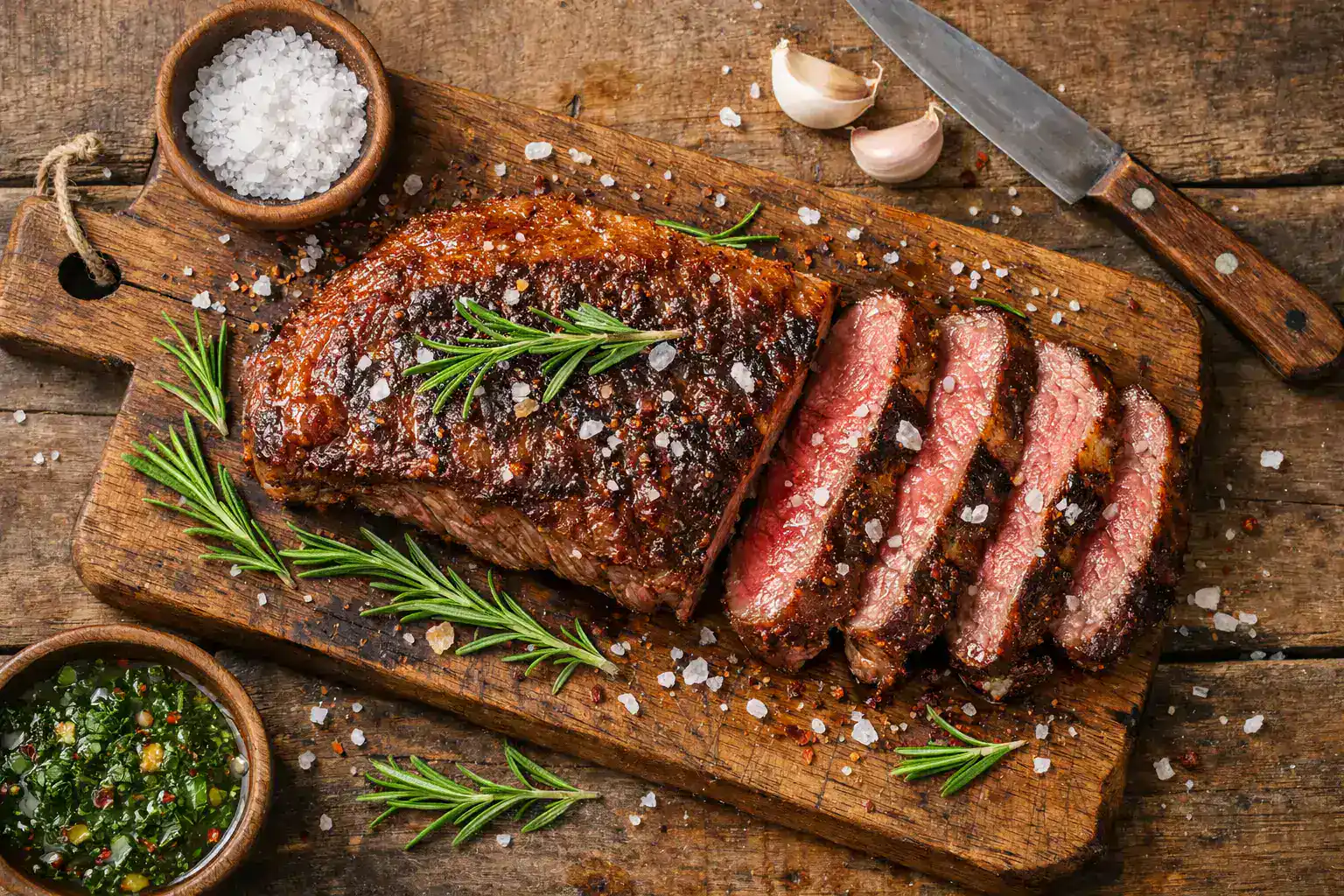
Quick Nutrition Facts
Per 100g Grilled Picanha (with fat cap)
| Nutrient | Amount |
|---|---|
| Calories | 250 kcal |
| Protein | 26g |
| Carbohydrates | 0g |
| Fiber | 0g |
| Sugars | 0g |
| Fat | 16g |
| Saturated Fat | 6g |
| Iron | 2.1mg |
| Zinc | 4.8mg |
| Vitamin B12 | 2.7mcg |
Macronutrient Breakdown
 ChatGPT
  Claude
  AI Mode
  Perplexity
NUTRITIONIST INSIGHT
Picanha delivers 26g of complete protein per 100g, providing all essential amino acids. The distinctive fat cap bastes the meat during cooking, keeping it juicy while adding flavor - simply trim before eating to reduce saturated fat intake.
Myth Busters
MYTH #1: Picanha Is Too Fatty to Be Healthy
TRUTH: While picanha has a fat cap, the lean meat underneath is relatively lean at 5-6g fat per 100g (raw, trimmed). The fat cap can be trimmed before or after cooking to control intake. Even with moderate fat, it's a nutrient-dense protein source.
MYTH #2: Red Meat Like Picanha Causes Heart Disease
TRUTH: Current research shows unprocessed red meat in moderate amounts (2-3 servings/week) can be part of a heart-healthy diet. The key is choosing lean cuts, proper portion control, and balancing with vegetables and whole grains.
MYTH #3: Picanha Should Be Well-Done for Safety
TRUTH: Whole muscle cuts like picanha are safe at medium-rare (145°F/63°C internal). Unlike ground beef, bacteria stays on the surface and is killed during cooking. USDA recommends 145°F with 3-minute rest for steaks.
MYTH #4: You Can't Eat Beef If You Have Diabetes
TRUTH: Diabetics can eat picanha - it has zero carbs and doesn't spike blood sugar. However, some studies suggest limiting red meat to 2-3 servings weekly for overall metabolic health. Pair with fiber-rich vegetables for balanced meals.
MYTH #5: All Brazilian Beef Is the Same
TRUTH: Picanha (top sirloin cap) is a specific cut with unique marbling and fat distribution. It's leaner than ribeye, more flavorful than tenderloin, and has a characteristic fat cap that makes it ideal for grilling. Quality varies by grade (Choice vs Prime).
NutriScore by Health Goals
| Health Goal | NutriScore | Why This Score? |
|---|---|---|
| Weight Loss |  | High protein (26g) promotes satiety, but moderate fat. Trim fat cap and limit to 100-150g portions. Best grilled without added oils. |
| Muscle Gain |  | Excellent complete protein source with all essential amino acids. 26g protein per 100g supports muscle synthesis. Iron and zinc aid recovery. |
| Diabetes Management |  | Zero carbs means no blood sugar impact. Research suggests moderate red meat intake is acceptable; limit to 2-3 servings weekly. |
| PCOS Management | | High protein supports hormone balance, but saturated fat may affect insulin resistance. Choose lean portions, limit frequency. |
| Pregnancy Nutrition | | Rich in iron (2.1mg) and B12 essential for fetal development. Cook to well-done (160°F) during pregnancy. |
| Viral/Flu Recovery | | Zinc (4.8mg/100g) supports immune function. Protein aids tissue repair. Easy to digest when cooked properly. |
PERSONALIZED NUTRITION
Track your meals with NutriScan for personalized NutriScores based on your specific health goals!
Blood Sugar Response to Picanha
Understanding how picanha affects your blood glucose can help you make informed decisions about meal timing and pairings.
Typical Glucose Response Curve
This chart shows typical blood glucose response for general healthy individuals. Individual responses may vary. Not medical advice.
Why Picanha Has Minimal Blood Sugar Impact
Protein and fat slow glucose absorption and provide steady energy without blood sugar spikes:
- 🥩 Zero carbohydrates - No direct glucose contribution
- 🔄 Protein effect - Promotes glucagon, not insulin spikes
- ⏱️ Sustained energy - Fat provides slow-releasing fuel
- 🥗 Pair with vegetables - Add fiber for complete nutrition
This makes picanha an excellent choice for blood sugar management when paired with low-glycemic sides like leafy greens or roasted vegetables.
Cultural Significance
Picanha is Brazil's most celebrated beef cut, central to the churrasco (barbecue) tradition that dates back to the 18th century gaucho cowboys of southern Brazil.
In Brazil:
- Traditional churrasco features picanha as the star cut, skewered and grilled over open flames
- Served at rodízio restaurants where it's carved tableside
- The fat cap is prized for adding flavor and moisture during cooking
- Regional variations include chimichurri sauce accompaniment
Global Spread:
- Gaining popularity in US steakhouses and Brazilian BBQ chains
- Known as "sirloin cap" or "coulotte" in American butcher shops
- Portuguese communities brought the tradition to diaspora countries
- Premium picanha now exported from Brazil, Argentina, and Australia
Compare & Substitute
Picanha vs Similar Beef Cuts (Per 100g Cooked)
| Nutrient | 🥩 Picanha | 🥩 Ribeye | 🥩 Tenderloin | 🥩 Flank Steak |
|---|---|---|---|---|
| Calories | 250 kcal | 291 kcal | 196 kcal | 192 kcal |
| Carbs | 0g | 0g | 0g | 0g |
| Fiber | 0g | 0g | 0g | 0g |
| Protein | 26g | 24g | 26g | 29g |
| Fat | 16g | 22g | 10g | 8g |
| Iron | 2.1mg | 2.0mg | 3.1mg | 2.4mg |
| B12 | 2.7mcg | 2.5mcg | 2.8mcg | 1.5mcg |
| Best For | Grilling, churrasco | Rich flavor, marbling | Lean, tender steaks | Lean, marinades |
Frequently Asked Questions
Is picanha good for weight loss?
Yes, picanha can support weight loss when eaten in moderation. A 100g serving of lean picanha provides 26g of protein that promotes satiety and helps preserve muscle mass during calorie restriction.
Best practices: Trim the fat cap, stick to 100-150g portions, grill without added oils, and pair with non-starchy vegetables. Limit to 2-3 servings per week for optimal results.
Can diabetics eat picanha?
Diabetics can eat picanha as it contains zero carbohydrates and won't directly spike blood sugar. However, some research suggests red meat consumption is associated with slightly higher fasting glucose levels over time.
Tips for diabetics:
- Limit to 2-3 servings per week
- Choose lean portions and trim visible fat
- Always pair with fiber-rich vegetables
- Monitor your individual response
The zero-carb nature makes it preferable to carb-heavy proteins like breaded options. Consult your healthcare provider for personalized guidance.
How much protein is in picanha?
A 100g serving of grilled picanha contains 26g of complete protein, providing all 9 essential amino acids. This represents about 52% of the daily protein requirement for an average adult.
For muscle gain, picanha is excellent post-workout due to its high leucine content (essential for muscle protein synthesis). Combine with carbs for glycogen replenishment.
What are the main health benefits of picanha?
Key Benefits:
- Complete Protein: 26g per 100g with all essential amino acids
- Iron Absorption: Heme iron (2.1mg) is highly bioavailable for preventing anemia
- B12 for Nerves: 2.7mcg supports nervous system function (113% DV)
- Zinc for Immunity: 4.8mg aids immune function and wound healing
- Selenium: 27mcg provides antioxidant protection
- Creatine: Natural source for energy and muscle performance
Is picanha the same as sirloin?
Picanha is specifically the top sirloin cap (also called sirloin cap or coulotte), not the entire sirloin. It's a triangular muscle with a thick fat cap that sits atop the sirloin.
Differences from regular sirloin:
- Picanha has a distinctive fat cap on one side
- More marbled and tender than bottom sirloin
- Smaller cut (typically 2-3 lbs per piece)
- Traditionally grilled whole, then sliced against the grain
How should I cook picanha for best nutrition?
For Maximum Nutrition:
- Grill to medium-rare or medium (145°F internal) to preserve B vitamins
- Traditional churrasco: skewer and grill over high heat
- Let rest 5 minutes before slicing to retain juices
- Slice against the grain for tenderness
IMPORTANT NOTE
Avoid charring or burning the meat, which creates potentially harmful compounds (HCAs and PAHs). If grilling at high heat, flip frequently.
How many servings of picanha per week is healthy?
General Guidelines:
- 2-3 servings weekly - Aligns with most health recommendations for red meat
- 100-150g per serving - Appropriate portion size
- Rotate with other proteins - Fish, poultry, legumes for variety
- Balance with vegetables - Fill half your plate with plants
Athletes and those building muscle may consume slightly more, but should still prioritize protein variety.


Similar Nutritious Foods
4505 Chicharrones Classic Chili Salt
7 Eleven Japan Crispy Corn Cheese
Explore More Nutrition Tools & Resources
AI Calorie Counter App - Snap a Photo, Get Macros
AI Nutritionist App That Reads Your Logged Meals
Best Protein Supplements for Women
Bulking Meal Plan App That Sets Your Surplus
ChatGPT Calorie Counter Alternative That Keeps the Total
ChatGPT Diet Plan Alternative That Tracks What You Eat
ChatGPT Weight Loss Coach Alternative With a Food Log
Fast Food Calorie Counter App That Reads the Tray
Free Calorie Tracker App with AI Photo Scans | NutriScan
Indian Diet Plan App With Veg and Non Veg Meals
Indian Food Calorie Calculator - Get Instant Nutrition Facts for Desi Meals — 2026
Intermittent Fasting for Women, Timer and Meal Log App
Intermittent Fasting Tracker App - Free Fasting Timer
Macro Tracker App That Fills the Numbers From a Photo
Mediterranean Diet Meal Plan App That Counts the Oil
Micronutrient Tracker App for Vitamins and Minerals
MyFitnessPal Alternative That Stays Free | NutriScan
NutriScore App: A Free Grade on Every Meal | NutriScan
Nutrition Label Scanner App for the Amount You Ate
Second Trimester Protein Guide
Vegetarian Meal Plan App With a Protein Target
Voice Calorie Counter - Speak to Track Meals Hands-Free
Water and Calorie Tracker App - Free Water Log