Pickled Herring: Calories, Nutrition and Health Benefits
Traditional Scandinavian delicacy packed with omega-3 fatty acids, high-quality protein, and essential nutrients for heart and brain health.
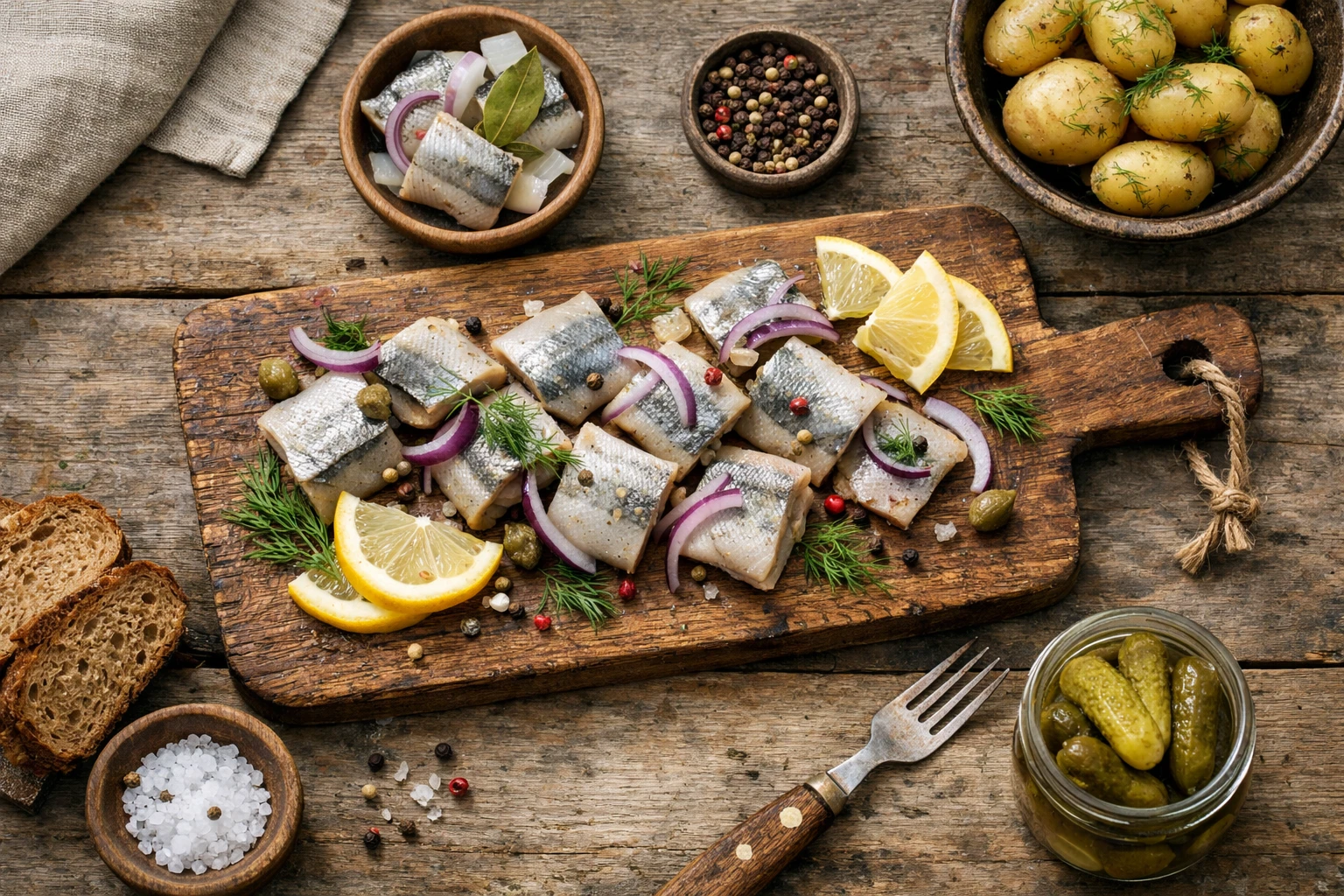
Quick Nutrition Facts
Per 100g Serving
| Nutrient | Amount |
|---|---|
| Calories | 220 kcal |
| Protein | 15g |
| Carbohydrates | 5g |
| Fiber | 0g |
| Sugars | 3g |
| Fat | 15g |
| Omega-3 EPA+DHA | 2,000mg+ |
| Vitamin D | 8mcg (40% DV) |
| Vitamin B12 | 4mcg (167% DV) |
| Sodium | 600mg |
Macronutrient Breakdown
 ChatGPT
  Claude
  AI Mode
  Perplexity
NUTRITIONIST INSIGHT
Pickled herring delivers over 2,000mg of omega-3 fatty acids per 100g, exceeding daily recommended intake. The fermentation process creates beneficial probiotics while preserving heart-healthy fats and vitamin D.
Myth Busters
MYTH #1: Pickled Herring Is Too High in Sodium
TRUTH: While pickled herring contains 500-800mg sodium per 100g due to brine, this is manageable within a balanced diet. Choose low-sodium varieties, rinse before eating, and balance with potassium-rich foods to support blood pressure regulation.
MYTH #2: The Pickling Process Destroys Omega-3s
TRUTH: Omega-3 fatty acids in herring remain stable during pickling. Studies show marinated and pickled fish retain 90-95% of their EPA and DHA content, making pickled herring an excellent omega-3 source year-round.
MYTH #3: Pickled Herring Causes Blood Sugar Spikes
TRUTH: Pickled herring has only 5g carbs per 100g and high protein plus fat content that stabilizes blood sugar. Omega-3s improve insulin sensitivity, making herring suitable for diabetes management when portion-controlled.
MYTH #4: All Pickled Fish Are the Same
TRUTH: Herring stands out for exceptionally high omega-3 content (2,000mg+ EPA+DHA per 100g) compared to other pickled fish. It also provides more vitamin D and B12 than most alternatives, offering superior nutritional density.
MYTH #5: Pickled Herring Is Only for Special Occasions
TRUTH: Nordic populations eat pickled herring 2-3 times weekly as part of their regular diet. This pattern correlates with lower cardiovascular disease rates in Scandinavia, suggesting regular moderate consumption supports long-term health.
MYTH #6: Pregnant Women Should Avoid Pickled Herring
TRUTH: Pregnant women can safely eat pickled herring in moderation. Herring is low in mercury, high in omega-3 DHA for fetal brain development, and rich in vitamin D. Limit sodium intake and choose quality brands; consume 100g 1-2 times weekly.
NutriScore by Health Goals
| Health Goal | NutriScore | Why This Score? |
|---|---|---|
| Weight Loss |  | 220 calories with 15g protein promotes satiety, omega-3s support fat metabolism. Watch sodium; limit to 100g servings. |
| Muscle Gain |  | 15g high-quality protein per 100g with all essential amino acids, omega-3s reduce inflammation after training. |
| Diabetes Management | | Only 5g carbs, high protein and fat stabilize blood sugar. Omega-3s improve insulin sensitivity. |
| PCOS Management | | Omega-3s reduce inflammation and support hormone balance. Monitor sodium; choose low-sugar pickling varieties. |
| Pregnancy Nutrition | | Omega-3 DHA essential for fetal brain development, vitamin D for bone health, B12 for nervous system. Low mercury. |
| Viral/Flu Recovery | | High-quality protein for immune repair, vitamin D and selenium for immunity, easy to digest. |
PERSONALIZED NUTRITION
Track your meals with NutriScan for personalized NutriScores based on your specific health goals!
Blood Sugar Response to Pickled Herring
Understanding how pickled herring affects blood glucose helps diabetics and those managing insulin sensitivity make informed choices.
Typical Glucose Response Curve
This chart shows typical blood glucose response for general healthy individuals. Individual responses may vary. Not medical advice.
How to Optimize the Response
Pairing pickled herring with fiber-rich foods further stabilizes blood sugar and provides balanced nutrition:
- 🥒 Cucumber or pickled vegetables - Adds fiber and probiotics
- 🥔 Boiled potatoes - Traditional Nordic pairing provides resistant starch
- 🍞 Whole grain rye bread (rugbrød) - Adds complex carbs and fiber
- 🥗 Fresh salad greens - Provides vitamins, minerals, and crunch
This combination creates a complete meal with sustained energy and minimal blood sugar impact.
Cultural Significance
Pickled herring has been a Nordic staple for over 1,000 years, originating as a preservation method before refrigeration.
In Scandinavia:
- Traditional Midsummer and Christmas dish across Sweden, Norway, Denmark, and Finland
- Served on smørrebrød (open-faced sandwiches) with onions, capers, and dill
- Each country has unique pickling styles: Swedish matjes, Danish sild, Norwegian sursild
- Symbol of Nordic heritage and coastal fishing culture
Global Impact:
- Introduced to North America and Europe by Scandinavian immigrants in 19th-20th centuries
- Now enjoyed in Germany (Rollmops), Netherlands (Hollandse Nieuwe), and Eastern Europe
- Sustainable fishery: herring populations well-managed in North Atlantic and Baltic Sea
- Zero-waste tradition: entire fish utilized including roe
Compare & Substitute
Pickled Herring vs Similar Fish (Per 100g)
| Nutrient | 🐟 Pickled Herring | 🐟 Smoked Salmon | 🥫 Canned Sardines | 🐟 Mackerel |
|---|---|---|---|---|
| Calories | 220 kcal | 117 kcal | 208 kcal | 205 kcal |
| Carbs | 5g | 0g | 0g | 0g |
| Fiber | 0g | 0g | 0g | 0g |
| Protein | 15g | 18g | 25g | 19g |
| Fat | 15g | 4.3g | 11g | 14g |
| Omega-3 | 2,000mg+ | 2,200mg | 1,480mg | 2,300mg |
| Vitamin D | 8mcg (40% DV) | 11mcg (55% DV) | 4.8mcg (24% DV) | 16mcg (80% DV) |
| Vitamin B12 | 4mcg (167% DV) | 3.2mcg (133% DV) | 8.9mcg (371% DV) | 8.7mcg (363% DV) |
| Sodium | 600mg | 784mg | 505mg | 90mg |
| Best For | Heart health, tradition | Low-calorie protein | Bone health (edible bones) | Highest omega-3 and vitamin D |
Frequently Asked Questions
Is pickled herring good for heart health?
Yes, pickled herring is excellent for heart health. It provides 2,000mg+ omega-3 fatty acids (EPA and DHA) per 100g, which reduce inflammation, lower triglycerides, and support cardiovascular function; limit sodium by choosing low-salt varieties and rinsing before eating.
Can diabetics eat pickled herring?
Yes, diabetics can eat pickled herring. It has only 5g carbs per 100g; high protein (15g) and omega-3 fats stabilize blood sugar; omega-3s improve insulin sensitivity; watch sodium (500-800mg) and choose low-sugar pickling styles; pair with vegetables or whole grains.
How much protein is in pickled herring?
Pickled herring contains 15g of protein per 100g serving. This high-quality protein includes all essential amino acids for muscle maintenance and recovery; the omega-3 fats enhance protein absorption and reduce post-exercise inflammation.
What are the main health benefits of pickled herring?
Key Benefits: 2,000mg+ omega-3s for heart health and brain function; 8mcg vitamin D (40% DV) for bone health; 4mcg vitamin B12 (167% DV) for energy and nervous system; selenium for immunity; high-quality protein for muscle maintenance; probiotics from fermentation for gut health.
Is pickled herring high in sodium?
Yes, pickled herring typically contains 500-800mg sodium per 100g due to pickling brine. Choose low-sodium varieties when available; rinse herring under cold water before eating to reduce sodium by 20-30%; balance with potassium-rich foods (potatoes, leafy greens) throughout the day.
How often should you eat pickled herring?
General Guidelines: 2-3 times per week - optimal omega-3 benefits without excessive sodium; 100g per serving - provides 2,000mg+ omega-3s; athletes and pregnant women - consult healthcare provider for personalized intake; pair with fresh vegetables and whole grains for balanced meals. Track with NutriScan app to monitor sodium and omega-3 intake.
Can I eat pickled herring during pregnancy?
Generally safe and beneficial - omega-3 DHA supports fetal brain development; herring is low-mercury fish; vitamin D for bone development; vitamin B12 for nervous system formation. Precautions: limit to 100g 1-2 times weekly; choose reputable brands; monitor sodium intake; consult your healthcare provider.


Similar Nutritious Foods
4505 Chicharrones Classic Chili Salt
7 Eleven Japan Crispy Corn Cheese
Explore More Nutrition Tools & Resources
AI Calorie Counter App - Snap a Photo, Get Macros
AI Nutritionist App That Reads Your Logged Meals
Best Protein Supplements for Women
Bulking Meal Plan App That Sets Your Surplus
ChatGPT Calorie Counter Alternative That Keeps the Total
ChatGPT Diet Plan Alternative That Tracks What You Eat
ChatGPT Weight Loss Coach Alternative With a Food Log
Fast Food Calorie Counter App That Reads the Tray
Free Calorie Tracker App with AI Photo Scans | NutriScan
Indian Diet Plan App With Veg and Non Veg Meals
Indian Food Calorie Calculator - Get Instant Nutrition Facts for Desi Meals — 2026
Intermittent Fasting for Women, Timer and Meal Log App
Intermittent Fasting Tracker App - Free Fasting Timer
Macro Tracker App That Fills the Numbers From a Photo
Mediterranean Diet Meal Plan App That Counts the Oil
Micronutrient Tracker App for Vitamins and Minerals
MyFitnessPal Alternative That Stays Free | NutriScan
NutriScore App: A Free Grade on Every Meal | NutriScan
Nutrition Label Scanner App for the Amount You Ate
Second Trimester Protein Guide
Vegetarian Meal Plan App With a Protein Target
Voice Calorie Counter - Speak to Track Meals Hands-Free
Water and Calorie Tracker App - Free Water Log