Pierogi: Calories, Nutrition and Health Benefits
Traditional Polish dumplings filled with potato, cheese, or meat - comforting, protein-rich, and surprisingly nutritious when prepared wisely.
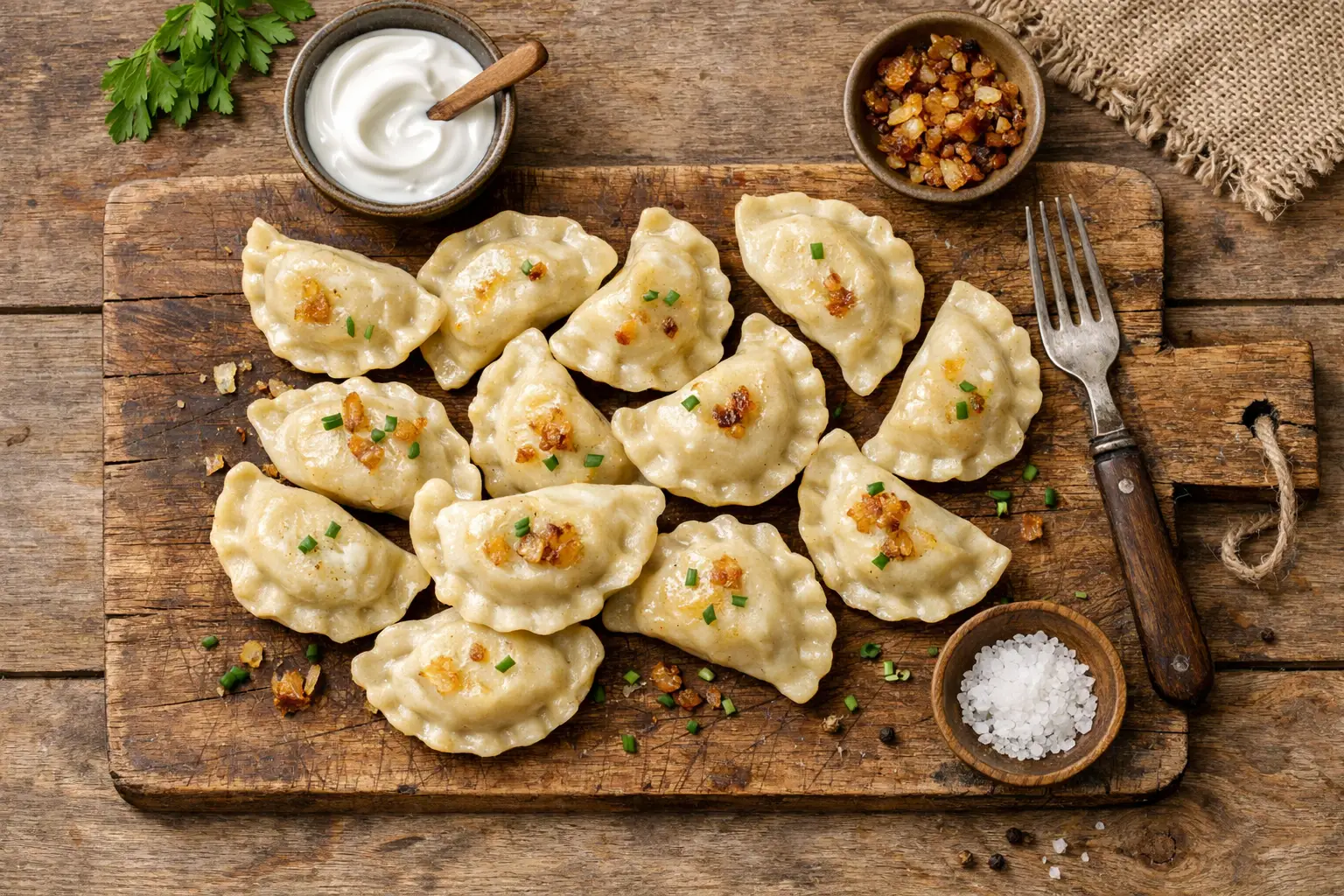
Quick Nutrition Facts
Per 3 Pieces (120g, Potato & Cheese, Boiled)
| Nutrient | Amount |
|---|---|
| Calories | 210 kcal |
| Protein | 7g |
| Carbohydrates | 34g |
| Fiber | 2g |
| Sugars | 2g |
| Fat | 5g |
| Saturated Fat | 2.5g |
| Sodium | 380mg |
| Calcium | 60mg |
| Iron | 3.6mg |
Macronutrient Breakdown
 ChatGPT
  Claude
  AI Mode
  Perplexity
NUTRITIONIST INSIGHT
Pierogi made with cooled potatoes develop resistant starch, which acts like fiber to support gut health and blood sugar control. The wheat-cheese combination provides complete protein for sustained energy.
Myth Busters
MYTH #1: Pierogi Are Too High in Calories for Weight Loss
TRUTH: Three boiled pierogi contain just 210 calories with 7g protein and 2g fiber for satiety. Preparation method matters more than the food itself - boiled (70 cal/piece) versus fried (130-150 cal/piece) saves 60-80 calories per serving. Pair with vegetables for a balanced meal under 400 calories.
MYTH #2: Diabetics Should Avoid Pierogi Completely
TRUTH: Diabetics can enjoy pierogi in moderation. Pairing carb-rich foods with protein and vegetables flattens blood sugar spikes. Limit to 2-3 pieces, choose sauerkraut-mushroom or meat fillings over potato-cheese, and eat with salad to reduce glycemic impact.
MYTH #3: All Pierogi Fillings Are Equally Unhealthy
TRUTH: Filling choice dramatically affects nutrition. Sauerkraut-mushroom pierogi have 55 calories per piece with probiotics and fiber. Potato-cheese has 70 calories. Fried sweet cheese can reach 150+ calories. Choose savory, vegetable-based fillings for best health outcomes.
MYTH #4: Pierogi Have No Nutritional Value
TRUTH: Pierogi provide 20% daily iron, B vitamins from enriched flour, calcium from dairy filling, and resistant starch from cooled potatoes that feeds beneficial gut bacteria. They're comfort food with genuine nutritional benefits when prepared thoughtfully.
MYTH #5: Fresh Pierogi Are Always Better Than Frozen
TRUTH: Frozen pierogi can be equally nutritious. Flash-freezing preserves nutrients immediately after cooking. Check labels for added preservatives or sodium, but nutritionally, frozen varieties often match homemade. Both develop resistant starch when cooled and reheated.
MYTH #6: You Can't Eat Pierogi During Pregnancy
TRUTH: Pierogi are safe during pregnancy when dough is fully cooked and dairy is pasteurized. They provide protein (7g), iron (20% DV), and energy (210 calories) for fetal development. Avoid raw dough and unpasteurized cheese fillings.
NutriScore by Health Goals
| Health Goal | NutriScore | Why This Score? |
|---|---|---|
| Weight Loss |  | 210 calories, 7g protein, 2g fiber provide satiety. Boiled preparation essential. Limit to 3-4 pieces, pair with vegetables. |
| Muscle Gain |  | 7-9g protein per serving supports muscle repair. Carbs (34g) replenish glycogen. Choose meat-filled for higher protein (11g). |
| Diabetes Management | | Moderate carbs (34g per 3 pieces). Choose sauerkraut or meat fillings, limit to 2-3 pieces, pair with protein/vegetables. |
| PCOS Management | | Moderate carbs affect insulin sensitivity. Limit to 2-3 pieces, choose boiled over fried, pair with lean protein and fiber-rich vegetables. |
| Pregnancy Nutrition | | Provides iron (20% DV), B vitamins, calcium for fetal development. Ensure dough fully cooked, use pasteurized dairy. 210 calories supports energy needs. |
| Viral/Flu Recovery | | Easy to digest, gentle comfort food, provides quick energy (34g carbs), protein for immune repair. Iron supports recovery. |
PERSONALIZED NUTRITION
Track your meals with NutriScan for personalized NutriScores based on your specific health goals!
Blood Sugar Response to Pierogi
Understanding how pierogi affect blood glucose helps diabetics and those managing insulin sensitivity make informed choices.
Typical Glucose Response Curve
This chart shows typical blood glucose response for general healthy individuals. Individual responses may vary. Not medical advice.
How to Flatten the Spike
Pairing pierogi with protein, fiber, or vegetables slows carbohydrate absorption and reduces peak blood sugar:
- 🥗 Side salad with vinaigrette - Fiber and acetic acid slow digestion
- 🥩 Lean protein (chicken breast, turkey, fish) - Slows glucose absorption
- 🥛 Greek yogurt or sour cream (small portion) - Protein and fat buffer
- 🥦 Non-starchy vegetables (broccoli, Brussels sprouts, green beans) - Fiber-rich, low-calorie
This combination extends energy release and improves satiety, keeping blood sugar stable for 2-3 hours.
Cultural Significance
Pierogi are Poland's most iconic dish, with origins dating back to the 13th century, influenced by Central Asian dumplings brought by traders.
In Poland:
- Traditional Christmas Eve dish (12 varieties symbolizing months)
- Each region has signature fillings: Silesia (meat), Podlasie (buckwheat), Podhale (bryndza cheese)
- Pierogi festivals celebrate harvest seasons (especially St. Hedwig's Day - October 16)
- Symbolize hospitality, family gatherings, and cultural identity
- UNESCO Intangible Cultural Heritage candidate
Global Impact:
- 20+ million Polish diaspora worldwide spread pierogi traditions
- North American cities host annual pierogi festivals (Pittsburgh, Chicago, Toronto)
- Fusion variations: buffalo chicken, cheeseburger, poutine pierogi
- Frozen pierogi industry: $400+ million market in North America alone
Compare & Substitute
Pierogi vs Similar Dumplings (Per 100g, Boiled)
| Nutrient | 🥟 Pierogi (Potato-Cheese) | 🥟 Pelmeni (Meat) | 🥟 Momo (Veg) | 🥟 Gyoza (Pork) |
|---|---|---|---|---|
| Calories | 175 kcal | 240 kcal | 140 kcal | 200 kcal |
| Carbs | 28g | 24g | 25g | 22g |
| Fiber | 1.7g | 0.8g | 2.2g | 1.2g |
| Protein | 6g | 12g | 4g | 9g |
| Fat | 4g | 11g | 3g | 8g |
| Sodium | 320mg | 450mg | 280mg | 380mg |
| Iron | 3mg (17% DV) | 2mg | 1.5mg | 1.8mg |
| Best For | Comfort, vegetarian, iron | High protein | Weight loss | Moderate option |
Frequently Asked Questions
Are pierogi good for weight loss?
Pierogi can fit weight loss goals when portion-controlled. Three boiled pieces provide 210 calories with 7g protein and 2g fiber for satiety - comparable to a small sandwich.
Best practices: Choose boiled over fried (saves 60-80 calories), limit to 3-4 pieces per meal, pair with large salad or steamed vegetables, avoid butter or sour cream toppings (use Greek yogurt instead).
Can diabetics eat pierogi?
Diabetics can eat pierogi in moderation with smart strategies. Three pieces contain 34g carbohydrates - similar to 2 slices of bread.
Tips for diabetics:
- Limit to 2-3 pieces per meal
- Choose sauerkraut-mushroom (lower carb) or meat-filled (higher protein) over potato-cheese
- Always pair with non-starchy vegetables and lean protein
- Boiled preparation only (avoid fried)
- Monitor blood sugar 2 hours after eating
Resistant starch in cooled and reheated potato pierogi can improve insulin sensitivity. Always consult your healthcare provider.
How much protein is in pierogi?
Three potato-cheese pierogi contain 7 grams of protein from wheat dough and dairy filling. Meat-filled varieties provide more: 9-11g per 3 pieces.
For muscle gain or high-protein diets, combine pierogi with Greek yogurt, lean meat, or eggs to reach 20-25g protein per meal.
What are the main health benefits of pierogi?
Key Benefits:
- Resistant Starch: Cooled potatoes develop resistant starch that feeds beneficial gut bacteria
- Complete Protein: Wheat + dairy combination provides all essential amino acids
- Iron Content: 20% daily value supports red blood cell production
- B Vitamins: From enriched flour (niacin, thiamine, riboflavin, folic acid)
- Calcium: 60mg per serving from cheese filling supports bone health
- Comfort & Satiety: Protein and fiber provide sustained energy and satisfaction
Are boiled or fried pierogi healthier?
Boiled pierogi are significantly healthier across all metrics.
Comparison (per piece):
- Boiled: 70 calories, 1-2g fat, preserves nutrients, gentle on digestion
- Fried: 130-150 calories, 8-12g fat, adds oxidized oils, doubles calories
- Pan-fried (minimal oil): 90-100 calories - compromise option
Recommendation: Always choose boiled for weight management, diabetes, or heart health. Pan-fry with 1 teaspoon olive oil if you prefer crispy texture - still healthier than deep-frying.
Which pierogi filling is healthiest?
Filling Rankings (per piece, boiled):
- 🥇 Sauerkraut-Mushroom: 55 calories, high fiber, probiotics from fermented cabbage, lowest fat
- 🥈 Spinach-Cheese: 65 calories, iron-rich, calcium, moderate protein
- 🥉 Meat (Beef/Pork): 80 calories, highest protein (4g/piece), iron, more saturated fat
- Potato-Cheese: 70 calories, comfort classic, moderate nutrition
- ❌ Sweet Cheese/Fruit: 100-120 calories, 8-12g added sugar, dessert category
Recommendation: Choose sauerkraut-mushroom for weight loss or gut health. Choose meat-filled for muscle gain or high-protein needs. Avoid sweet fillings as main meals.
How many pierogi should I eat per meal?
General Guidelines:
- 3-4 pieces - Most people (210-280 calories, balanced meal with vegetables)
- 2-3 pieces - Diabetes, weight loss, PCOS management
- 5-6 pieces - Athletes, muscle gain, pregnancy, high activity days
- 6-8 pieces - Traditional Polish serving (600+ calories - special occasions only)
Pairing Strategy: Treat 3 pierogi + large salad + lean protein as a complete meal. Avoid eating pierogi alone (causes blood sugar spike and hunger 1-2 hours later).
Track your meals with NutriScan app to see how pierogi fit your personal nutrition goals.
Are pierogi safe during pregnancy?
Generally safe when prepared properly - provides excellent nutrition for pregnancy.
Safety Checklist:
- ✅ Ensure dough is fully cooked (no raw flour exposure)
- ✅ Use pasteurized cheese for fillings
- ✅ Boiled preparation (avoid fried versions with oxidized oils)
- ✅ Watch sodium intake (380mg per 3 pieces - limit other salty foods same day)
Pregnancy Benefits: 20% daily iron for red blood cells, B vitamins for fetal development, 210 calories for energy, calcium for baby's bones. Consider meat-filled for extra protein (11g vs 7g).


Similar Nutritious Foods
4505 Chicharrones Classic Chili Salt
7 Eleven Japan Crispy Corn Cheese
Explore More Nutrition Tools & Resources
AI Calorie Counter App - Snap a Photo, Get Macros
AI Nutritionist App That Reads Your Logged Meals
Best Protein Supplements for Women
Bulking Meal Plan App That Sets Your Surplus
ChatGPT Calorie Counter Alternative That Keeps the Total
ChatGPT Diet Plan Alternative That Tracks What You Eat
ChatGPT Weight Loss Coach Alternative With a Food Log
Fast Food Calorie Counter App That Reads the Tray
Free Calorie Tracker App with AI Photo Scans | NutriScan
Indian Diet Plan App With Veg and Non Veg Meals
Indian Food Calorie Calculator - Get Instant Nutrition Facts for Desi Meals — 2026
Intermittent Fasting for Women, Timer and Meal Log App
Intermittent Fasting Tracker App - Free Fasting Timer
Macro Tracker App That Fills the Numbers From a Photo
Mediterranean Diet Meal Plan App That Counts the Oil
Micronutrient Tracker App for Vitamins and Minerals
MyFitnessPal Alternative That Stays Free | NutriScan
NutriScore App: A Free Grade on Every Meal | NutriScan
Nutrition Label Scanner App for the Amount You Ate
Second Trimester Protein Guide
Vegetarian Meal Plan App With a Protein Target
Voice Calorie Counter - Speak to Track Meals Hands-Free
Water and Calorie Tracker App - Free Water Log