Pistachios: Calories, Nutrition and Health Benefits
Nutrient-dense green gem packed with heart-healthy fats, complete protein, and powerful antioxidants for comprehensive wellness.
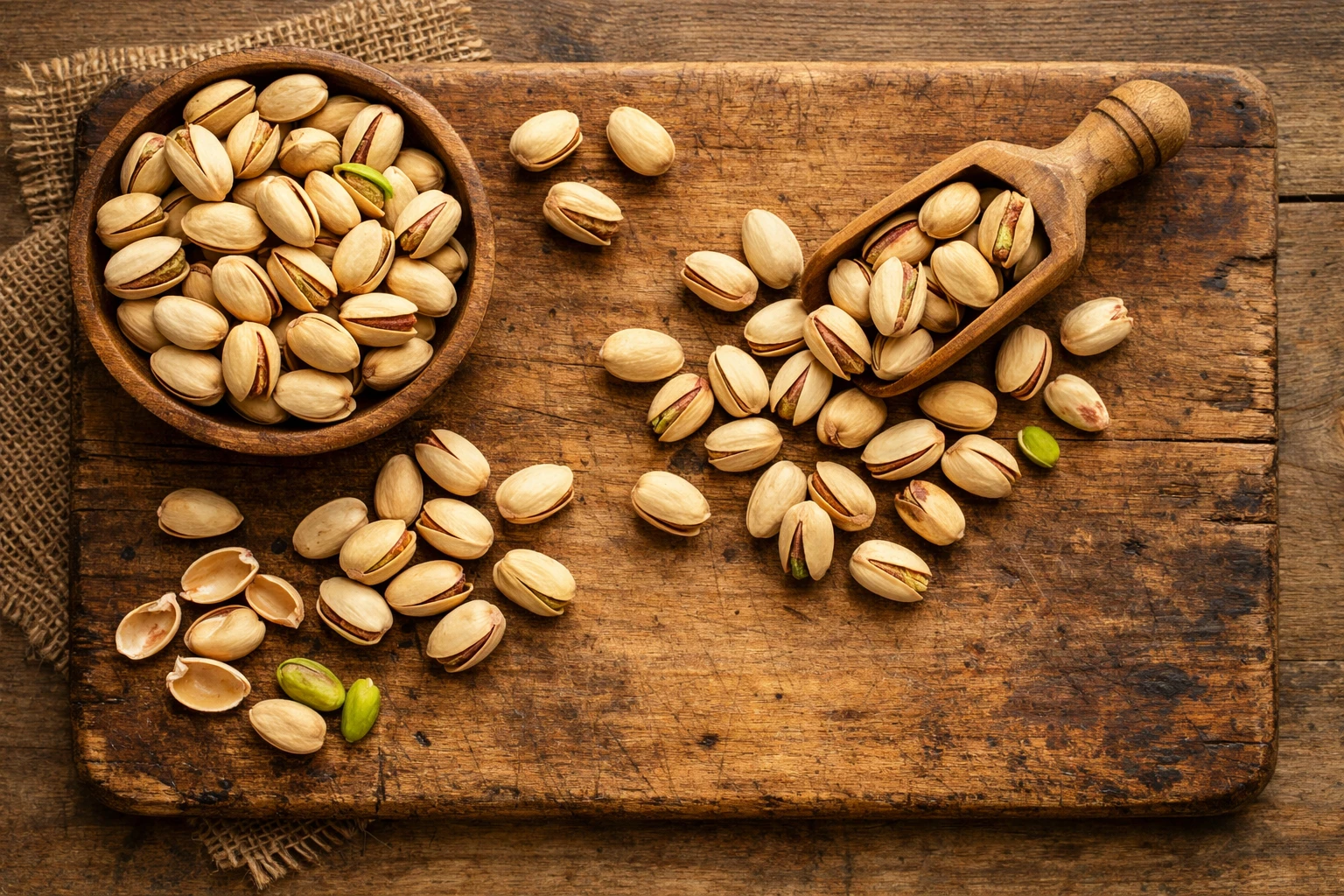
Quick Nutrition Facts
Per 100g (49 kernels)
| Nutrient | Amount |
|---|---|
| Calories | 562 kcal |
| Protein | 20g |
| Carbohydrates | 28g |
| Fiber | 10g |
| Sugars | 8g |
| Fat | 45g |
| Saturated Fat | 5.4g |
| Monounsaturated | 24g |
| Potassium | 1025mg |
| Vitamin B6 | 1.7mg |
| Copper | 1.3mg |
| Antioxidants | High |
Macronutrient Breakdown
 ChatGPT
  Claude
  AI Mode
  Perplexity
NUTRITIONIST INSIGHT
Among all nuts, pistachios have a low glycemic index and uniquely reduce postprandial glycemia. The 10g fiber and 20g protein per 100g make them exceptionally satiating; the in-shell format naturally slows consumption for better portion control.
Myth Busters
MYTH #1: Pistachios Are Too High in Calories for Weight Loss
TRUTH: Despite 562 calories per 100g, pistachios reduce postprandial glycemia and improve satiety, supporting weight management. The shell-cracking process slows eating; 28g (160 calories) provides significant fullness.
MYTH #2: All Nuts Are Bad for Diabetics
TRUTH: Pistachios significantly decrease fasting blood glucose and HOMA-IR insulin resistance in diabetic patients. Their low glycemic index and fiber content make them ideal for blood sugar control.
MYTH #3: Pistachios Have Too Much Fat
TRUTH: 80% of pistachio fat is heart-healthy monounsaturated and polyunsaturated fats that reduce LDL cholesterol and support cardiovascular health. Only 5.4g per 100g is saturated fat.
MYTH #4: You Can't Eat Pistachios Daily
TRUTH: Daily consumption of 28-42g pistachios provides heart health benefits, improves blood sugar control, and supports weight management without adverse effects. Studies show consistent daily intake reduces cardiovascular disease risk.
MYTH #5: Roasted Pistachios Lose All Nutrients
TRUTH: Roasting minimally affects nutrient content; protein, fiber, and minerals remain intact. Some antioxidants become more bioavailable with roasting. Choose dry-roasted or lightly roasted over oil-roasted for best nutrition.
MYTH #6: Green Color Means Artificial Dye
TRUTH: Natural green color comes from chlorophyll in the kernel. Brighter green indicates fresher, higher-quality nuts with more antioxidants like lutein and zeaxanthin. No artificial coloring is used in quality pistachios.
NutriScore by Health Goals
| Health Goal | NutriScore | Why This Score? |
|---|---|---|
| Weight Loss |  | High satiety from 10g fiber and 20g protein; reduces postprandial glycemia. Limit to 28g (160 cal) daily. |
| Muscle Gain |  | 20g complete protein per 100g, healthy fats for hormone production, potassium (1025mg) prevents cramps. |
| Diabetes Management | | Low GI; reduces fasting glucose and insulin resistance. Consume 28-42g daily for optimal blood sugar control. |
| PCOS Management | | Improves insulin sensitivity, provides anti-inflammatory omega-3s, supports hormone balance. 28-42g daily recommended. |
| Pregnancy Nutrition | | Rich in folate, vitamin B6 (85% DV), iron, copper for fetal development; healthy fats support brain growth. 28-42g daily safe. |
| Viral/Flu Recovery | | High antioxidants, vitamin B6 for immune function, protein for tissue repair, easy to digest. |
PERSONALIZED NUTRITION
Track your meals with NutriScan for personalized NutriScores based on your specific health goals! Use our Online Macro Calculator to find your daily nutrition targets.
Blood Sugar Response to Pistachios
Understanding how pistachios affect blood glucose demonstrates their unique metabolic benefits.
Typical Glucose Response Curve
This chart shows typical blood glucose response for general healthy individuals. Individual responses may vary. Not medical advice.
Blood Sugar Benefits
Pistachios uniquely reduce postprandial glycemia and improve insulin response:
- 🍞 Pair with high-GI foods - Add pistachios to bread, rice, or pasta to lower meal glycemic response
- 🥗 Pre-meal consumption - 28g pistachios 30 minutes before meals reduces blood sugar spike
- 🍰 Dessert substitute - Replace high-sugar snacks with pistachios for stable blood sugar
- ☕ Coffee companion - Morning pistachios provide sustained energy without glucose crash
- 🏃 Pre-workout snack - Provides energy without insulin spike
The combination of fiber, protein, and healthy fats creates optimal glycemic control.
Cultural Significance
Pistachios originated in the Middle East over 9,000 years ago and were considered a royal delicacy.
Australian Pistachio Trend (2025):
- Viral pistachio desserts: Dubai chocolate bars, pistachio lattes, gelato
- Melbourne cafes featuring pistachio everything: spreads, croissants, pancakes
- Premium Australian-grown pistachios gaining market share
- Social media driving "pistachio obsession" phenomenon
- High-end restaurants incorporating pistachios in savory and sweet dishes
Global History:
- Queen of Sheba demanded exclusive rights to pistachio production
- Ancient Persians believed pistachios brought good fortune
- Pistachios mentioned in Old Testament and traveled Silk Road
- Iran, USA, Turkey remain top producers (1+ million tons annually)
- California pistachios developed unique flavor profile in 1970s
Compare & Substitute
Pistachios vs Other Nuts (Per 100g)
| Nutrient | 🥜 Pistachios | 🌰 Almonds | 🥜 Cashews | 🌰 Walnuts |
|---|---|---|---|---|
| Calories | 562 kcal | 579 kcal | 553 kcal | 654 kcal |
| Protein | 20g | 21g | 18g | 15g |
| Carbs | 28g | 22g | 30g | 14g |
| Fiber | 10g | 12.5g | 3.3g | 7g |
| Fat | 45g | 50g | 44g | 65g |
| Potassium | 1025mg | 733mg | 660mg | 441mg |
| Vitamin B6 | 1.7mg (85% DV) | 0.1mg | 0.4mg | 0.5mg |
| GI Impact | Low (reduces post-meal spike) | Low | Low | Low |
| Best For | Diabetes, weight loss, heart health | Vitamin E, weight loss | Magnesium, copper | Omega-3s, brain health |
Frequently Asked Questions
Are pistachios good for weight loss?
Yes, pistachios support weight loss despite being calorie-dense. The 10g fiber and 20g protein per 100g promote exceptional satiety; the shell-cracking process naturally slows eating rate; studies show reduced postprandial glycemia aids fat burning.
Best practices: Limit to 28-30g daily (160 calories, 49 kernels); choose in-shell versions for portion control; eat as mid-morning or afternoon snack; pair with water to enhance fullness; avoid salted or candied varieties.
Can diabetics eat pistachios?
Yes, pistachios are excellent for diabetics with proven glycemic benefits. They have a low glycemic index, reduce postprandial glycemia by 20-30%, improve fasting blood glucose, and decrease insulin resistance markers.
Tips for diabetics:
Consume 28-42g daily as snack or meal component; pair with meals to reduce overall glycemic response; choose unsalted or lightly salted versions; monitor blood sugar to observe individual benefits; prefer in-shell pistachios for mindful eating.
How much protein is in pistachios?
Pistachios contain 20 grams of protein per 100g (6g per ounce/28g serving). This makes them one of the highest-protein nuts, providing complete amino acids for muscle support, satiety, and metabolic function.
Protein comparison: 28g pistachios (6g protein) equals 1 egg; 100g pistachios (20g) approaches chicken breast protein density with added fiber and healthy fats.
What are the main health benefits of pistachios?
Key Benefits:
- Heart Health: Monounsaturated fats reduce LDL cholesterol and cardiovascular disease risk
- Blood Sugar Control: Low GI reduces fasting glucose and improves insulin sensitivity
- Weight Management: High satiety from fiber and protein supports calorie control
- Eye Health: Lutein and zeaxanthin antioxidants protect against macular degeneration
- Gut Health: 10g fiber supports beneficial bacteria and digestive regularity
- Nutrient Density: Vitamin B6 (85% DV), potassium, copper, magnesium in one serving
When is the best time to eat pistachios?
Depends on your goal:
- Weight Loss: Mid-morning or afternoon snack (reduces meal calorie intake)
- Muscle Gain: Post-workout with carbs for recovery; anytime for protein boost
- Diabetes: With meals to reduce glycemic response; 30 minutes pre-meal for best effect
- Heart Health: Any time as daily 28-42g serving
- Sleep Support: Evening snack (contains melatonin precursors)
- Energy: Morning or pre-workout for sustained fuel without crash
IMPORTANT NOTE
Avoid eating pistachios within 2 hours of bedtime if trying to lose weight (calorie-dense).
Are roasted or raw pistachios healthier?
Both are healthy with minimal nutritional differences - choose based on preference:
Raw Pistachios:
- Slightly higher B vitamin content
- More natural flavor
- May be harder to digest for some
- Often more expensive
Roasted Pistachios:
- Enhanced flavor and crunch
- Some antioxidants become more bioavailable
- Easier to digest
- Longer shelf life
Recommendation: Choose unsalted or lightly salted dry-roasted pistachios for optimal health; avoid heavily salted (excess sodium) or oil-roasted (extra calories) versions.
How many pistachios should I eat per day?
General Guidelines:
- 28g (49 kernels, 160 cal) - Weight loss, general health maintenance
- 28-42g (49-74 kernels) - Diabetes management, heart health, active individuals
- 42-56g (74-100 kernels) - Muscle gain, pregnancy, high activity levels
Avoid excess: More than 56g daily provides excess calories (300+), may cause digestive issues from fiber overload, and displaces other nutrient sources.
Track your meals with NutriScan app to see how pistachios fit your personal nutrition goals.
Can I eat pistachios on an empty stomach?
Yes, generally safe and beneficial for most people - provides sustained energy without digestive issues.
Ideal for:
- Morning snack: Provides protein, healthy fats, and fiber for sustained energy
- Pre-workout: Offers fuel without digestive discomfort
- Between meals: Controls appetite and stabilizes blood sugar
May want to pair with food if you have:
- Sensitive digestion (high fiber may cause mild bloating)
- Very low body weight (calorie-dense; better with meals)
Best approach: Combine 28g pistachios with water or herbal tea for optimal digestion and hydration.


Similar Nutritious Nuts
4505 Chicharrones Classic Chili Salt
7 Eleven Japan Crispy Corn Cheese
Explore More Nutrition Tools & Resources
AI Calorie Counter App - Snap a Photo, Get Macros
AI Nutritionist App That Reads Your Logged Meals
Best Protein Supplements for Women
Bulking Meal Plan App That Sets Your Surplus
ChatGPT Calorie Counter Alternative That Keeps the Total
ChatGPT Diet Plan Alternative That Tracks What You Eat
ChatGPT Weight Loss Coach Alternative With a Food Log
Fast Food Calorie Counter App That Reads the Tray
Free Calorie Tracker App with AI Photo Scans | NutriScan
Indian Diet Plan App With Veg and Non Veg Meals
Indian Food Calorie Calculator - Get Instant Nutrition Facts for Desi Meals — 2026
Intermittent Fasting for Women, Timer and Meal Log App
Intermittent Fasting Tracker App - Free Fasting Timer
Macro Tracker App That Fills the Numbers From a Photo
Mediterranean Diet Meal Plan App That Counts the Oil
Micronutrient Tracker App for Vitamins and Minerals
MyFitnessPal Alternative That Stays Free | NutriScan
NutriScore App: A Free Grade on Every Meal | NutriScan
Nutrition Label Scanner App for the Amount You Ate
Second Trimester Protein Guide
Vegetarian Meal Plan App With a Protein Target
Voice Calorie Counter - Speak to Track Meals Hands-Free
Water and Calorie Tracker App - Free Water Log