Plain Dosa: Calories, Nutrition and Health Benefits
South India's beloved crispy breakfast staple made from fermented rice and lentils, packed with B vitamins and gut-friendly probiotics.
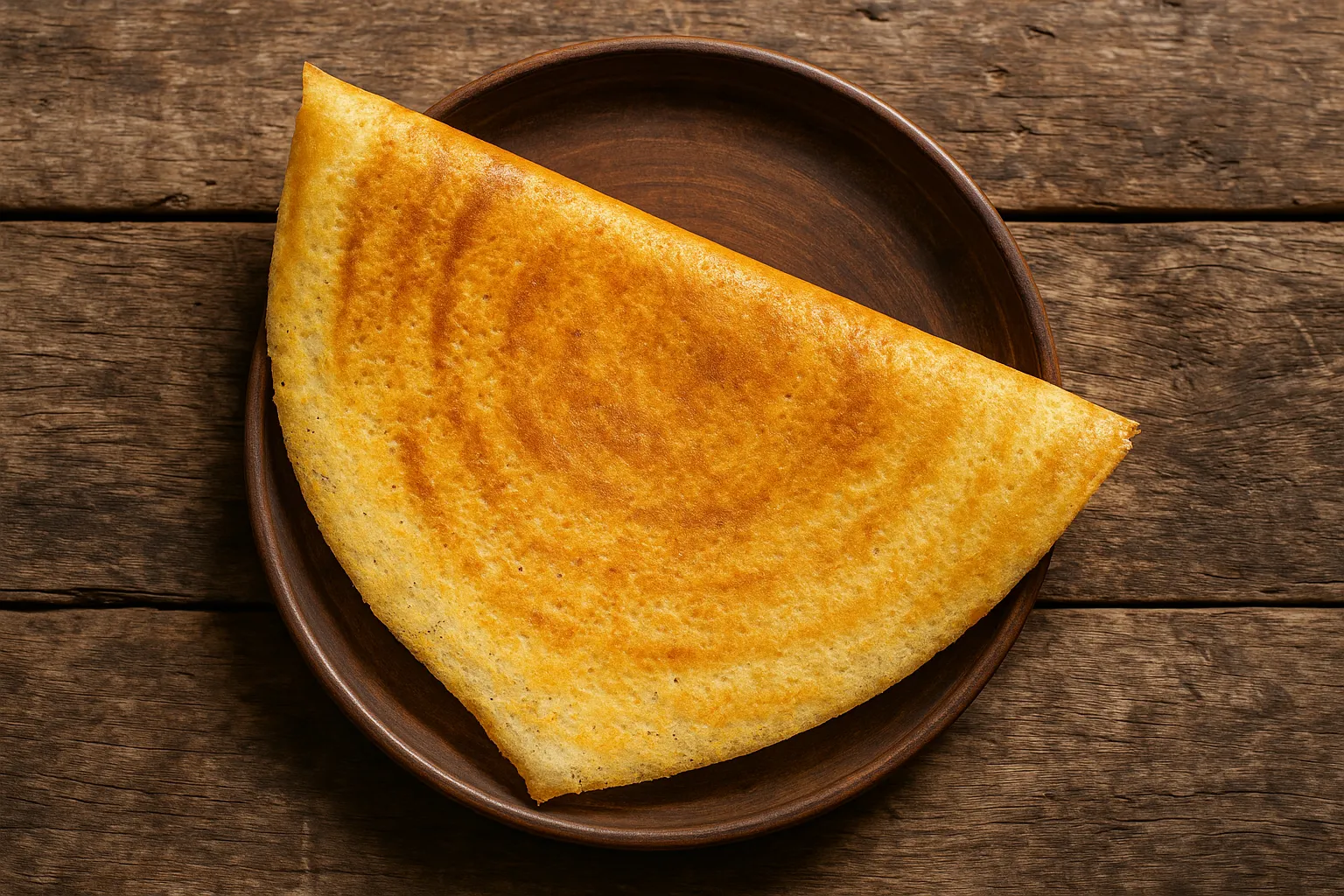
Quick Nutrition Facts
Per 1 Medium Plain Dosa (100g)
| Nutrient | Amount |
|---|---|
| Calories | 209 kcal |
| Protein | 5.7g |
| Carbohydrates | 37g |
| Fiber | 1.8g |
| Sugars | 0.5g |
| Fat | 4g |
| Iron | 2.1mg |
| Vitamin B1 | 0.15mg |
| Vitamin B3 | 1.2mg |
| Magnesium | 48mg |
Macronutrient Breakdown
 ChatGPT
  Claude
  AI Mode
  Perplexity
NUTRITIONIST INSIGHT
Plain dosa's fermentation process reduces phytic acid (anti-nutrient), increases iron and calcium bioavailability, and creates probiotics supporting gut health. The combination of rice and urad dal provides all nine essential amino acids, making it a complete protein source when paired with sambar.
Myth Busters
MYTH #1: Dosa is Pure Carbs with No Nutritional Value
TRUTH: Plain dosa is a fermented whole grain combining rice and urad dal. The fermentation significantly reduces the glycemic index, increases bioavailable minerals, and creates probiotic cultures. It provides 5.7g protein, B vitamins, and magnesium—far from empty calories.
MYTH #2: Dosa Will Spike Blood Sugar Because It's Made from White Rice
TRUTH: Fermented rice has a lower glycemic index than regular white rice. The fermentation process breaks down starches and reduces digestibility rate. Pairing dosa with sambar (lentil-based) or chutney further slows glucose absorption and stabilizes blood sugar.
MYTH #3: All the Nutrients Cook Away During Preparation
TRUTH: The fermentation pre-process actually unlocks minerals—phytic acid reduction allows better iron and calcium absorption. B vitamins like B1, B2, and niacin are heat-stable and retained. The final product retains probiotics from fermentation, supporting digestive health.
MYTH #4: Dosa is High in Fat and Bad for Weight Loss
TRUTH: A plain dosa has only 4g fat per 100g serving. Traditional dosa doesn't use butter or ghee—just a thin oil coating on the griddle. Weight loss fails when dosa is paired with high-fat chutneys (coconut, ghee). Choose tomato or mint chutney instead.
MYTH #5: Fermented Foods Like Dosa Cause Bloating
TRUTH: While fermented foods contain histamines that may bother sensitive individuals, most people benefit from improved digestion and reduced gas. Start with smaller portions if sensitive, and chew thoroughly to support enzyme action.
NutriScore by Health Goals
| Health Goal | NutriScore | Why This Score? |
|---|---|---|
| Weight Loss |  | 209 calories, 1.8g fiber, low fat (4g). Fermented grains digest slower, promoting satiety. Pair with sambar for protein. Limit to 1-2 dosas per meal. |
| Muscle Gain |  | 5.7g protein per dosa, but incomplete amino acid profile alone. Combine with sambar (lentils) or egg curry for complete protein (12-15g total). |
| Diabetes Management | | Fermented rice has lower GI (~55). Eat thinner dosas, pair with protein-rich sambar, monitor portion size. Choose brown rice or millet variants when possible for even lower glycemic load. |
| PCOS Management | | Moderate carbs (37g). Best paired with high-protein sambar or dal. Limit to 1 dosa, avoid ghee-laden chutneys. Include vegetables in sambar to increase fiber and micronutrients. |
| Pregnancy Nutrition |  | Rich in folate (18mcg), iron (2.1mg) for fetal development and preventing anemia. Fermented grains enhance mineral absorption. B vitamins support fetal nervous system development. |
| Viral/Flu Recovery | | Easy to digest due to fermentation, gentle on stomach, provides quick carbs for energy, B vitamins for immune recovery. Pair with warm sambar for hydration and mineral replacement. |
PERSONALIZED NUTRITION
Track your dosa meals with NutriScan for personalized NutriScores based on your specific health goals and accompaniments!
Blood Sugar Response to Plain Dosa
Understanding how fermented dosa affects your glucose helps optimize meal composition and pairing strategies.
Typical Glucose Response Curve
This chart shows typical blood glucose response for general healthy individuals. Individual responses may vary. Not medical advice.
How to Flatten the Spike
Pairing dosa with protein-rich sambar or dal slows glucose absorption and reduces the peak blood sugar level:
- 🍲 Sambar (lentil curry) - Contains protein and fiber, slows carb digestion
- 🥒 Chutney with peanuts - Adds healthy fats and protein for satiety
- 🥬 Spinach or greens curry - Adds fiber, micronutrients, and volume without extra calories
- 🍚 Pickle or yogurt side - Yogurt provides probiotics and protein; pickles add acid that slows starch digestion
This combination not only reduces the glucose spike but also extends energy release, keeping you fuller longer and preventing mid-morning crashes.
Cultural Significance
Dosa is one of South India's most celebrated breakfast dishes, with roots dating back centuries to the Tamil Nadu and Karnataka regions.
In India:
- Originated in Tamil Nadu, now iconic across all of South India and increasingly North India
- Traditional preparation uses fermented rice and urad dal batter, prepared fresh each day
- Dosa leaves (sometimes offered as plates) have cultural and religious significance in Hindu ceremonies
- Indian breakfast culture built around dosa: variations include masala dosa (potato-filled), ghee roast, and paper dosas
- Fermentation tradition reflects ancient Indian food science and gut health practices
Global Impact:
- South Indian restaurants worldwide feature dosa as a signature dish
- Growing popularity in international vegetarian and vegan food scenes
- Fermented food trend has increased scientific study of dosa's probiotic benefits
- Viewed as a sustainable, plant-based protein source comparable to international grains
Compare & Substitute
Dosa vs Similar Breakfast Staples (Per 100g)
| Nutrient | 🥞 Plain Dosa | 🍳 Panipuri | 🥞 Idli | 🍞 Whole Wheat Bread |
|---|---|---|---|---|
| Calories | 209 kcal | 145 kcal | 110 kcal | 265 kcal |
| Carbs | 37g | 24g | 20g | 49g |
| Fiber | 1.8g | 1.5g | 0.8g | 6.7g |
| Protein | 5.7g | 3.5g | 2.2g | 9g |
| Fat | 4g | 2.8g | 0.4g | 3.3g |
| Iron | 2.1mg | 1.2mg | 0.9mg | 2.8mg |
| Probiotic | Yes (fermented) | No | Yes (fermented) | No |
| Best For | Breakfast with sambar | Quick snack with chutney | Light breakfast | Sustained energy, fiber |
Frequently Asked Questions
Is plain dosa good for weight loss?
Plain dosa supports weight loss when portion-controlled and paired correctly. One medium dosa has 209 calories, 1.8g fiber, and only 4g fat. The fermented grains digest slower than white rice, promoting longer satiety. Best practice: eat 1-2 dosas for breakfast with a protein-rich side (sambar containing lentils, or peanut chutney) to increase fullness and slow glucose absorption. Avoid ghee-laden chutneys.
Can diabetics eat plain dosa?
Diabetics can eat plain dosa in moderation. Fermented rice has a lower glycemic index (~55) than regular white rice (~72). Tips: make thinner dosas to reduce portion size, pair with sambar or dal for added protein and fiber, choose brown rice or millet dosas when available, eat early in the day, and monitor blood sugar 2 hours after eating.
How much protein is in plain dosa?
A medium plain dosa contains approximately 5.7g of protein. While not a complete protein source alone, the combination of rice and urad dal (black gram) provides all nine essential amino acids in small amounts. Pair dosa with sambar (containing lentils for 5-7g additional protein) or egg curry to boost total protein intake to 12-15g per meal.
What are the main health benefits of plain dosa?
Key benefits include: B vitamins (B1, B2, B3, B6) for energy metabolism and nerve function; iron for oxygen transport and preventing anemia; magnesium for muscle relaxation and sleep; probiotics from fermentation supporting digestive health and immunity; and enhanced mineral bioavailability due to reduced phytic acid content.
When is the best time to eat plain dosa?
For weight loss: early morning with sambar to control mid-morning hunger. For muscle gain: post-workout with protein-rich sambar or egg curry. For diabetes: breakfast or early lunch paired with protein and vegetables. Avoid late dinner, especially with high-fat chutneys, as carbs may spike blood sugar when digestion is slower. Mid-morning or afternoon snack pairing with yogurt also works well.
Is fermented dosa healthier than unfermented white rice?
Yes, fermentation significantly improves nutritional quality. Fermented dosa has a lower glycemic index (~55 vs ~72 for white rice), reduced anti-nutrients (phytic acid), increased bioavailable iron and calcium, and probiotic cultures supporting gut health. Longer fermentation (12-24 hours) produces more probiotics and enzymes improving digestibility.
How many dosas should I eat per day?
General guidelines: 1-2 medium dosas for most people as breakfast; 1 dosa for weight loss or diabetes management; 1-2 dosas for muscle gain goals when paired with high-protein sides (sambar, curries). Keep total carbs and calories in mind for your goals. Track meals with NutriScan app to optimize dosa intake for your health plan.
Can I eat dosa on an empty stomach?
Yes, dosa is gentle and easily digestible due to fermentation. However, pairing it with sambar, chutney, or yogurt (to add protein and fiber) provides better sustained energy and prevents mid-morning blood sugar crashes. Plain dosa alone on an empty stomach may cause faster glucose spikes; combination meals are preferable for stable energy.


Similar Nutritious Foods
4505 Chicharrones Classic Chili Salt
7 Eleven Japan Crispy Corn Cheese
Explore More Nutrition Tools & Resources
AI Calorie Counter App - Snap a Photo, Get Macros
AI Nutritionist App That Reads Your Logged Meals
Best Protein Supplements for Women
Bulking Meal Plan App That Sets Your Surplus
ChatGPT Calorie Counter Alternative That Keeps the Total
ChatGPT Diet Plan Alternative That Tracks What You Eat
ChatGPT Weight Loss Coach Alternative With a Food Log
Fast Food Calorie Counter App That Reads the Tray
Free Calorie Tracker App with AI Photo Scans | NutriScan
Indian Diet Plan App With Veg and Non Veg Meals
Indian Food Calorie Calculator - Get Instant Nutrition Facts for Desi Meals — 2026
Intermittent Fasting for Women, Timer and Meal Log App
Intermittent Fasting Tracker App - Free Fasting Timer
Macro Tracker App That Fills the Numbers From a Photo
Mediterranean Diet Meal Plan App That Counts the Oil
Micronutrient Tracker App for Vitamins and Minerals
MyFitnessPal Alternative That Stays Free | NutriScan
NutriScore App: A Free Grade on Every Meal | NutriScan
Nutrition Label Scanner App for the Amount You Ate
Second Trimester Protein Guide
Vegetarian Meal Plan App With a Protein Target
Voice Calorie Counter - Speak to Track Meals Hands-Free
Water and Calorie Tracker App - Free Water Log